Eat More Plants: Recipes
Winter’s Jewels
By Laura Chávez Silverman
Sign up for our monthly newsletter!
In the Western Catskills where I live, the winter landscape is not devoid of color. Bright spots of scarlet persist, stippling the fields and forests, beckoning critters and foragers alike. These red flags signal the birds that winterberries (Ilex verticillata), Japanese barberries (Berberis thunbergii) and various rose hips (Rosa carolina, R. virginiana, R. multiflora) are available in abundance. The birds eat these fruits and drop the seeds as they fly, doing their part to help the plants survive and spread—including the non-native species we humans may not value.
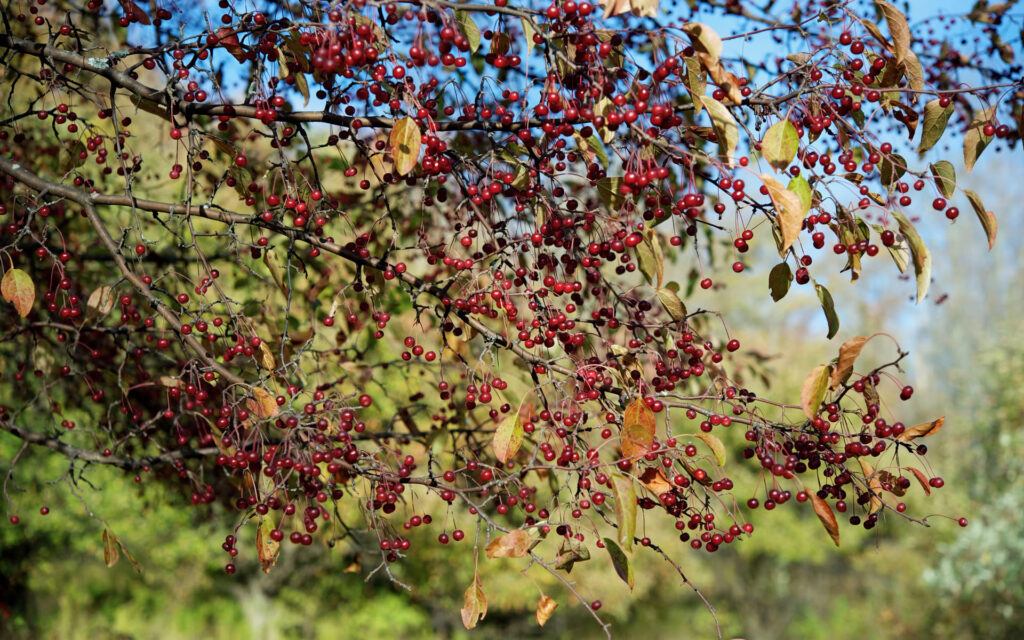
I, too, partake of some of this winter fruit and am especially grateful for the many crabapple trees I come across on my walks. One is the native variety (Malus coronaria), confusingly called “the sweet crabapple” despite its sour taste; countless others were introduced over the centuries from Asia and Europe. Although most are adorned with miniature bright red apples of varying sizes, some have yellow or orange fruit. Virtually all are too tart and astringent to eat raw, but crabapples have a long history of use in cooked preparations and are valued for their high pectin content, which makes them excellent for setting jams and jellies. They were also a key ingredient in making hard cider, which was the beverage of choice for early colonists, who often lacked reliable sources of clean water. The local Lunaapeew tribes traditionally used crabapples for food and medicine (they are rich in vitamin C and malic acid), sometimes storing them underground over the winter so their sugars would accrue, or drying them by sun or fire. Like all fruits that remain in the cold season, crabapples become sweeter after the frost because the cold triggers a natural defense mechanism in plants that converts stored starches into sugars.
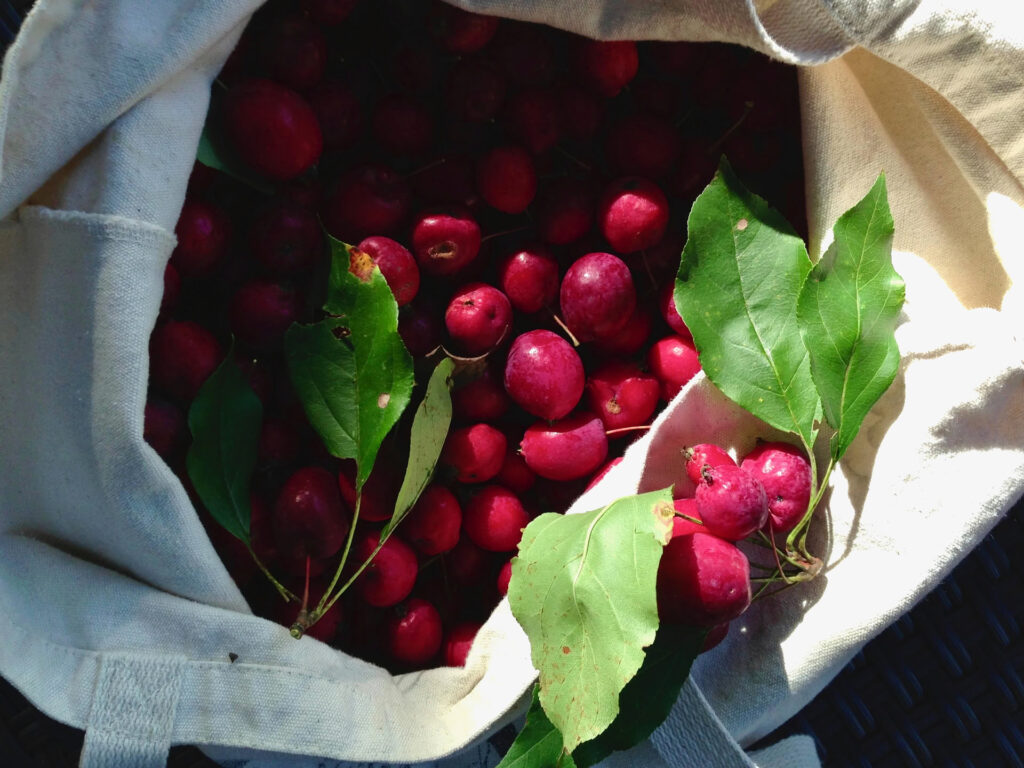
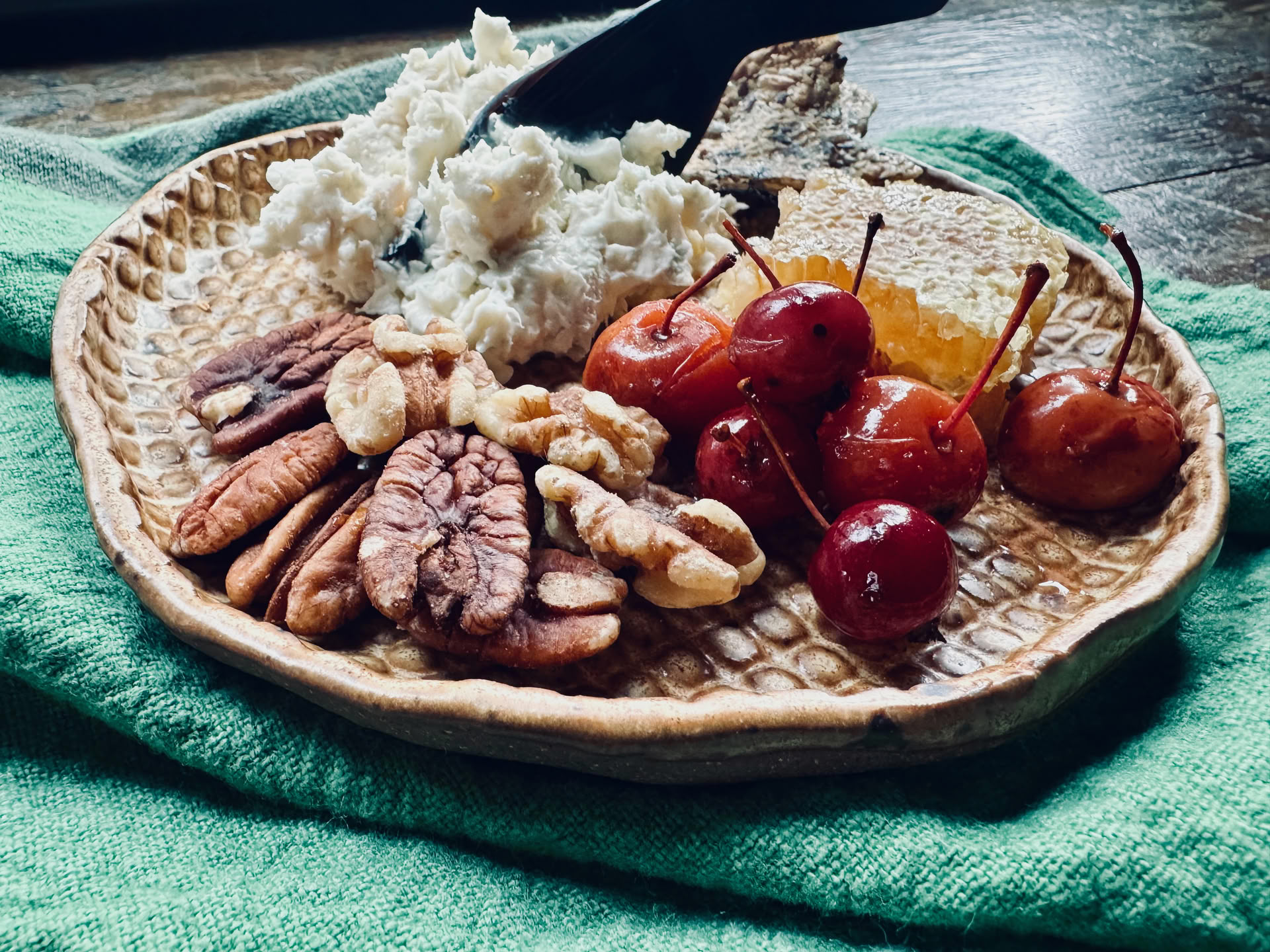
My annual crabapple harvest includes several varieties of different sizes. I like to preserve the larger ones in a sweet-tart brine that brings out their aromatic, winey complexity. They make a wonderful garnish for a hot toddy or as a nibble on a cheese plate. The smaller ones I infuse for several weeks in bourbon or rye, commingling their bright apple-y flavors with warming spices like star anise, black pepper and mace. This rich spirit works well in said hot toddy or in a whiskey sour or Manhattan with a wild kick that keeps winter’s chill at bay.
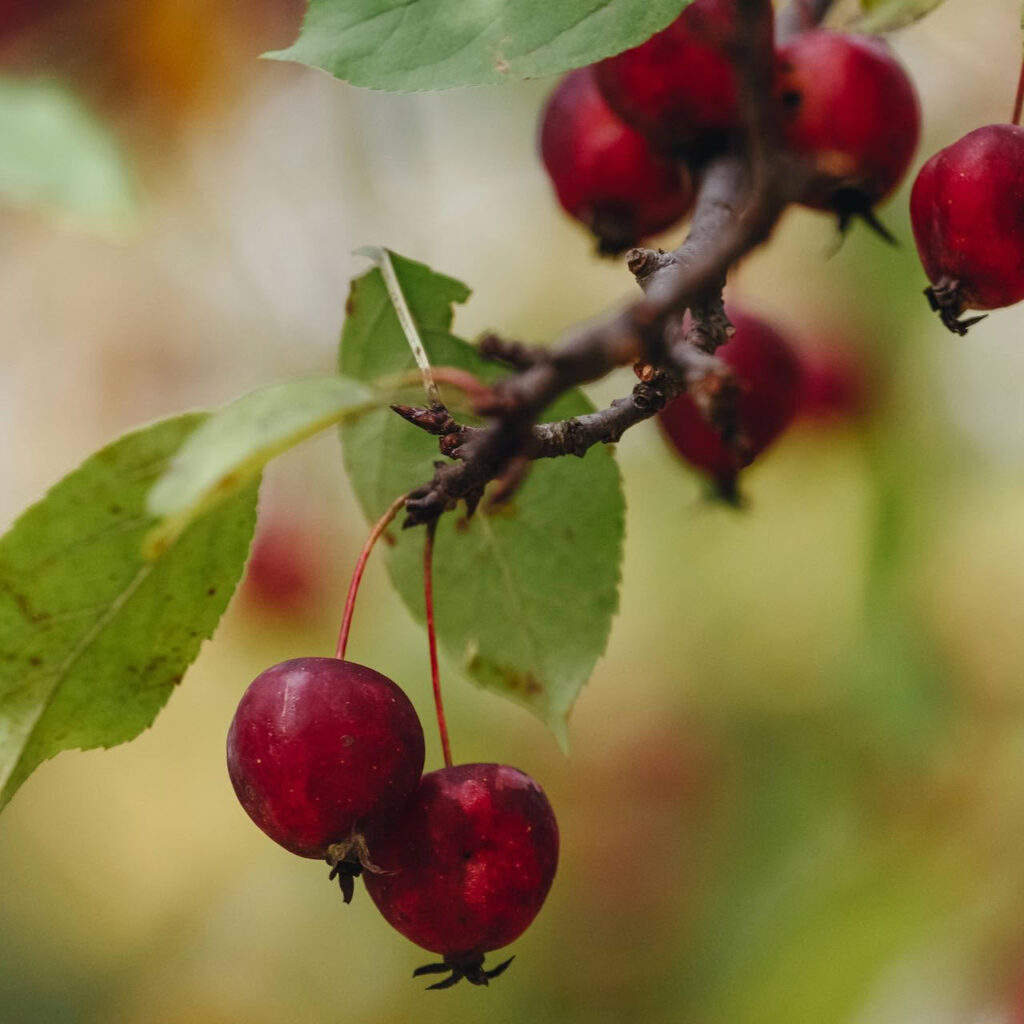
Spiced Pickled Crabapples
2 pounds crab apples, 1-2” diameter, stems intact
2 cups apple cider vinegar
2 cups water
3 cups organic cane sugar
½ teaspoon whole cloves
½ teaspoon dried spicebush berries (or sub allspice)
3 star anise
2 sticks cinnamon
3 large slices fresh ginger
Wash the crabapples. Gently prick them all over with a fork or toothpick to prevent them from bursting as they simmer.
In a large saucepan, stir together the vinegar, water, sugar and spices over medium heat. Bring to a slow boil. Immediately lower the heat, then add the prepared crabapples and gently simmer until tender, 5-10 minutes.
Using a slotted spoon, gently transfer the crabapples from the hot liquid into clean glass jars. Strain the pickling liquid, discarding the spices, then pour it over the fruit to cover completely. Seal the jars and allow to cool. Store indefinitely in the refrigerator.
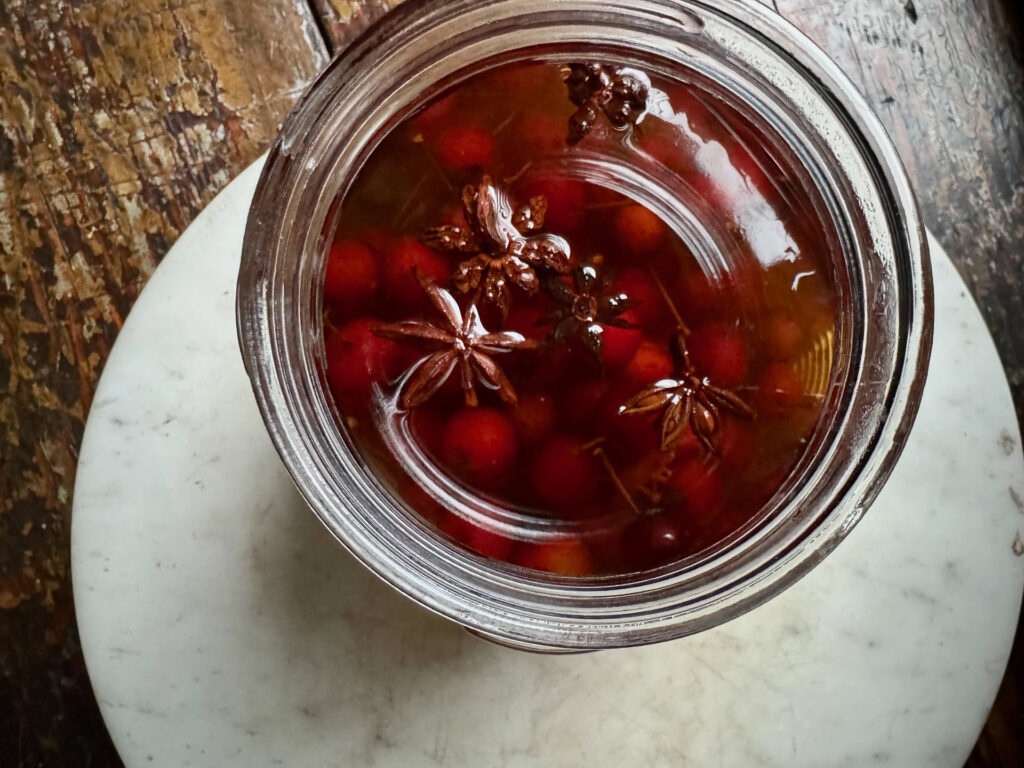
Crabapple Whiskey
3 cups crabapples, softened overnight in the freezer*
1 750ml bottle bourbon or rye
2 tablespoons coarsely ground spices, such as a combination of star anise, spicebush, mace and black pepper, optional
Combine all the ingredients in a large glass jar, seal and place in a cool, dark cupboard for two weeks. Swirl it daily or at least occasionally. Strain through a fine mesh strainer and discard the solids. Return the crabapple spirits to the original bottle and store indefinitely.
*Softened crabapples will infuse their flavor faster.
Laura Chávez Silverman is a writer and the founding naturalist of The Outside Institute, which connects people to the healing and transformative powers of nature through guided walks, foraging education and botanical mixology in the Western Catskills. By nurturing humanity’s innate affinity for the wild, she hopes to combat plant blindness and inspire an essential reciprocity between all beings. The Outside Institute has published three volumes of its Field Guide to the Northeast and has a teaching outpost in Barryville, New York. theoutsideinstitute.org @theoutsideinstitute
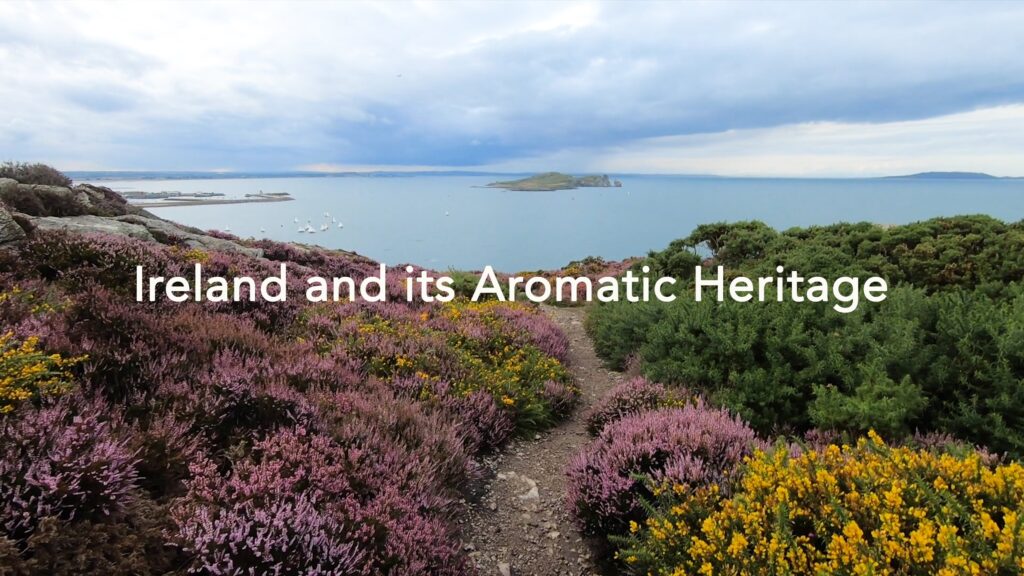
As Ireland transitions from the rich, smoky scent of peat-burning to a more sustainable future, its olfactory heritage is evolving. What will become the next iconic aromatic symbol of Ireland?
Click to watch the documentary trailer.
As Ireland transitions from the rich, smoky scent of peat-burning to a more sustainable future, its olfactory heritage is evolving. What will become the next iconic aromatic symbol of Ireland?
Plantings

Is There Such a Thing as Too Many Houseplants?
By Molly Glick
Smound: how entanglement of scent and sound shape our world
By Willow Gatewood

Jane Goodall: A Voice for the Planet
By Gayil Nalls