

Eat More Plants: Recipes
Rhus Juice: an Indigenous-inspired drink from the plant that connects continents
By Willow Gatewood
Sign up for our monthly newsletter!
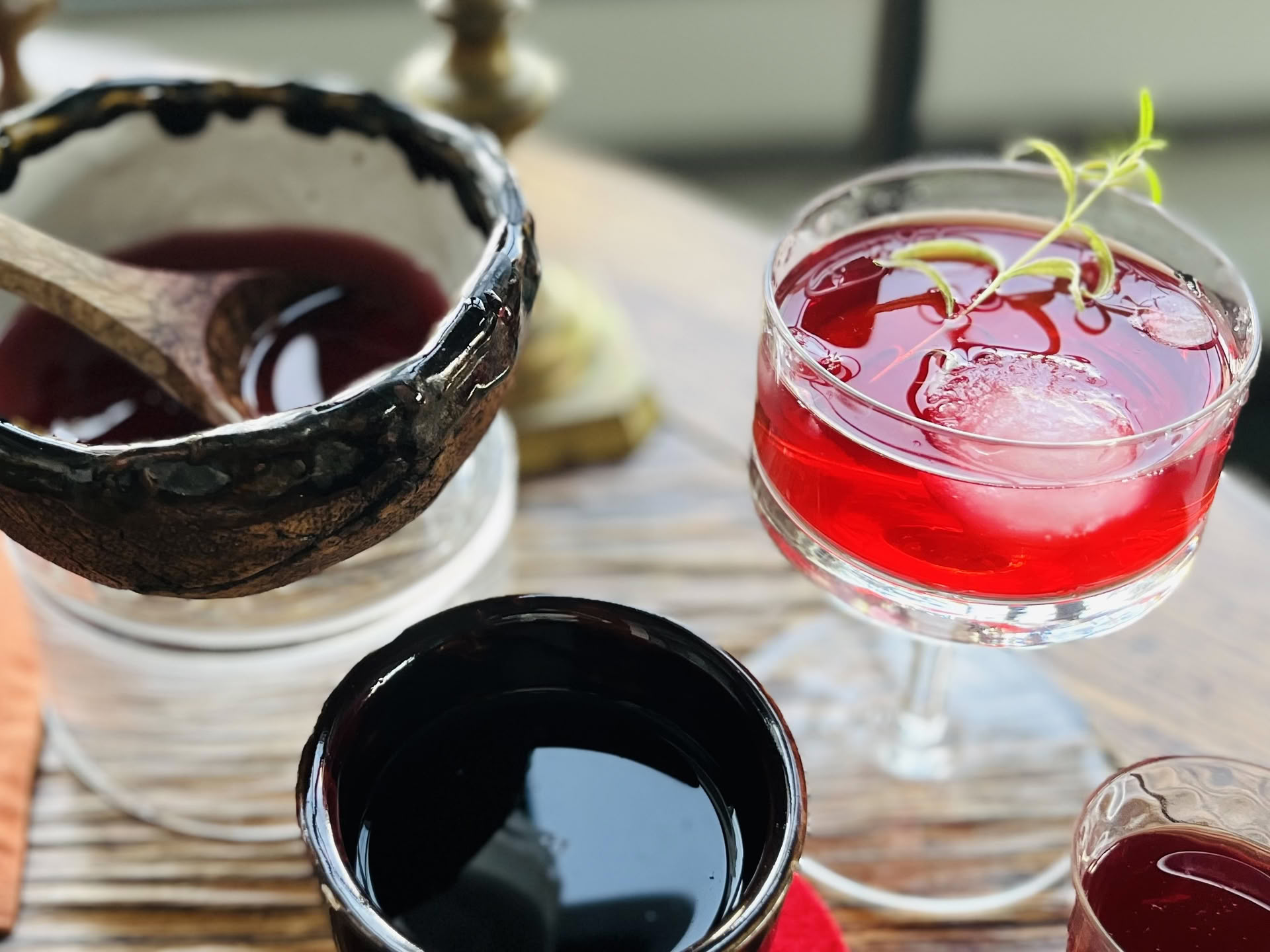
For several years, one of my favorite winter drinks has been rhus juice (pronounced roos, similar to loose). Made from sumac (Rhus sp.) berries, the ruby-colored liquid that results by infusing or steeping them in water can be served as a soothing tea, iced as an Indigenous-inspired lemonade, or mixed with a shot of vodka to create unique cocktails. I love surprising guests at holiday gatherings with a twangy, locally-foraged take on mocktails; I also delight in sipping tea by candlelight, knowing what goes into my body was collected with care by my hands and will provide essential antioxidants for winter’s chilly months.
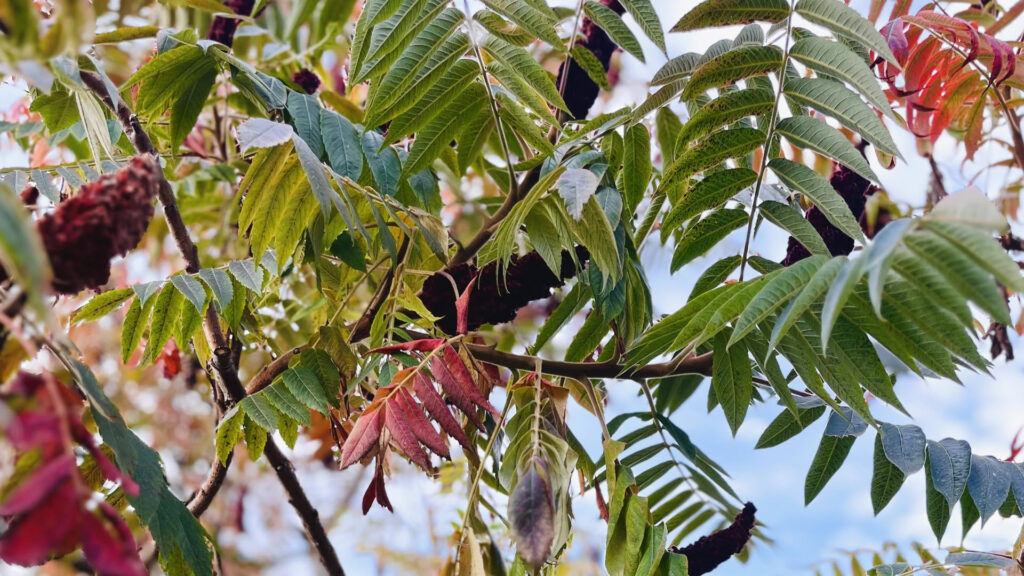
I first came across rhus juice through the practice of natural dyeing. Sumac, a species abundant in abandoned lots, roadsides, and forest edges throughout the Northeast, produces vibrant reds, deep magenta, and when combined with iron, shades so dark they range from steel to near-black. While collecting sumac for dyeing fabric or eco-printing paper, I often munch on the little jewels for a pop of sweet-and-sour. It never occurred to me to drink the syrupy liquid that results from soaking or boiling the berries until a friend from Kenya asked if I’d ever made rhus wine.
Rhus “wine”, he explained, is popular particularly among North African communities: simply soak—infuse—sumac berries (this species, likelyRhus coriaria, a leggy species found across Mediterranean climates) and ferment as you would grapes for a twangy beverage. I could find no recipe for this online; however, in my search came across the myriad of ways cultures across the globe have used Rhus spp. as treasured spice, dye, medicine, and culinary sciolist for centuries.
Sumac is a flowering plant that belongs to the Anacardiaceae family, widespread in Asia, Europe, and North America at similar latitudes. One might be familiar with prized spices, ground sumac and blended Zatar spice, usually Rhus coriaria from the Middle East and Mediterranean climates where it was first used as textile dye, souring agent, food preservative, and flavor. Arabic and Persian societies documented medicinal uses, while the spice became a staple in cuisine across the Middle East. Similar North American species were used by Indigenous peoples to brew refreshing drinks and teas to treat illness, sanitize wounds, and improve health from the antioxidants and vitamins sumac is rich in (Das, D., 2025). Because the species’s range traverses the globe, sumac and its many uses connect continents and cultures.
Harvesting:
Both staghorn sumac (Rhus typhina) and smooth sumac (Rhus glabra) berries make delightful drinks. Staghorn sumac often towers into a sturdy, tree-like plant donning dark green leaves and smooth bark peppered with knobs. It predominates in Northeastern States. Smooth sumac is an equally common species and is found in all contiguous 48 states. Smooth sumac is easy to identify by its hairy stems and berries. Winged Sumac (Rhus copallina), named for the “winged” bark protrusions that line the stems, fills southern state’s mountains with flaming red leaves come autumn.
All red-berry producing species of sumac are edible; poison sumac, more closely related to poison ivy, is an invasive and has white-ish colored berries and shorter leaves. Avoid: all parts of this plant cause irritation or rash when touched. For a more thorough identification guide, please see this helpful ID from Missouri Department of Conservation: https://mdc.mo.gov/discover-nature/field-guide/sumacs (Sumacs, n.d.).
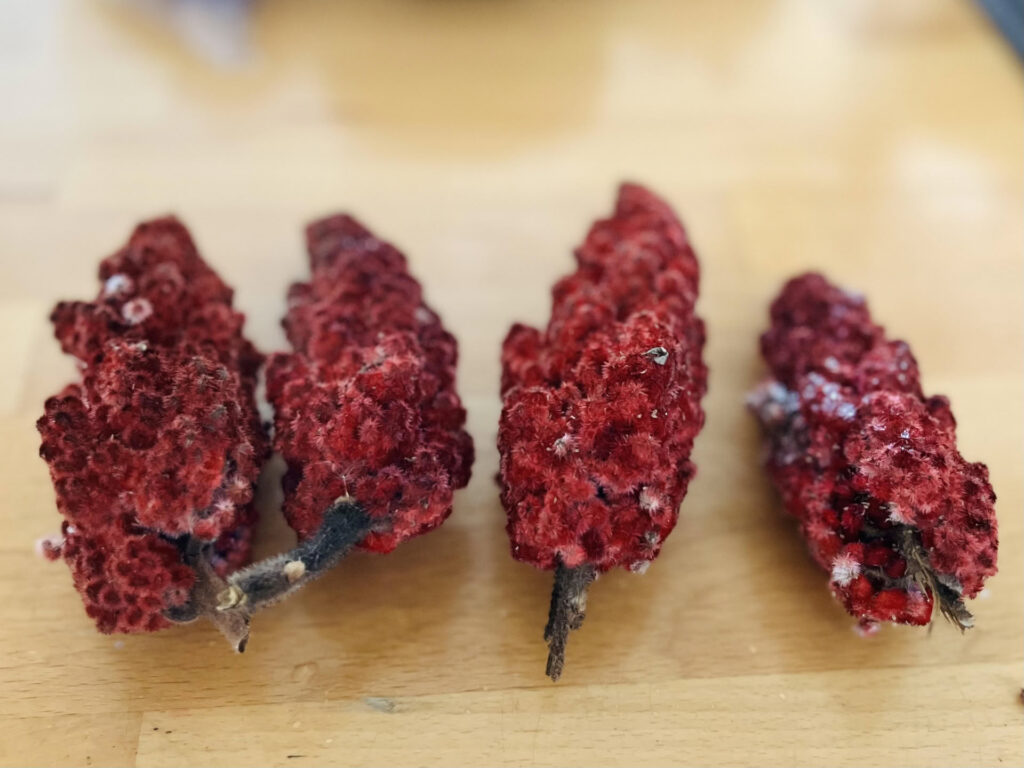
Sumac species are often found along roadsides and in parks; however, it is important to remember these plants act as filters — they absorb pollutants from the air and soil around them, often storing these toxins within their tissue. For safety, it is always better to harvest wild foods — and grow edible gardens — away from roadsides, city sidewalks, and other areas of high pollution or soil contamination. In the Northeast, sumac berries begin ripening in autumn and often remain on bare stems throughout winter. They are best used fresh, but berries are suitable as long as they are plump and deep red in color: the more plump, the more sour, as these are “younger” berries. Once brown or crumbling from the stem, they are no longer palatable. I often harvest and freeze berries at their peak in autumn or early winter to use throughout the year.
Rhus juice | Native American Lemonade
What you’ll need:
~ 4-5 cones (clusters) of sumac per liter of water
Add ins: herbs like mint, rosemary, or lemon balm; lemon juice or other fruit juices; sweeteners like agave or honey; sparkling water, vodka, or whisky.
I enjoy the bitter twang of bringing berries to a boil; however, to create a lighter, more rosé or lemonade style version of the drink, soak berries at room temperature overnight.
Wash berries thoroughly. If you are using smooth sumac, be aware that berries are coated in a fuzz that can be irritating for some people. For best flavor, especially when making a cold infusion, strip berries from large stems and gently mash clusters. After infusing, strain, sweeten if desired, and enjoy.
Cold infusions: soak berries overnight for a stronger drink, or several hours for a drink that tastes more like a lemonade refresher (the sweet and sour flavors infuse before the bitterness of tannins). Mashing berries speeds up the process.
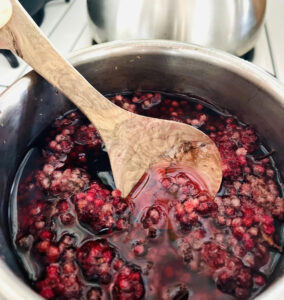
Hot infusions: simmer slightly for a tart-bitter, syrupy drink or simply add to just-boiled water (essentially making tea) for sweeter flavor. Chill and serve over ice, or enjoy fresh as hot tea.
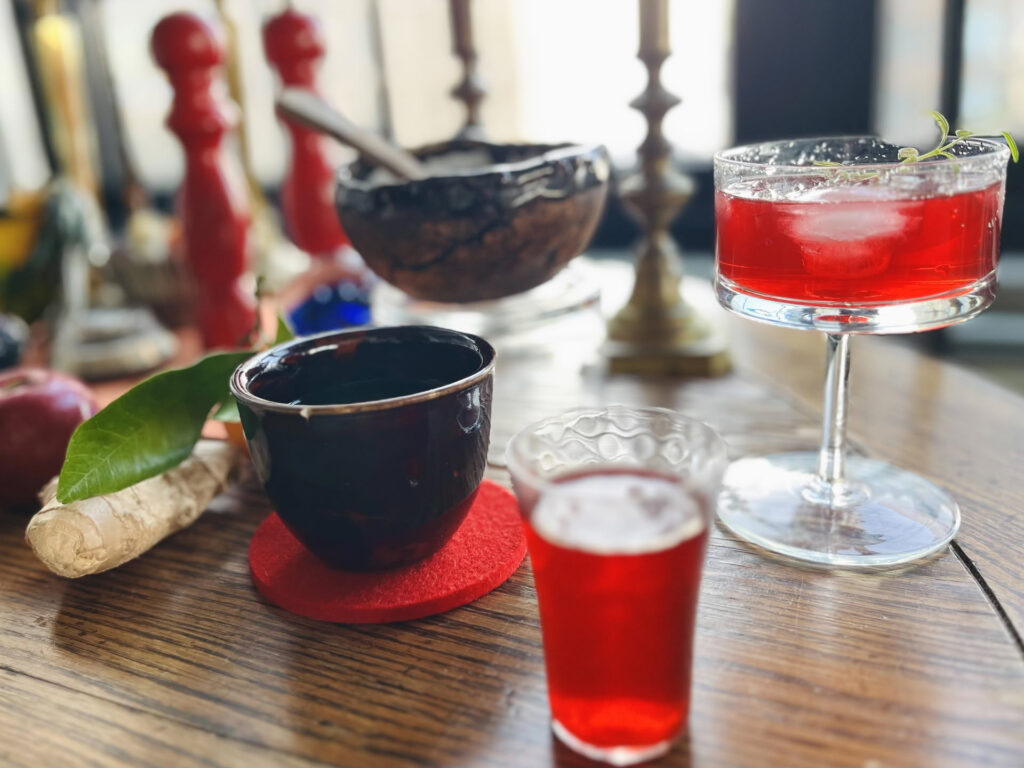
Rhus juice is a versatile element for any New Year’s spread that bridges both global and local cultures. Add sparkling water for bubbles; a splash of vodka for an evening party; or enjoy warm and honeyed as a nourishing, cranberry-colored tea. For a unique, almost savory party drink, I often mix it with chilled sparkling water, add a sprinkle of ginger, and top it off with a sprig of rosemary. Pairs well with citrus, fruits, and other herbs like rosemary — get creative, explore your own rhus mixes, cocktails, and experiments.
Willow Gatewood is an environmental scientist, interdisciplinary artist, storyteller, and biophile. Follow her on Instagram @willowg_music.
Sources:
Das, D. (2025, August). History of Sumac Ground: The Crimson Tang from Ancient Dye to a Global Flavor. Premium Spices. https://www.premiumspices.co.nz/blogs/news/history- of-sumac-ground
Sumacs. (n.d.). Missouri Department of Conservation. https://mdc.mo.gov/discover-nature/field- guide/sumacs

As Ireland transitions from the rich, smoky scent of peat-burning to a more sustainable future, its olfactory heritage is evolving. What will become the next iconic aromatic symbol of Ireland?
Click to watch the documentary trailer.
As Ireland transitions from the rich, smoky scent of peat-burning to a more sustainable future, its olfactory heritage is evolving. What will become the next iconic aromatic symbol of Ireland?
Plantings

Seeds of War
By Gayil Nalls


The Vampire Paradox
By Lewis H. Ziska
Creating Your Own Seed Bank
By WS/C
Learning the Language of Seed
By Liz Macklin
Seed Dreaming
By Willow Gatewood