

Eat More Plants: Recipes
Why and How to Grow Microgreens
By WS/C
Sign up for our monthly newsletter!
For this month’s Eat More Plants, the World Sensorium Conservancy invites everyone to discover a plant-forward path that feels personal, sustainable, and nourishing. There is no single right way—only choices that support your own well-being while lightening your footprint on the planet.
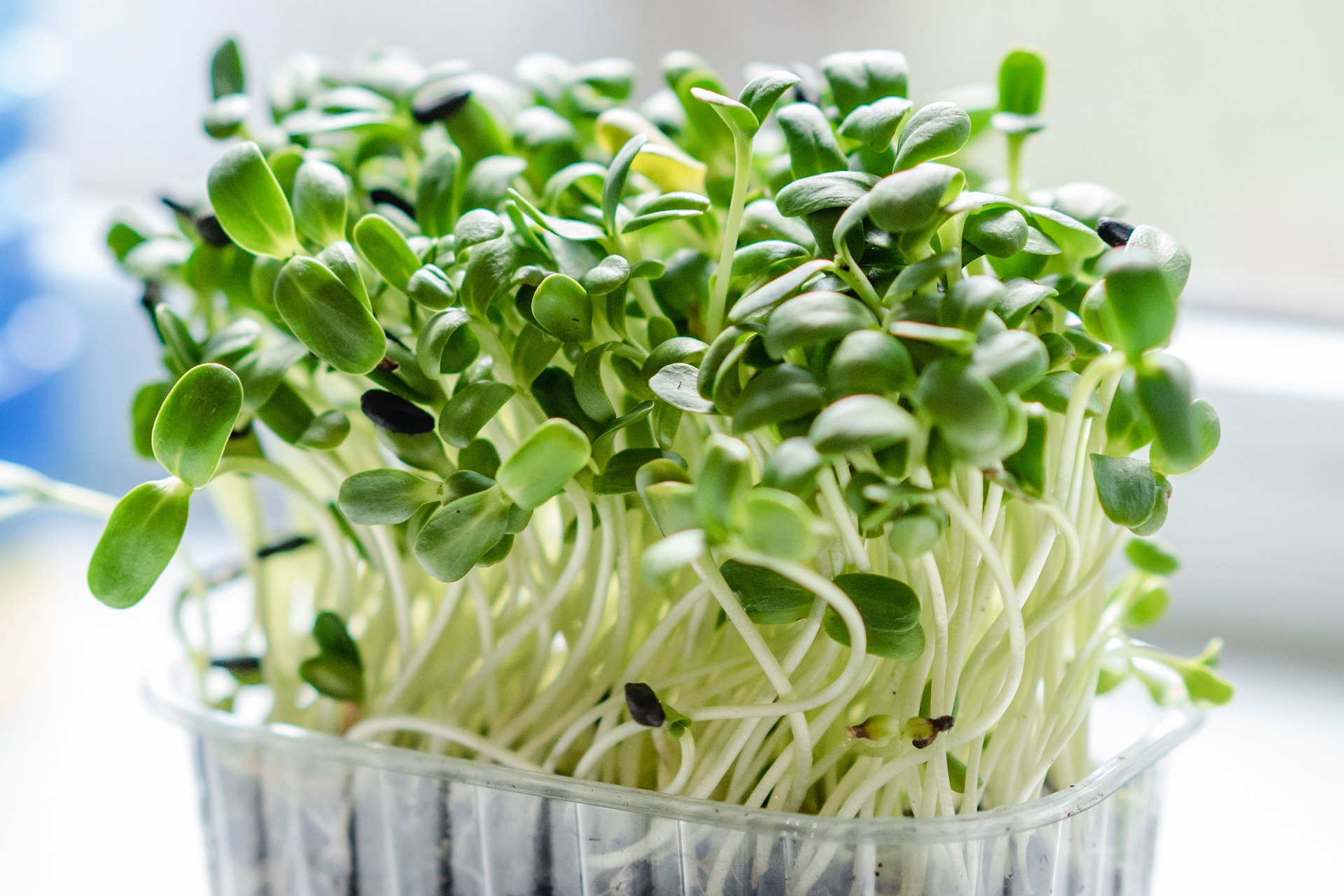
One of the simplest and most accessible places to begin is with microgreens. These nutrient-dense young plants can be grown year-round in the smallest of spaces—on a windowsill, a countertop, or under a modest grow light. Ready to harvest in just days, microgreens bring fresh flavor, texture, and concentrated nutrition to almost every meal, from soups and salads to eggs, grains, and sandwiches. Small in scale but powerful in impact, they offer a gentle, everyday way to eat more plants while cultivating a closer relationship with the food you grow.

Microgreens are harvested at a moment when plants are biochemically concentrated, making them surprisingly nutrient-dense. Studies have shown that many microgreens contain significantly higher levels of vitamins and antioxidants than their mature forms, including vitamins C, E, and K, as well as beta-carotene and polyphenols.
Broccoli microgreens are rich in sulforaphane precursors, compounds associated with cellular protection and detoxification pathways. Radish and mustard microgreens provide glucosinolates that support metabolic and immune health. Pea shoots contribute plant-based protein, iron, and folate. Sunflower greens offer vitamin E, zinc, and essential fatty acids.
Microgreens and the Senses
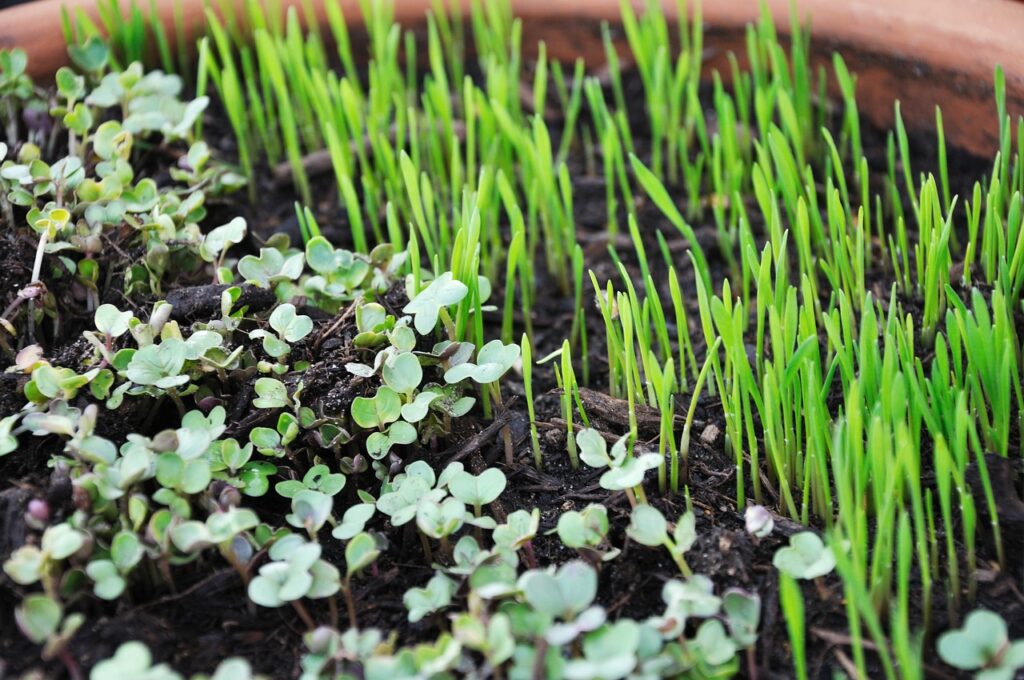
Microgreens awaken the senses in ways their mature counterparts often don’t. Their scale invites closeness: the fine hairs on a sunflower shoot, the snap of a pea tendril, the peppery bite of radish on the tongue. Because they are harvested young, their aromas are bright and immediate—fresh-cut grass, green almonds, mustard seed, wet soil after rain.
Taste them slowly. Notice how broccoli microgreens are mild yet grassy, how arugula greens tingle at the back of the throat, or how basil microgreens release perfume as soon as they are clipped. Adding microgreens just before serving preserves these volatile aromatic compounds, allowing scent to lead taste—an entry point into mindful, embodied eating.
Growing and harvesting them yourself deepens this sensory loop. You smell the soil, hear the scissors cut, feel the living plant in your hand. Food becomes less abstract and more relational: a daily reminder of growth, care, and seasonal rhythm—even in winter.
How to Grow Microgreens
What you’ll need
Seeds: broccoli, radish, arugula, pea shoots, sunflower, mustard, kale
Shallow container: a tray, takeout container, or anything 1–2 inches deep (with drainage holes if possible)
Growing medium: organic potting soil or coconut coir
Light: a bright windowsill or small grow light
Water: a spray bottle works best
Scissors: for harvesting
Step-by-step
- Fill the tray
Add about 1–1½ inches of moist (not soggy) soil or coir. Gently level it—no need to pack it down. - Sow the seeds densely
Scatter seeds evenly across the surface. Microgreens like company—this is one case where crowding is encouraged. - Lightly cover & mist
Sprinkle a thin layer of soil over the seeds (or gently press them in). Mist well so everything is evenly damp. - Cover & wait (2–4 days)
Cover the tray with another tray or a lid to keep moisture in. Keep it in a warm spot. Check daily and mist if dry. - Uncover & give light
Once seedlings push up, remove the cover and move them into bright light. Water gently from below or mist daily. - Harvest
In 7–14 days, when greens are 2–4 inches tall and have their first true leaves, snip them just above the soil line.
How to use them
Sprinkle microgreens on:
- eggs, toast, soups, salads
- grains, beans, pasta
- sandwiches, wraps, smoothies
They’re most nutrient-dense when fresh—eat right after harvesting if you can.
Tips for success
- Start small: one tray at a time builds confidence
- Rinse seeds before sowing to reduce mold
- If mold appears, improve airflow and avoid overwatering
- Replant every week for a steady supply
Microgreens area reminder that nourishing food doesn’t need acres of land—just a little attention and a sunny corner.

As Ireland transitions from the rich, smoky scent of peat-burning to a more sustainable future, its olfactory heritage is evolving. What will become the next iconic aromatic symbol of Ireland?
Click to watch the documentary trailer.
As Ireland transitions from the rich, smoky scent of peat-burning to a more sustainable future, its olfactory heritage is evolving. What will become the next iconic aromatic symbol of Ireland?
Plantings

Urban Nature: Building Resilience with Living Systems
By Gayil Nalls
The Crown Made of Leaves
By John Steele

Why the World Must Measure Well-Being, Not GDP
By Gayil Nalls

The Secret Lives of Tree Roots
By Kristen French

On Self-Incompatibility
By Daria Dorosh