

KEW’s Millennium Seed Bank: A Mission to Save Plant Life on Planet Earth
By Gayil Nalls
Sign up for our monthly newsletter!
Global Strategy for Plant Conservation 2011-2020, Convention on Biological Diversity
“Without plants, there is no life. The functioning of the planet, and our survival, depends on plants… Our vision is of a positive, sustainable future where human activities support the diversity of plant life, and where in turn the diversity of plants supports and improves our livelihoods and well-being.”
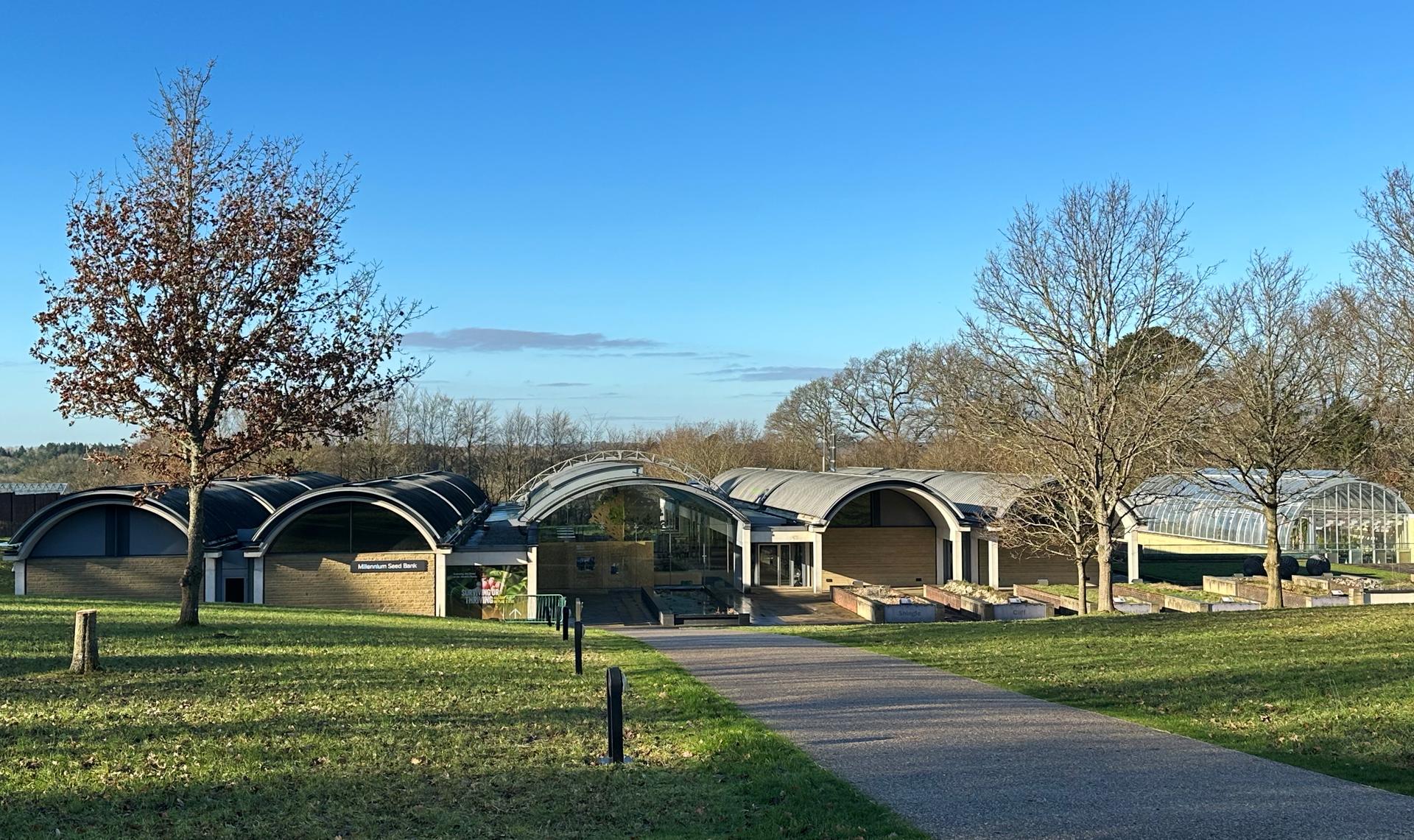
A January train journey in 2023, from London, followed by a gentle walk through the rolling hills of the Sussex countryside, leads to Wakehurst—home to one of the most ambitious conservation projects ever undertaken. Beneath the earth, inside the Wellcome Trust Millennium Building, lies the Millennium Seed Bank (MSB), a flagship initiative of the Royal Botanic Gardens, Kew. Opened in 2000 by HRH The Prince of Wales, now King Charles III, the MSB stands as the world’s largest and most comprehensive repository of wild plant seeds.
Here, more than 2.4 billion seeds, representing tens of thousands of species from nearly every region of the globe, are conserved ex situ, outside their natural habitats, in carefully controlled, sub-zero underground vaults. Collected through partnerships with over 95 countries, these seeds form a global insurance policy for plant life at a time of unprecedented ecological disruption. According to MSB scientists, two out of every five plant species stored are threatened with extinction, making this high-tech conservation effort not merely archival, but existential.
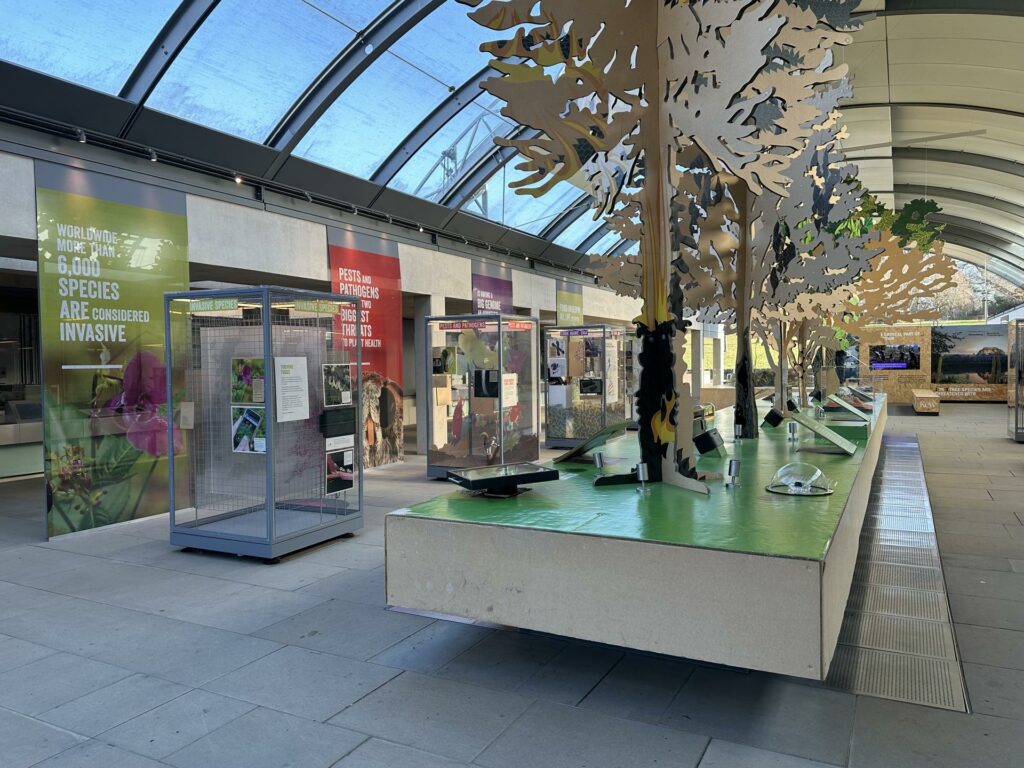
An installation within the MSB introduces visitors to the remarkable diversity of seeds housed here—an exhibition of form, function, and evolutionary ingenuity. Seeds range from the near-invisible dust-like particles of orchids, among the smallest in nature, to the immense double coconut (Lodoicea maldivica), or Coco de Mer, whose dramatic form defies conventional seed banking because it cannot survive drying.
Seeds are anything but uniform. Some germinate rapidly when conditions are favorable; others may lie dormant for decades or even centuries. Still others require rare or extreme triggers—such as fire, prolonged cold, or passage through an animal’s digestive system—to awaken. These varied strategies reflect millennia of adaptation, each seed carrying within it a precise ecological memory of how and when life should begin.
Beyond their importance as genetic time capsules, food, feed, fiber, fuel, and medicine, seeds are complete biological blueprints. Each healthy seed contains the full genetic information necessary to produce a new plant, encoding evolutionary solutions to drought, heat, disease, and poor soils. Protecting a plant’s fundamental right to reproduce means safeguarding its DNA, its past, present, and future.
Research at the MSB focuses on the fundamental mechanisms of seed biology: seed size, dispersal strategies, dormancy, shattering, yield, and germination. Understanding these traits is essential not only for conservation, but also for restoring degraded ecosystems and breeding crops resilient to climate change.
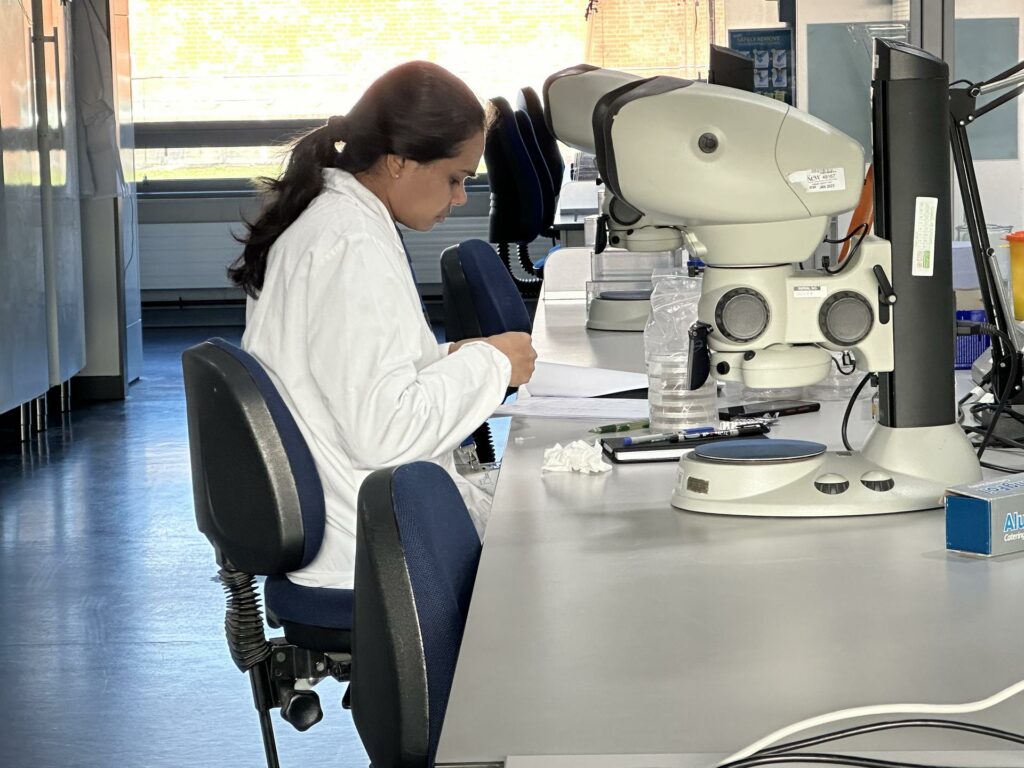
On display are striking images of seeds photographed under electron microscopes, produced through collaborations between artists and scientists. These images reveal intricate architectures—hooks, spines, wings, and sculptural surfaces—designed for dispersal by wind, water, animals, or gravity. A baobab fruit (Adansonia digitata) collected in Botswana in 2010 invites a deceptively simple question: does form follow function in seeds? The answer, visible at microscopic scale, is almost always yes.
The Millennium Seed Bank has been charged with an extraordinary mandate: to collect, conserve, and study the world’s wild plant seeds for long-term storage, potentially lasting thousands of years, according to international genebank standards.
Seeds contain messenger RNAs (mRNAs) required for germination, which gradually degrade as seeds age. By reducing temperature and moisture, MSB scientists dramatically slow the chemical reactions responsible for this degradation, extending seed longevity by orders of magnitude.
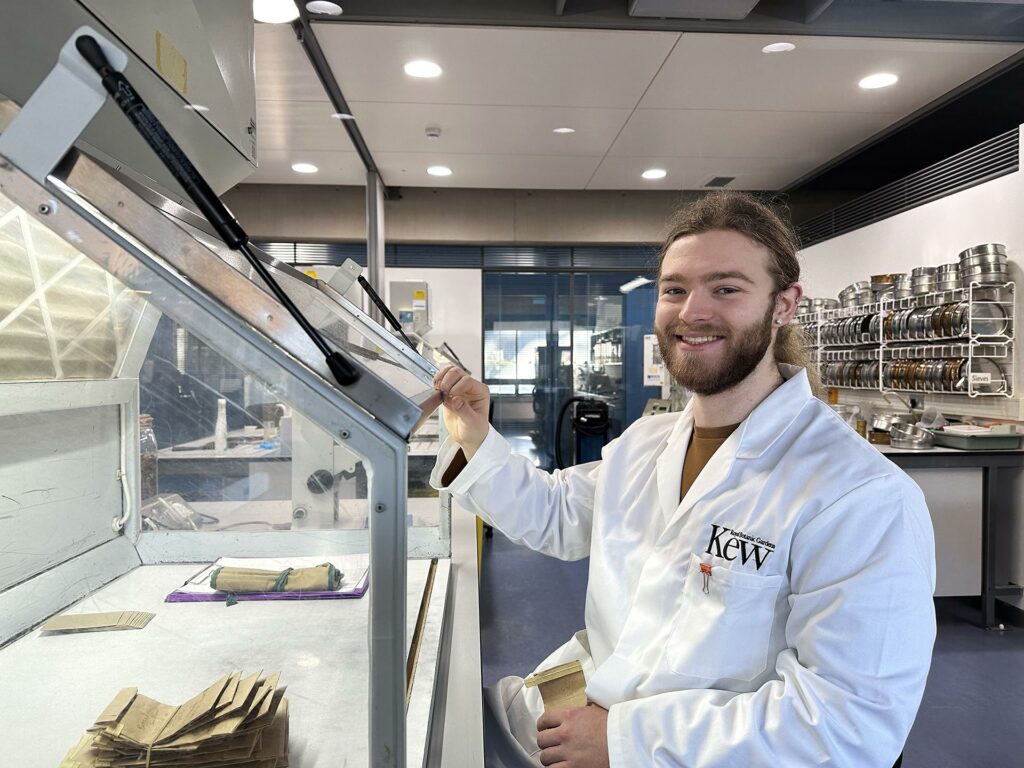
When seeds arrive at Wakehurst, their care begins immediately. Ideally, they have been kept cool and dry from the moment of collection, conditions critical to preserving viability. In a contained laboratory, collections are unpacked, catalogued in the Seed Bank Database, and cleaned of surrounding plant material and visible insects. Seeds are then X-rayed to ensure they are full, healthy, and free from internal infestation, allowing scientists to estimate how much of each collection is viable.
The seeds are further dried in air-locked rooms maintained at 15% relative humidity and 18°C, until their moisture content reaches approximately 6–7%. Seeds that tolerate this drying process are known as orthodox seeds and can be safely frozen. Others, known as recalcitrant seeds, cannot survive drying; removing even a portion of their moisture is fatal. Many tree species—including oaks and chestnuts—produce recalcitrant seeds and require alternative conservation strategies.
To address this challenge, Kew also leads the Global Tree Seed Bank, dedicated to conserving rare, endangered trees and shrubs and developing best practices for their storage, propagation, and reforestation. With one in three tree species globally threatened with extinction, and forests representing the most powerful natural carbon capture system on Earth, this work is both urgent and irreplaceable. For some species, advanced techniques such as cryopreservation—freezing living cells and tissues at ultra-low temperatures—offer hope where conventional seed banking cannot.
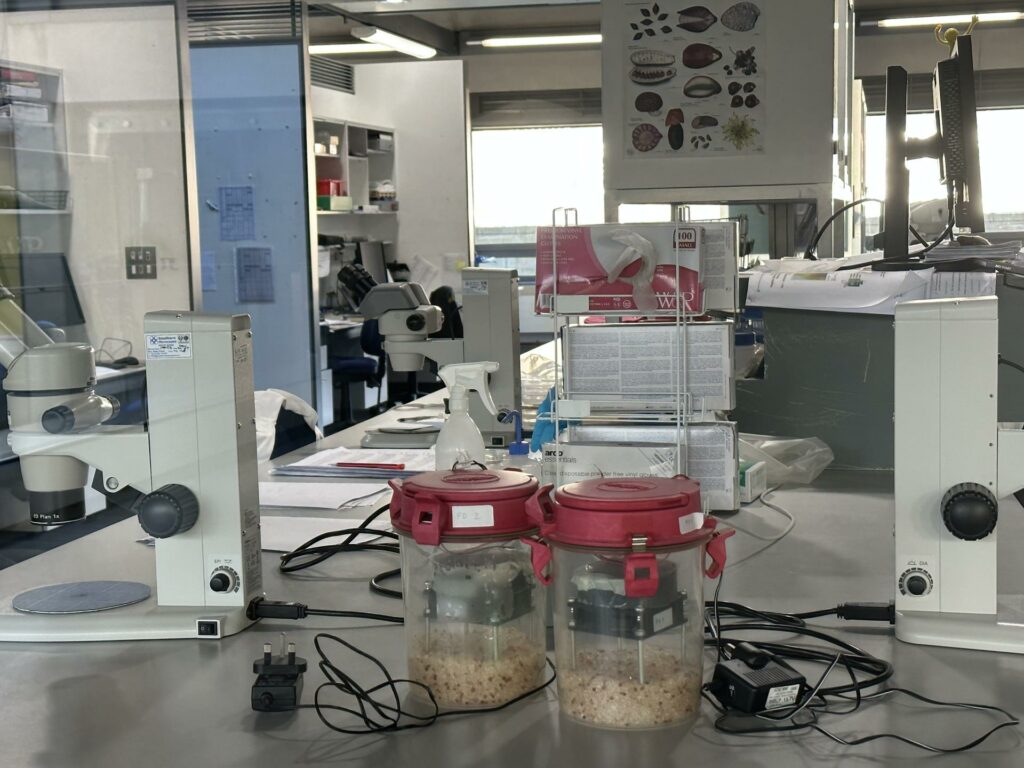
Not all collections arrive ready for processing. Sometimes fruits are harvested prematurely, and their seeds are too immature to survive storage. These are transferred to warm, humid ripening rooms until the embryos fully mature. Only then are seeds removed, cleaned, and prepared for long-term conservation, because only a mature embryo can become a plant.
Once fully processed, seeds are sealed in labeled jars or bottles bearing their unique accession numbers and transferred to one of four underground vaults, each maintained at –20°C. At this temperature, MSB estimates that seed lifespan is extended by a factor of over 1,400 times. Periodically, seeds are retrieved for viability testing, scientific research, ecological restoration, or repatriation to their countries of origin to support habitat recovery.
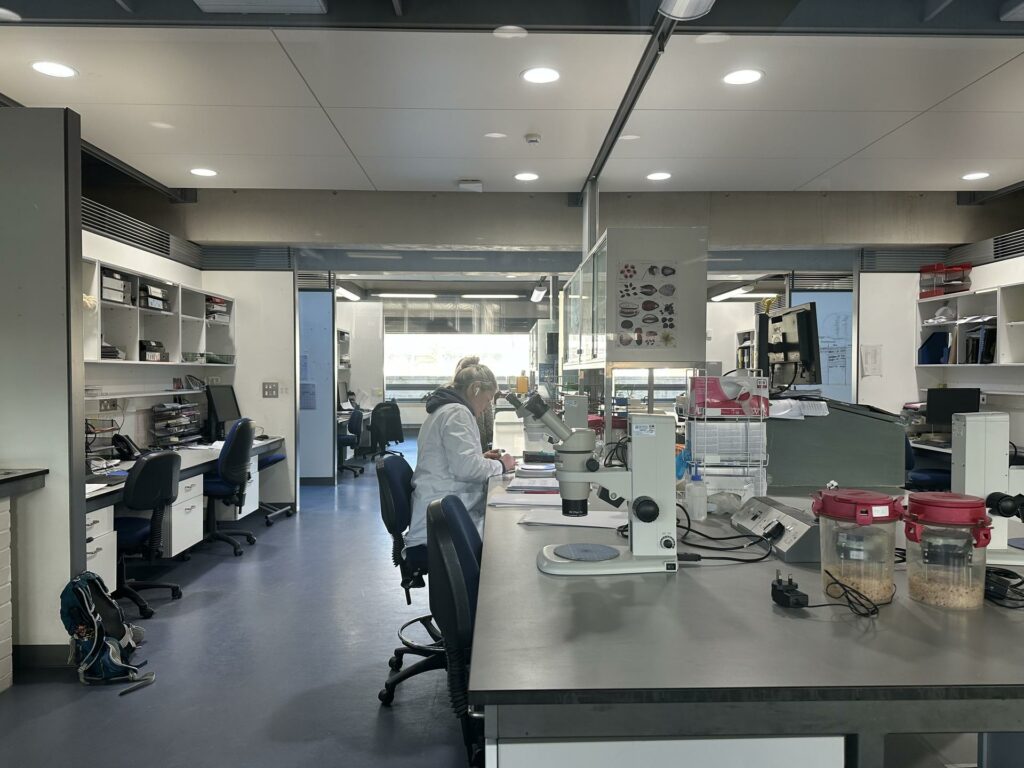
Kew is among the world’s leading plant research institutions, working to answer questions both fundamental and urgent about plant life. As biodiversity loss accelerates globally, conserving viable, genetically diverse seeds is no longer optional, it is essential to the survival of life on Earth.
Today, Kew estimates that more than 20,000 plant species are used medicinally, yet many remain inadequately protected. Building resilience for nature’s pharmacopoeia requires both large-scale, high-tech facilities like the Millennium Seed Bank and smaller, localized, low-tech seed banks embedded in communities. Aromatic, medicinal, food, and culturally significant plants all deserve robust safety nets.
Recognizing how deeply human survival is entwined with plant diversity can help us rethink our lifestyles, support native seed production, and protect our shared botanical heritage. Seed banking is one of humanity’s most hopeful responses to ecological crisis—and one in which everyone has a role to play.
Gayil Nalls, Ph.D. is an interdisciplinary artist, sensory studies scholar, and the creator of World Sensorium. She is the founder of the World Sensorium / Conservancy and the journal Plantings.
This article is an expanded and updated version of a piece originally published in Plantings, Issue 20: February 2023.
Plantings

Seeds of War
By Gayil Nalls
The Vampire Paradox
By Lewis H. Ziska
Creating Your Own Seed Bank
By WS/C
Learning the Language of Seed
By Liz Macklin
Seed Dreaming
By Willow Gatewood
Eat More Plants Recipes:
Rhus Juice: an Indigenous-inspired drink from the plant that connects continents
By Willow Gatewood
As Ireland transitions from the rich, smoky scent of peat-burning to a more sustainable future, its olfactory heritage is evolving. What will become the next iconic aromatic symbol of Ireland?
Click to watch the documentary trailer.
As Ireland transitions from the rich, smoky scent of peat-burning to a more sustainable future, its olfactory heritage is evolving. What will become the next iconic aromatic symbol of Ireland?