

Learning the Language of Seed
By Liz Macklin
Sign up for our monthly newsletter!
Like many people, I’m eager to grow more native plants in my community – on my doorstep, at our local nature center, and at parks and playgrounds where we volunteer. I’ve had a few successes, but what about the failures? Those beautiful cardinal flowers – scarlet and so attractive to hummingbirds – why don’t they come back, even if I’ve saved seeds and planted them in just the right spot? I decided to search for books and websites with helpful information about collecting and sprouting seeds. This is what I’ve found.
Seeds. What are they?
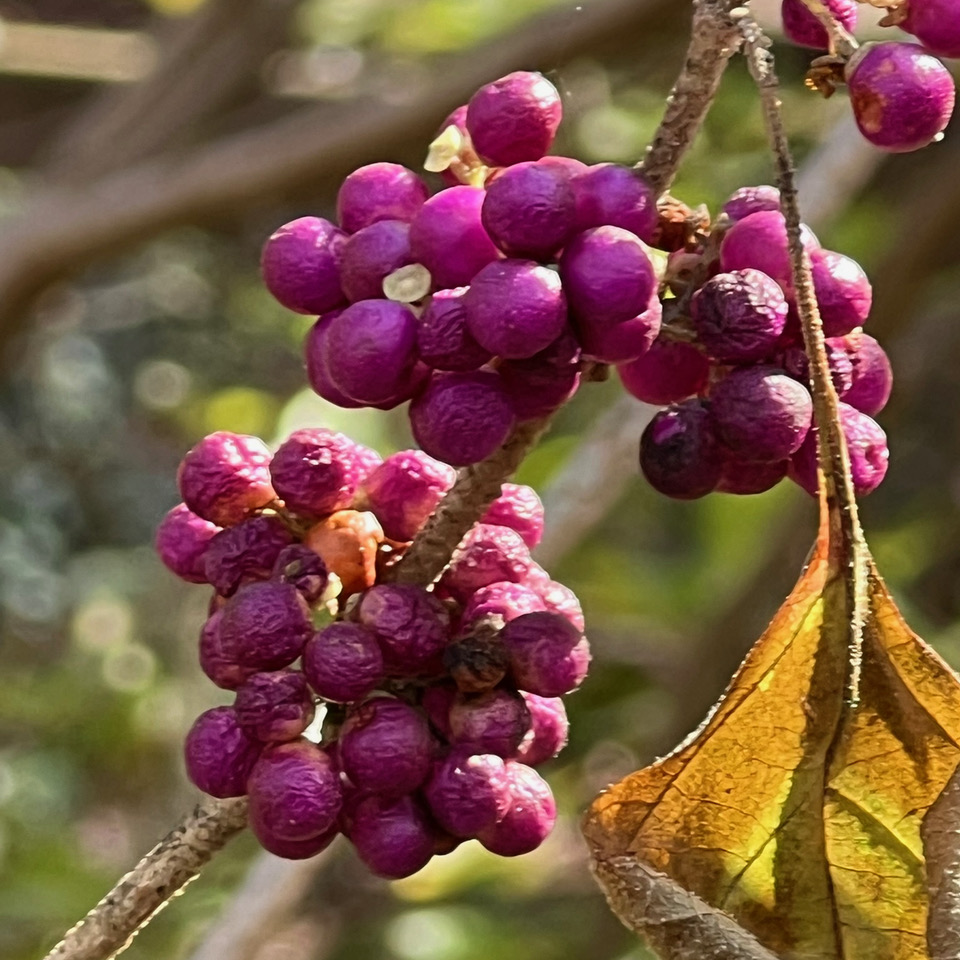
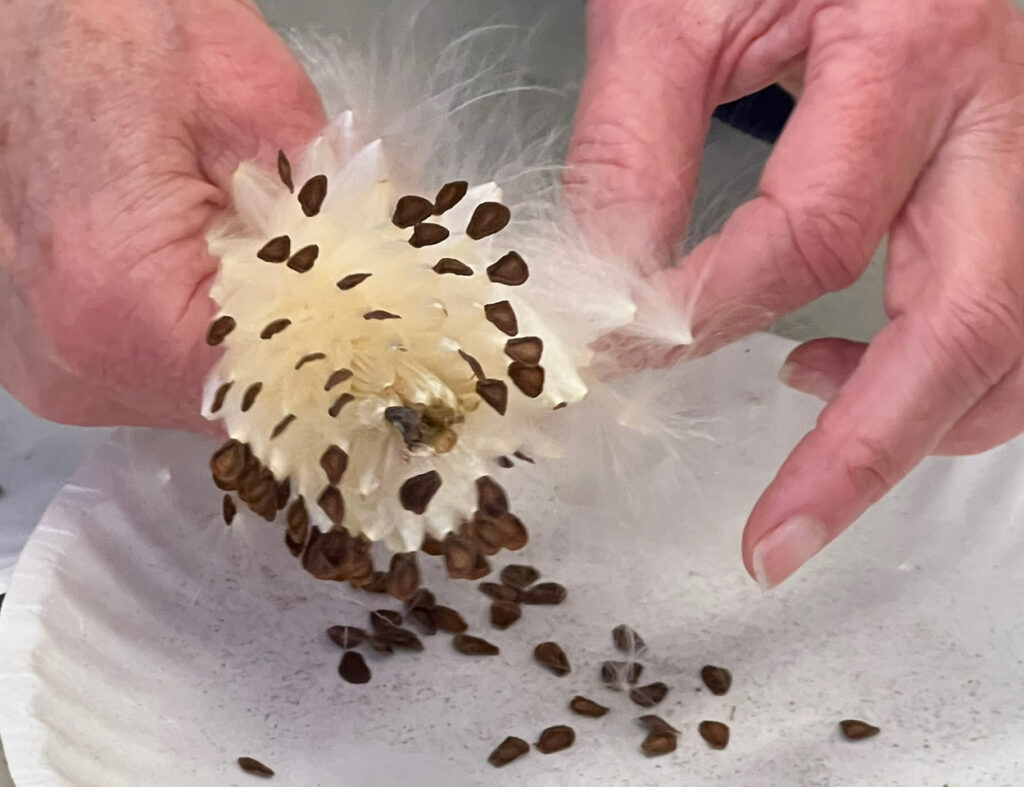
In the world of plants, seeds come in many shapes, colors and sizes. They can spread via gravity, wind, water, animals or machines. In the autumn near my home, American beautyberry bushes burst with plump fruit containing seeds. The birds fly in to eat, digest and eventually expel the seeds in droppings to the ground. Only a few yards away, an oak tree bears large, round acorns. When they begin to fall, squirrels and blue jays snatch and hide hundreds for winter meals. Close by, milkweed pods open to release wisps of fluff carrying seeds, oval and almost weightless, borne by the breeze to new sites. Yet in all cases, the seeds have one thing in common. They hold the ingredients for new life.
I began by searching with the terms “saving seeds,” which took me to the blog of the New York Botanical Garden. There I learned that seeds contain
- a coat (also called a testa), the outside covering protecting the seed
- an endosperm, a source of food, often starch, oil and protein, required for early growth by an embryo
- the embryo, essentially a tiny plant that includes a root (called a radicle) that will grow down into the soil and a shoot (called a plumule) that will grow toward the sun as a stem. In “Seed and Seedling Biology,” the Extension at Penn State University explains that a cotyledon, or often two cotyledons, are leaves wrapping the endosperm. They supply temporary food for the embryo until the stem pushes above ground. Cotyledons are frequently, but not always, the first leaves to open when the seed sprouts.
How do you tell if seeds are ripe and how do you collect them?
In the book Wildflowers, William Cullina describes telltale signs to look for. When ready to grow, seeds will contain adequate food reserves, ensuring that an embryo will survive dormancy and develop into a new plant. That development process is called germination. Seeds need to be free of infection – no mold, please – as well as ready for harvest.
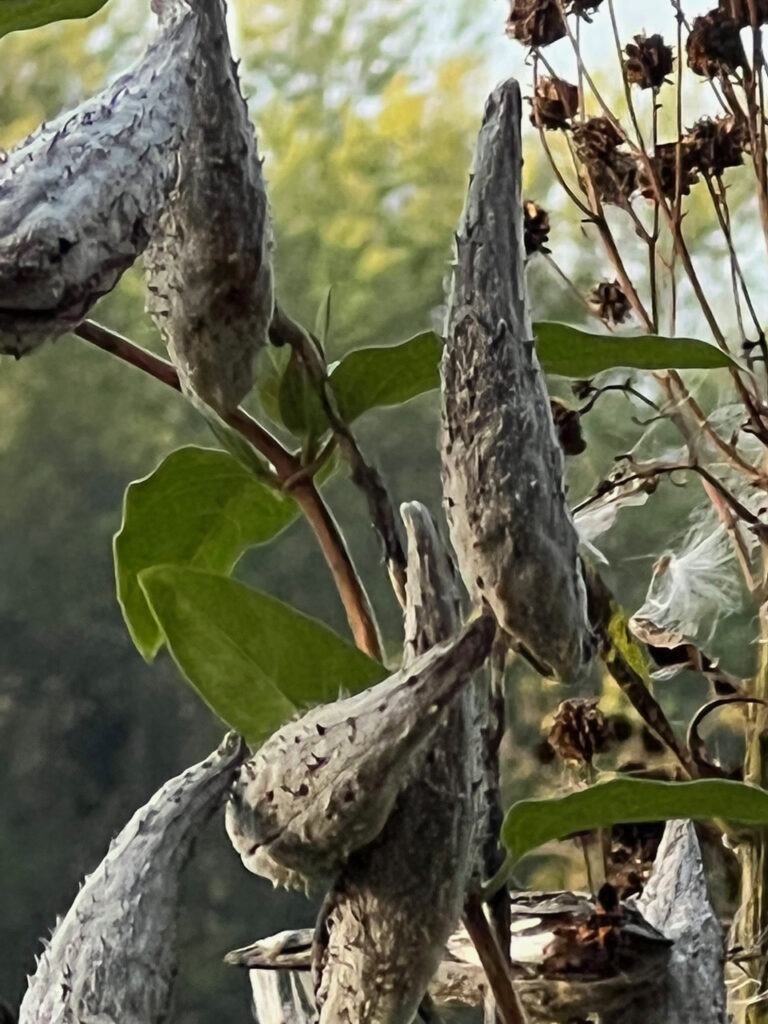
Cullina says that green seed pods often change to black, brown or gold. Pods can dry or split and might hold mature seeds. Fleshy fruits, such as cherries or blueberries, will ripen with seeds, as well. Where I live, blueberries turn sweet and blue, and I’m assuming that means the seeds are viable. (The birds often beat me to them.)
He recommends drying seeds in the open air to reduce chances of infection. Drying also slows metabolism, as does refrigeration. He uses sieves made from window screens or kitchen strainers to separate seeds from chaff. If removing debris is difficult, he allows that skipping this step will “probably do no harm.”
In many cases, fruit with seeds serves as food for animals. Their digestive systems break down the pulp, and seeds flush away in scat to eventually sprout in a new location. It’s possible to approximate this process by mashing and rinsing seeds, and then perhaps follow with fermentation.
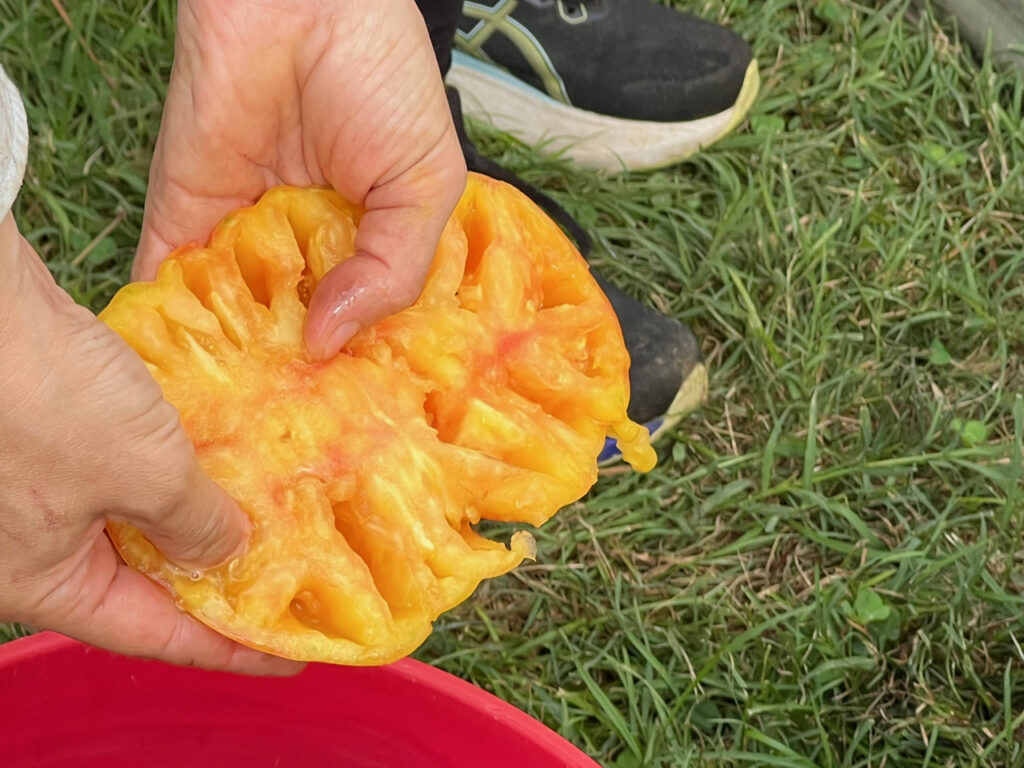
Last summer, at the Biocultural Conservation Farm at Rokeby Farm in Oak Spring Garden, I helped plant, prune, and harvest rows of luscious tomatoes, which are highly edible but not native to Virginia. Fermentation was part of the process to preserve these seeds. Anyone considering seed fermentation should seek advice from local experts. Helpful guidelines for edible plants are also available from The Southern Exposure Seed Exchange or the New York Botanical Garden. Adaptation of their methods might work for you.
Conscientious seed collectors follow several important rules, first explained to me on a field trip to Earth Sangha Native Plant Nursery during my training as a Virginia Master Naturalist.
- Search for seeds in places where you have permission to collect.
- In the wild, take only a portion of the seeds available. Leave enough for new plants to sprout and grow in seasons that follow.
- Avoid seeds treated with pesticides or growth inhibitors.
- Share or exchange any extra seeds with your friends, neighbors and local nature centers, along with your knowledge of the plants you grow.
What prompts seeds to germinate and grow?
Most seeds with healthy embryos live initially in a dormant state. If environmental conditions provide adequate water, an optimum temperature and sufficient oxygen in the soil (or other planting medium), the embryo will grow into a young plant. In “The Great Plant Escape,” the University of Illinois Extension describes this process.
- When a seed absorbs water, the exterior coat softens, allowing oxygen from the soil to combine with nutrients in the endosperm.
- Cells in the embryo’s root and stem begin to grow, putting pressure on the seed coat, and it breaks open.
- The root emerges and absorbs additional oxygen and nutrients from the soil, fueling chemical reactions that produce more cells.
- With further growth, the stem pushes through the seed coat and works its way above ground.
- In several blog entries, the New York Botanical Garden notes that if temperature, moisture, air and light conditions remain advantageous, development continues. The stem sprouts new leaves and photosynthesis begins. The plant uses sunlight, water, and carbon dioxide to produce glucose for energy, while releasing oxygen. Photosynthesis makes growth and life possible.
Water
Moisture enables germination and is required throughout the lifecycle of plants. As growth continues, consistent and sufficient watering will provide cells with important nutrients. In “Plant Propagation from Seed,” Virginia Cooperative Extension explains that too much water can drown a plant and prevent necessary chemical reactions within cells. Too little water will cause cells to dry out and cease to grow.
Some seeds have very hard coats that hinder germination. They require scarification. This process breaks down the coat to allow water to penetrate.
- In the book Plant Propagation: The Fully Illustrated Plant-by-Plant Manual of Practical Techniques (American Horticultural Society), I learned that seed coats can be softened by soaking in hot but not boiling water. The optimum length of time depends on the size of the seed (48 hours maximum). Sowing immediately after will prevent the seeds from drying out and might ensure viability.
- Also, nicking, cracking or scratching the outer surface with sandpaper can penetrate or weaken the seed coat to let water in.
- The Virginia Cooperative Extension suggests that in some cases, seeds stored in warm, damp containers for several months will be subject to decay that aids germination. I’d also recommend monitoring for the negative effects of mold.
Additional advice from the American Horticultural Society relates to hawthorns (Crataegus spp.) and linden (Tilia spp.) They produce chemicals that hinder germination when ripe. Seeds should be harvested before they mature, then cleaned and stored.
Light
Many seeds require light to germinate, while others grow more readily in the dark. Still others have no requirements either way. Virginia Cooperative Extension cautions that small seeds often contain limited food resources. When sown too deeply, they risk running out of nutrients before emerging from the ground.
In Wildflowers, Cullina suggests several methods for propagating tiny seeds. This year I plan to follow his recommendation for cardinal flower (Lobelia cardinalis). I’ll sow seeds directly outdoors on tamped and dampened soil mix, then cover them with 1/8 inch of coarse quartz sand. According to Cullina, the sand reflects light and offers some protection from wind and weather. It’s also possible to use “builder’s sand”, and he suggests screening it followed by washing to remove dust.
Virginia Cooperative Extension offers the option of vermiculite instead of sand. Scatter it gently in a thin layer to allow exposure to filtered light while preserving uniform moisture.
Small seeds can also be planted in moistened soil in a flat container with a clear cover. In that case, Cullina says that some plants may require exposure to cold temperatures before being set under light. (See notes under temperature.)
Many states’ extension services or public gardens are affiliated with universities and offer advice on preparing seedbeds, including recipes for growing mediums. It’s wise to consult organizations in your region. Keep in mind that native plants have evolved over thousands of years in local soil and weather conditions.
Oxygen
Seeds, even when dormant, require oxygen (O2) to break down glucose (C6H12O6) to produce energy for chemical reactions that build and repair cells. Virginia Cooperative Extension is one among many groups advising that loose, well-aerated soils aid germination.
Temperature
Each plant has evolved a unique range of temperatures that favor germination. Penn State Extension explains that air and soil temperatures influence the number of seeds that will germinate, as well as the speed of germination. Ideal temperatures facilitate faster, more uniform sprouting. Any values below the minimum or above the maximum might damage seeds or lead to dormancy.
Cullina describes how plants that evolved in climates with cold winters require a period of cold before germinating, a process called stratification. This includes many wildflowers in the northern United States and Canada. Many must also be “sown and well moistened before being exposed to cold.”
Why is there a need for moisture plus cold? In Wildflowers Cullina suggests that damp cold might trigger enzymes or other chemicals to accelerate growth. He says that for some species, “Dry cold storage will not usually substitute for moist stratification.” He points to autumn as the best time for sowing these seeds directly outdoors, either in garden beds or in pots stored in a cold frame or a crawl space protected from freezing. Temperature variations in nature often yield better results than placing trays in a refrigerator.
For gardeners in warm climates where temperatures remain above 50 degrees, and for individuals (like me) who have limited refrigerator space, Cullina recommends mixing seeds in damp vermiculite in a sealed plastic bag. The bag and seeds can then go into a cooler. After 90 days, the seeds can be transplanted into a container or a warmer outdoor setting.
Wildflowers include a carefully organized database of plants and germination conditions for seeds of each species. Cullina advises that milkweed seeds (Asclepias spp.) often require a year of dry storage for germination. A gardener will generally see equivalent results with 60 days with moist, cold stratification.
After over a month of listening to podcasts, looking at websites and reading a variety of books, I’ve discovered several ideas that could help me. I have more work to do, but to anyone who asks, I’d say look for advice from the people at your state’s extension service, your local nature center, and your local native plant nurseries. They know what’s growing in your region and will often talk about what seems to work. Try keeping a log of what you plant, where it’s located, how it’s doing, and why you think it’s thriving – or not. What you observe now might help you next year. In the meantime – enjoy!
Liz Macklin is a certified Master Naturalist in Virginia, who enthusiastically collects, saves, sows, and shares seeds – sometimes at a local nature center – to encourage her neighbors to grow native plants
If you’d like to learn more, here is a list of books, internet resources and podcasts. They offer a variety of interesting facts and strategies.
BOOKS
Cullina, William, Wildflowers: A Guide to Growing and Propagating Native Flowers of North America, The New England Wild Flower Society, Houghton Mifflin Company, New York, NY, 2000.
Jewell, Jennifer, What We Sow: On the Personal, Ecological and Cultural Significance of Seeds, Timber Press, Inc., Hachette Book Group, Inc., New York, NY. 2023.
Toogood, Alan, editor-in-chief, American Horticultural Society, Plant Propagation: The Fully Illustrated Plant-by-Plant Manual of Practical Techniques, Dorling Kindersley, London, 1999.
Tallamy, Douglas, The Nature of Oaks, Timber Press, Inc., Portland, OR, 2021.
Tallamy, Douglas, How Can I Help? Saving Nature With Your Yard, Timber Press, Inc., Hachette Book Group, Inc., New York, NY, 2025.
INTERNET RESOURCES
Arlington Regional Master Naturalists, www.armn.org
“Banking Seeds: Saving the Plant Seeds of New England’s Rare Plants,” Native Plant Trust, https://nativeplanttrust.org/conservation/seedbank/
Katz, Sara, “Seed Saving: Simple Steps,” Plant Talk: Inside the New York Botanical Garden, www.nybg.org
Kelly, Lawrence M, Ph.D., Susan E. Lynch and Cecilia Zumajo, “What Is a Seed?” The New York Botanical Garden, www.nybg.org
“Our DC-Area Restoration Work,” Earth Sangha, www.earthsangha.org, 2025.
“Parts of a Seed,” Supplementary material from Minnesota Project Learning Tree https://files.dnr.state.mn.us.us/education_safety/education//plt/activity_sheets//seed-parts-of-seed.pdf
Penn State Extension, “Seed and Seedling Biology,” https://extension.psu.edu/seed-and-seedling-biology
Southern Exposure Seed Exchange, “Saving Seeds for Home Use,” https://www.southernexposure.com/growing-guides/saving-seeds-home-use.pdf
University of Illinois Extension, “Is it Dust, Dirt, Dandruff or a Seed?,” The Great Plant Escape, https://web.extension.illinois.edu/gpe/gpe.html
Uyterhoeven, Sonia, “Cleaning Tomato Seeds,” Plant Talk: Inside The New York Botanical Garden, www.nybg.org
“What is Photosynthesis?” Stemvisions Blog, Smithsonian Science Education Center, www.ssec.si.edu
PODCASTS
“From Seed to Sovereignty,” Conversations with Ira Wallace and Melissa De Sa, The Oak Spring Podcast, Oak Spring Garden Foundation, July 8, 2023.
“Anna Fialkoff of the Wild Seed Project,” The Native Plant Podcast, July 8, 2023.
Plantings
Issue 55 – January 2026
Also in this issue:

Seeds of War
By Gayil Nalls

KEW’s Millennium Seed Bank: A Mission to Save Plant Life on Planet Earth
By Gayil Nalls
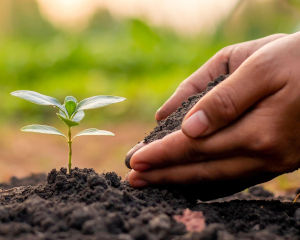
The Vampire Paradox
By Lewis H. Ziska
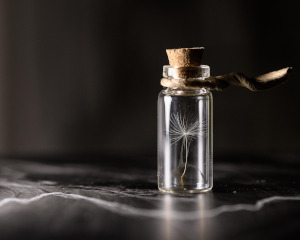
Creating Your Own Seed Bank
By WS/C
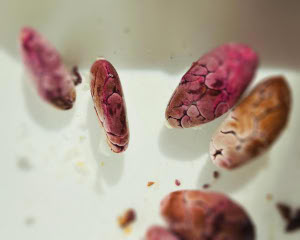
Seed Dreaming
By Willow Gatewood
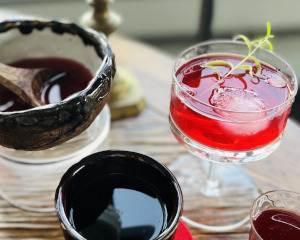
Eat More Plants Recipes:
Rhus Juice: an Indigenous-inspired drink from the plant that connects continents
By Willow Gatewood

As Ireland transitions from the rich, smoky scent of peat-burning to a more sustainable future, its olfactory heritage is evolving. What will become the next iconic aromatic symbol of Ireland?
Click to watch the documentary trailer.
As Ireland transitions from the rich, smoky scent of peat-burning to a more sustainable future, its olfactory heritage is evolving. What will become the next iconic aromatic symbol of Ireland?