


Ecological Grief: The Work of Mourning Landscapes and Lost Species
By Margherita Gandolfi
Sign up for our monthly newsletter!
The other day, I drove through the neighborhood where I grew up. The streets still curved the same way. My high school stood on the left. For a moment, my body relaxed, almost hugged by the certainty that just beyond the bend, there would be the linden trees lining the road. I lowered the window, ready to breathe them in. As soon as I turned the corner, I slammed the brakes—so abruptly that the car behind me honked in protest.
The trees were gone.
The air felt thinner without their perfume. I looked around, disoriented, searching for something familiar. The ice cream shop where we used to queue in every season had become a restaurant with mirrored windows reflecting a version of the street I did not recognize. Next to it, where the old haberdashery once stood, harsh neon lights announced: Phone cases, €20. The glare almost hurt. I was afraid to look toward the park. The tall, old, wise oak—the one whose bark pressed cool against my back in summer, whose leaves crackled dry and tannic in autumn—had disappeared. In its place stood a tram stop. I could almost smell the crushed leaves underfoot, feel the shade gathering around us, hear the murmur of teenage secrets carried by warm air. My chest tightened. Something inside me shifted. Was this nostalgia? Melancholy? Or was it something closer to grief?
What I felt was not only longing for youth. It was sorrow for a place that no longer exists in the form that shaped my senses, my rhythms, my belonging. And this feeling and experience is no longer rare among humans. Across cities and countryside alike, landscapes shift faster than memory can adapt—forest edges retreat. Fields become asphalt. Shorelines narrow. Seasons blur. What many of us feel in our bodies—a heaviness in the chest, a dull ache behind the eyes, a subtle vertigo when familiar nature is altered—is increasingly recognized as ecological grief. Psychologists define ecological grief as a form of mourning linked to actual or anticipated ecological loss. Comtesse et al. (2021) describe it as a “phenomenon of yearning that refers to actual and past physical ecological loss or to future situations that trigger the actual/past loss, including all ecological losses such as home environments, ways of life, landscapes, species or ecosystems.”
Naming a feeling often marks the first step toward acknowledging its legitimacy, and when we name ecological grief, we permit ourselves to recognize that our sorrow for land, atmosphere, and species is real. Because ecological loss is not abstract. It is sensory. It is the absence of the scent that rises from soil after summer rain when that soil is sealed beneath concrete. It is the fading sweetness of flowering hedgerows replaced by dust. It is the disappearance of wild jasmine at dusk, of orange blossom drifting through open windows, of pine resin warming under the sun, of salt and algae carried inland by coastal wind. Smell is neurologically intertwined with memory and emotion. When ecosystems change, their chemical signatures change. The air itself alters. The world quite literally smells different. Ecological grief is therefore also olfactory: the mourning of atmospheres that once oriented us, comforted us, and told our nervous systems that we were home.
This grief intensifies when it touches species and foods woven into daily rituals. Coffea arabica, which accounts for roughly 60% of global coffee production, may lose up to half of its suitable growing area by 2050 due to climate change (Davis et al., 2019). Theobroma cacao faces similar threats from rising temperatures and shifting rainfall. The Cavendish banana—nearly half of global banana production—is being devastated by Tropical Race 4, a soil-borne fungus spreading across continents. These losses reach into kitchens and morning routines. They alter taste, aroma, and texture. When plants vanish, cultural practices shift. Entire species are disappearing. The Chinese paddlefish, one of the largest freshwater fish in the world, was declared extinct in 2022. The Javan rhinoceros survives in a fragile population confined to a single national park. The northern white rhinoceros is functionally extinct. To lose a species is not only to lose biological complexity. It is to lose a sound in a river, a shadow moving through tall grass, a musk carried on humid air. It is to lose a relationship we may never have consciously named but nonetheless inhabited.
Research in ecological psychology suggests that humans form deep attachments to specific places—forests walked in childhood, gardens tended, lakes revisited each summer (Albrecht, 2005; Comtesse et al., 2021). When these places are damaged or disappear, grief can manifest as anxiety, numbness, irritability, or a persistent ache that feels misplaced. What is often missing is social permission. Environmental grief remains quiet and largely invisible. We are expected to adapt quickly, to call it development, progress, or inevitability. Yet our bodies register loss. Mourning landscapes asks us to slow down and witness what is still alive. Across cultures, grief becomes bearable through ritual: walking familiar paths, tending soil, planting trees, telling stories, learning names, cooking traditional foods, singing songs tied to seasons. These acts do not reverse loss, but they transform isolation into a relationship. To mourn the living world is to affirm that it mattered—and still matters. Ecological grief is evidence of attachment, of interdependence, of having been shaped by land and species in ways that endure. What we allow ourselves to grieve, we are more likely to protect. And what we protect, we may yet help endure.
Margherita Gandolfi is a licensed psychologist based in Milan who supports others and the natural world through empathy, dialogue, and psychological care.
Sources
Albrecht, G., Sartore, G. M., Connor, L., Higginbotham, N., Freeman, S., Kelly, B., Stain, H., Tonna, A., & Pollard, G. (2007). Solastalgia: the distress caused by environmental change. Australasian psychiatry: bulletin of Royal Australian and New Zealand College of Psychiatrists, 15 Suppl 1, S95–S98. https://doi.org/10.1080/10398560701701288
Comtesse, H., Ertl, V., Hengst, S. M. C., Smid, G. E., & Boelen, P. A. (2021). Ecological grief as a response to environmental change: A mental health risk or functional response? International Journal of Environmental Research and Public Health, 18(2), 488. https://doi.org/10.3390/ijerph18020734
Davis, A. P., Chadburn, H., Moat, J., O’Sullivan, R., Hargreaves, S., & Lughadha, E. N. (2019). High extinction risk for wild coffee species and implications for coffee sector sustainability. Science Advances, 5(1), eaav3473. https://doi.org/10.1126/sciadv.aav3473
Food and Agriculture Organization of the United Nations. (2019). Tropical Race 4 (TR4): A threat to global banana production. https://www.fao.org/news/story/en/item/1180463/icode/
International Union for Conservation of Nature. (2020). Rhinoceros sondaicus. The IUCN Red List of Threatened Species 2020: e.T19495A8925966. https://www.iucnredlist.org/species/19495/8925966
International Union for Conservation of Nature. (2022). Phocoena sinus. The IUCN Red List of Threatened Species 2022: e.T17028A50370296. https://www.iucnredlist.org/species/17028/50370296
Läderach, P., Martinez-Valle, A., Schroth, G., & Castro, N. (2013). Predicting the future climatic suitability for cocoa farming of the world’s leading producer countries, Ghana and Côte d’Ivoire. Climatic Change, 119, 841–854. https://doi.org/10.1007/s10584-013-0774-8
National Oceanic and Atmospheric Administration. (2016). Chocolate is under threat from climate change. https://research.noaa.gov/article/ArtMID/587/ArticleID/2371
Ol Pejeta Conservancy. (n.d.). Northern White Rhinos. Retrieved January 2026, from https://www.olpejetaconservancy.org
Ploetz, R. C. (2015). Management of Fusarium wilt of banana: A review with special reference to tropical race 4
ace 4. Crop Protection, 73, 7–15. https://doi.org/10.1016/j.cropro.2015.01.007
Zhang, H., Yao, C., Zhang, T., Du, H., & He, Y. (2020). Extinction of one of the world’s largest freshwater fishes: Lessons for conserving biodiversity of global river ecosystems. Science of The Total Environment, 710, 136242. https://doi.org/10.1016/j.scitotenv.2020.136242
Plantings
Issue 57 – March 2026
Also in this issue:
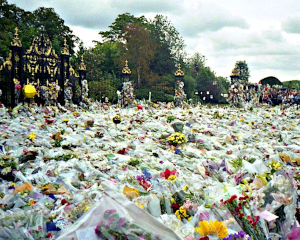
When Flowers Speak
By Gayil Nalls

Jane Colden: Naming the Living World
By John Steele

Why is Old Bay Maryland’s Culinary Anchor?
By Ian Sleat

Asking Trees to Solve a Roman Conspiracy
By Molly Glick
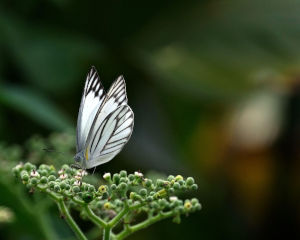
Attract Pollinators to Your Garden and Other Tips
By WS/C

Eat More Plants Recipes:
Hearty Green Pasta Sauce
By Ian Sleat
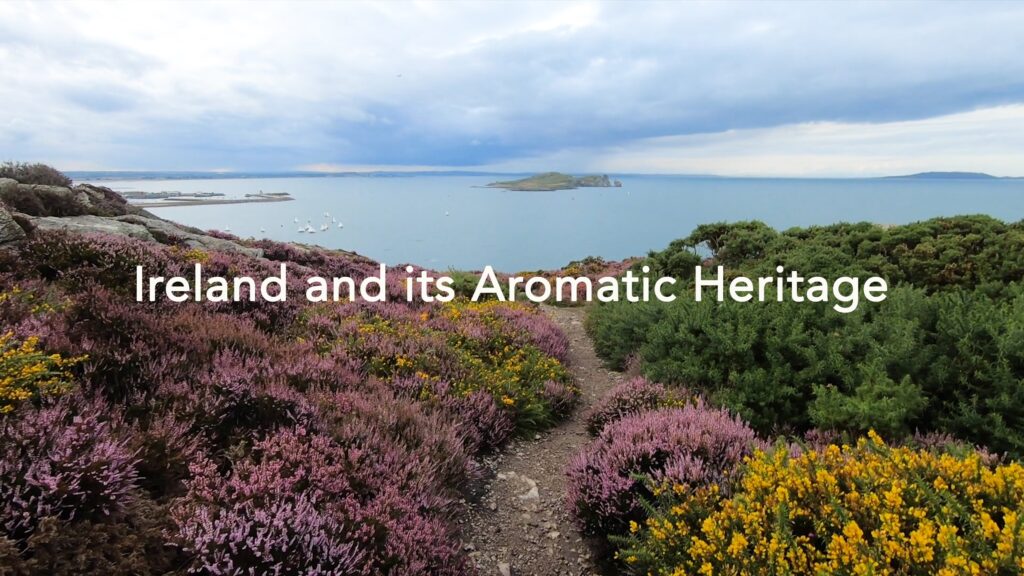
As Ireland transitions from the rich, smoky scent of peat-burning to a more sustainable future, its olfactory heritage is evolving. What will become the next iconic aromatic symbol of Ireland?
Click to watch the documentary trailer.
As Ireland transitions from the rich, smoky scent of peat-burning to a more sustainable future, its olfactory heritage is evolving. What will become the next iconic aromatic symbol of Ireland?