

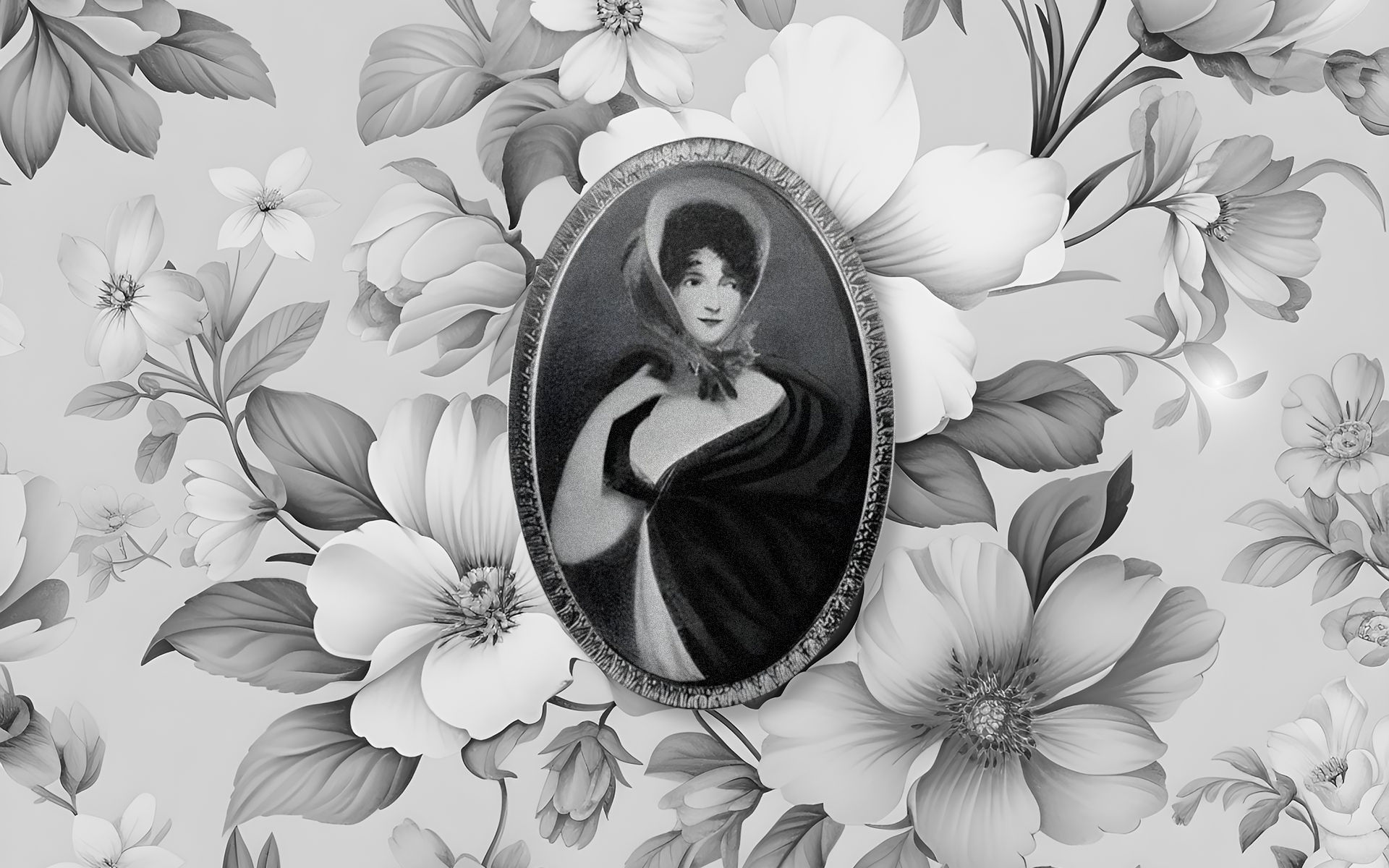
Jane Colden
Naming the Living World
By John Steele
Sign up for our monthly newsletter!
In the middle years of the eighteenth century, when the American colonies were still more geography than nation, knowledge itself seemed a kind of wilderness. Forests stretched unmeasured, rivers ran unnamed on European maps, and the plants of the New World, riotous in variety and unfamiliar in form, pressed upon the curiosity of natural philosophers who believed that understanding nature was a way of understanding humanity’s place in the cosmos. It was in this world, at once raw and awakening to order, that Jane Colden quietly began to classify the living earth.
Jane Colden was born in New York City in 1724, the daughter of Cadwallader Colden, a physician, colonial administrator, and natural philosopher. Her father belonged to the intellectual culture of the Enlightenment, maintaining correspondence with European scientists and cultivating a deep interest in botany, medicine, and natural history. When the family moved to their country estate in Orange County, New York, the rural landscape provided both him and his daughter with a setting rich in botanical diversity.¹
Educational opportunities for women in colonial America were limited, but Jane Colden received an unusually rigorous intellectual upbringing. Under her father’s supervision she studied Latin, mathematics, and scientific observation, subjects rarely offered to women at the time. More importantly, she was encouraged to observe the natural world directly. The woods and meadows surrounding the family home became her laboratory, where she began collecting, sketching, and describing local plant species with unusual discipline and care.
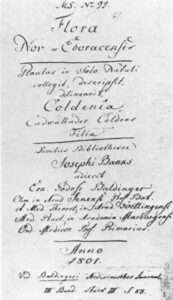
At this time, botany itself was being reshaped by Linnaeus’s revolutionary classification system. By organizing plants according to their reproductive structures and assigning them standardized Latin names, Linnaeus provided a framework that allowed naturalists across continents to identify and compare species systematically.² Cadwallader Colden admired this approach and introduced his daughter to the Linnaean method. Jane Colden quickly mastered it and began applying it to the flora of colonial New York.
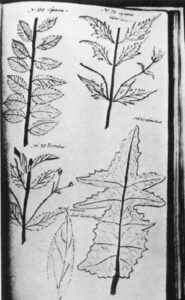
Her principal achievement was a manuscript now known as The Flora of New York. In this work she described more than three hundred plant species, carefully classifying them according to the Linnaean system and illustrating many of them herself. Her drawings were precise enough to serve scientific identification, emphasizing the structural details required for classification rather than decorative beauty.³ The manuscript represents the earliest known systematic botanical survey produced by a woman in North America and one of the first serious applications of Linnaean taxonomy in the American colonies.
Through her father’s scientific correspondence, Colden’s work became known among European botanists, including Linnaeus himself. Historical accounts record that Linnaeus admired her scholarship but lamented the social barriers that limited its circulation. He is reported to have remarked, “I wish that you had been a man, for then I might have published your work.”⁴ The statement reflects both recognition of her scientific competence and the institutional constraints faced by women in eighteenth-century science.
Although her manuscript was not formally published during her lifetime, her observations circulated privately and contributed to the growing recognition that American flora required systematic study. Colonial natural history was beginning to shift from anecdotal description toward organized scientific inquiry, and Colden’s work stood at the forefront of that transition. By applying European taxonomic methods to American species, she helped establish that the colonies were not merely sources of specimens for European study but sites where scientific knowledge could be produced directly.
Colden’s botanical work was grounded in close attention to local environments. She noted habitats, flowering patterns, and distinguishing features, treating plants not simply as isolated specimens but as parts of a living landscape. This approach anticipated later ecological thinking, in which species are understood within networks of climate, soil, and biological interaction. Her manuscript thus represents not only an exercise in classification but an early attempt to document the biodiversity of a specific American region.
In 1753 Jane Colden married Dr. William Farquhar. As was typical for women of her time, her scientific work diminished after marriage as she assumed the responsibilities of family life. She bore several children and remained primarily occupied with domestic duties. She died in 1766 at the age of forty-one.⁵ Her botanical manuscripts and drawings survived, however, preserved through family papers and later recognized by historians as significant contributions to early American science.
The importance of Jane Colden’s work lies in both its content and its example. Botanically, her careful adoption of Linnaean classification helped embed modern taxonomic practice in North America. The standardized naming of plants—now fundamental to botany, agriculture, pharmacology, and conservation—depends on the very principles she applied in her study. Each plant identified through binomial nomenclature today participates in a system whose early American adoption included her efforts.
Historically, her work demonstrates that scientific inquiry in colonial America did not depend solely on institutions or professional societies. It could arise in private homes, sustained by intellectual curiosity and supported through correspondence networks. Colden’s example shows how knowledge in the Enlightenment era often spread through letters, manuscripts, and personal exchanges rather than formal publication alone.
Her life also marks an early chapter in the participation of women in scientific research. Later American botanist Asa Gray would refer to her as “the first lady botanist of America,” acknowledging both her priority and her seriousness as a scientific observer.⁶ Though her work was conducted outside official academies, it met the methodological standards of her time and earned the respect of leading naturalists.
Modern botany has expanded far beyond the observational tools available to Colden. Genetic sequencing, digital herbarium databases, and satellite mapping now allow scientists to track plant evolution and distribution on a global scale. Yet the discipline still rests on the core practices she exemplified: careful observation, accurate description, systematic classification, and the preservation of specimens and records. These practices form the groundwork for contemporary research in biodiversity, ecology, and conservation.
At a moment when the preservation of plant diversity has become a global concern, Colden’s work acquires renewed relevance. The documentation of species, knowing what exists and where, is the first step in protecting ecosystems. Her impulse to catalogue the plants around her reflects a foundational scientific principle that understanding precedes stewardship.
Jane Colden worked without expectation of recognition and without the institutional support granted to most scientists of her era. Yet her manuscript stands as evidence that disciplined observation and intellectual commitment can shape a field even from the margins. In the quiet act of recording the plants of colonial New York, she participated in the broader Enlightenment project of rendering nature intelligible through reason and evidence.
Her legacy endures not only in the specific plants she described but in the model she provided, that the scientific understanding of the natural world advances through patient attention, accurate naming, and the willingness to study one’s own landscape with rigor. In this sense, Jane Colden’s work forms part of the early foundation upon which modern American botany was built.
John Steele is a publisher and founder of Nautilus Magazine.
Footnotes
- Linda Hall Library, Jane Colden: America’s First Woman Botanist, historical biography and archival overview.
- Carl Linnaeus, Species Plantarum (1753), foundational work establishing binomial nomenclature and modern plant taxonomy.
- British Library and New York Historical Society holdings of Colden manuscripts; see also Mary E. Stuckey, “Jane Colden: Colonial Botanist,” Huntia journal of botanical history.
- The Linnaeus remark is preserved in later historical accounts derived from Colden family correspondence and Linnaean archives; wording varies slightly in translation but the sentiment is consistently reported. See Judith Magee, Royal Botanic Gardens, Kew, biographical notes on Jane Colden.
- Biographical details summarized from colonial records and Colden family papers; see Orange County Historical Society archives.
- Asa Gray referenced Colden as “the first lady botanist of America” in nineteenth-century botanical historical commentary; phrase widely cited in American botanical histories.
Plantings
Issue 57 – March 2026
Also in this issue:
When Flowers Speak
By Gayil Nalls

Why is Old Bay Maryland’s Culinary Anchor?
By Ian Sleat

Ecological Grief: The Work of Mourning Landscapes and Lost Species
By Margherita Gandolfi
Asking Trees to Solve a Roman Conspiracy
By Molly Glick
Attract Pollinators to Your Garden and Other Tips
By WS/C

Eat More Plants Recipes:
Hearty Green Pasta Sauce
By Ian Sleat
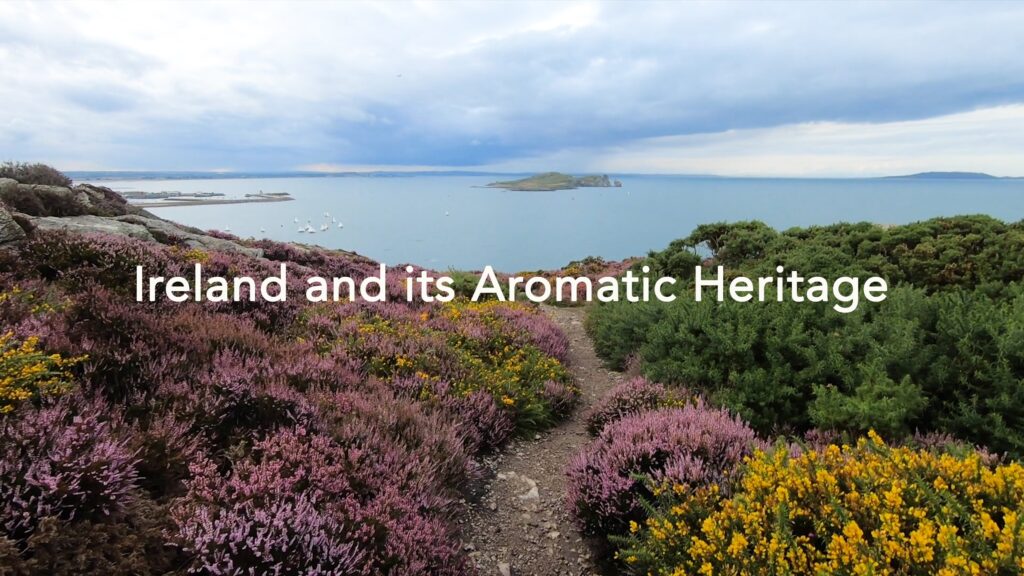
As Ireland transitions from the rich, smoky scent of peat-burning to a more sustainable future, its olfactory heritage is evolving. What will become the next iconic aromatic symbol of Ireland?
Click to watch the documentary trailer.
As Ireland transitions from the rich, smoky scent of peat-burning to a more sustainable future, its olfactory heritage is evolving. What will become the next iconic aromatic symbol of Ireland?