

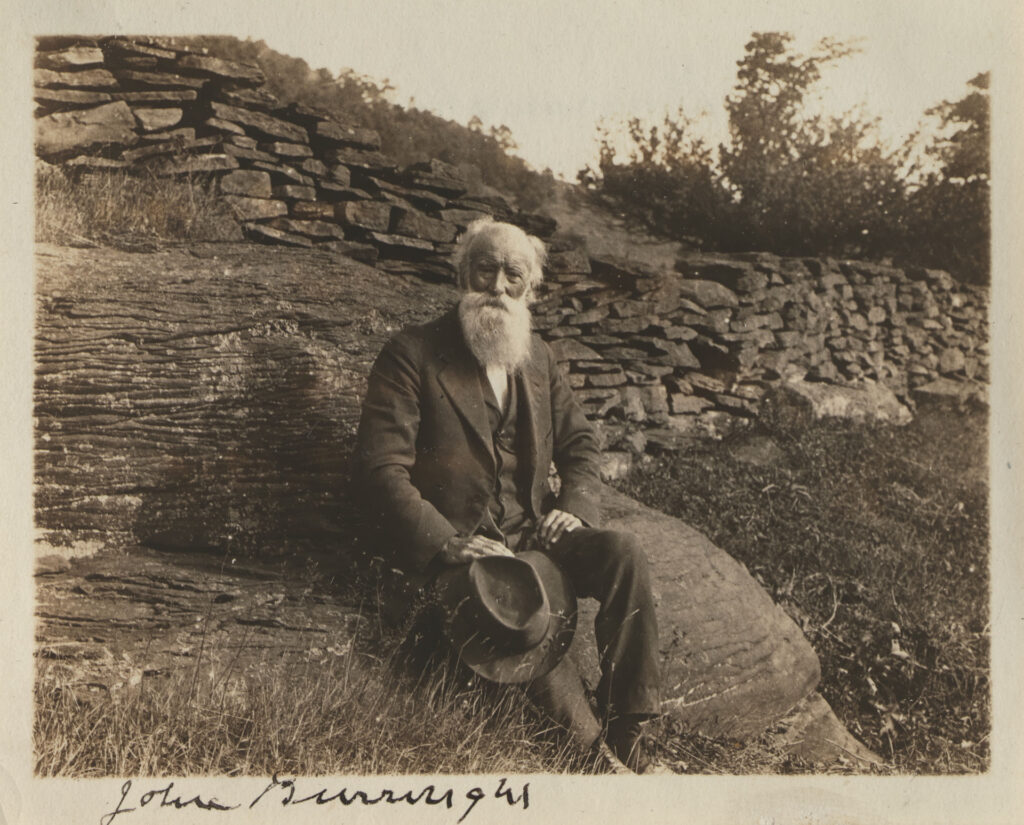
John Burroughs: “The Incense of April”
“There is no glory in star or blossom,
Till looked upon by a loving eye;
There is no fragrance in April breezes,
Till breathed with joy as they wander by;”
— William C. Bryanti
By Clara Muller
Sign up for our monthly newsletter!
John Burroughs was born on “the edge of April.”ii On April 3rd, 1837, on a small family farm in the Catskill Mountains, he entered a world of woods, meadows, and hillsides, a world of bird songs and sweet-scented flora, that would furnish the substance of his writing for the rest of his life.
Even before he became a canonical voice of American nature writing, John Burroughs was already, fully and simply, “a part and parcel of Nature.”iii The son of a farmer, he spent much of his childhood reading and working outdoors—patiently observing and taking in the beauty of the natural world, “breathing it like the air,”iv as he would later write. He began his adult life as a teacher, then worked in banking, all the while writing and publishing articles and essays, encouraged in no small part by his friend Walt Whitman. In time, he returned to the life that had formed him, purchasing a farm and devoting himself to both cultivating the land and writing. His essays, widely read in his time, are marked by an intimate fidelity to experience—and, perhaps most strikingly, by the unusual importance he grants to the senses, especially smell, as a way of encountering and knowing the more-than-human world.
This olfactory acuity, which runs throughout Burroughs’ writing, was noted early on by his biographers. In “A Biographical Sketch of John Burroughs,” prefacing the 1901 reprint of A Year in the Fields, Clifton Johnson remarks upon “his eyes and sense of smell [being] phenomenally acute,” adding that “what he writes is full of outdoor fragrance, racy, piquant, and individual.”5 Clara Barrus—his companion and biographer—likewise emphasized “the preternatural keenness of his sense of smell,” describing his nose as “one of the five free channels through which he received messages from Nature.”6
Burroughs himself was keenly aware of the formative role that the open air played in sharpening“all his senses.”vii Not only does he repeatedly suggest that Nature must be read through the eye, the ear, and the nose, he also describes it as“a field for their exercise.”viiiHe understood perception not as a given, but as something cultivated and refined through experience and training:
“One thing is certain, in a hygienic way I owe much to my excursions to Nature. […] They have helped sharpen and attune all my senses; […] they have made my sense of smell so keen that I have much pleasure in the wild, open-air perfumes, especially in the spring —the delicate breath of the blooming elms and maples and willows, the breath of the woods, of the pastures, of the shore. […] Senses trained in the open air are in tune with open-air objects; they are quick, delicate, and discriminating.”ix
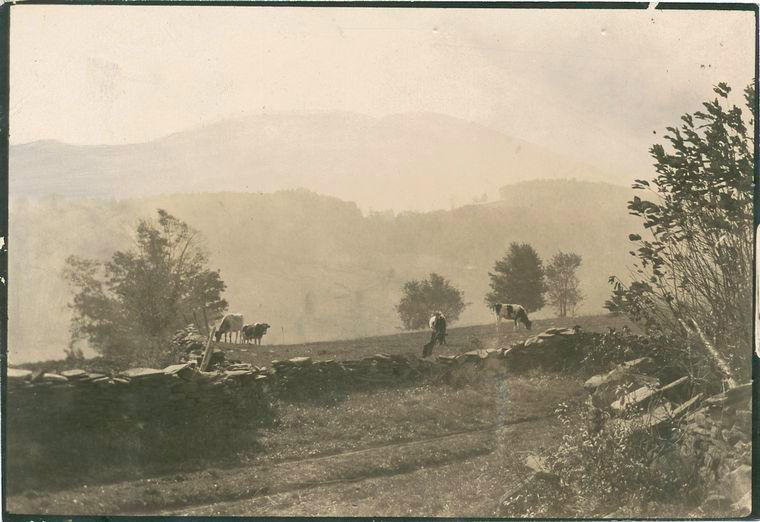
In this regard, Burroughs can be brought into close conversation with one of his most influential peers, Henry David Thoreau, whose sense of smell was, by his own account, highly perfected through sustained contact with the wilderness.x In his 1842 essay “The Natural History of Massachusetts,” Thoreau outlines a vision of science not as detached observation, but as an embodied practice grounded in sensory acuity: “The true man of science will know nature better by his finer organization: he will smell, taste, see, hear, feel, better than other men.”xi Significantly, smell appears first in this sequence—a striking detail, especially at a time when olfaction was often dismissed as too subjective and elusive to serve the purposes of science. Yet for Burroughs, as for Thoreau, smell is both a means of noticing and a mode of knowing: not merely a source of enjoyment, but a genuine tool of inquiry. He embraces precisely what some regarded with suspicion—its subjectivity—and integrates it into his practice of observation and description.
This convergence of scientific investigation and first-person experience has often been seen as a defining feature of nature writing. As Frank Stewart (1995) writes in A Natural History of Nature Writing, “From their own direct experiences [nature writers] are aware of the limits of both objectivity and subjectivity in giving accurate accounts of nature that will grip our emotional as well as rational understanding.”xii Burroughs’ redolent prose inhabits precisely this fertile interval, insisting that one crucial element “is the absorption by an author, previous to becoming so, of the spirit of nature, through the visible objects of the universe, and his affiliation with them subjectively and objectively.”xiii Much the same could be said of scientific knowledge as Burroughs understood it: without taking liberties with fact, it too must be animated by lived experience, pleasure, and sympathy. As he writes,“the way of knowledge of Nature is the way of love and enjoyment, and is more surely found in the open air than in the school-room or the laboratory.”xiv It is in this spirit that Burroughs himself approaches the vegetal world: as both a meticulous and sensuous field botanist.xv
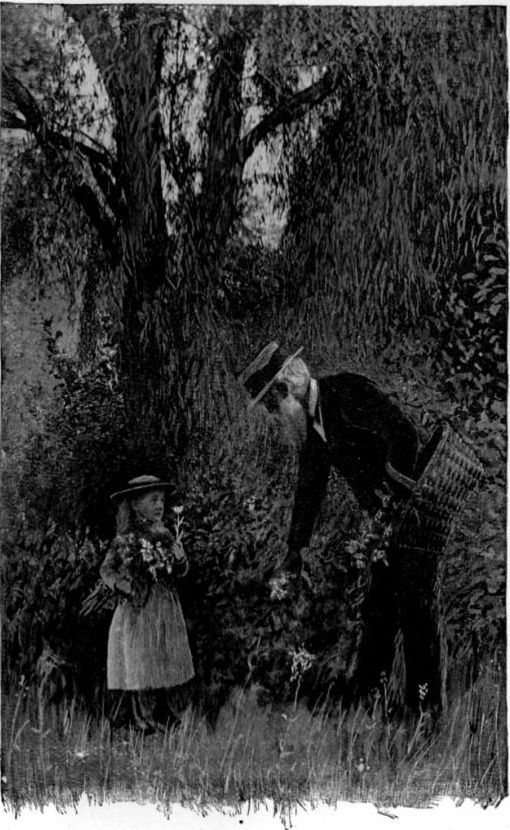
An admirer of Charles Darwin’s poetic botanical writing, and insisting himself that botany “in the fields and woods [is] a source of perennial delight,”xvi Burroughs treats vegetal scents as both an object of pleasure and a distinctive trait of certain plants that ought not be overlooked. In Signs and Seasons (1886), Burroughs explicitly invites his reader into a practice of olfactory attention: “Which are our sweet-scented wild flowers? Put your nose to every flower you pluck, and you will be surprised how your list will swell the more you smell.”xvii Here, the deliberate use of the sense of smell is proposed as a genuine mode of field knowledge. Later, writing of the horned bladderwort, he observes that “perhaps the most notable thing about the flower was its fragrance,—the richest and strongest perfume I have ever found in a wild flower,” adding that “the fragrance suggested that of white clover, but was more rank and spicy.”xviii Having offered this precise and comparative description of Utricularia cornuta’s prominent scent, Burroughs gently rebukes less nose-minded botanists for neglecting it: “This, our botanist, Gray, does not mention; as if one should describe the lark and forget its song.”xix
Throughout his work, Burroughs is particularly attentive to describing even the faintest botanical scents, rendering them through a range of literary strategies. At times, he relies on direct qualification, using descriptors such as ‘spicy,’ ‘earthy,’ ‘grassy,’ or more synesthetic adjectives such as ‘warm,’ ‘fresh,’ ‘moist,’ or ‘bitterish,’ as well as words that register the odor’s hedonic value, from ‘rank’, ‘fetid,’ and ‘coarse’ to ‘delicious’ or ‘agreeable.’ At other moments, he turns to analogy, comparing the perfume of the horse bean to that of apple orchards, the scent of furze to“mingled cocoanut and peaches,”xx or, more surprisingly, that of Smilax herbacea to “the vent of a charnel-house.”xxi He also conveys olfactory experience through metaphor, as when witch-hazel gives out an odor “that is to the nose like cool water to the hand.”xxii
Burroughs shows a marked interest in identifying, describing, and inventorying fragrant flora, going as far as to assert that odorless flowers “lack the soul that perfume suggests.”xxiii In “A Bunch of Herbs: Fragrant Wild Flowers,” originally published in Pepactons (1881), he compiles a list of about forty fragrant native wild flowers, flowering shrubs and trees of New England and New York.xxiv Beyond simple enumeration, he examines the expansion, evolution, and overall variability of their odors in relation to season, weather, time of day, blooming date, perianth color, etc. He notes, for instance, that the Canada violet, in May, has a “very sweet-scented foliage” while the flowers are “practically without fragrance”xxv before finally developing as the season advances. Elsewhere, he remarks on the capriciousness of the genus Hepatica: “You cannot tell which the fragrant ones are till you try them,” since“sometimes it is the large white ones, sometimes the large purple ones, sometimes the small pink ones.”xxvi Such observations reveal how closely Burroughs attends to vegetal fragrance—not only as a poet, but as a true naturalist—through trial, repetition, comparison, and long familiarity with particular plants and places. Remarkable, too, is the constancy of this sensory commitment throughout his life. Even in old age, as Clara Barrus recalls, Burroughs was still capable of “going a half-mile across the fields just to smell the fragrance of the buckwheat bloom.”xxvii
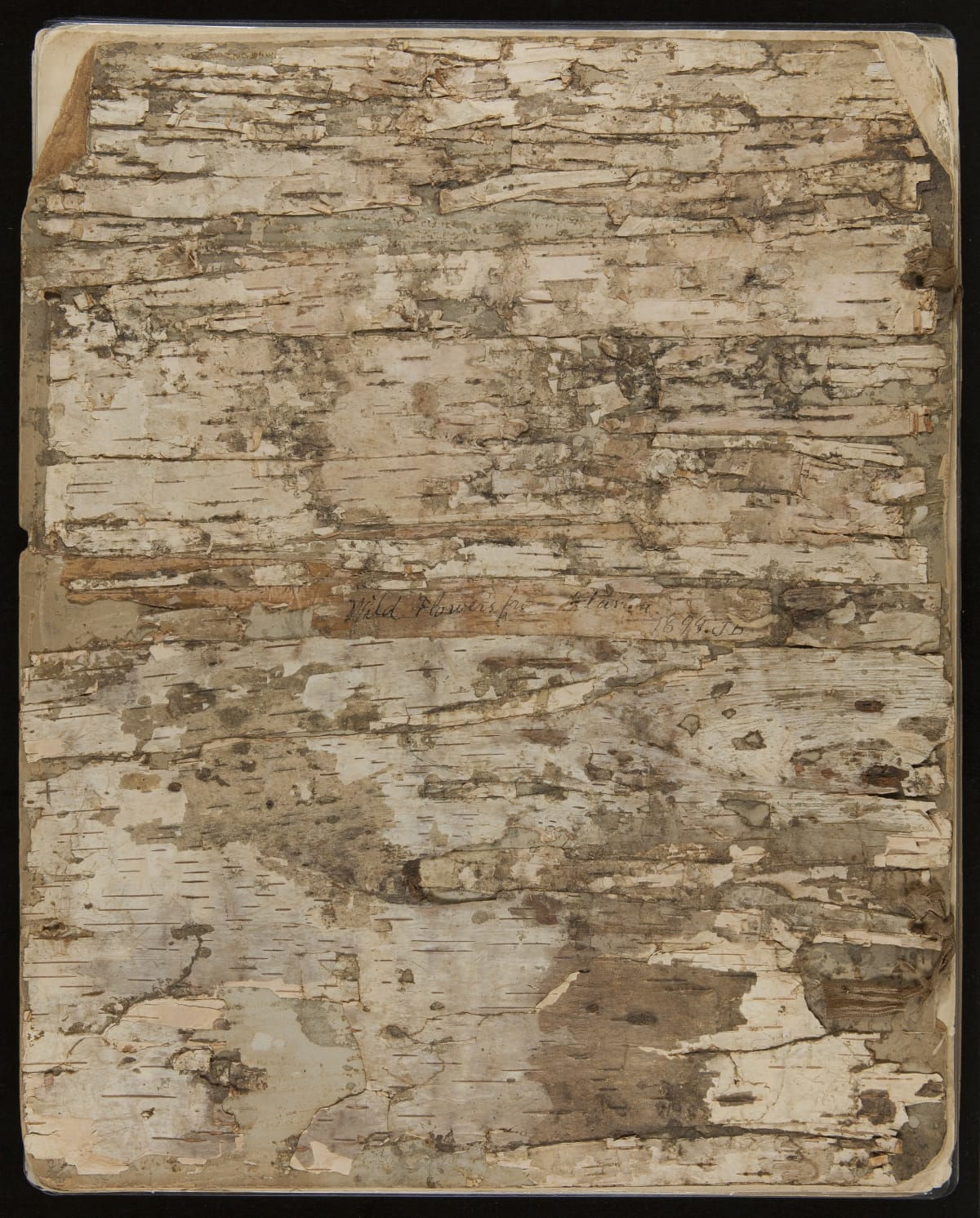
Evidently, Burroughs treats smell as a primary mode not only of botanical but also of ecological knowledge. However closely he lingers over the fragrance of a single flower or species, he is never inattentive to the larger olfactory composition of a landscape—to the blended exhalations of soil, fungi, herbs, trees, weather, and season. And though he loved every month and every turn of the year, it was perhaps spring—especially April, his native month—that he took most deeply into his heart—and nostrils. For Burroughs, April is not merely a month: it is a sensory threshold, a moment of fertile disequilibrium after winter, apprehended not first by the eye but by the nose. And if, as he complained, poets had seldom succeeded in rendering spring with all its “fresh, earthy smells” and “its strange feeling of unrest,”xxviii he certainly came closer than most.
It is through smell that his body registers seasonal change before his eyes can fully confirm it. Spring first announces itself as a redolent rebirth that seems to rise from the invisible layers of the ground. It is not, at first, floral sweetness but something rawer: an exhalation from the soil itself, thrilling “with life or the potencies of life!”xxixIn Wake-Robin (1871), Burroughs writes: “the signs of returning life are so faint as to be almost imperceptible, but there is a fresh, earthy smell in the air, as if something had stirred here under the leaves.”xxx A few years later, he insists again on this almost alchemical transformation happening “when the sun embraces the earth with fervor and determination” and “his beams pour into the woods till the mould under the leaves is warm and emits an odor!”xxxi Nothing, for him, announces spring more clearly than “the warm earthy odors which the heat liberates from beneath the dry leaves.”xxxii And this idea of April as a subterranean awakening keeps resurfacing in all his writing: “One seems to get nearer to nature in the early spring days: all screens are removed, the earth everywhere speaks directly to you […] How welcome the smell of it, warmed by the sun; the first breath of the reviving earth.”xxxiii
After these first earthy signs arises a second source of vernal odor, from another form of awakening: the swelling of buds. In “Spring Jottings,” included in Riverby (1894), Burroughs reproduces several April diary entries from earlier years, many of them packed with evocations of what he calls the “sweet perfume of bursting, growing things.”xxxiv On April 8, 1884, he notes that in the warm south wind, “one can almost smell the swelling buds”; about a week later, he writes again: “A cool south wind with streaks of a pungent vegetable odor, probably from the willows. When I make too dead a set at it I miss it; but when I let my nose have its own way, and take in the air slowly, I get it, an odor as of a myriad swelling buds.”xxxv Here again, smell registers what sight can scarcely yet confirm: growth not fully visible, but already diffused in the air in molecular form.
Burroughs is especially drawn to the resinous exudations that protect new buds, those fragrant secretions that bees gather for propolis. In “A Spring Relish,” published in Signs and Seasons (1895), he dwells upon this subtle chemistry of April with characteristic delight:
“When spring pushes pretty hard, many buds begin to sweat as well as to glow; they exude a brown, fragrant, gummy substance that affords the honey-bee her first cement and hive varnish. The hickory, the horse-chestnut, the plane-tree, the poplars, are all coated with this April myrrh. That of certain poplars, like the Balm of Gilead, is the most noticeable and fragrant. No spring incense more agreeable. Its perfume is often upon the April breeze.”xxxvi
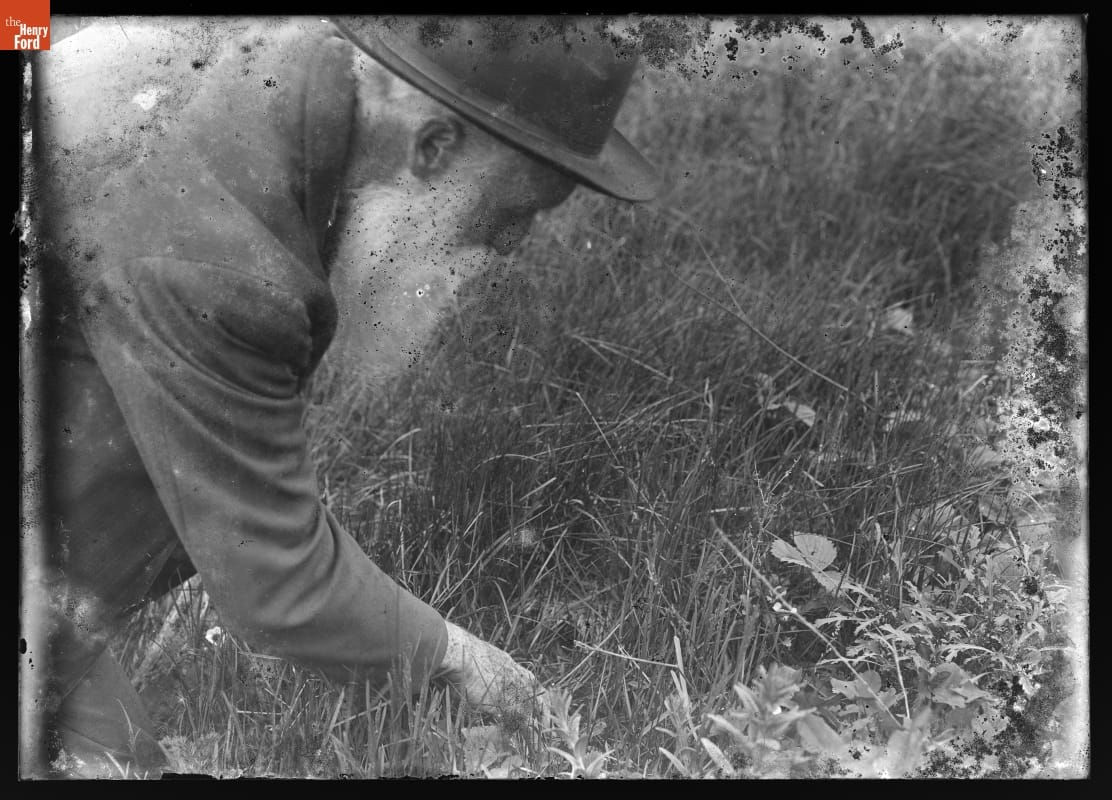
Then come the earliest floral scents of the season. In Leaf and Tendril (1908), Burroughs writes that “April’s flower offers the first honey to the bee and the first fragrance to the breeze. Modest, exquisite, […] it is the very spirit and breath of the woods.”xxxvii Chief among the first blooms is the trailing arbutus, Epigaea repensxxxviii, the “most poetic and the best beloved”xxxix of wild flowers, which, “during the first half of April, perfumes the wildwood air.”xl In Riverby (1894), Burroughs recalls how six young women carrying “vast sheaves and bundles of trailing arbutus” boarded a train, and how, all at once, “the breath of spring loaded the air.”xli The scent of the little rosy flower, so frequently mentioned by the author, thus becomes almost metonymic of the season itself, inseparable in his memory from “the first fragrant showers”xlii of the vernal season.
Rain, too, plays a part in this olfactory construction of spring, carrying and enhancing its many mingled odors. In “Is it Going to Rain?” from Locusts and Wild Honey (1879), Burroughs contrasts the “cold and odorless” rains of winter with“the first warm April rain, […]every drop condensed from warm tropic vapors and charged with the very essence of spring.”xliii What follows is one of his finest evocations of seasonal atmosphere as something apprehended by the nose—figured here as an open channel through which the communal breath of the living world pours into one’s body: “Then what a perfume fills the air! One’s nostrils are not half large enough to take it in. The smoke, washed by the rain, becomes the breath of woods, and the soil and the newly plowed fields give out an odor that dilates the sense.”xliv Once again, April is registered not primarily as spectacle but as emanation, seeming to enlarge the self as it is breathed in.
If Burroughs consistently privileges April over later months, which belong more obviously to maturation and prodigality, it is because April reveals Nature in the act of becoming. It is the month not of fullness but of emergence, fermentation, and covert transformation—when life is still half-hidden, stirring beneath the surface, and therefore all the more arresting to a man so passionately devoted to understanding life’s incipient forms and ceaseless changes. April’s odors arise from germination, chemical affinity, cellular movement, and microscopic phenomena. And as Burroughs writes, smell and taste are the only senses that “make us acquainted with matter in a state which may be said to approach the atomic.”xlv They are thus especially suited to apprehending nascent life at its most intimate, diffuse, and minute. In the “April” section of Birds and Poets (1897), Burroughs gathers these vigorous emanations into one of his fullest and most rapt evocations of the season:
“Then its odors! I am thrilled by its fresh and indescribable odors,—the perfume of the bursting sod, of the quickened roots and rootlets, of the mould under the leaves, of the fresh furrows. No other month has odors like it. The west wind the other day came fraught with a perfume that was to the sense of smell what a wild and delicate strain of music is to the ear. It was almost transcendental. I walked across the hill with my nose in the air taking it in. It lasted for two days. […] The main characteristic of these April odors is their uncloying freshness. They are not sweet, they are oftener bitter, they are penetrating and lyrical. I know well the odors of May and June, of the world of meadows and orchards bursting into bloom, but they are not so ineffable and immaterial and so stimulating to the sense as the incense of April.”xlvi
The word ‘incense‘ is carefully chosen. It evokes something that rises, like smoke, from the material toward the immaterial: something released from the earth and tending upward. The term also suggests a form of transcendence without theological presuppositions. It belongs to a broader metaphorical lexicon through which Burroughs articulates a non-doctrinal, sensuous form of reverence for Nature. Although he was not conventionally religious, the smells of April, in his prose, effect a kind of consecration of the living world. This becomes even more explicit in “The Faith of the Naturalist,” published in one of his latest books, Accepting the Universe (1920), where he writes:
“Every walk to the woods is a religious rite, every bath in the stream is a saving ordinance […] The beauty of natural religion is that you have it all the time; […] Its incense rises from the plowed fields, it is on the morning breeze, it is in the forest breath and in the spray of the wave. […] it is not even a faith; it is a love, an enthusiasm, a consecration to natural truth.”xlvii
John Burroughs was buried on the edge of April, April 3rd, 1921, on what would have been his 84th birthday. Ten years after his death, Clyde Fisher, then curator at the American Museum of Natural History, wrote that he had done “perhaps more than anyone else to open our eyes to the beauty of nature.”xlviii Yet Burroughs did more than that. He also taught his readers to “dilate [their] nostrils”xlix and to breathe in Nature’s invisible language. In April, and in every other month, his writings remind us that the world does not only bloom before us, but into us—that “our most constant and vital relation to the world without is a chemical one.”l
Clara Muller is a French art historian and art critic conducting research on olfaction in art, design, and literature. She has been a writer for the olfactory magazine and publishing house Nez since 2016. She contributes to the collection “The Naturals Notebooks” for which she studies the place of aromatic plants in the history of visual and decorative arts. She has curated several exhibitions dedicated to olfactory art and design. https://www.claramuller.fr/
i Quoted by John Burroughs in “Nature and the Poets,” Pepacton, Boston & New York: Houghton Mifflin, 1881, p. 124.
iiHildegarde Hoyt Swift, The Edge of April: A Biography of John Burroughs, New York: William Morrow, 1957.
iiiHenry David Thoreau, “Walking,” The Atlantic Monthly, Volume 9, no. 56, June 1862, p. 657.
ivJ. Burroughs, Birds and Poets, with Other Papers, New York: Hurd and Houghton, 1877, p. 175.
vClifton Johnson, “A Biographical Sketch,” in John Burroughs, A Year in the Fields, Boston & New York: Houghton Mifflin, 1901, p. 5.
viClara Barrus, The Life and Letters of John Burroughs, Boston & New York: Houghton Mifflin, 1925, p. 155.
viiJ. Burroughs, The Last Harvest, Boston & New York: Houghton Mifflin, 1922, p. 132.
viiiJ. Burroughs, Riverby, Boston & New York: Houghton Mifflin, 1894, p. 203.
ixJ. Burroughs, “The Gospel of Nature,” in Time and Change, Boston & New York: Houghton Mifflin, 1912, p. 244.
xVictor Carl Friesen, The Spirit of the Huckleberry: Sensuousness in Henry Thoreau, University of Alberta Press, 1984, pp. 15-26.
xiHenry David Thoreau, “Natural History of Massachusetts,” Excursions and Poems, Boston & New York, Houghton Mifflin, 1906, p. 131.
xiiFrank Stewart, A Natural History of Nature Writing, Washington, D.C.: Island Press, 1995.
xiiiBirds and Poets, op. cit., p. 221.
xiv“The Gospel of Nature,” in Time and Change, op. cit., p. 250.
xvBurroughs’ writings are particularly rich with vegetable scents but he also mentions a lot the smells of mammals and birds, and is greatly interested in the olfactory abilities of many animals, particularly in his later works such as Birds and Bees, Sharp Eyes and Other Papers (1896), Ways of Nature (1905) or Under the Maples (1921).
xviRiverby, op. cit., p. 28.
xviiJ. Burroughs, “A Sharp Lookout,” Signs and Seasons, Boston & New York: Houghton Mifflin,1895 (1st ed. 1886), p. 25.
xviiiJ. Burroughs, Birds and Bees, Sharp Eyes and Other Papers, Boston & New York: Houghton Mifflin,1896, p. 63.
xixIbid., p. 63.
xxJ. Burroughs, Fresh Fields, Boston & New York: Houghton Mifflin,1896, p. 167.
xxi“A Sharp Lookout,” Signs and Seasons, op. cit., p. 28.
xxiiJRiverby, op. cit. p. 28.
xxiiiJ. Burroughs, Leaf and Tendrils, Boston & New York: Houghton Mifflin, 1908, p. 35.
xxivThis early attempt at what might be called an olfactory botany did not go unnoticed. Burroughs’ lists of fragrant wild flowers were taken up in Willard N. Clute’s “Fragrant Wild Flowers” in The Asa Gray Bulletin (1895), which in turn prompted a series of follow-up pieces on fragrant flowers by contributors including Homer C. Skeels, F. E. Langdon, and Lucy A. Osband, extending and systematizing some of the questions Burroughs had begun to raise.
xxvJ. Burroughs, Pepacton, Boston & New York: Houghton Mifflin, 1881, p. 209.
xxviBirds and Poets, op. cit., pp. 110-111.
xxviiClara Barrus, Our Friend John Burroughs, Boston & New York: Houghton Mifflin,1914.
xxviiiBirds and Poets, op. cit., p. 127
xxix“The Grist of the Gods,” Leaf and Tendrils, op. cit., p. 203.
xxxJ. Burroughs, Wake-Robin, New York: Hurd and Houghton, 1871, p. 142.
xxxiBirds and Poets, op. cit., p. 120.
xxxiiRiverby, op. cit., p. 14.
xxxiiiIbid., p. 219.
xxxivIbid, p. 167.
xxxvIbid, p. 163-165.
xxxvi“A Spring Relish,” Signs and Seasons, op. cit., p. 174.
xxxviiA Breath of April,” Leaf and Tendrils, op. cit., p. 33.
xxxviiiIn the late 1800s and early 1900s, trailing arbutus was harvested for bouquets and garlands or to be used in soaps or perfumes. Today, the plant has rarefied and is protected in many states.
xxxix“A Breath of April,” Leaf and Tendrils, op. cit., p. 33.
xlWake-Robin, op. cit., p. 159.
xliRiverby, op. cit., p. 15.
xlii“A Breath of April,” Leaf and Tendrils, op. cit., p. 34.
xliii“Is it going to rain?,” Locusts and Wild Honey, Boston: Houghton, Osgood and Company, 1879, p. 83.
xlivIbid.
xlvJ. Burroughs, “The Journeying Atoms,” The Breath of Life, Boston & New York: Houghton Mifflin, 1915, p. 198.
xlviBirds and Poets, op. cit., p. 110.
xlviiJ. Burroughs, “The Faith of the Naturalist,” Accepting the Universe, Boston & New York: Houghton Mifflin, 1920, p. 117.
xlviiiClyde Fisher, “With John Burroughs at Slabsides,” Natural History Magazine, Volume 31, no. 5, September/October 1931, p. 510.
xlixFresh Fields, op. cit., p. 1.
l“A Wonderful World,”The Breath of Life, op. cit., p. 50.
Plantings
Issue 58 – April 2026
Also in this issue:
Earth Day: What Is Biodiversity—and Why Does It Matter?
By WS/C

The Science of a Sense of Place
By Gayil Nalls
Reflections on the Hundred Acre Wood
By John Steele
Antibacterial Herbs: Ancient Remedies, Modern Science
By Gayil Nalls
You probably agree with the animals on which bird calls, frog noises and cricket chirps are most attractive – new research
By Logan S. James
Eat More Plants Recipes:
Vegan Confetti Coleslaw
By Gayil Nalls
As Ireland transitions from the rich, smoky scent of peat-burning to a more sustainable future, its olfactory heritage is evolving. What will become the next iconic aromatic symbol of Ireland?
Click to watch the documentary trailer.
As Ireland transitions from the rich, smoky scent of peat-burning to a more sustainable future, its olfactory heritage is evolving. What will become the next iconic aromatic symbol of Ireland?