

Creating Your Own Seed Bank
How to Harvest, Clean, and Store Seeds from Vegetables, Plants, and Herbs
By WS/C
Sign up for our monthly newsletter!
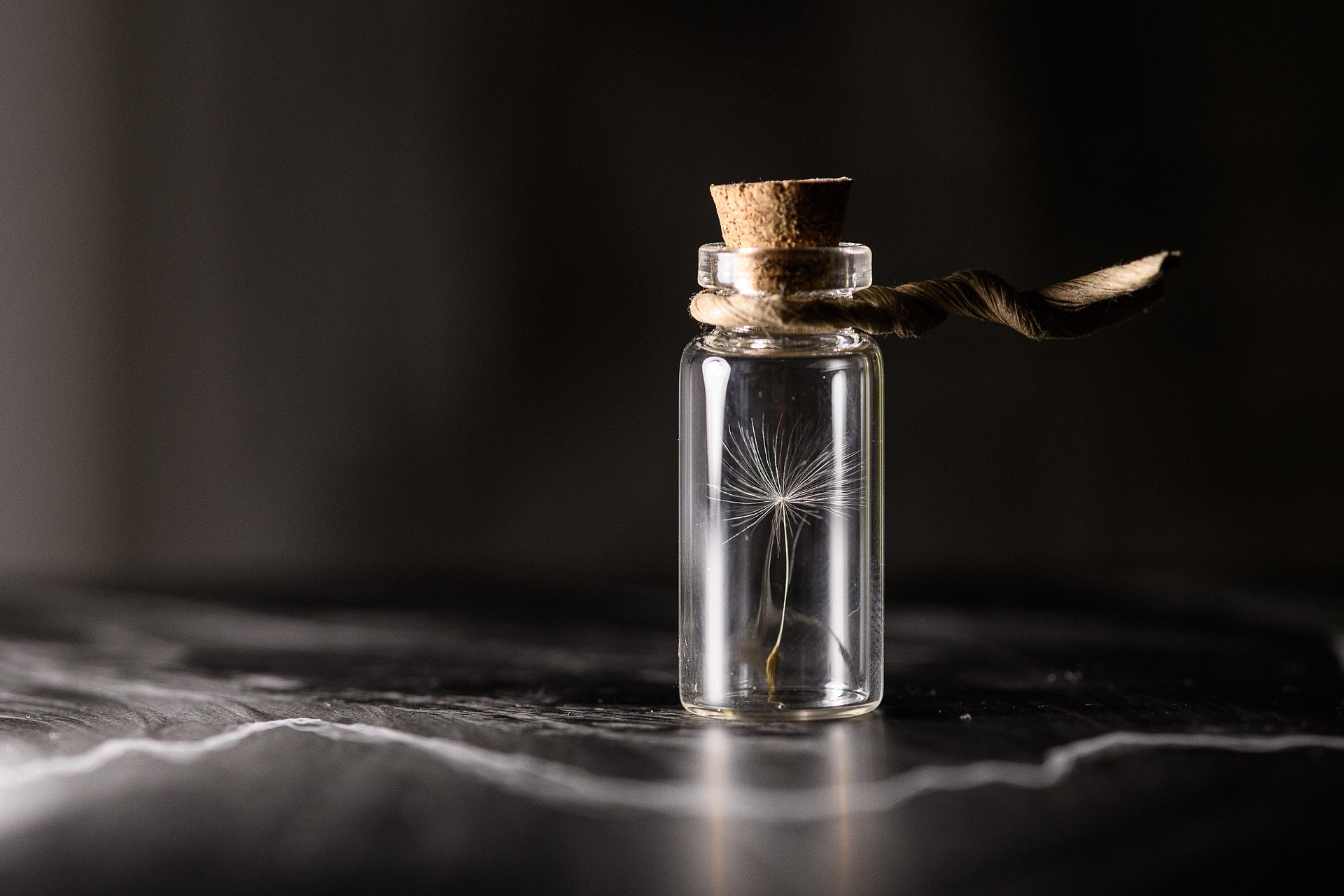
In an era of accelerating climate change, biodiversity loss, and increasing consolidation of the global seed supply, saving seeds is both a gardening skill and an act of stewardship. Every seed carries not only genetic information, but memory: of soil, weather, taste, scent, and place. By harvesting and storing seeds from vegetables, herbs, and garden plants, home gardeners become caretakers of living archives, preserving adaptability and cultural knowledge for seasons yet to come.
Creating a personal seed bank is surprisingly simple, deeply satisfying, and profoundly empowering. What follows is a simple and practical guide to harvesting, cleaning, and storing seeds—transforming the end of one growing season into the beginning of many.
Choosing Plants with Seeds Worth Saving
Choosing your plants in the spring is the first step in selecting seeds worth saving. It is a foundational act in building a resilient and meaningful seed bank. The varieties selected at planting time shape not only that season’s harvest, but the genetic traits—flavor, hardiness, drought tolerance, disease resistance, and local adaptability—that will be carried forward into future generations. By prioritizing open-pollinated and heirloom varieties and saving seed only from healthy, vigorous plants, gardeners become active stewards of living genetic diversity. Spring planting thus becomes an act of foresight and quiet selective breeding, favoring resilience and continuity over short-term yield, and ensuring that the seeds saved at season’s end are robust, locally attuned, and capable of sustaining gardens and communities over time.
When and How to Harvest Seeds
Dry-Seed Crops
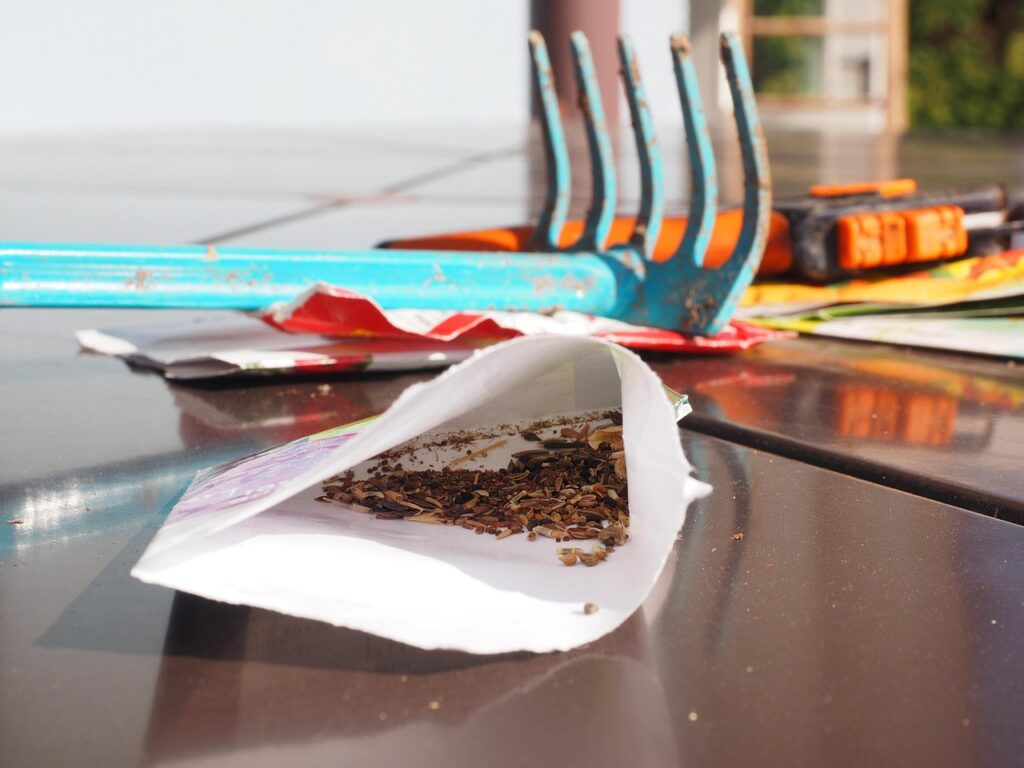
These include lettuce, beans, peas, dill, fennel, basil, coriander, calendula, poppies, and many native wildflowers.
- Allow seeds to fully mature on the plant, often well past the edible stage.
- Seed heads or pods should be dry, brittle, and fragile brown, not green.
- Harvest on a dry day, ideally late morning once the dew has evaporated.
- Cut seed heads or pods and place them in paper bags or shallow trays to finish drying indoors if needed.
Wet-Seed Crops
These include tomatoes, cucumbers, squash, melons, and some peppers.
- Fruits should be fully ripe or slightly overripe.
- Scoop seeds into a clean jar or bowl.
- For tomatoes and cucumbers, allow seeds to ferment in their pulp for 1–3 days. This process removes germination inhibitors and kills some pathogens.
- Rinse thoroughly with water, pouring off debris until only clean seeds remain.
- Let dry thoroughly.
Cleaning Seeds Properly
Cleaning seeds is essential for long-term storage and disease prevention.
- Threshing: Gently crush pods or seed heads by hand to release seeds.
- Winnowing: Use a light breeze or fan to blow away chaff while heavier seeds fall into a bowl.
- Rinsing: For wet seeds, rinse until the water runs clear.
- Final drying: Spread seeds in a single layer on ceramic plates, screens, or parchment paper. Avoid paper towels, which can stick.
Seeds must be completely dry before storage. A good rule: if a seed bends, it’s too wet; if it snaps, it’s ready.
Storing Seeds for Longevity
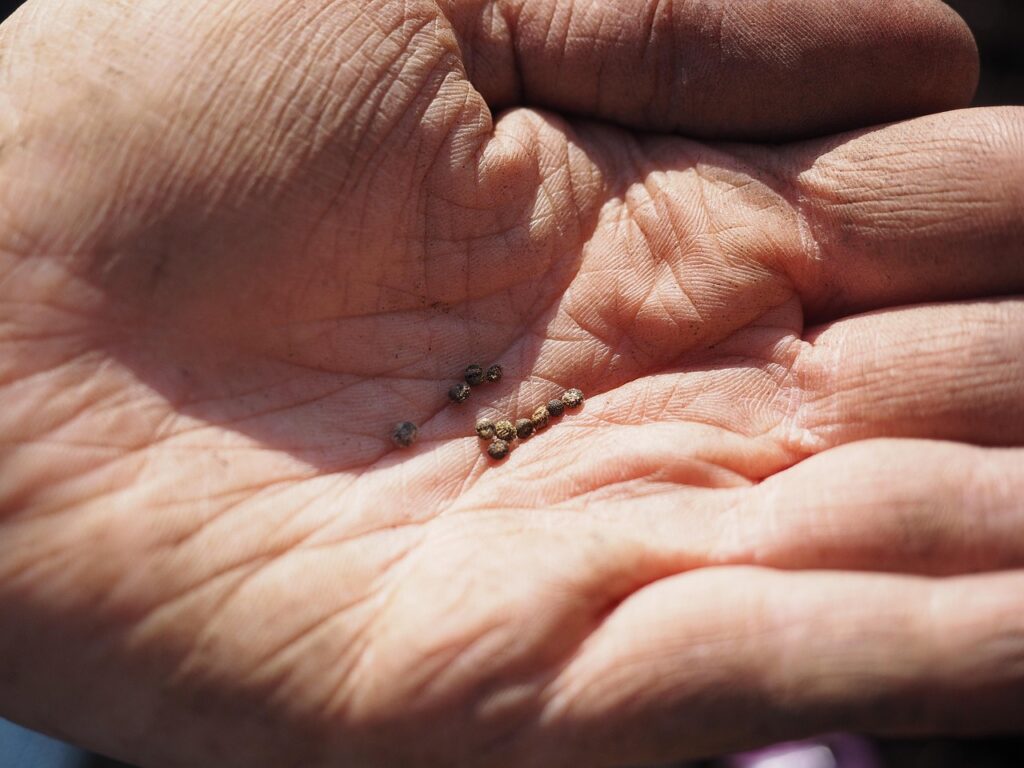
The three enemies of seed viability are heat, moisture, and light.
Ideal Storage Conditions
- Cool (below 50°F / 10°C if possible)
- Dark
- Dry (low humidity)
Containers
- Paper envelopes for short-term storage
- Glass jars with tight lids for long-term storage
- Reused spice jars or vials with silica gel packets for moisture control
Label everything clearly with:
- Plant name (and variety)
- Location grown
- Date harvested
- Any notable traits (early ripening, drought tolerance, exceptional flavor)
Stored properly, many seeds remain viable for years:
- Lettuce: 4–6 years
- Tomatoes: 6–10 years
- Beans & peas: 3–5 years
- Herbs: 2–5 years (varies widely)
From Personal Practice to Living Archive
A home seed bank is a practical reserve and a form of cultural conservation. Seeds carry the imprint of regional climates, traditional cuisines, medicinal practices, and family histories. They are also repositories of scent and chemistry, holding future expressions of aroma, flavor, and resilience.
Seed saving reconnects gardeners to ancient rhythms of reciprocity: harvesting not only food, but possibility. In saving seeds, we participate in a lineage that stretches back thousands of years—and forward into uncertain futures where diversity, adaptability, and care will matter more than ever.
In the quiet act of labeling a seed envelope, we affirm something radical and hopeful: that the future is still plantable, because in naming the variety, the place it was grown, the season, and the hands that tended it, we give the seed a narrative as well as a lineage, transforming it from anonymous matter into a living story of memory, care, and continuity that can be carried forward and retold each time it is planted again.
Plantings
Issue 55 – January 2026
Also in this issue:

Seeds of War
By Gayil Nalls

KEW’s Millennium Seed Bank: A Mission to Save Plant Life on Planet Earth
By Gayil Nalls
The Vampire Paradox
By Lewis H. Ziska
Learning the Language of Seed
By Liz Macklin
Seed Dreaming
By Willow Gatewood
Eat More Plants Recipes:
Rhus Juice: an Indigenous-inspired drink from the plant that connects continents
By Willow Gatewood

As Ireland transitions from the rich, smoky scent of peat-burning to a more sustainable future, its olfactory heritage is evolving. What will become the next iconic aromatic symbol of Ireland?
Click to watch the documentary trailer.
As Ireland transitions from the rich, smoky scent of peat-burning to a more sustainable future, its olfactory heritage is evolving. What will become the next iconic aromatic symbol of Ireland?