

Rooted Resistance: Rashid Johnson’s Potted Plants as Living Symbols
By Gayil Nalls
Sign up for our monthly newsletter!
For nearly three decades, Rashid Johnson, storyteller and cultural alchemist, has built an artistic practice that resists easy categorization, layering philosophy, literature, music, and Black cultural history into a powerful visual language. His latest exhibition is a masterclass in how contemporary art can interrogate identity, memory, and belonging while simultaneously reimagining the aesthetic and conceptual boundaries of the museum itself.
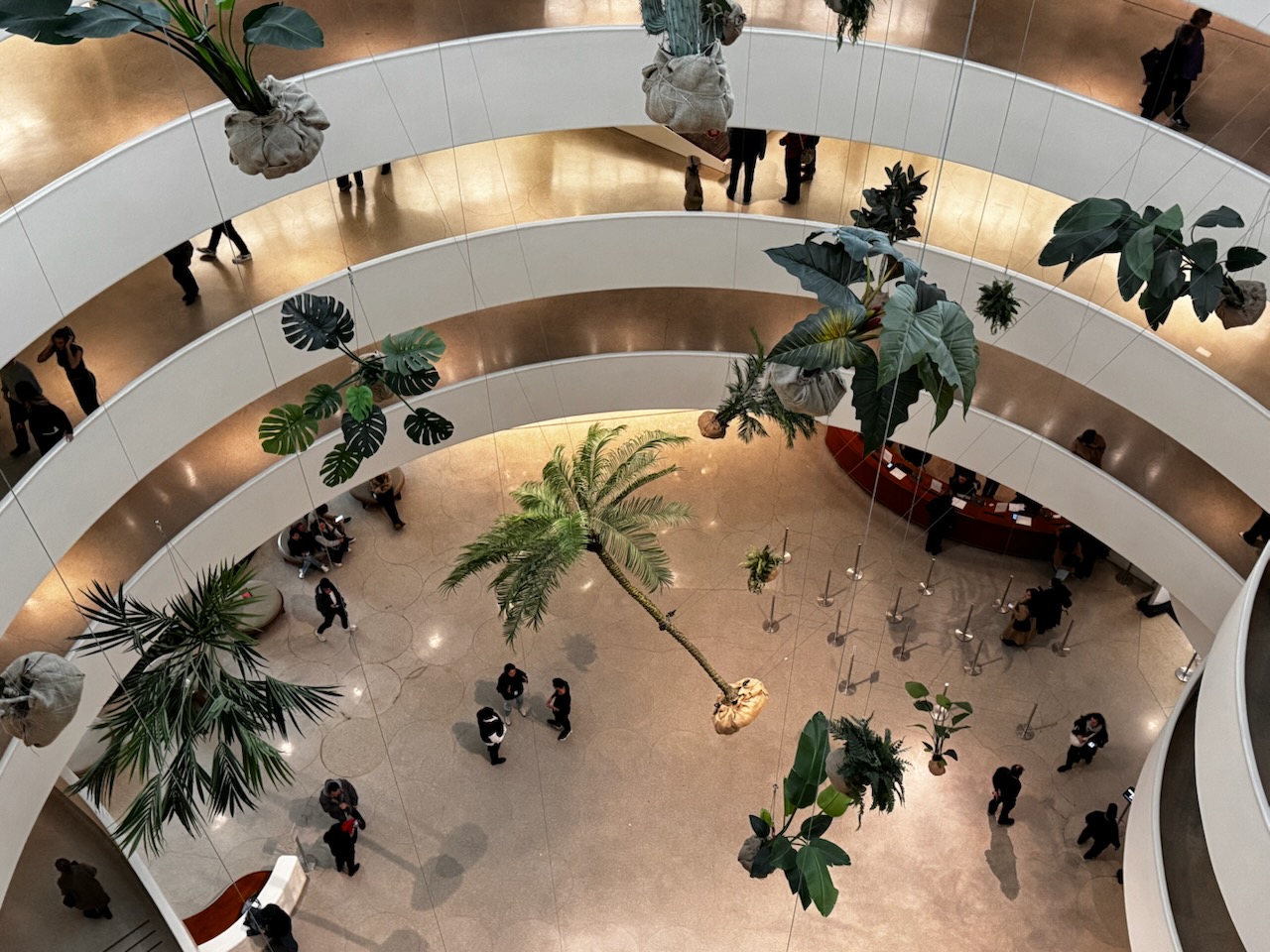
Occupying the full sweep of the Guggenheim museum’s rotunda, Rashid Johnson’s exhibition “A Poem for Deep Thinkers”is immersive from the outset. Nearly ninety works, ranging from Johnson’s signature black-soap and wax paintings to text-based pieces, monumental sculptures, and film, chart the evolution of an artist deeply engaged with both personal narrative and collective history. Johnson has long been interested in the spaces where the personal meets the political, where material choices carry cultural resonance, and where abstraction can speak volumes. These preoccupations are visible everywhere here, in the way text is scrawled like a subconscious eruption, or how natural materials become vessels for ancestral memory. “My work is about freedom”, he says.
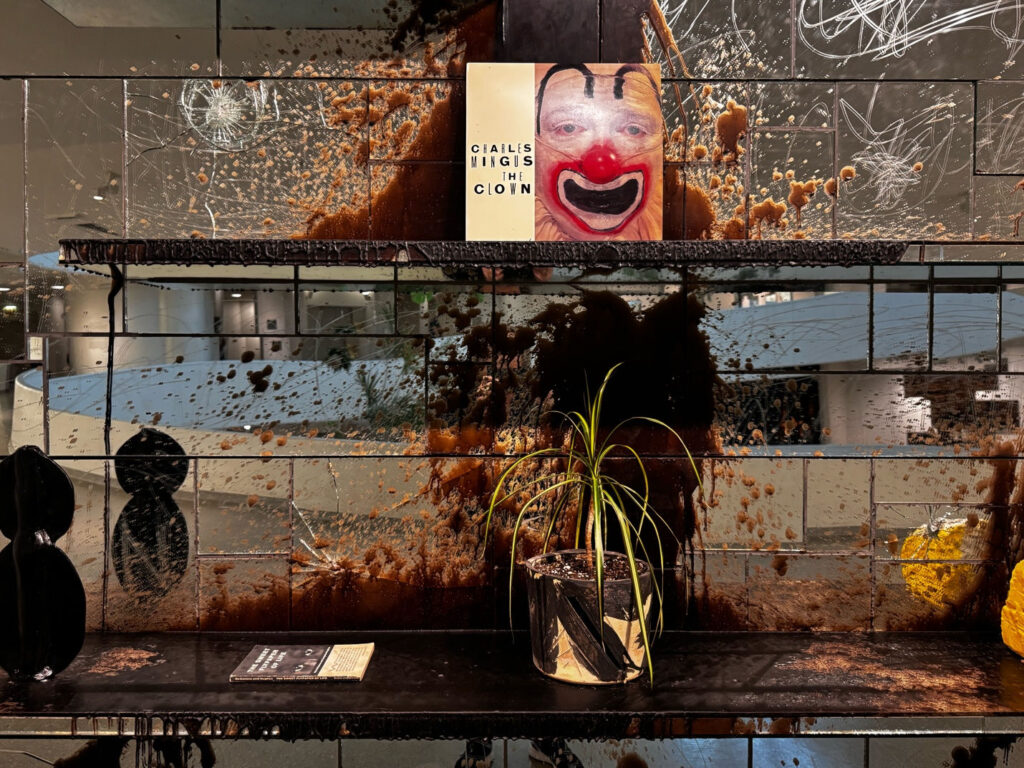
One of the exhibition’s most striking elements is Sanguine, a site-specific installation that cascades across the museum’s upper ramp. Embedded with a piano for live performances, it turns the gallery into a space not only for viewing but for listening and gathering, an embodied metaphor for Johnson’s belief that art should be a living, participatory force. That ethos extends to the ground floor, where a sculptural stage anchors a series of public programs created in collaboration with community partners across New York City. The result is a show that refuses to stay confined within the walls of the institution; instead, it reaches outward, inviting dialogue, exchange, and action.
What distinguishes this exhibition is Johnson’s dual role as both cultural mediator and art-historical interlocutor. His works are deeply referential, drawing on the legacies of artists like David Hammons, Agnes Martin, and Mark Rothko; yet they also operate as critical interventions into those narratives, asserting the centrality of the Black experience and thought. Through this synthesis, Johnson demonstrates how contemporary art can be a space for intellectual inquiry as much as aesthetic experience.
Ultimately, this retrospective of an accomplished artist is a testament to the generative power of art as scholarship, activism, and ritual. Johnson’s work reminds us that cultural heritage—like scent, like sound—is not static. It is something we inhabit, reinterpret, and pass forward. In that way, this exhibition is not only a celebration of a singular career but also an invitation to reconsider how we tell our stories and whose stories get told.
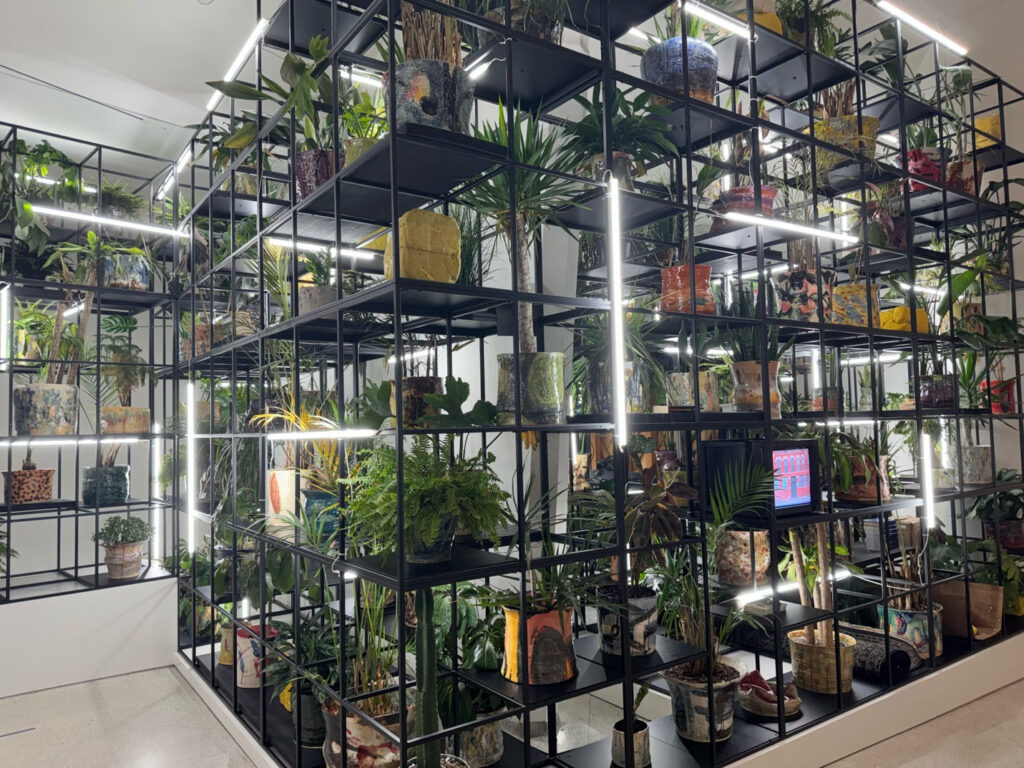
Among the most evocative elements of the exhibition are the living potted plants that punctuate this sculptural installation; these lush, sprawling presences transform the museum’s white rotunda into something far more organic, fantastic, and alive. At first glance, the plants might seem like mere aesthetic gestures, softening the hard edges of metal scaffolds or mingling with books and shea butter on his trademark “shelving units.” But their role is far more profound. In Johnson’s visual vocabulary, plants, like black soup, shea butter, and vinyl albums, are not decorative; they are conceptual anchors, living symbols of resilience, displacement, and the enduring search for home.
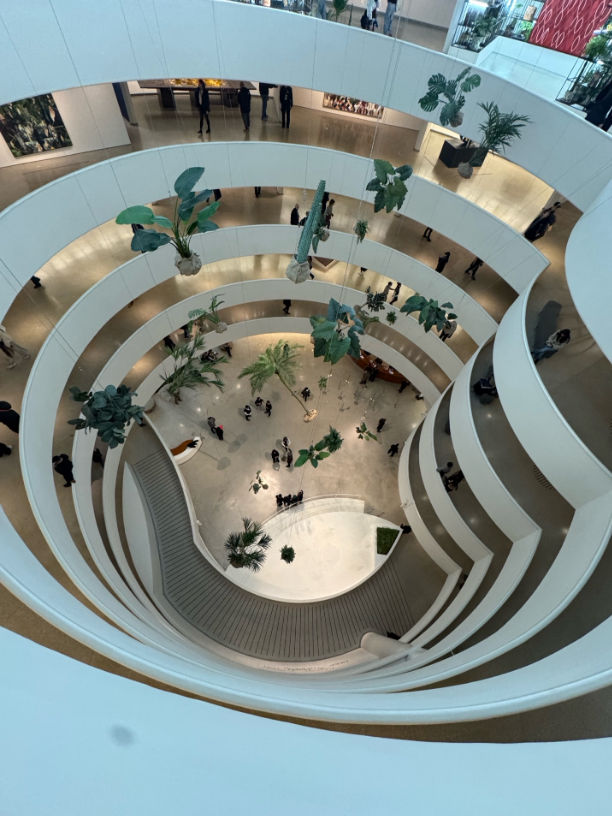
The use of flora is deeply entwined with Johnson’s exploration of Black identity and diasporic experience. Many of the plants—such as tropical philodendrons, palms, and rubber trees—are species often found in Black domestic spaces, particularly in the homes of Johnson’s parents and grandparents. In these contexts, they were more than ornamental; they were acts of care and connection, a means of cultivating beauty and control within environments shaped by systemic exclusion. By bringing these plants into the rarefied space of the Guggenheim, Johnson elevates what has historically been considered “ordinary” into the realm of high art, challenging entrenched hierarchies about what—and whose—cultural expressions belong in museums.
The plants also embody a metaphor of rootedness and adaptation. Contained within pots, they are at once anchored and mobile, able to thrive far from their native soil, yet always shaped by the conditions of their container. This duality speaks powerfully to the Black diasporic condition: uprooted through historical violence and forced migration, yet continuously adapting, flourishing, and transforming new environments into spaces of belonging. In this way, Johnson’s plants become living archives of resilience and survival, each leaf and tendril a testament to cultural continuity against the odds.
Moreover, the living nature of these works introduces a temporal, even ritualistic dimension to the exhibition. Plants grow, change, and require care. Their presence insists on time and attention, qualities often absent from the sterile, static realm of the gallery. They remind viewers that art, like life, is not fixed but evolving, and that heritage is not an artifact to be preserved behind glass but a living process to be tended and nurtured.
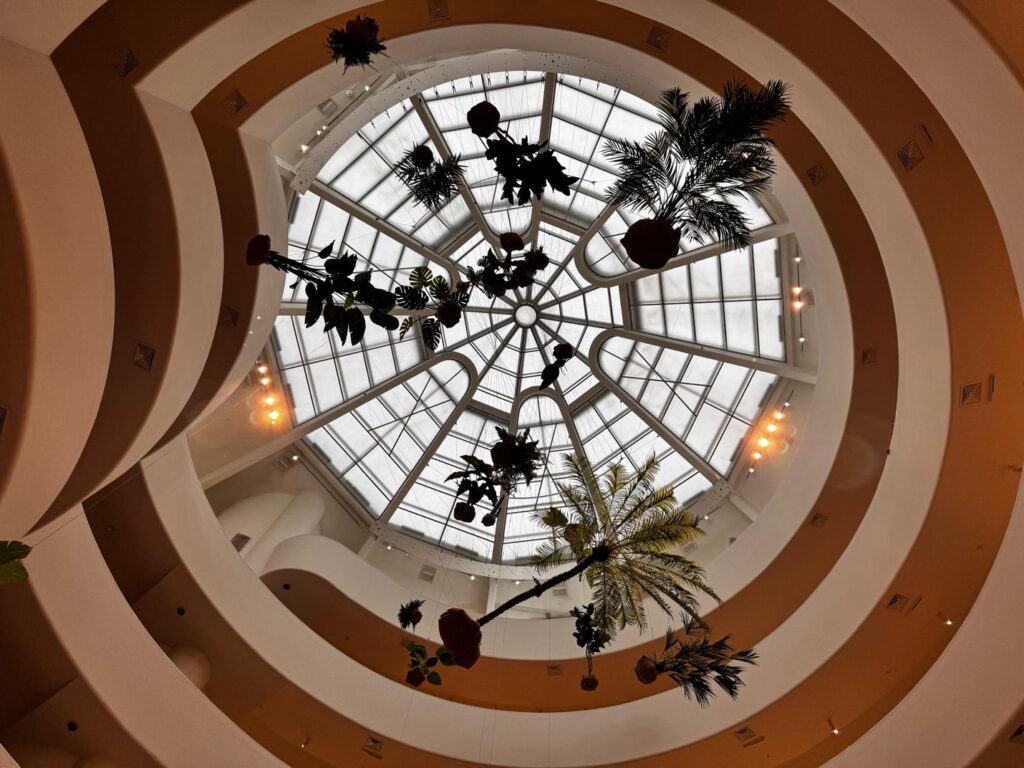
Through this subtle yet radical gesture, Johnson expands the scope of what an art object can be. His potted plants invite us to think of cultural memory, sensory nourishment, and renewal not as something confined to the past, but as something alive and growing in the present, yet rooted in history, always organic, authentic, biophilic, and alive, reaching toward the light.
The exhibition “Rashid Johnson: A Poem for Deep Thinkers,” along wth a public performance series, is up through January 19, 2026, at the Guggenheim, New York, NY.
Gayil Nalls, PhD, is an interdisciplinary artist and theorist and the founder of the World Sensorium Conservancy.
.
Plantings
Issue 54 – December 2025
Also in this issue:
Is There Such a Thing as Too Many Houseplants?
By Molly Glick
The Female Artist Who Showed How Plants and Insects Relate
By Alice Alder
Smound: how entanglement of scent and sound shape our world
By Willow Gatewood
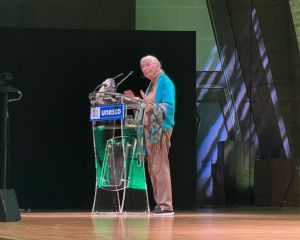
Jane Goodall: A Voice for the Planet
By Gayil Nalls

The Scents of Christmas: Aromatic Plants, Memory, and the Ecology of Celebration
By Gayil Nalls
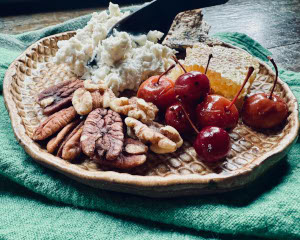
Eat More Plants Recipes:
Winter’s Jewels
By Laura Chávez Silverman
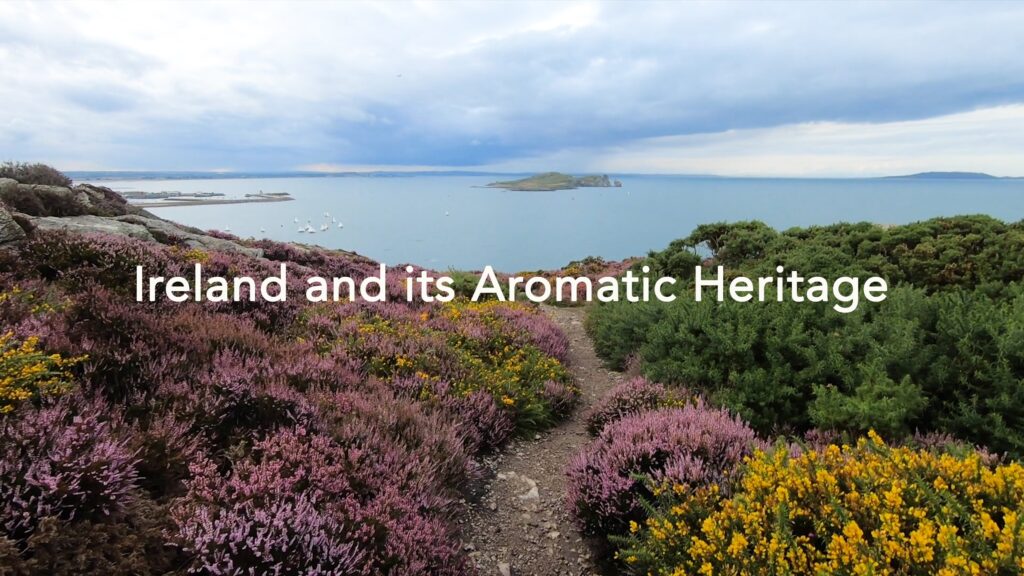
As Ireland transitions from the rich, smoky scent of peat-burning to a more sustainable future, its olfactory heritage is evolving. What will become the next iconic aromatic symbol of Ireland?
Click to watch the documentary trailer.
As Ireland transitions from the rich, smoky scent of peat-burning to a more sustainable future, its olfactory heritage is evolving. What will become the next iconic aromatic symbol of Ireland?