


The Science of a Sense of Place
By Gayil Nalls
Sign up for our monthly newsletter!
It can be difficult to articulate what draws us to a particular place. At times, the feeling arrives suddenly: a quiet recognition, as though we have come home to somewhere we have never been. A landscape, a quality of light, the scent of the air, or the taste of local food can awaken a sense of belonging that feels both immediate and deeply rooted. These experiences are rarely discussed with precision; we reach instead for metaphors—soul, magic, atmosphere—to describe the subtle yet powerful pull of place. Yet beneath this seemingly ineffable response lies a convergence of psychological, ecological, and neurobiological processes that together shape what we call a “sense of place.”
In environmental psychology, this phenomenon is often described as place attachment—the emotional bond between individuals and specific locations (Altman & Low, 1992; Scannell & Gifford, 2010). Place attachment emerges through lived experience, memory, and cultural meaning, but it is also shaped by sensory perception. The concept of topophilia, introduced by geographer Yi-Fu Tuan, further captures this affective connection, suggesting that human beings develop love for place through the interplay of environment, perception, and meaning (Tuan, 1974).
Neuroscience offers deeper insight into why certain places feel immediately familiar or significant. Sensory input, especially olfactory cues, is processed through the limbic system, including the amygdala and hippocampus, regions associated with emotion and memory (Herz & Engen, 1996; Sobel et al., 2000). Unlike other senses, smell has a direct neural pathway to these areas, which helps explain why a particular scent, salt air, damp earth, wood smoke, or flowering plants, can evoke powerful autobiographical memories and emotional states. This “Proustian effect” demonstrates how sensory environments become encoded as lived experience, linking external landscapes to internal identity (Chu & Downes, 2000).
Beyond individual memory, places are also experienced as multisensory environments. Research in sensory studies and human geography shows that perception of place arises from the integration of visual, auditory, tactile, and olfactory stimuli into what some scholars describe as an “atmosphere” (Böhme, 1993; Pink, 2015). Atmosphere is not merely a poetic abstraction; it is a measurable, embodied experience shaped by air chemistry, soundscapes, microclimates, and ecological composition. The volatile organic compounds (VOCs) emitted by plants, terpenes, esters, and other aromatic molecules, play a significant role in defining the character of a place. These compounds influence not only scent but also human physiology, with studies showing that exposure to plant-derived volatiles can reduce stress, modulate immune function, and enhance mood (Li, 2010; Kalson et al., 2019).

Memory, time, and perception further layer themselves through cognitive mapping—the brain’s ability to organize spatial environments into meaningful structures (O’Keefe & Nadel, 1978). The hippocampus constructs internal representations of place, linking physical surroundings with personal narrative. Over time, repeated exposure deepens this mapping, but even first encounters can feel familiar if they resonate with prior sensory or cultural experiences. This may explain why certain environments—coastal landscapes, forests, or agricultural terrains—can evoke a sense of recognition that precedes conscious understanding.
Cultural context also shapes how we experience place. Landscapes are not neutral; they are imbued with meanings carried through ritual, cuisine, language, and tradition. Anthropologists and heritage scholars describe this as intangible cultural heritage, where knowledge and identity are transmitted through lived practices rather than fixed monuments (UNESCO, 2003). Within this framework, the sensory qualities of place, its scents, sounds, and seasonal rhythms, become part of a collective memory system. What feels like personal recognition may in fact be an encounter with deeply embedded cultural patterns.
Emerging research in ecological psychology suggests that humans are attuned to certain environmental features through evolutionary processes. The biophilia hypothesis proposes that humans possess an innate affinity for life and life-like systems, shaped by millennia of interaction with natural environments (Wilson, 1984). Landscapes that offer water, biodiversity, and ecological richness may therefore feel inherently restorative or “right,” triggering physiological responses associated with safety and well-being.
Taken together, these perspectives suggest that the “mysterious alchemy” of place is not beyond understanding, but rather a complex interplay of biology, memory, environment, and culture. A place is not experienced solely through its physical attributes; it is encountered as a living field of relationships—between molecules and memory, ecology and emotion, past and present.
What we call the spirit of a place may, in fact, be the moment when these systems align, when the external world resonates with the internal landscape of the self. In that convergence, time seems to fold, memory becomes immediate, and we feel that we belong.
Gayil Nalls, PhD is an interdisciplinary artist and theorist, and the founder of the World Sensorium / Conservancy.
Selected References
Altman, I., & Low, S. (1992). Place Attachment. Plenum Press.
Böhme, G. (1993). “Atmosphere as the Fundamental Concept of a New Aesthetics.”
Chu, S., & Downes, J. J. (2000). “Odour-evoked autobiographical memories.” Memory & Cognition.
Herz, R. S., & Engen, T. (1996). “Odor memory: Review and analysis.” Psychonomic Bulletin & Review.
Kalson, N. S., et al. (2019). “The effect of natural environments on health.” Environmental Research.
Li, Q. (2010). Forest Bathing: How Trees Can Help You Find Health and Happiness.
O’Keefe, J., & Nadel, L. (1978). The Hippocampus as a Cognitive Map.
Pink, S. (2015). Doing Sensory Ethnography.
Scannell, L., & Gifford, R. (2010). “Defining place attachment.” Journal of Environmental Psychology.
Sobel, N., et al. (2000). “Sniffing and smelling: separate subsystems in the human olfactory cortex.”
Tuan, Y.-F. (1974). Topophilia.
UNESCO (2003). Convention for the Safeguarding of Intangible Cultural Heritage.
Wilson, E. O. (1984). Biophilia.
Plantings
Issue 58 – April 2026
Also in this issue:
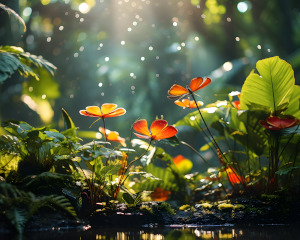
Earth Day: What Is Biodiversity—and Why Does It Matter?
By WS/C
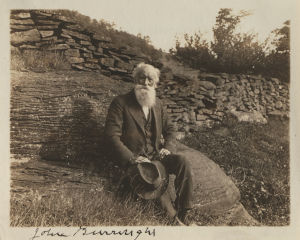
John Burroughs: “The Incense of April”
By Clara Muller

Reflections on the Hundred Acre Wood
By John Steele

Antibacterial Herbs: Ancient Remedies, Modern Science
By Gayil Nalls

You probably agree with the animals on which bird calls, frog noises and cricket chirps are most attractive – new research
By Logan S. James

Eat More Plants Recipes:
Vegan Confetti Coleslaw
By Gayil Nalls
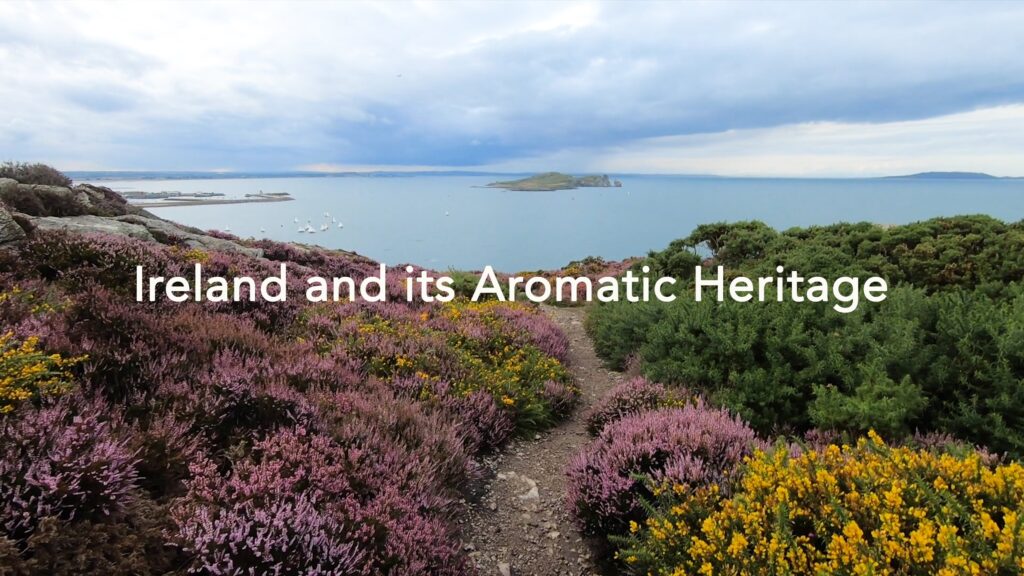
As Ireland transitions from the rich, smoky scent of peat-burning to a more sustainable future, its olfactory heritage is evolving. What will become the next iconic aromatic symbol of Ireland?
Click to watch the documentary trailer.
As Ireland transitions from the rich, smoky scent of peat-burning to a more sustainable future, its olfactory heritage is evolving. What will become the next iconic aromatic symbol of Ireland?