

The Vampire Paradox
“I feel the need…the need for seed!”
(Apologies to Top Gun)
By Lewis H. Ziska
Sign up for our monthly newsletter!
Ever gone on a nature walk? Notice all the plants? More importantly, did you notice that there wasn’t just one kind of plant, but many—all differing in size and shape, with different flowers, different leaf shapes, and different heights?
Nature promotes diversity. Despite billions of years of natural selection, there is no perfect set of plant DNA, adaptable to all environments. No single plant type or architecture that is optimal in every environment.
Modern society, on the other hand, avoids diversity when it comes to food choices. We like what we like, and draw “comfort” from food choices in a chaotic world.
On any given day, about a third of Americans eat fast food. Among fast food outlets, despite Burger King’s bid for the throne, McDonalds reigns supreme, with about 70 million customers every day on a global basis1. Among menu items, French fries are their best-seller, 9 million pounds of fries are eaten every day.
There is comfort in the consistency, quality, and taste of food. But to achieve this culinary goal, McDonalds isn’t going to choose among thousands of different potato varieties for their fries—they want genetic uniformity. Would you keep visiting McDonalds if every time you visited the fries tasted different? No.
To maintain universal consistency, McDonalds only buys a handful of potato varieties, mostly Russets, Russet Burbank being the most popular2. This reliance on a small subset of available plant genetics is not, of course, restricted to McDonalds. In the U.S. for example, all modern U.S. soybean varieties can be traced back to a dozen strains from northeastern China; the majority of hard red winter wheat varieties grown in the U.S. originate from just two lines imported from Poland and Russia3,4. Although there are tens of thousands of rice lines, only about a dozen of these are used for your Uncle Ben’s or Rice Krispies. More than two-thirds of US corn acreage is planted using only four distinct varieties5. Anheuser-Busch relies on a small subset of barley for their beer; Frito-Lay depends on a small subset of corn lines for their chips; apple growers rely on a few dozen apple varieties that must be carefully cultivated. Such lack of diversity also extends to livestock, most chickens raised for meat are a Cornish cross hybrid; 99% of the turkeys consumed are Broad-Breasted Whites; etc., etc. Nature may provide for tremendous genetic diversity, but industry dictates consistency and uniformity6-8. Our modern assembly line approach: More! Faster! Cheaper!, relies on uniformity, differences are to be avoided9.
And there are consequences.
The obvious ones are taste—flavor. Sure, a bigger strawberry looks better, but the smaller strawberries of your grandmother’s era tasted (Chef’s kiss). Nutrition? That has declined as well. As we’ve hybridized, our Faster! More! Cheaper! Model has made certain that modern fruits and vegetables may be bigger, but that they have less nutritional values, from strawberries to mangos, bananas, tomatoes….it’s a long list10.
But the greatest consequence is less evident, evolutionary selection.
Genetic diversity is the primary means to survive shifting environments and pest pressures. Without this diversity, a monoculture of corn, or wheat, or barley or rice, etc. is naked against a vast array of enemies. Russet Burbank for all its sterling properties as a French fry, is 130 years old, uses a tremendous amount of water, has a long maturing time, and because it is grown continuously as a monoculture, requires tremendous amounts of chemicals to keep pest pressures manageable11.
As the environment changes, as climate change segues to center stage and 1 in a hundred year extremes now become 1 in ten-year disruptions, the vulnerability of monocultures, of growing only one variety, becomes self-evident. Yes, we can control the pests, which proliferate with monocultures– by chemical means, but chemicals cannot control rapid climatic shifts. Only genetic diversity can do that. And as we transition to industrial agriculture, we lose our diversity, our ability to counter climate change through genetic selection–limiting our ability to grow food8.
Recent data suggests that the world’s seed bearing plants have been disappearing at a rate of nearly 3 species a year since 1900, a rate that is as high as 500x that would be expected if compared to natural forces alone12. Such disappearance is even more remarkable among crop seeds. It is estimated that we have lost over 300 varieties of peas, 307 lines of sweet corn, over 400 kinds of radish, two genetically unique seeds of cabbage13.
Based on an analysis by the Food and Agricultural Organization (FAO) more than 90 percent of crop varieties have disappeared from farmers’ fields, along with local knowledge and the culture and skill in raising such varieties14. Such loss is concurrent with farmers switching to genetically uniform, high-yielding varieties endemic with the modern agricultural model, Faster!, More!, Cheaper!.
Such varieties, as can be imagined, are designed by seed companies. Not only designed, but patented, and that is an important distinction. Because when you patent something, it has monetary value—and you don’t want it to change. Because if those genetics change, you lose the royalties. Since the 1990s, when laws were introduced to provide intellectual protection to bioengineered crops, four corporations, Bayer, Corteva, ChemChina and Limagrain, now control more than 50% of the world’s seeds15.
Such patented, genetically modified seeds are now the mainstay of industrial agriculture. In the U.S., approximately 95% of the soybean, 96% of the cotton, 92% of the corn, 95% of canola, 99.9% of sugar beets are all GMO patented16.
By patenting these seeds, corporations are, by definition, protecting only one set of genetics, not two, or three, or many… one. Protecting them over time as well, because they limit how a farmer can use the patented variety. Currently, it is standard practice to have buyer agreements with farmers that prevent them from saving seeds from previous crops to trade with other farmers or to exchange for different varieties17.
These corporations are strict. Monsanto, for example, has set aside millions to investigate and prosecute anyone who should, accidentally, or on purpose, save their GMO seeds. But what if, God forbid, a stray bit of GMO pollen crosses with some of the other plants in your field? Just ask Percy Schmeiser, who was sued by Monsanto for $145,000 in 1999 ($275,000 in today’s dollars)—not because he had planted the seed illegally—but because some of the non-GMO canola plants on his land had—gasp—received pollen (had sex!) with some of the nearby GMO canola plants. And Monsanto owned those genes. Percy lost his court battle, and subsequent appeals18.
Percy had been saving his canola seed for 50 years. After the litigation, he stopped. However, Monsanto (now Bayer), continues to sue farmers for patent infringement, even if the farmers replant non-GMO seeds from previous years. Recently, Bayer sued four Missouri farmers for illegally applying dicamba while saving and replanting seeds from Bayer’s genetically engineered crops19.
Government officials (often former executives of the company now under regulation), are doing little to address genetic uniformity. Just the opposite. The World Trade Organization requires member states — 164 countries– to have some form of legislation providing patent protection for crop varieties. Many countries are fulfilling this requirement by signing on to the International Union for the Protection of Varieties of Plants (UPOV), an organization that places limits on the production, sale, and exchange of seeds20. UPOV, as well as the major seed corporations, insist that such efforts, by encouraging the patenting of new seeds, provide a means to profit from any new varieties that could be developed. Overall, seed marketing laws for many countries prevent the sale, and sometimes even the sharing, of seeds that haven’t been certified to meet certain standards, such as a high commercial yield under industrial farming conditions.
Hang on–if corporations are offering up new whiz-bang gmo plants using new gene editing state-of-the-art CRISPR (Clustered Regularly Interspaced Short Palindromic Repeats) technology, that could produce dozens or hundreds of new varieties each year, that of itself could be a means to improve diversity, the increased genetics needed to address climate and conflict. Problem solved!
Not happening. At present two single traits, herbicide and pest (insect) resistance account for about 95% of all gmp crops planted globally9. Part of the difficulty is scientific. Yes, it’s easy to move one or two genes around and to get them to express a desired trait over a range of environments. But for complex plant responses (like drought tolerance or shelf life or higher yields), you need a level of genetic mastery that GM technology has yet to achieve. Yield for example, is an integration of thousands of specific events from germination to nutrient acquisition to leaf development to photosynthesis to flowering to protein mobilization in the seed. You don’t just have to move a few genes around; you have to move hundreds of genes around. Then your final engineered plant has to be able to deliver that product, not in the lab, but in the field– across a range of environments. And while a single gene-trait switch (e.g. herbicide resistance) can do so, getting lots of different traits and the underlying chemical switches to transition smoothly for different soils, different light levels, different amounts of water and different pest pressures only happens through evolution.
Another difficulty is money; yes, implementing gmo technology and then providing a product that exploits that technology can be a money-spinner, just ask Bayer; but genetically engineering something like golden rice (or drought tolerance or higher yields) will involve long development times and high upfront costs with uncertain results. “Long development times”, “High upfront costs” are phrases that lack business appeal.
But the need to increase diversity, especially in regard to rapid climate change, has never been greater. Reducing seed diversity, promoting genetic erosion when all genetic options need to be on the table, is the absolute opposite of what we should be doing to adapt to climate change.
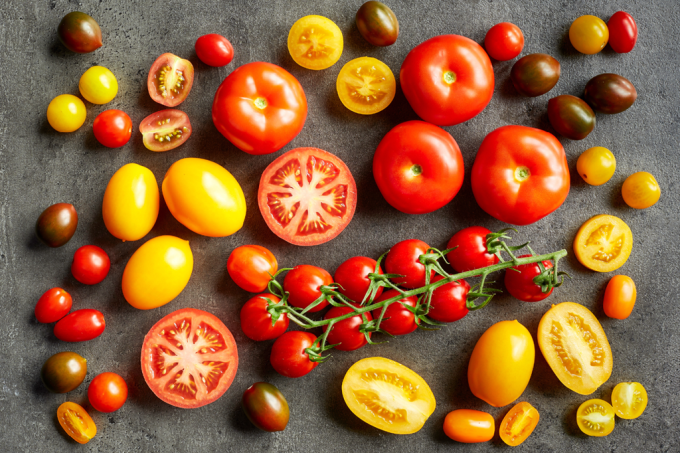
The danger of mono-cropping, limiting genetic diversity, is increasingly recognized, not at the corporate level, but culturally. There is a groundswell of concern to try and save, to “bank” seed for future use, as many seeds from as many locations as possible. These efforts are global in nature, from La Via Campesina, The Alliance for Sustainable and Holistic Agriculture in India, AFSA, the Alliance for Food Sovereignty in Africa, Let’s Liberate Diversity in Europe, Seed Savior Exchanges in the US. The Andean Alliance for Sustainable Development (AASD),. Such networks allow farmers and communities to preserve and diversify seed genetics, to preserve food culture, to pass such traits onto future generations (Figure 1).
Perhaps the pinnacle of such efforts is a fortress, an Elsa-like frozen treasure buried beneath an icy mountain on an island above the arctic circle, the Svalbard global seed reservoir. Sometimes referred to as the “Doomsday” vault. A resting place for all of the world’s crop seeds.
The concept was initiated in the 1980s by Cary Fowler, an American agronomist, but became reality after the U.N. signed an International Seed Treaty in 2001. The vault is managed by the Crop Trust, an international, non-profit whose mission is to conserve and make available the world’s crop diversity as a means to maintain food security. At present it has, behind its large steel doors amassed over a million different varieties of food crops21. The ultimate insurance policy for the world’s food supply. It has not, to date, accumulated all seed from everywhere; only recently did the Cherokee nation (in 2021) send its traditional heirloom seeds to Svalbard, the first indigenous people to do so22. Still, more seeds are arriving at the Doomsday Vault.
Trying to save seeds is, naturally, of benefit, it helps preserve existing diversity. But it doesn’t generate new diversity. And that’s a problem. Evolutionary fitness isn’t improved with producing new seeds using varieties that are closely related to you. Just the opposite, mixing genetics, increasing diversity results in what is called “heterosis”, where offspring show superior qualities relative to both parents. (Yes, it really can happen in nature).
This type of genetic “wilding” is, or was, endemic to agriculture. The introduction of wild genes into stable corn populations every 12 years23. In Appalachia farmers, scooping a handful of bean seeds and adding them to the seed stock of their neighbor to ensure diversity24. The use of wild grapes to save the global wine industry from Phylloxera, a deadly root disease25.
To save seed and preserve their traits in a closed vault is useful, but to assume that doing so will, Viola!, result in adaptation to a rapidly shifting climate is nonsensical. Climate is changing quickly; business-as-usual breeding efforts are not enough. We need seeds that are adaptive and resilient; climate change represents an intense and immediate need to scale up diversity now. Increasing genetic diversity is the antithesis of giant corporations—their interest is to make money through the proprietary promise of gmo seed, limiting diversity.
Evolution. Natural selection. It is very different than human selection. One considers rising CO2 and climate change, and the other is focused on licensing, patents and marketing.
Once you collect a seed, of any variety, evolution stops, its genetics are isolated. Can it stay alive? Sure, for hundreds, even thousands of years. But you can’t really evolve if you are isolated, waiting to be planted. It is the vampire paradox, once you are placed in a box and are unable to have children, evolution stops, it becomes harder to adapt to change.
It isn’t enough to just save the seeds in a cardboard coffin in an underground vault for future use–facilitating adaptation to a changing set of circumstances (and climate change would qualify in that regard) requires evolution, genetic selection. The opposite of what farmers are set for economically—a “McDonaldization”, a monocrop with the same genetics. Over and over again.
Not a problem! We will simply adjust to a northward migration of the crop as the climate changes, who cares if corn moves to Canada?26. Heck, the U.S. corn crop has already migrated 200 kilometers into Canada. Canada is known for its pleasant ways and friendly manner. Heck, they may even become the 51 state! Hmm.
But what do you think will happen when China wants to grow wheat in Siberia? A Sino-Soviet folk dance? What happens to rice growing in India, new paddies in the Himalaya’s?
There is a need not only to save some seed, but the plants themselves so that they can evolve. We recognize the need to preserve nature by establishing national parks, important–crucial—means to preserve unique genetics and biodiversity. To allow for evolutionary change, for adaptation. This is necessary for food security.
Hear those crystal wind chimes? It’s the Rainbows, Unicorns and Sprinkles express!.
What if we could, , as in natural parks, set aside land that is native to a given crop, like we do for native ecosystems with natural parks—land where the crop originated, where genetic diversity is high, where the ability to adapt—to evolve— is highest? What if we could create a living seed bank.
Let’s start with a simple example, a crop that is fundamental to our daily lives. The world’s most consumed psychoactive substance. No, not what you’re thinking.
Does the world run on Dunkin’?; no, but it runs on what Dunkin’ sells—coffee. Specifically, caffeine. It is estimated that 74% of Americans drink coffee every day, with an average consumption of 3-5 cups, or 400 million cups of coffee every day27. Obviously, if climate altered coffee availability, or caffeine content, the level of public crankiness would ratchet up to an 11.
There is evidence that climate change is already having an impact. Warmer temperatures are exacerbating coffee insect pests, like the coffee berry borer (hard to say 3x fast), and the coffee leaf miner; not to mention coffee leaf rust, a fungal pathogen that can devastate coffee plantations28. There is even some evidence that rising carbon dioxide (CO2) levels may directly reduce caffeine content, Yikes!29.
As climate drives new pest pressures, there is an obvious need to look for resistance among native coffee lines. In this instance, that means going back to the region where coffee is endemic and genetically diverse, the ancient coffee forests of the Ethiopian plateau. Forests that will, adapt genetically to that change, to evolve.
But here, another issue inextricably linked to climate is raised– conflict. Ethiopia is not the most stable of countries. Currently, there is a year-long conflict between the Tigray People’s Liberation Front (TPLF) and the Ethiopian government, with thousands of casualties. Oddly enough, preserving land where coffee originated is not on either side of the agenda30.
And, sadly, while few in the U.S. or elsewhere care about inter-tribal warfare, they would very much care if coffee prices soared or became unavailable. Preservation of these lands, then, could, perhaps, even be a reason to urge peace and prevent further conflict by other governments, one conducted under caffeinated self-interest.
Such needs to preserve land native to plants that are culturally, ethically, and economically important as a means to preserve not only genetics, but evolutionary response, is a crucial, if overlooked, aspect of adaptation. Such preservation, the establishment of living seed banks can extend from coffee in Ethiopia to wild tomatoes in the Andean region of South America; apples from Kazakhstan, potatoes from Peru, fonio from the foothills of western Africa, avocados from Mexico, and on and on. To identify and maintain these areas is crucial to preserve genetic diversity, and to allow evolution to climate change in real time.
There is another source of Rainbows, Unicorns, and Sprinkles—your backyard. There are a number of citizen groups—from Appalachia31to India32—who are dedicated to preserving the remaining seed of many different heirloom crop varieties, strains of everything from eggplant to lettuce, from corn to tomatoes in home gardens. Remaining, because some estimates suggest that we have lost up to 90% of our vegetable varieties33.
Want to help? Each year, there is a citizen science program run by Seed Savers Exchange, a non-profit out of Iowa that has, by their estimate, conserved over 17,000 plant varieties34. You can be a volunteer and plant heritage seeds in your own garden, or you can provide data about how those plants grow, how they taste. Sign up for their Adapt Program!35
Identification of diversity through these citizen science efforts is incredibly important. Only through promoting diversity will we be able to identify crop varieties that are drought and temperature tolerant, resistant to climate induced shifts in disease, or CO2 responsive. Varieties that are evolving to climate change in real time. Think of it as the DEI for the crop movement.
As exemplified by McDonalds, modern food practices avoid diversity; our assembly-line approach necessitates genetic uniformity. But promoting diversity, insisting on it, is a rainbows, unicorns, and sprinkles solution that is imperative and immediate.
Boxing seeds in a frozen crypt won’t do it. Evolution promotes diversity. Adaptation to climate change and continued food security demand it. Living seed banks are the way to go.
Dr. Lewis H. Ziska is an American plant physiologist, academic, and author. He is an associate professor of environmental health sciences at Columbia University’s Mailman School of Public Health. He served for nearly twenty-five years as a scientist at the U.S. Department of Agriculture, resigning in 2019 to protest interference by the Trump administration with his research into the effects of rising carbon dioxide on rice cultivation. His books include Agriculture, Climate Change, and Food Security in the Twenty-First Century: Our Daily Bread (2017) andGreenhouse Planet by Columbia University Press.
This article is adapted from an excerpt of the forthcoming book, “Climate Change and Hunger: Rainbows, Unicorns and Sprinkles Solutions“.
REFERENCES. Part 2. Down on the Farm. Chapter 2. The Vampire Paradox.
2https://idahopotato.com/dr-potato/what-variety-of-potatoes-did-mcdonalds-use
3Harlan, J.R., 1998. The living fields: our agricultural heritage. Cambridge University Press.
4Paulsen, G.M. and Shroyer, J.P., 2008. The early history of wheat improvement in the Great Plains. Agronomy Journal, 100, pp.S-70.
5Schapiro, M., 1985. Seeds of disaster. The Trumpeter, 2(2).
6Tanksley, S.D. and McCouch, S.R., 1997. Seed banks and molecular maps: unlocking genetic potential from the wild. science, 277(5329), pp.1063-1066.
7Swarup, S., Cargill, E.J., Crosby, K., Flagel, L., Kniskern, J. and Glenn, K.C., 2021. Genetic diversity is indispensable for plant breeding to improve crops. Crop Science, 61(2), pp.839-852.
8Dwivedi, S.L., Van Bueren, E.T.L., Ceccarelli, S., Grando, S., Upadhyaya, H.D. and Ortiz, R., 2017. Diversifying food systems in the pursuit of sustainable food production and healthy diets. Trends in plant science, 22(10), pp.842-856.
9Roberts, P., 2009. The end of food. Houghton Mifflin Harcourt.
10Davis, D.R., 2009. Declining fruit and vegetable nutrient composition: What is the evidence?. HortScience, 44(1), pp.15-19.
11Michael Pollan, https://www.youtube.com/watch?v=dsyLusDloSM
12https://www.nature.com/articles/d41586-019-01810-6.
13Khoury, C.K., Brush, S., Costich, D.E., Curry, H.A., De Haan, S., Engels, J.M., Guarino, L., Hoban, S., Mercer, K.L., Miller, A.J. and Nabhan, G.P., 2022. Crop genetic erosion: understanding and responding to loss of crop diversity. New Phytologist, 233(1), pp.84-118.
14https://www.fao.org/3/y5609e/y5609e02.htm
17https://seedalliance.org/publications/a-guide-to-seed-intellectual-property-rights/#:~:text=A%20goal%20of%20OSA’s%20program,to%20conserve%20culturally%20important%20varieties
19https://investigatemidwest.org/2023/03/29/bayer-sues-four-missouri-farmers-for-illegally-spraying-dicamba-saving-and-replanting-seeds-from-the-companys-genetically-engineered-crops/
20https://www.upov.int/portal/index.html.
21Asdal, Å. and Guarino, L., 2018. The Svalbard global seed vault: 10 years—1 million samples. Biopreservation and biobanking, 16(5), pp.391-392.
22Grigoli, R., 2024. Planting The Seed: The Svalbard Global Seed Vault as an Archive in the Face of Uncertain Futures. The iJournal: Student Journal of the Faculty of Information, 9(2), pp.117-131.
23Beadle, G.W., 1980. The ancestry of corn. Scientific American, 242(1), pp.112-119.
24https://www.theguardian.com/environment/2023/oct/18/heirloom-seeds-genetics-sustainable-agriculture
25Gale, G., 2002, December. Saving the vine from Phylloxera: a never-ending battle. In Wine (pp. 70-91). CRC Press.
26https://www.scientificamerican.com/article/farmers-must-adapt-as-u-s-corn-belt-shifts-northward/
27https://www.driveresearch.com/market-research-company-blog/coffee-survey/
28Ziska, L.H., Bradley, B.A., Wallace, R.D., Bargeron, C.T., LaForest, J.H., Choudhury, R.A., Garrett, K.A. and Vega, F.E., 2018. Climate change, carbon dioxide, and pest biology, managing the future: Coffee as a case study. Agronomy, 8(8), p.152.
29Vega, F.E., Ziska, L.H., Simpkins, A., Infante, F., Davis, A.P., Rivera, J.A., Barnaby, J.Y. and Wolf, J., 2020. Early growth phase and caffeine content response to recent and projected increases in atmospheric carbon dioxide in coffee (Coffea arabica and C. canephora). Scientific Reports, 10(1), p.5875.
30https://www.foreignaffairs.com/ethiopia/ethiopia-back-brink
31Best, B., 2013. Saving seeds, preserving taste: heirloom seed savers in Appalachia. Ohio University Press.
32Santha, S.D., Sasidevan, D., Sowmya, B., Alfa, C.P., Anna Steffy, K.J., Kolathur, D., Ghurshida Janbeen, M.K. and Raman, A., 2024. Losing touch with mother seed: Insights from action research with small-scale farmers in Tamil Nadu, India. Journal of Political Ecology, 31(1), pp.1-14.
33https://www.fastcompany.com/1669753/infographic-in-80-years-we-lost-93-of-variety-in-our-food-seeds
34https://www.washingtonpost.com/climate-solutions/2024/09/20/seed-savers-heirloom-crops-biodiversity/
Plantings
Issue 55 – January 2026
Also in this issue:

Seeds of War
By Gayil Nalls

KEW’s Millennium Seed Bank: A Mission to Save Plant Life on Planet Earth
By Gayil Nalls
Creating Your Own Seed Bank
By WS/C
Learning the Language of Seed
By Liz Macklin
Seed Dreaming
By Willow Gatewood
Eat More Plants Recipes:
Rhus Juice: an Indigenous-inspired drink from the plant that connects continents
By Willow Gatewood
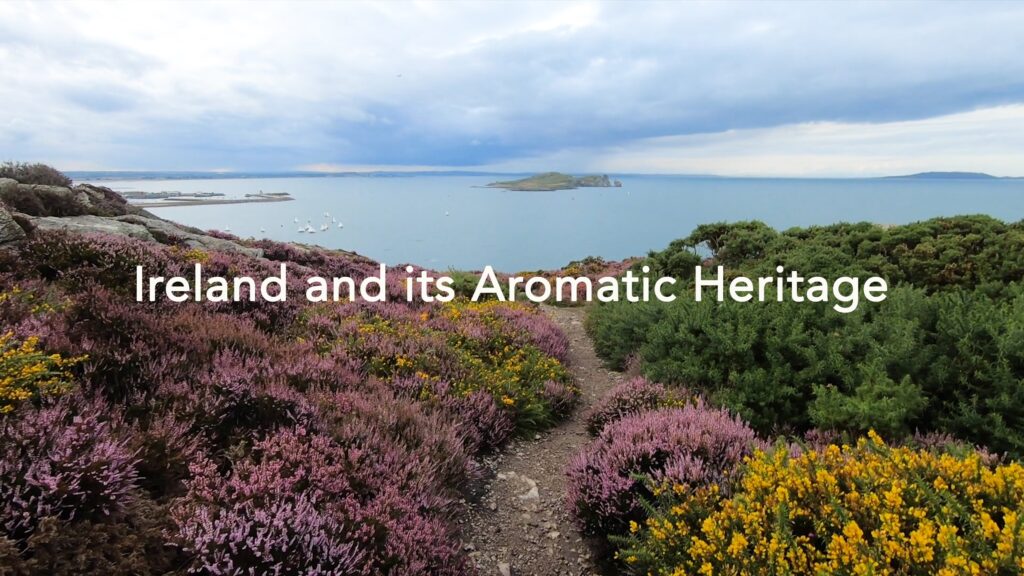
As Ireland transitions from the rich, smoky scent of peat-burning to a more sustainable future, its olfactory heritage is evolving. What will become the next iconic aromatic symbol of Ireland?
Click to watch the documentary trailer.
As Ireland transitions from the rich, smoky scent of peat-burning to a more sustainable future, its olfactory heritage is evolving. What will become the next iconic aromatic symbol of Ireland?