

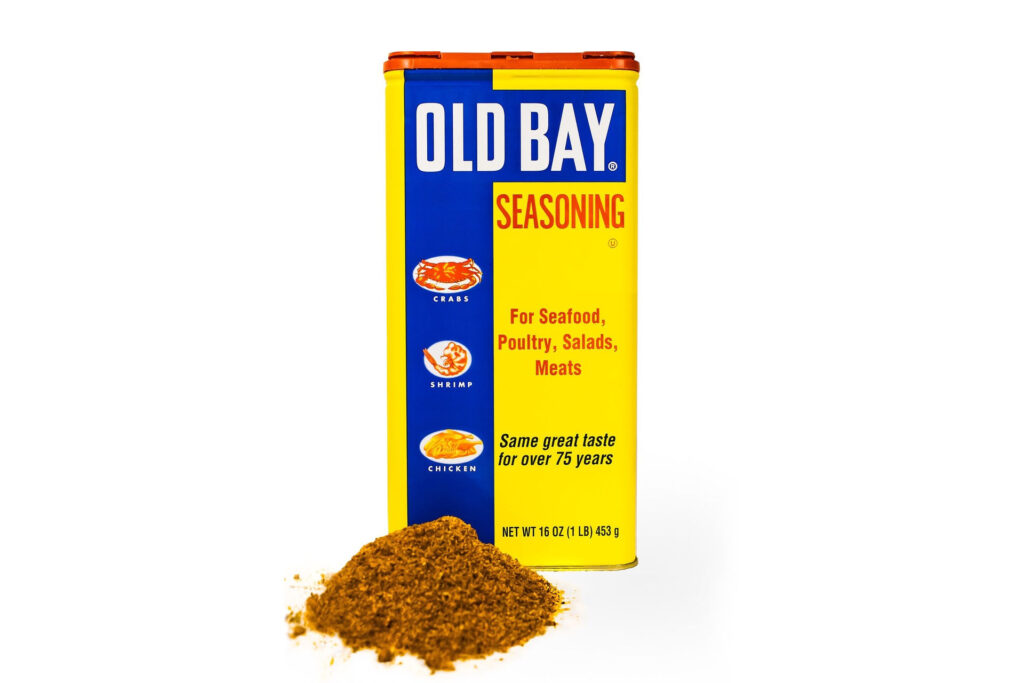
Why is Old Bay Maryland’s Culinary Anchor?
By Ian Sleat
Sign up for our monthly newsletter!
“Oh, so you eat a ton of Old Bay all the time…” I hear for the 9,000th time after telling yet another stranger that I grew up in Annapolis, Maryland.
“Of course I do,” I always reply. Truthfully, it is an everyday staple for me, and countless other Marylanders. Why, though?
Written across its signature yellow, red, and blue canister is a clear indication of its versatility: “For seafood, poultry, salads, meats.” It sits on our counters like a utility tool for flavor, ready to dust anything from crabs to corn on the cob to the occasional Bloody Mary. That little metal can is as much a part of the mid‑Atlantic landscape as the Bay Bridge and the slow crawl down Route 50 on a summer Friday.
Part of Old Bay’s magic is that it did not begin as a branding exercise; it began as survival. In 1940, a German‑Jewish spice maker named Gustav Brunn, who had fled Nazi persecution and briefly been imprisoned at Buchenwald, arrived in Baltimore with his family and a hand‑cranked spice grinder among his few possessions. He took work in the spice world, was quickly let go from McCormick, and then opened his own shop, the Baltimore Spice Company, across from the city’s wholesale fish market. There, with the smell of live blue crabs and the damp, metallic air of the harbor drifting in, he started to experiment.
Old Bay is plant-based except for salt; it’s a fascinating botanical blend of seeds, bark, berries, dried leaves, and flower buds drawn from multiple continents. Aromatic herbs (celery seed, bay). Warm spices (clove, allspice) Pungent seeds from the mustard plant with heat from paprika— the pepper plant. And depending on the formulation—ginger, cinnamon, nutmeg, and mace.
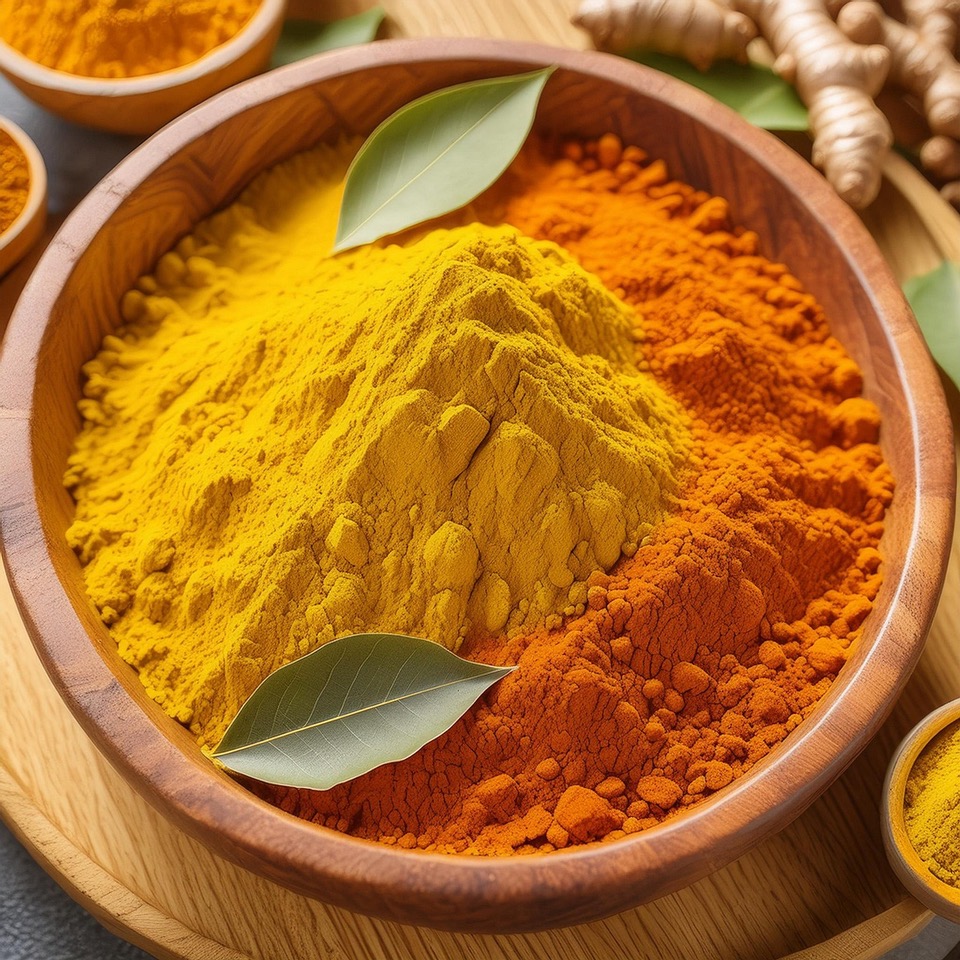
The blend began life under the somewhat less catchy name “Delicious Brand Shrimp and Crab Seasoning,” created to elevate simple steamed crabs at a time when richer, cream‑based preparations were considered fancier. Brunn folded in not only the expected celery salt and paprika, but also more unexpected spices like cinnamon, cloves, and nutmeg to keep competitors from copying him and to give the blend its warm, lingering aroma. He handed out free samples to crab houses and fishmongers, and soon the seasoning became entwined with Maryland’s booming crab culture in the 1940s. When he eventually renamed it Old Bay, after a steamship line that ran between Baltimore and Norfolk, the association between the spice and the water was sealed.
Smell, arguably, is the fastest route to memory, and Old Bay is a regional time machine. Crack the lid, and you get a dry, savory hit of celery salt first, then that peppery, slightly smoky tickle that promises heat without real danger. Underneath is a faint sweetness from those “odd” baking spices, like catching a whiff of holiday kitchen in the middle of July. For Marylanders, that scent holds a whole sensory archive: brown paper spread over picnic tables, newsprint stained orange, piles of blue crabs, and hands that smell like spice and bay water long after the feast is over.
If you grew up here, Old Bay is not just something you taste, but rather something you inhabit. It clings to your fingers, your T‑shirt, the steering wheel on the drive home from a crab feast. It laces the steam rising from pots on back decks, mixing with humid air and the faint brackish note that rolls off the Chesapeake. One shake over popcorn or french fries is enough to summon a whole estuary of memory: sunburned shoulders, someone’s uncle showing you how to pick a crab “the right way,” mallets thudding in erratic rhythm.
As Marylanders embraced the blend on crabs, they also began to put it on nearly everything else. Old Bay became the seasoning you reach for in the same absentminded way others reach for salt, finding its way into deviled eggs, potato salad, fried chicken, and even ice cream and beer. It has achieved a kind of cult status, a shorthand for state pride that shows up on T‑shirts, bumper stickers, and the occasional somewhat unhinged Old Bay tattoo. What started as an immigrant’s improvised recipe is now a flavor that many here would argue tastes like home.
There is irony mixed into the can, too. In 1990, decades after allegedly firing Brunn, McCormick bought Old Bay from his family and turned it into a global product. Yet even in its corporate form, it still smells intensely local. Open a can in a kitchen in Annapolis, and it behaves less like a product on a shelf and more like a signal flare: dinner, friends, paper‑lined tables, the whole ritual of eating with your hands. That is the quiet power of olfactory heritage. Certain smells, like Old Bay, anchor us to place and story, even as the can itself travels far beyond the Bay.
Ian Sleat is a music, culture, and food writer. You can subscribe to his newsletter “TO BE FRANK” here.
Sources
“Fun Fact: Where Does Old Bay Seasoning Originate From?” Conduit Street, Maryland Association of Counties, 21 Nov. 2024, conduitstreet.mdcounties.org/2024/11/21/fun-fact-where-does-old-bay-seasoning-originate-from/.
“The Fascinating History Behind Maryland’s Old Bay Seasoning You Might Not Know.” Food Republic, 3 Jan. 2025
Plantings
Issue 57 – March 2026
Also in this issue:

When Flowers Speak
By Gayil Nalls

Jane Colden: Naming the Living World
By John Steele

Ecological Grief: The Work of Mourning Landscapes and Lost Species
By Margherita Gandolfi

Asking Trees to Solve a Roman Conspiracy
By Molly Glick

Attract Pollinators to Your Garden and Other Tips
By WS/C
Eat More Plants Recipes:
Hearty Green Pasta Sauce
By Ian Sleat

As Ireland transitions from the rich, smoky scent of peat-burning to a more sustainable future, its olfactory heritage is evolving. What will become the next iconic aromatic symbol of Ireland?
Click to watch the documentary trailer.
As Ireland transitions from the rich, smoky scent of peat-burning to a more sustainable future, its olfactory heritage is evolving. What will become the next iconic aromatic symbol of Ireland?