

The Olive Tree
By John Steele
Sign up for our monthly newsletter!
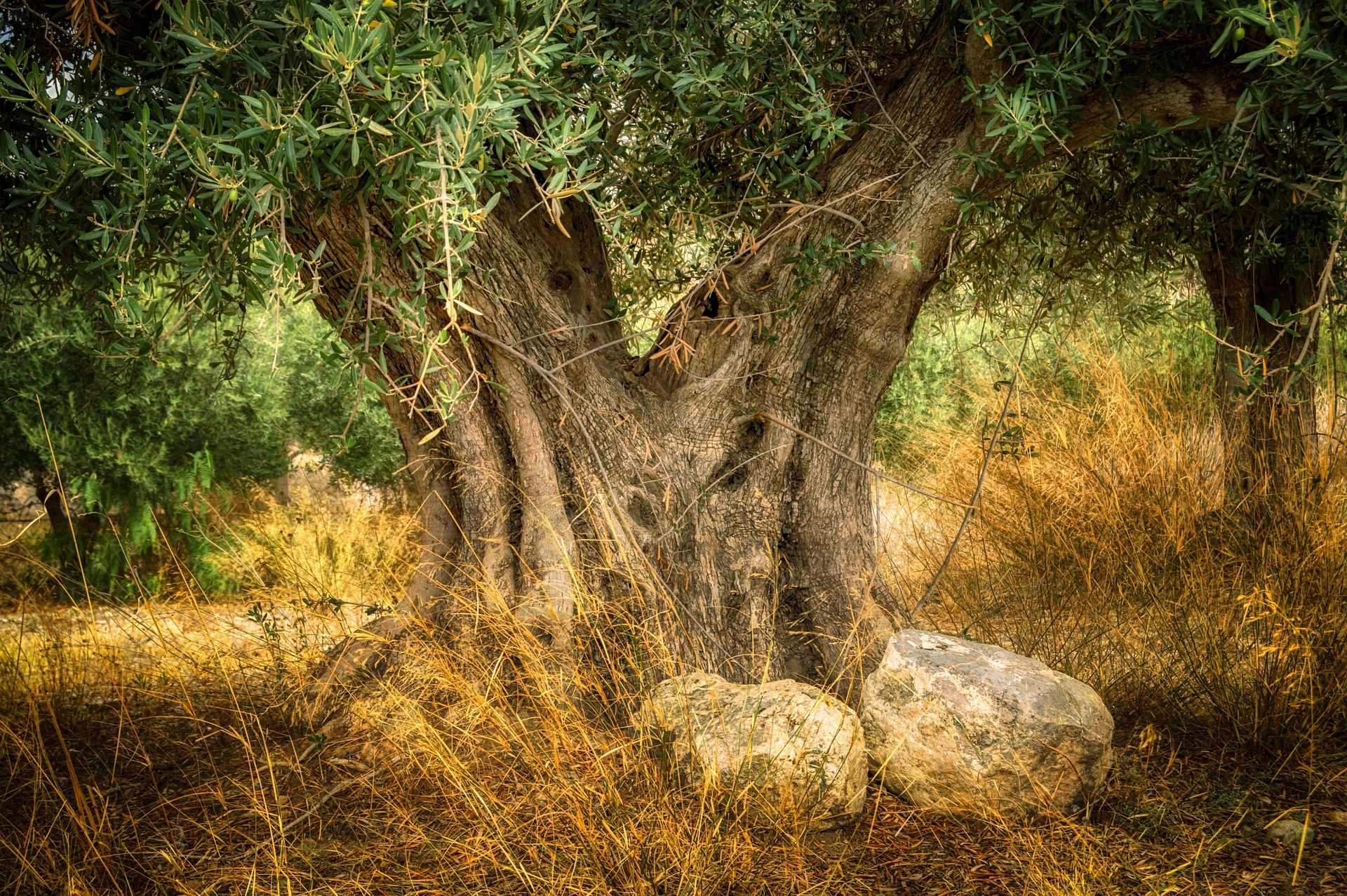
Greek mythology tells a story about how Athens got its name, and it is a story about choosing. Two gods wanted the city. Poseidon came up onto the Acropolis and struck the rock with his trident, and out of it poured a spring. But when the people went to drink, the water was salty.
Then Athena knelt and pressed something into the ground, and a tree grew. It was a small, grey, unremarkable tree. It did not gush. It had to be waited for. And the Athenians, having weighed the two gifts, gave the city to her.
Somewhere in the long prehistory of the Mediterranean, people really did decide that a slow tree was worth more than a spectacular spring. An olive grown from a cutting may take five or six years to give a useful crop and fifteen or twenty to come into its full strength. Whoever plants one is making a promise to people they will never meet.
The Athenians understood this. They kept a sacred olive on the Acropolis, said to be Athena’s own tree, and when the Persians burned the city in 480 BC, the tree burned with it. Herodotus reports that on the next day the Athenians who climbed up to make sacrifice found a new shoot already growing from the charred stump, as long as a man’s forearm. The Athenians read it as an omen. A botanist reads it as an olive doing exactly what olives do. Both readings come to the same thing: this is a plant that does not accept that it is dead.
The city built its ritual and much of its economy around that stubbornness. The victors of the Panathenaic Games were not given gold. They were given oil, pressed from the sacred groves and sealed in painted amphorae, scores of jars for a winning charioteer. To uproot one of those sacred trees could be punished by exile or death.
The Elders
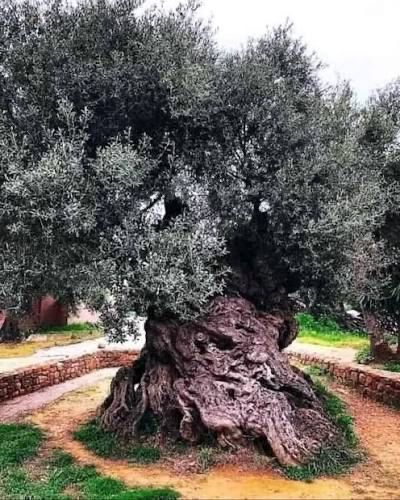
If you want to see what that stubbornness looks like after a very long time, go to the village of Ano Vouves in western Crete. There, in a small fenced enclosure, stands an olive tree whose trunk is nearly five meters across at the base. It does not look like a tree so much as a geological event. It is a tangle of grey columns twisted around one another and around nothing, because the center has long since rotted away and you can see daylight through it. Estimates of its age run from two thousand to more than three thousand years. It still bears fruit. In 2004, when the Olympic Games came home to Athens, branches were cut from it to crown the winners of the marathon.
There are others. In the village of al-Walaja, near Bethlehem, a tree the local people call Al-Badawi is claimed to be four or five thousand years old, and a family has served as its caretakers for generations. At Luras in Sardinia there is S’Ozzastru, a wild olive, and not far away Sa Tanca Manna, each credited with three thousand years or more. Near the Mount of Olives in Jerusalem, the eight old trees of the Garden of Gethsemane have been studied with radiocarbon, and their oldest surviving wood dates to the twelfth century, though their roots may be far older than the trunks above them.
Nobody can count the rings of an olive. The wood of an old olive grows irregularly, the heart decays, and what is left standing may be a later growth from an ancient root. We cannot date these trees precisely because they have outlived their own centers. The part of the tree that could have been counted is gone, and the tree has simply gone on without it.
That is a strange kind of individual. When we say a person is seventy years old, we mean that a single body has persisted for seventy years. When we say the Vouves olive is three thousand years old, we mean something looser, that a living thing has kept rebuilding itself on the same spot, from the same root, for a hundred human generations. It is less like a statue and more like a city. The streets are new; the plan is ancient.
How the Tree Is Made
The olive is Olea europaea, and its family, the Oleaceae, is a surprising one. Its cousins are the ash, the lilac, the privet hedge and the jasmine. The kinship shows in the small four-petalled flowers, creamy white and faintly scented, which the olive puts out in late spring in clusters so modest that most people who live among olive groves have never really looked at them.
The flowers are pollinated by the wind, not by insects, and most varieties set fruit poorly with their own pollen, so a grove does best with a mixture of kinds. The tree will not flower at all unless it has had a winter. It needs a spell of cold, weeks of nights near freezing, before it will commit to a crop. This is the botanical fact behind the old saying that the olive marks the edge of the Mediterranean. Go too far south and the winters are too warm for it to bloom. Go too far north and the frost kills it outright. The tree draws the boundary of a civilization with its own physiology.
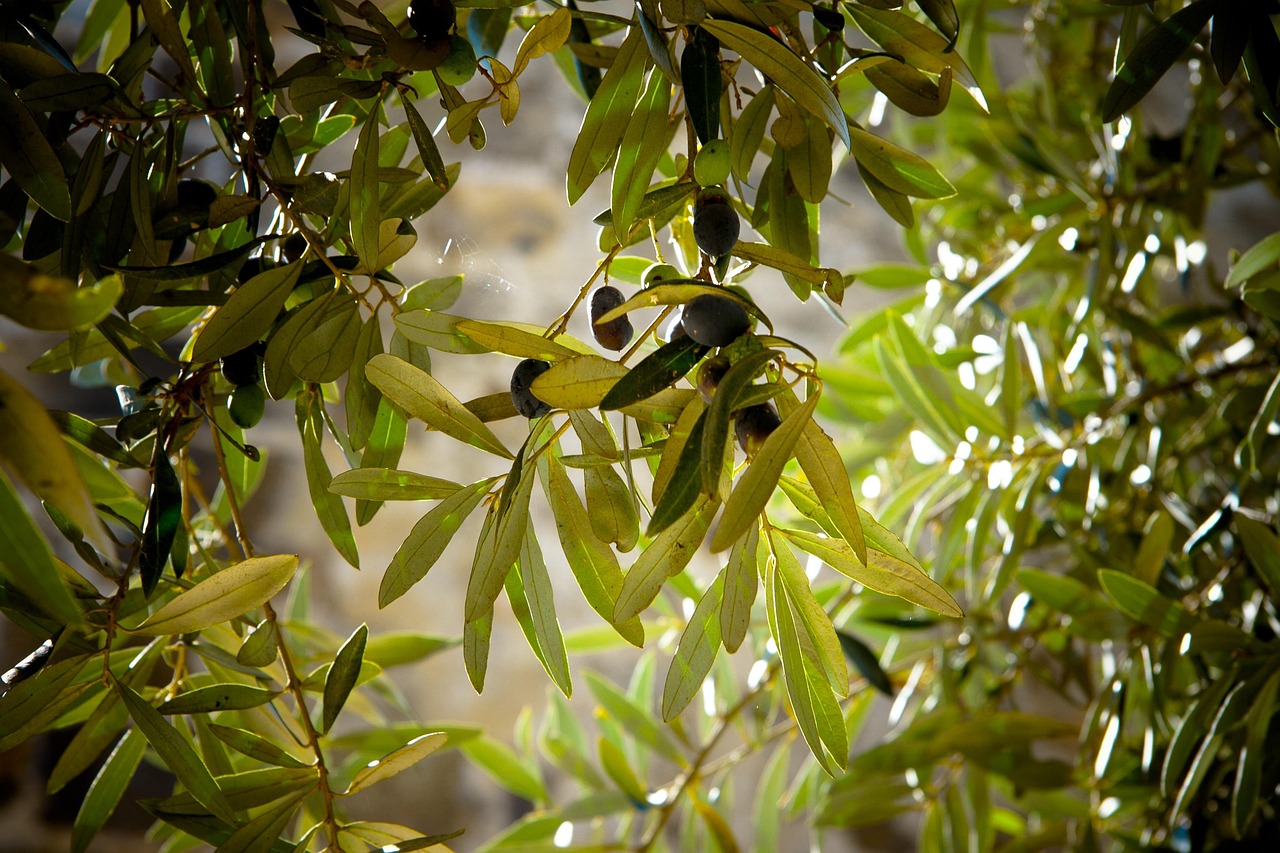
The olive leaf is narrow, leathery, dark green above and silver beneath, and the silver is the clue. Under a lens, the underside is covered with tiny scales, each a little umbrella of cells on a short stalk. They shade the pores through which the leaf breathes and trap a layer of still, moist air against them, so the tree loses less water in the long dry summer. When the wind turns the leaves over, the whole grove flickers from green to silver.
The wood solves a different problem. An olive does not grow as one unified trunk. Its living tissue runs in strips, each strip connected to particular roots and feeding particular branches. When one part of the root dies, the strip above it dies too, and the trunk divides into separate living columns, twisting as they go. That is why the old trees look as though they were wrung out by giant hands. It is also why they survive. A tree built of semi-independent parts can lose half of itself and carry on. At the base, in swollen knobs just below the soil, the olive keeps a reserve of dormant buds. Burn it, cut it, freeze it to the ground, and those buds will wake. The shoot Herodotus saw on the Acropolis came from there.
Then there is the fruit, which is botanically a drupe, like a cherry or a plum. It’s a skin, a fleshy middle, and a hard stone around the seed. The oddity is where the oil is. Most plants that make oil, the sunflower, the rape, the almond, pack it into the seed, where it feeds the embryo. The olive puts its oil in the flesh. Nobody is entirely sure why. Whatever the reason, it is what made the olive useful to us. You do not need to crack a seed, only to crush the fruit, and out comes an oil made mostly of oleic acid, stable enough to keep for a year in a clay jar.
But you cannot eat an olive from the tree. It is fiercely bitter, and the bitterness has a name: oleuropein, a compound the tree makes to discourage animals and microbes. Every table olive in the world has been treated in some way, soaked in brine, in water, in wood-ash lye, or dried in salt, to break that compound down. Somebody had to discover this. Think of the first person who looked at an inedible fruit and thought it worth the trouble of weeks of soaking. That takes imagination.
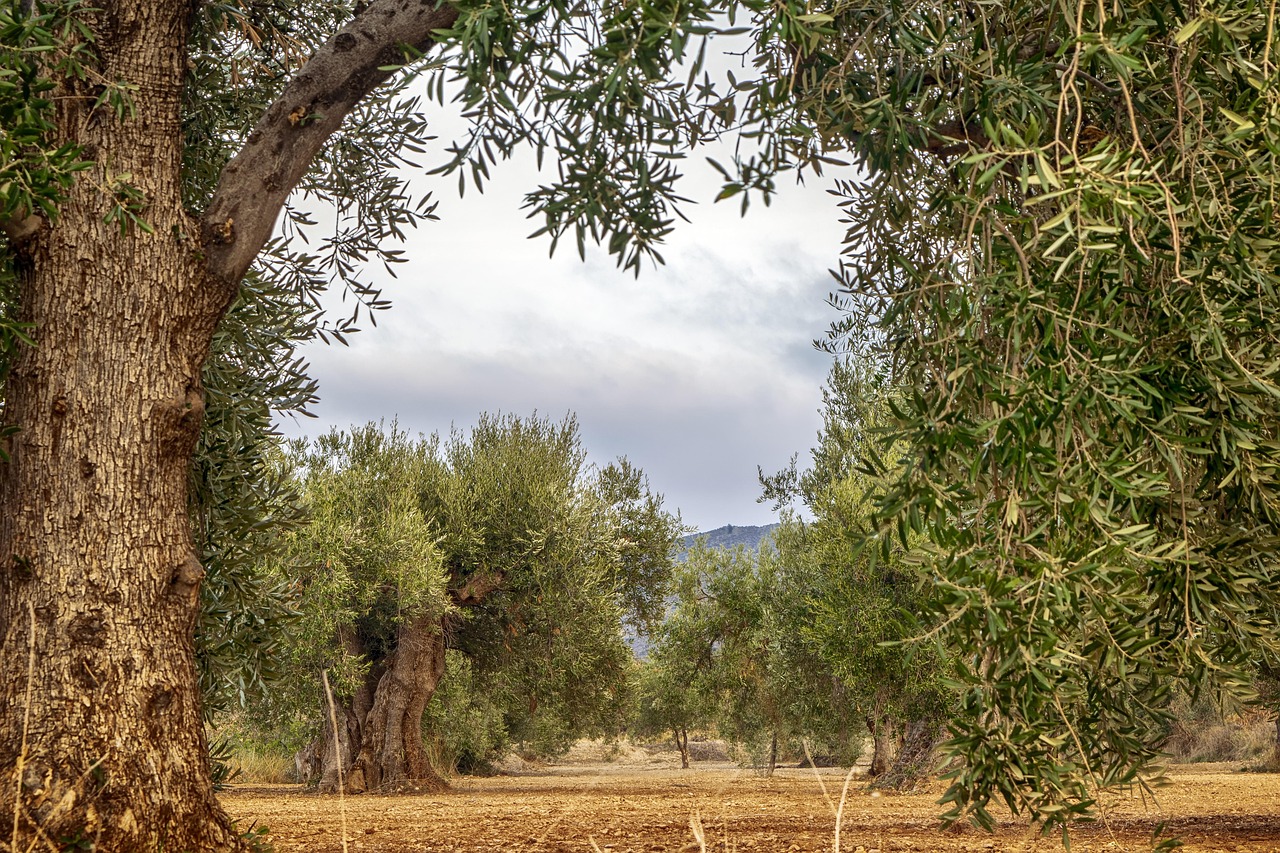
The larger experiment was domestication. The wild olive, the oleaster, is a thorny shrub with small fruit and little oil, and it still grows across the Mediterranean hills. Genetic studies point to the Levant as the place where people first selected better trees, perhaps seven thousand years ago, and residues of olive oil in pottery from that region reach back almost as far. The crucial trick was not breeding but cloning. An olive grown from seed does not resemble its parent. The good qualities scatter. So growers learned to take cuttings, or to graft a good branch onto wild rootstock, and to keep a fine tree going by copying it rather than by breeding it. A named variety like the Greek Koroneiki or the Spanish Picual is a single individual that has been cut and replanted across millions of trees and many centuries. When you walk through a grove, you may be walking among one tree, repeated.
That same sameness is now a danger. Since 2013 a bacterium called Xylella fastidiosa, carried by small sap-sucking insects, has been killing olives across Puglia in the heel of Italy. It blocks the channels that carry water up the trunk, and the trees scorch and wither from the top. Millions have died, among them trees that were old when the Normans came. A plant that has survived fire, frost and war for three thousand years can still be undone by an organism it never met before, spreading through groves where every tree is very nearly the same tree.
So we come back to the choice on the rock. Poseidon offered something that arrived all at once and could not be used. Athena offered something that asked for patience, and repaid it for three thousand years. The myth is a parable, but the botany shows that it was not a naive one. The olive really is a tree built to outlast catastrophe, by dividing, by resprouting, by hoarding buds underground against the day it is burned.
What it cannot do is protect itself against the dangers we create by moving the world’s organisms around faster than any tree can adapt. The groves of the Salento died so fast because most of their trees belonged to two old varieties, Ogliarola and Cellina di Nardò, copied by cutting across the whole peninsula, and both proved defenseless against Xylella. Yet in the same fields, trees of Leccino and of a newer variety called Favolosa sickened slowly or not at all. The difference lay in their genes, and it was there only because someone, long ago, had kept a different tree. A grove of wide varieties, with wild oleasters left standing at its edges, is a grove in which the next unknown bacterium will find trees it cannot kill. That was always the olive’s own defense, the variety of the wild, and we traded it away when we learned to clone.
The olive and the peoples of the Mediterranean made each other. They took a thorny shrub of the hillsides and, by cutting and grafting, turned it into a tree that pours out oil. The tree repaid us with light to read by after dark, food that keeps through the winter, oil to anoint an athlete or a king or a corpse, and a branch to hold out to an enemy when the fighting was done. No other plant is so bound up with the idea of a settled life, because no other asks so plainly that you stay. You cannot follow the herds and keep an olive grove. A people that plants olives has decided to live in one place for a long time, and to hand that place on.
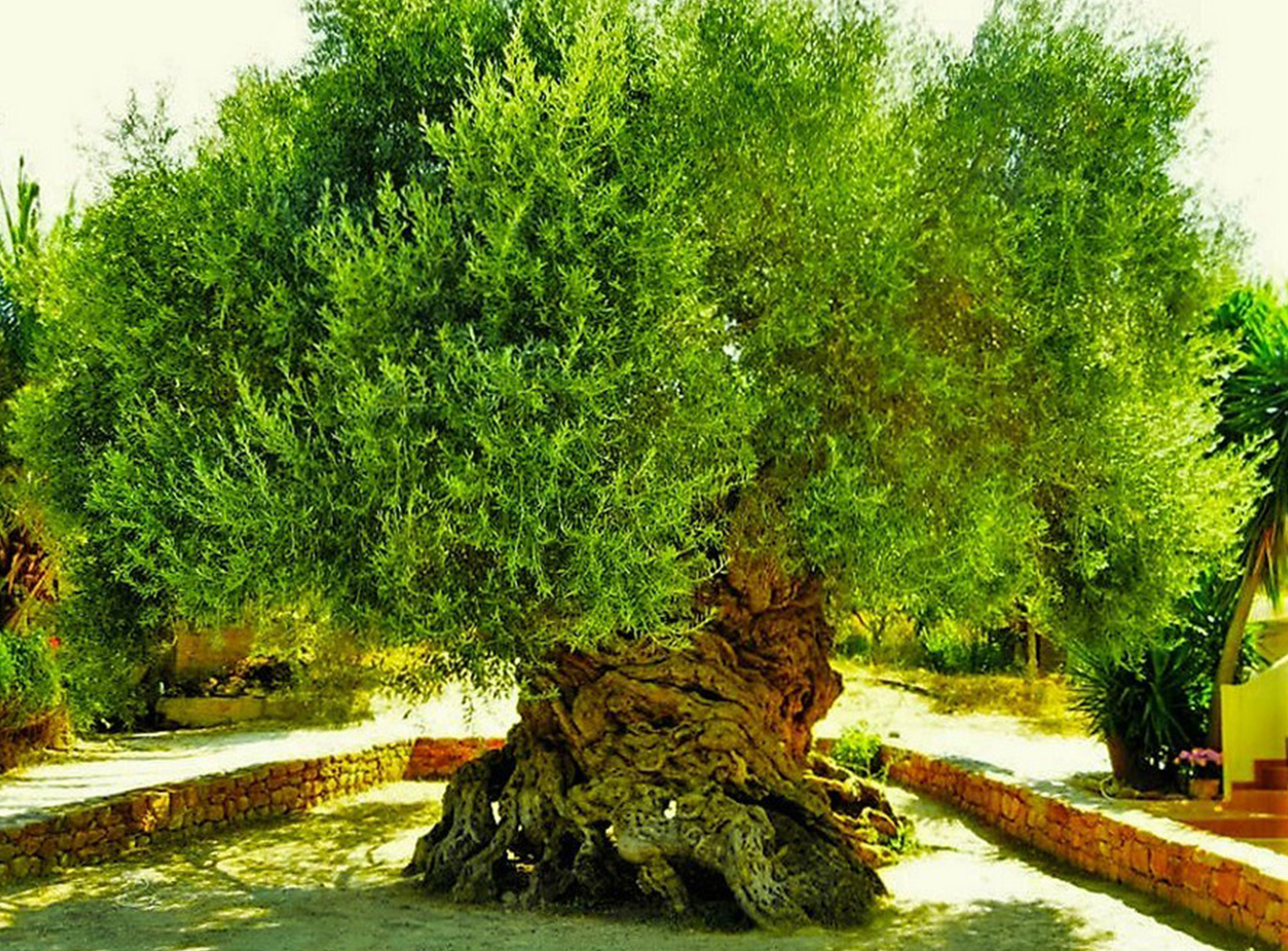
That is the real content of Athena’s gift. It was never the tree alone. It was the habit of mind the tree demands: to work for a harvest you may not live to see, and to trust those who come after you to go on working. The Vouves olive is alive today because a hundred generations each did a little and passed it on. That is also a fair description of civilization. We do not own the old trees. We are only this generation of their keepers, and the question the olive puts to us is whether we will hand on a grove as varied and as hardy as the one we were given.
John Steele is a Founder and Executive Editor of Blue Continuum.
Plantings
Issue 63 – September 2026
Also in this issue:
Romain Sordello: Sensory Pollution and the Ecology of Odor Landscapes
Clara Muller

Beyond GDP: Tenzin Seldon’s Vision for an Economy That Regenerates Life
Gayil Nalls

Lessons for the 21st century from a 200‑year‑old book by Frankenstein author Mary Shelley
Eileen Hunt

The Land Within Us
Gayil Nalls
Hucked and Shucked
Lewis H. Ziska
Eat More Plants Recipes:
Maple Oat Baked Apples
Gayil Nalls
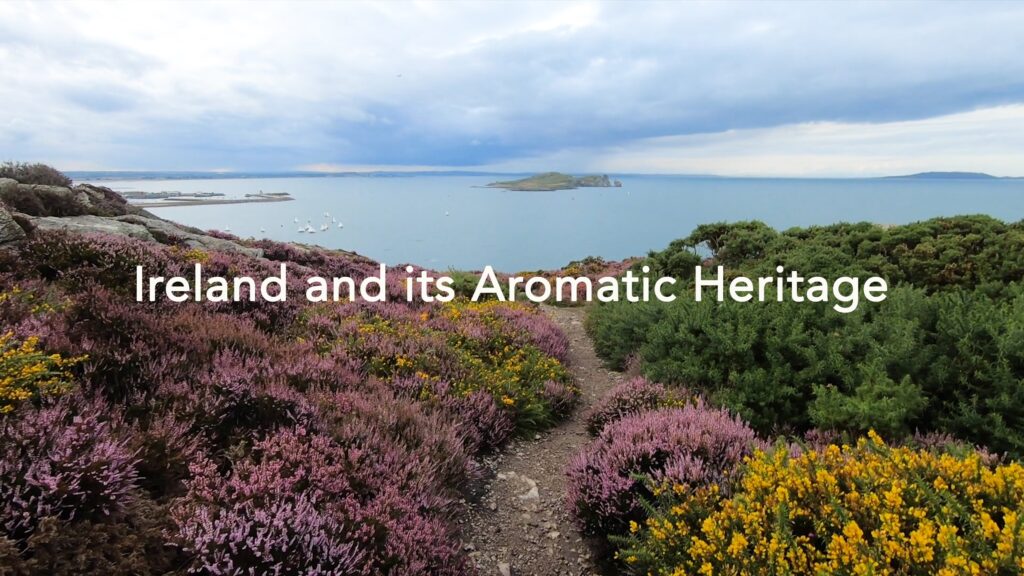
As Ireland transitions from the rich, smoky scent of peat-burning to a more sustainable future, its olfactory heritage is evolving. What will become the next iconic aromatic symbol of Ireland?
Click to watch the documentary trailer.
As Ireland transitions from the rich, smoky scent of peat-burning to a more sustainable future, its olfactory heritage is evolving. What will become the next iconic aromatic symbol of Ireland?