

Hucked and Shucked
The hidden costs of turning America’s corn crop into fuel
By Lewis H. Ziska
Sign up for our monthly newsletter!
“There’s a fine line between patriotism and corn.”
David L. Wolper
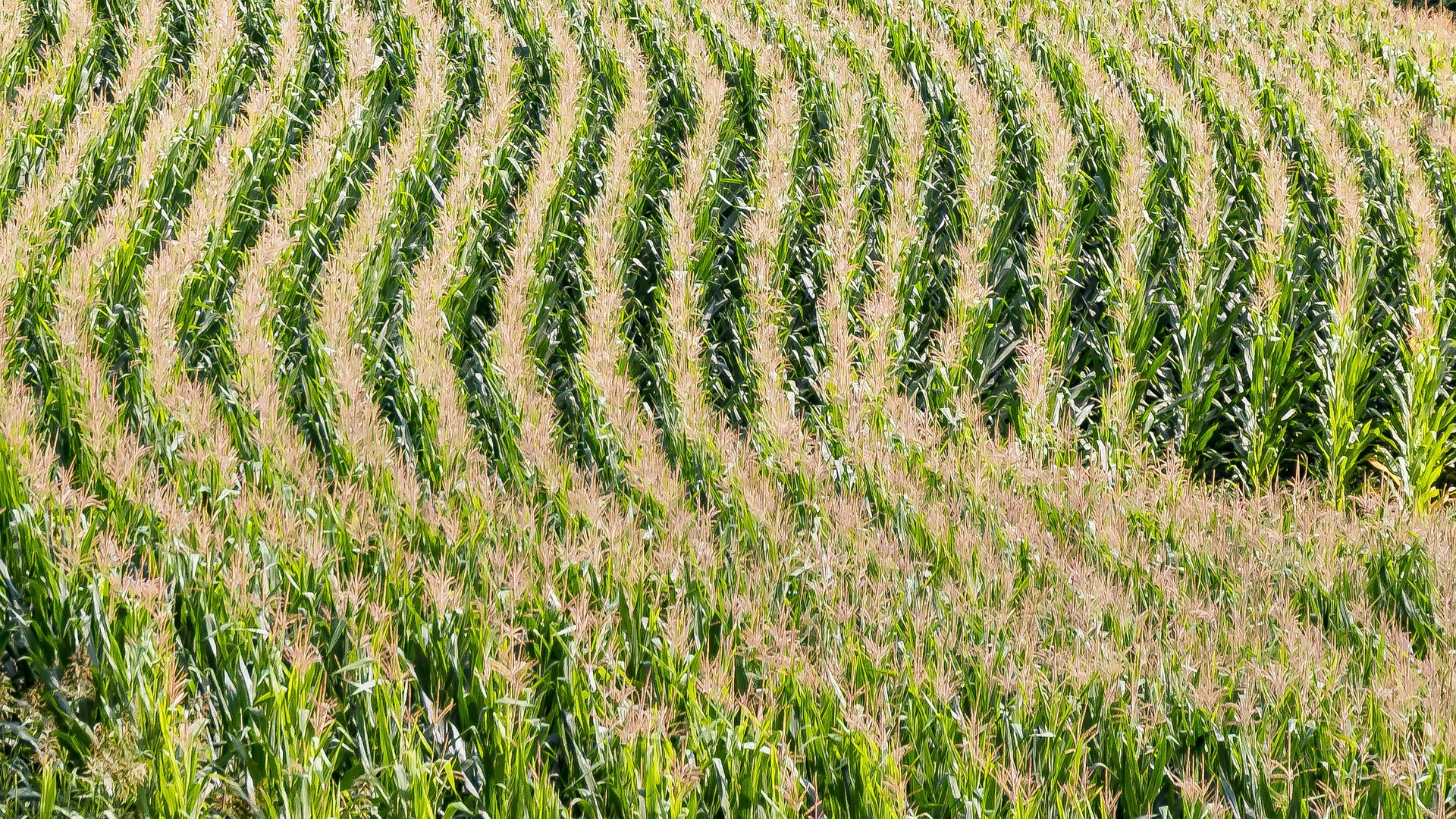
If you have ever traveled through the Midwest—particularly Illinois, Indiana, Iowa, or Ohio—you may have noticed a singular plant: corn. It is hard to miss. Fields of it stretch in every direction. It even makes an effective setting for a horror movie.
But perhaps the most unsettling thing about corn is how little of the crop ends up directly on people’s plates.
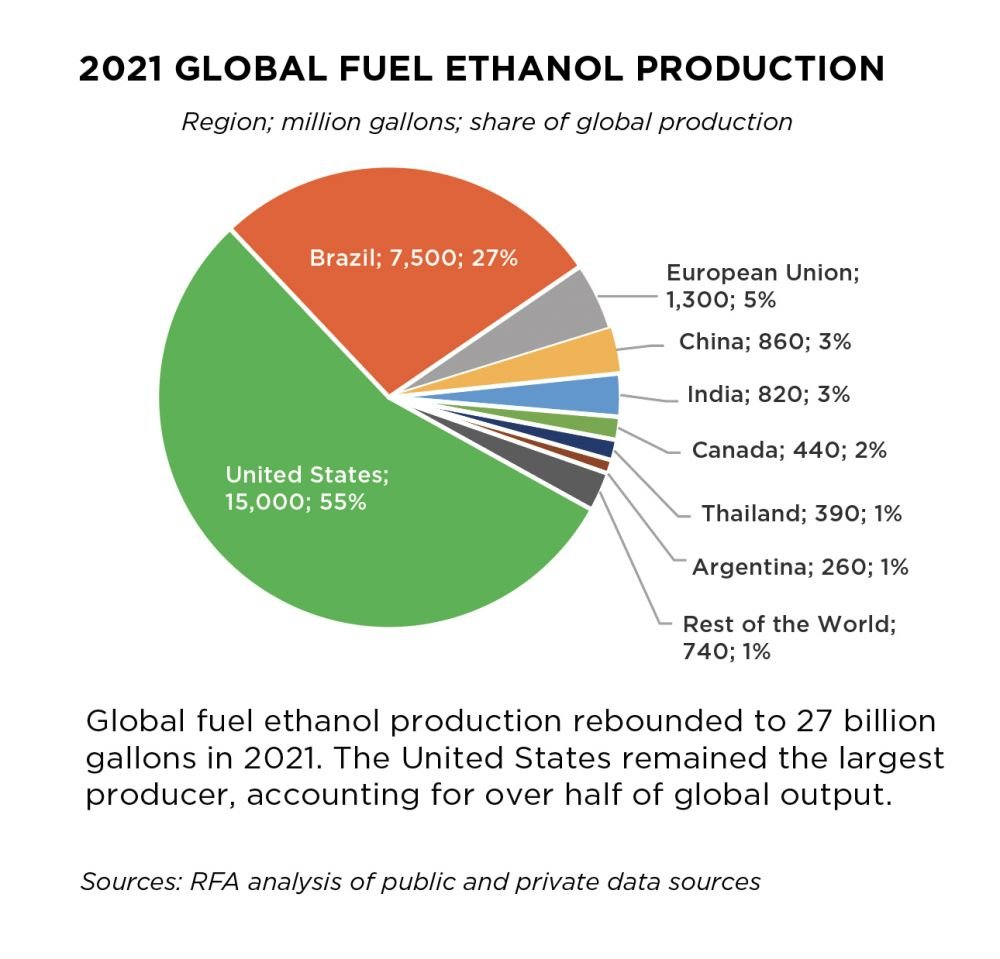
In 2024, U.S. farmers harvested 14.9 billion bushels of corn at an average yield of 179.3 bushels per acre. Roughly 5.5 billion bushels—about 37 percent of the crop—were used to produce fuel ethanol.[1,2] The United States has long been the world’s largest ethanol producer, well ahead of Brazil; the 2021 global production profile below illustrates that dominance.[3]
Food, fuel, and a revealing calculation
How much potential food energy is represented by that corn? At 179.3 bushels per acre and 56 pounds per bushel, an acre yields about 10,000 pounds of grain. Using a rough value of 1,500 calories per pound, that is approximately 15 million calories per acre. Dividing the 5.5 billion bushels used for ethanol by the 2024 national yield produces an acreage equivalent of about 30.7 million acres—not 45 million acres.
On paper, those acres represent roughly 460 trillion calories, or the annual caloric needs of about 570 million people at 2,200 calories per day. That is not a literal estimate of how many people could be fed. Most U.S. corn is field corn rather than the sweet corn eaten as a vegetable; diets require far more than calories; distribution, affordability, storage, and politics determine who eats; and ethanol plants return part of the grain to the feed system as distillers grains and other coproducts. Even with those qualifications, the scale of land and biological productivity committed to transportation fuel remains striking.
So why convert so much potential food and habitat into fuel?
How corn became fuel policy
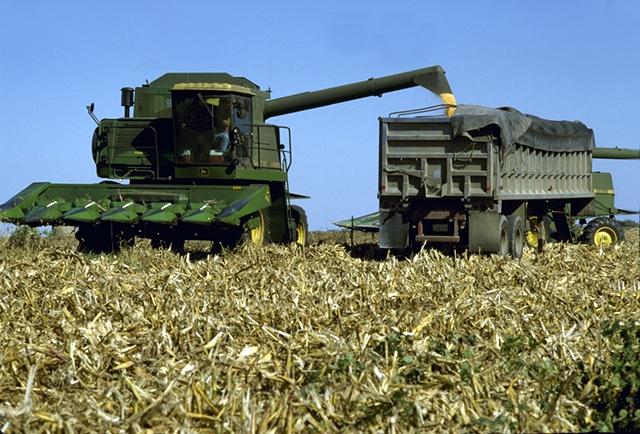
A quick trip down history lane: U.S. gasoline prices rose sharply in 2005 and again in 2006. In response to concerns about fuel prices, greenhouse-gas emissions, and dependence on imported oil, Congress established the Renewable Fuel Standard in the Energy Policy Act of 2005 and greatly expanded it through the Energy Independence and Security Act of 2007.[4,5] The RFS remains the world’s largest biofuel mandate.
Corn appeared to be an ideal candidate. It has a high starch content, and the United States already led the world in corn production. Between 2006 and 2007, planted corn acreage rose from 78.3 million to 93.5 million acres—one of the largest year-to-year increases on record—while ethanol production expanded rapidly.[2,6] Those are acreage figures, however, not billions of bushels of ethanol.
Do we still need corn ethanol at its present scale? Other renewable-energy technologies have grown dramatically. U.S. wind generation, for example, rose from roughly 34 terawatt-hours in 2007 to more than 425 terawatt-hours in 2023.[7] Wind and solar do not directly replace liquid fuel in every vehicle, but electrification increasingly changes the terms of the energy-independence debate.
The disputed energy and carbon balance
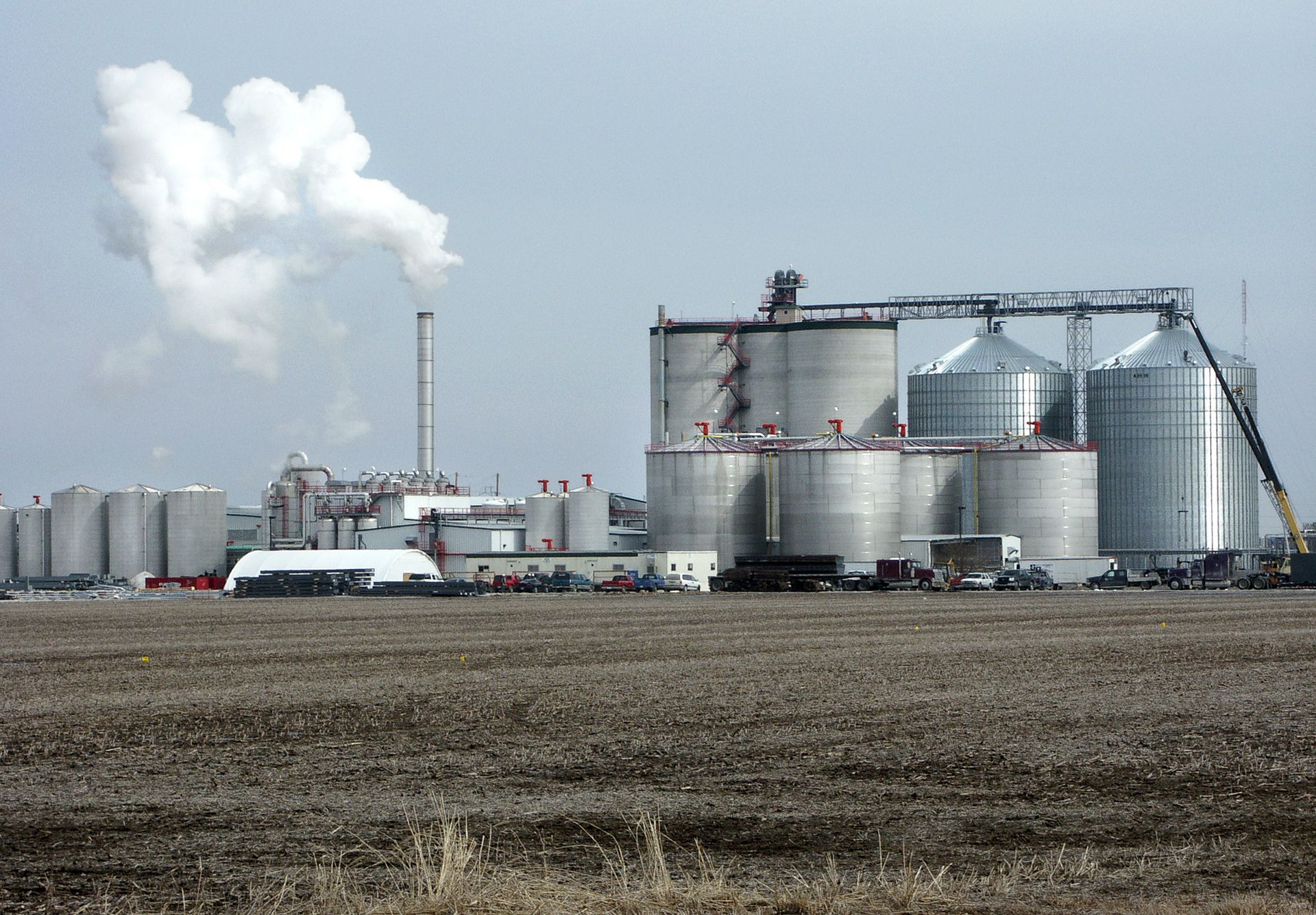
Whether corn ethanol yields substantially more energy than its production consumes has been debated for decades. An influential early analysis concluded that producing ethanol from corn required more fossil energy than the fuel contained.[8] Later Department of Energy analyses, incorporating coproduct credits and improvements in farming and refining, found a positive energy balance. Results depend heavily on assumptions about fertilizer, farm energy, refinery efficiency, coproducts, and land-use change.[9]
The climate balance is equally contested. EPA’s Renewable Fuel Standard requires qualifying conventional renewable fuel from newer facilities to achieve at least a 20 percent lifecycle greenhouse-gas reduction relative to the petroleum baseline.[5] Yet a 2022 analysis in the Proceedings of the National Academy of Sciences concluded that, after accounting for land conversion, higher fertilizer use, and crop displacement caused by the RFS, the carbon intensity of corn ethanol was likely at least 24 percent greater than gasoline.[10] The conclusion is not that every gallon has the same footprint, but that policy-driven land-use effects can overturn apparent benefits measured only at the refinery gate.
Corn also carries hidden environmental and health costs. High yields commonly require substantial nitrogen fertilizer, much of it made through the energy-intensive Haber–Bosch process. Nitrogen losses contribute to greenhouse-gas emissions, water pollution, and airborne fine particles. A 2019 study estimated that pollution associated with U.S. corn production causes approximately 4,300 premature deaths annually, with ammonia from fertilizer application a major contributor.[11]
Could another crop do better?
Other plants can produce ethanol more efficiently. Brazil relies primarily on sugarcane, whose sugars are more readily fermented than corn starch. Sugarcane and cassava, however, are poorly suited to cold Midwestern winters. Industrial sweet potatoes present a more intriguing possibility.
Unlike sweet potatoes grown for the table, industrial sweet potatoes are allowed to develop very large storage roots. Trials in Alabama and Maryland found that selected industrial sweet-potato systems could produce more than twice as much ethanol per hectare as the national average for corn.[12]
|
Feedstock and location |
Liters of ethanol per hectare |
|
Sweet potato — U.S. average |
2,608 |
|
Corn — Maryland |
3,399 |
|
Corn — Alabama |
3,797 |
|
Corn — U.S. average |
3,880 |
|
Potato — U.S. average |
4,884 |
|
Sugar beet — U.S. average |
5,891 |
|
Sugarcane — U.S. average |
6,195 |
|
Cassava — Alabama |
6,717 |
|
Industrial sweet potato — Alabama |
8,141 |
|
Industrial sweet potato — Maryland |
8,839 |
Table 1. Estimated ethanol yield from selected carbohydrate crops. Trial locations are shown where applicable. A hectare equals 2.47 acres. Source: Ziska et al. (2009).[12]

The comparison is promising, but it is not proof that industrial sweet potatoes can simply replace corn throughout the Corn Belt. Results from Alabama and Maryland cannot be assumed to hold across Iowa, Illinois, Indiana, or Ohio. A national transition would also require suitable cultivars, mechanized harvesting, storage systems, processing infrastructure, reliable markets, and careful assessment of water use, soil impacts, crop rotations, disease pressure, and farm economics. Sweet potatoes generally require less nitrogen fertilizer than high-yield corn, but their performance and inputs vary by soil, climate, and management.[12,13]
Still, the trial data invite a useful thought experiment. If a crop yielded twice as much ethanol per acre as corn, the approximately 30.7 million acre-equivalents associated with the 2024 ethanol feedstock could theoretically be reduced to about 15.4 million acres. The remaining land—roughly 15 million acres—might support food production, other crops, or restored native habitat. That is an illustration of biological potential, not a deployment forecast.
Why corn remains king
America likes to imagine itself as an agrarian nation: “amber waves of grain,” a breadbasket to the world, fruited plains. In reality, more than four-fifths of Americans live in urban areas, and only a small share of the population farms.[14] Yet the cultural and political power of the agricultural heartland remains enormous.
Corn ethanol offers politicians an unusually effective story: a domestically produced fuel associated with family farms, rural employment, energy security, and climate action. Decades of mandates and subsidies have also created refineries, pipelines, blending systems, commodity markets, farm equipment, research programs, and local tax bases built around corn. Votes matter, but so do these forms of economic and infrastructural lock-in.
Iowa’s presidential caucuses historically amplified that political influence, although the Democratic Party changed its nominating calendar in 2024 and Iowa no longer held the first binding Democratic contest. Candidates from both major parties have nevertheless continued to court corn and ethanol interests. In April 2022, President Biden visited an Iowa ethanol plant and announced an emergency waiver allowing summertime sales of E15 gasoline in an effort to reduce fuel prices.[15] This occurred before—not as part of—the Inflation Reduction Act, which was enacted in August 2022. Donald Trump’s widely reported visit to the Iowa State Fair occurred in August 2023, during the 2024 presidential campaign.[16]
What should change?
Diverting a major share of a staple crop into fuel while hundreds of millions of people face hunger should force us to examine what our agricultural and energy policies reward. The choice is not as simple as moving grain directly from an ethanol plant to a dinner plate, and eliminating the RFS tomorrow would carry consequences for farmers, rural communities, livestock-feed markets, and fuel supplies. But neither should an established mandate be treated as permanent merely because industries and elections have grown around it.
A serious reassessment would compare fuels by their full lifecycle costs: land conversion, fertilizer, air and water pollution, greenhouse gases, coproducts, biodiversity, food prices, rural livelihoods, and the opportunity to use land differently. It would support genuine low-carbon fuels where liquid fuels remain necessary, accelerate vehicle electrification and public transportation, and invest in cropping systems that produce more value with less land and pollution.
Willie Sutton, the famous bank robber, was said to have explained that he robbed banks “because that’s where the money is.” The line is probably apocryphal, but its logic survives. Why has the United States supported corn ethanol so tenaciously? Because the corn is already there. The refineries are there. The subsidies are there. And yes—the votes are there, too.
Lewis H. Ziska is an American plant physiologist, academic, and author. He is an associate professor in Environmental Health Sciences at the Mailman School of Public Health at Columbia University.
References
1. U.S. Department of Agriculture, National Agricultural Statistics Service. “Crop Production 2024 Summary.” January 2025.
2. U.S. Department of Agriculture, Economic Research Service. Feed Grains Database and Feed Grains Yearbook Tables, accessed 2026.
3. Renewable Fuels Association. “2021 Global Fuel Ethanol Production.” Analysis of public and private data sources.
4. U.S. Energy Information Administration. “U.S. All Grades All Formulations Retail Gasoline Prices,” historical series.
5. U.S. Environmental Protection Agency. “Overview of the Renewable Fuel Standard Program,” updated April 16, 2026.
6. U.S. Department of Agriculture, National Agricultural Statistics Service. Quick Stats database, corn planted acreage, 2006–2007.
7. U.S. Energy Information Administration. Electric Power Monthly, net generation from wind, 2007 and 2023.
8. Pimentel, D., Patzek, T., and Cecil, G. “Ethanol Production: Energy, Economic, and Environmental Losses.” Reviews of Environmental Contamination and Toxicology (2007): 25–41.
9. U.S. Department of Energy. “The Energy Balance of Corn Ethanol: An Update.”
10. Lark, T. J., et al. “Environmental Outcomes of the US Renewable Fuel Standard.” Proceedings of the National Academy of Sciences 119, no. 9 (2022): e2101084119.
11. Hill, J., et al. “Air-Quality-Related Health Damages of Maize.” Nature Sustainability 2, no. 5 (2019): 397–403.
12. Ziska, L. H., et al. “An Evaluation of Cassava, Sweet Potato and Field Corn as Potential Carbohydrate Sources for Bioethanol Production in Alabama and Maryland.” Biomass and Bioenergy 33, no. 11 (2009): 1503–1508.
13. George, J., et al. “Sustainable Sweetpotato Production in the United States: Current Status, Challenges, and Opportunities.” Agronomy Journal 116, no. 2 (2024): 630–660.
14. U.S. Census Bureau. “2020 Census Urban Areas Facts.”
15. The White House. “Remarks by President Biden on Actions to Lower Costs for American Families.” Menlo, Iowa, April 12, 2022.
16. Associated Press. “Trump and DeSantis Court Iowa Voters at the State Fair.” August 12, 2023.
17. Warman, A. Corn and Capitalism: How a Botanical Bastard Grew to Global Dominance. University of North Carolina Press, 2003.
Plantings
Issue 64 – October 2026
Also in this issue:

Romain Sordello: Sensory Pollution and the Ecology of Odor Landscapes
Clara Muller

Beyond GDP: Tenzin Seldon’s Vision for an Economy That Regenerates Life
Gayil Nalls

Lessons for the 21st century from a 200‑year‑old book by Frankenstein author Mary Shelley
Eileen Hunt

The Land Within Us
Gayil Nalls

The Olive Tree
John Steele

Eat More Plants Recipes:
Maple Oat Baked Apples
Gayil Nalls

As Ireland transitions from the rich, smoky scent of peat-burning to a more sustainable future, its olfactory heritage is evolving. What will become the next iconic aromatic symbol of Ireland?
Click to watch the documentary trailer.
As Ireland transitions from the rich, smoky scent of peat-burning to a more sustainable future, its olfactory heritage is evolving. What will become the next iconic aromatic symbol of Ireland?