

Beyond GDP: Tenzin Seldon’s Vision for an Economy That Regenerates Life
By Gayil Nalls
Sign up for our monthly newsletter!
One of the talked-about headlines emerging during Climate Week NYC 2026 was the announcement that Pulse Fund had closed its inaugural $63 million venture capital fund to invest in early-stage climate startups in energy transition, food and agriculture, infrastructure, and mobility. The fund is led by its founder and managing partner, Tenzin Seldon. But who is she, and what kind of future is she investing in?
Seldon is a climate investor, humanitarian, and former United Nations environmental policy specialist whose work brings together finance, technology, social justice, and the resilience of the living world. At the center of her thinking is an ambitious proposition to replace Gross Domestic Product, or GDP, with Gross Domestic Regeneration, or GDR, a model that values what an economy restores rather than only what it produces.
For nearly a century, Gross Domestic Product has served as the dominant measure of economic success. Governments celebrate when GDP rises, investors respond to its fluctuations, and public policy is often organized around the pursuit of continual growth. Yet GDP answers only a narrow question: How much economic activity has taken place? GDP measures only the flow of new production in a given period. It does not ask what that activity has produced for the living world, or what it has destroyed.
A forest can be cut down and sold as timber, increasing GDP. An oil spill can generate billions of dollars in cleanup costs, also increasing GDP. Rebuilding homes after a wildfire registers as economic growth, while the intact forest, healthy watershed, and avoided disaster that preceded it remain largely invisible. Pollution, illness, displacement, and ecological loss may all stimulate spending, even as they erode the foundations of collective well-being.
Tenzin Seldon, a former founder and UN climate policy person turned climate investor and humanitarian, believes that this fundamental accounting failure is helping propel the environmental crisis. Her proposed alternative, Gross Domestic Regeneration, or GDR, would measure progress not simply by what an economy produces, but by what it restores.
Seldon defines Gross Domestic Regeneration through three interdependent dimensions: ecological regeneration, social regeneration, and economic or capital regeneration. Ecological regeneration measures the health of natural systems; social regeneration considers the strength and well-being of communities; and economic regeneration examines the resilience of livelihoods and the capacity to create enduring prosperity.
Seldon treats them as mutually reinforcing. A community cannot remain economically secure if its soil is exhausted, its water contaminated, or its people repeatedly displaced by fires and floods. Nor can a restored ecosystem remain protected for long if the people who care for it lack stable livelihoods, political power, and access to capital.
GDR therefore proposes a significant shift in economic logic. Rather than asking only whether an investment will produce financial returns, it asks whether the activity strengthens or diminishes the larger systems on which those returns depend.
A regenerative economy would reward practices that restore soil fertility, improve water quality, protect biodiversity, increase community resilience, create dignified employment, and return value to the landscapes and people that make production possible. Growth would not disappear, but its meaning would change. The goal would be growth in ecological health, human capability, resilience, and shared prosperity—not merely an increase in transactions.
Seldon’s ideas are inseparable from her personal history. Born into a Tibetan family in Dharamsala, India, she grew up in a refugee community shaped by displacement, political struggle, and collective responsibility. In the foothills of the Himalayas, she watched the glaciers recede year after year, long before she knew the term climate change. She has traced her concern for climate and refugee issues, in part, to seeing affected communities excluded from decisions about their own futures.
After graduating summa cum laude from Stanford University, Seldon became the first Tibetan American Rhodes Scholar at the University of Oxford. She later worked for the United Nations Environment Programme in Thailand, overseeing regional disaster-risk-reduction policy. She also co-founded an infrastructure project based on the adaptive reuse of historic buildings.
Today, she is the founder and managing partner of Pulse Fund, which invests in climate-related companies working across energy, infrastructure, mobility, food, and agriculture. Her portfolio and board work have included businesses concerned with reforestation, flood risk, carbon transformation, electric transportation, building decarbonization, and environmental data.
This breadth is important. Seldon argues that climate investing cannot succeed when food, energy, transportation, land, and infrastructure are treated as isolated sectors. They belong to one living system. Agriculture depends on energy and water; transportation shapes emissions; healthy soil influences carbon storage, biodiversity, erosion, and human nutrition. Transformational investment must therefore take place at the ecosystem level.
She says we must make nature visible to finance. Conventional economics often treats nature as an unlimited source of raw materials and an equally unlimited destination for waste. Forests become valuable when their trees are harvested. Wetlands become visible to the economy when they are drained for development. Wild plants, pollinators, clean air, fertile soil, and functioning watersheds remain largely absent from financial accounts until their disappearance creates a measurable cost.
Gross Domestic Regeneration attempts to reverse that blindness. Under a GDR framework, a restored wetland would be recognized for reducing flood risk, filtering water, storing carbon, and providing habitat. Regenerative agriculture would create value not only through crop yields but through increased soil carbon, water retention, biodiversity, and farm resilience. Reforestation would be evaluated not simply by the number of trees planted or carbon credits sold, but by whether a living forest ecosystem and the surrounding community could flourish over time.
The model also challenges the assumption that protecting nature is a charitable act standing outside the “real” economy. The United Nations Environment Programme has estimated that each dollar invested in restoration can produce as much as thirty dollars in economic benefits. Yet nature-based initiatives, particularly those led by Indigenous peoples and frontline communities, continue to receive only a small portion of available investment.
For Seldon, this is both an injustice and a failure of financial intelligence. Indigenous peoples safeguard an extraordinary proportion of the world’s remaining biodiversity, but the knowledge, stewardship, and community relationships that make this protection possible are rarely represented on a conventional balance sheet. GDR would make those forms of value harder to ignore.
Gross Domestic Regeneration remains an emerging framework rather than a fully standardized national accounting system. Its promise will depend on developing rigorous, transparent measurements that can be applied without reducing living systems to simplistic financial units.
Possible ecological indicators could include changes in biodiversity, soil health, water quality, carbon storage, habitat connectivity, pollution, and ecosystem resilience. Social indicators might examine public health, housing stability, community participation, educational access, cultural continuity, equity, and trust. Measures of economic regeneration could include the durability of local livelihoods, energy and food security, infrastructure resilience, ownership patterns, and whether wealth remains within communities.
The essential question is not only how much value was produced, but whether the process increased or depleted the capacity for future life.
“The strongest interpretation of GDR is not that nature belongs on the balance sheet. It is that the balance sheet belongs within nature.”
This distinction matters. A company may reduce its annual emissions while continuing to degrade biodiversity. A tree-planting project may store carbon but fail if it introduces inappropriate species or excludes local people. A clean-energy development may advance decarbonization while damaging culturally significant land. GDR’s interconnected structure is intended to expose these contradictions: ecological gains cannot compensate indefinitely for social harm, just as short-term financial returns cannot substitute for collapsing ecosystems.
However, there is still danger in pricing what is priceless. Any attempt to incorporate nature into economic decision-making also carries risks. Assigning a monetary value to a forest may help protect it from development, but it may also imply that the forest can be destroyed if someone is willing to pay enough. Biodiversity credits and carbon markets can attract conservation funding, yet weak verification and distant ownership may turn living landscapes into speculative assets.
A regenerative model must therefore move beyond merely placing prices on ecosystem services. It must recognize ecological limits, community rights, cultural meaning, and forms of value that cannot be adequately expressed in dollars.
Nature is not valuable only because forests store carbon, insects pollinate crops, or wetlands protect real estate. These functions are vital, but the living world also possesses evolutionary, sensory, relational, and intrinsic value. A forest is habitat, memory, climate regulator, cultural inheritance, and community of life at once.
The strongest interpretation of GDR is therefore not “nature belongs on the balance sheet.” It is that the balance sheet belongs within nature.
“Gross Domestic Regeneration would measure progress not simply by what an economy produces, but by what it restores.”
Seldon’s model requires a different definition of prosperity. It arrives at a moment when the limitations of conventional growth are becoming impossible to overlook. Climate disasters can make economic figures rise even as they leave people homeless. Industrial agriculture can produce abundant commodities while depleting soil and poisoning water. A nation may become financially richer while its citizens become less healthy and its ecosystems less capable of sustaining life. Gross Domestic Regeneration asks us to adopt a different definition of prosperity: one measured by the capacity of a place to renew itself.
Under this model, a healthy economy would leave forests more diverse, soils more fertile, waters cleaner, communities stronger, and people better prepared for the future. Investment would be directed not only toward reducing damage but toward restoring the conditions in which life can flourish.
Seldon’s proposal is still developing, and translating it into credible public policy will require scientists, economists, Indigenous knowledge holders, communities, governments, and investors to determine what should be measured and who gets to decide. But its central insight is already clear.
What societies measure becomes what they pursue. If we measure only extraction and expenditure, we should not be surprised when both continue to grow. If we begin measuring regeneration, we may finally create an economy that recognizes nature not as an external resource, but as the living foundation of all wealth.
Gross Domestic Regeneration belongs to a long history of attempts to answer a question that GDP cannot: Does economic activity improve the conditions of life? In 1972, economists William Nordhaus and James Tobin proposed a Measure of Economic Welfare that adjusted conventional output figures to account for aspects of well-being, including leisure and work performed outside the market. Their work helped establish a distinction that remains central today: the amount an economy produces is different from the welfare people gain from it.
Other approaches widened the lens. Bhutan developed the idea of Gross National Happiness in the late 1970s, asking the state to consider the quality of life alongside material growth. In 1989, Herman Daly and John Cobb proposed the Index of Sustainable Economic Welfare; the related Genuine Progress Indicator later incorporated social and environmental costs into its assessment of progress. The United Nations Development Programme’s Human Development Index, introduced in 1990, brought health and education into a prominent measure of national development. Each model challenged the assumption that a rising GDP, by itself, meant a society was doing well. The United Nations’ System of Environmental-Economic Accounting developed from early work in the 1990s into international standards adopted in 2012 and 2021, allowing countries to track environmental assets and ecosystem conditions alongside economic activity. These frameworks made it more practical to ask whether apparent prosperity was being achieved by depleting natural systems.
But perhaps the truest measure of prosperity would combine the models. GDP tells us how much an economy produces and spends; Gross Domestic Regeneration would help us see what that activity leaves behind. Read together, or with others, they could show whether rising output is accompanied by healthier ecosystems, stronger communities, and livelihoods that can endure.
A country would still need to know the value of the goods and services it produces. But it would also need to ask whether its forests, waters, soils, and people are better able to sustain life than they were a year before. An economy that grows while exhausting those foundations is borrowing from its future. A more balanced measure of progress would make that cost visible—and recognize renewal as an achievement in its own right.
Its history is best understood as part of this continuing effort to measure the condition of the world an economy creates—and leaves for those who come after us.
Gayil Nalls, PhD, is an interdisciplinary artist and theorist and the founder of the World Sensorium / Conservancy.

Plantings
Issue 64 – October 2026
Also in this issue:

Romain Sordello: Sensory Pollution and the Ecology of Odor Landscapes
Clara Muller

Lessons for the 21st century from a 200‑year‑old book by Frankenstein author Mary Shelley
Eileen Hunt

The Land Within Us
Gayil Nalls
Hucked and Shucked
Lewis H. Ziska
The Olive Tree
John Steele

Eat More Plants Recipes:
Maple Oat Baked Apples
Gayil Nalls
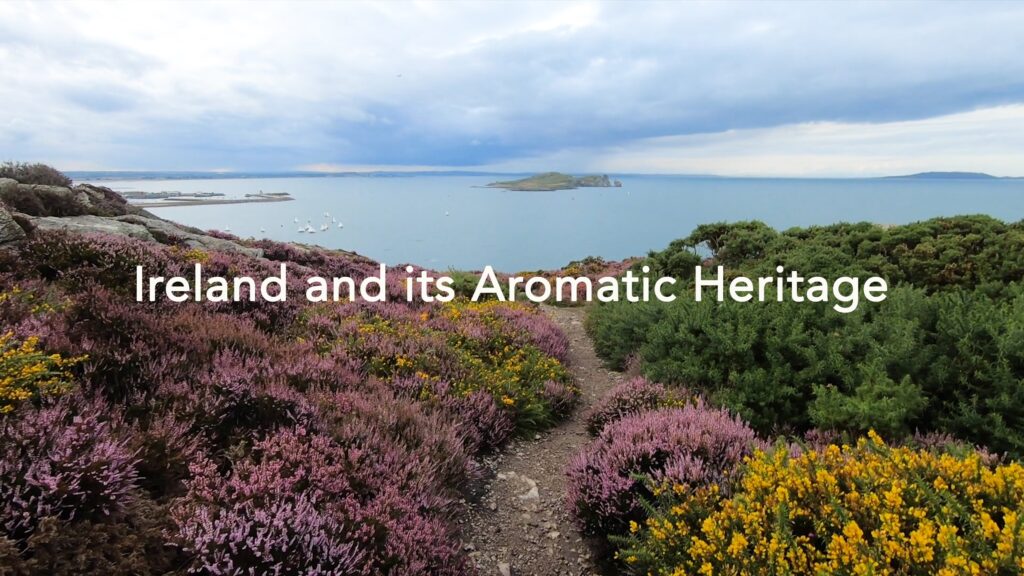
As Ireland transitions from the rich, smoky scent of peat-burning to a more sustainable future, its olfactory heritage is evolving. What will become the next iconic aromatic symbol of Ireland?
Click to watch the documentary trailer.
As Ireland transitions from the rich, smoky scent of peat-burning to a more sustainable future, its olfactory heritage is evolving. What will become the next iconic aromatic symbol of Ireland?