

Eat More Plants: Recipes
Ephemeral’s Encore: A Magnolia, White Chocolate Vinaigrette for Foraged Greens
By Mary Munroe
Sign up for our monthly newsletter!
Spring woke up late in the north this year with wild violets, garlic mustard, and dandelions sleeping in, for fear of yet another snow encore. Nettles and knotweed even hid under last year’s leaves a little longer, uncharacteristic for such rambunctious characters. I know, because I’m a forager.
My walks are like wild scavenger hunts mixed with memory games and magic. I notice my excitement rise as new plants arise too, on the margins of everyday life. Fuzzy new mullein emerging by mugwort was a dreamy delight the other day, adding a pop of life and future medicine to a rough patch. And as the elm samaras helicopter off branches like confetti, I’ve been dreaming up dishes to celebrate all my unruly and wild friends; of both the human and flora form.
The magnolias gave me a head start this year though, sprouting their bright buds right on time, emerging like little pink light bulbs never in need of a lampshade. They’re confident, and resilient. Surviving the ice age, they evolved with dino beetles to light up our landscapes we enjoy today. Magnolias are strong, resilient and elegant; ancient armoured blossoms wearing perfume. So when their blossoms unfurled and began to flutter down, I was very ready to pick them up to elevate such ephemerals, with the late waking weeds. They deserve the real encore.
Perhaps that is why spring and summer foraged salads feel so alive; the sweet terroir of the temporary lingers just a little on the tongue, and yet lives much longer through our relationship with it, and its stories we digest. That is why it only makes sense to crown a lovely riot of weeds with a fabulous foraged vinaigrette.
Foraged salad:
This is not so much a recipe as it is a method. Foraged salads are at their best when a variety of bitter and young tender plants are combined, mixed sparingly with bought greens too.
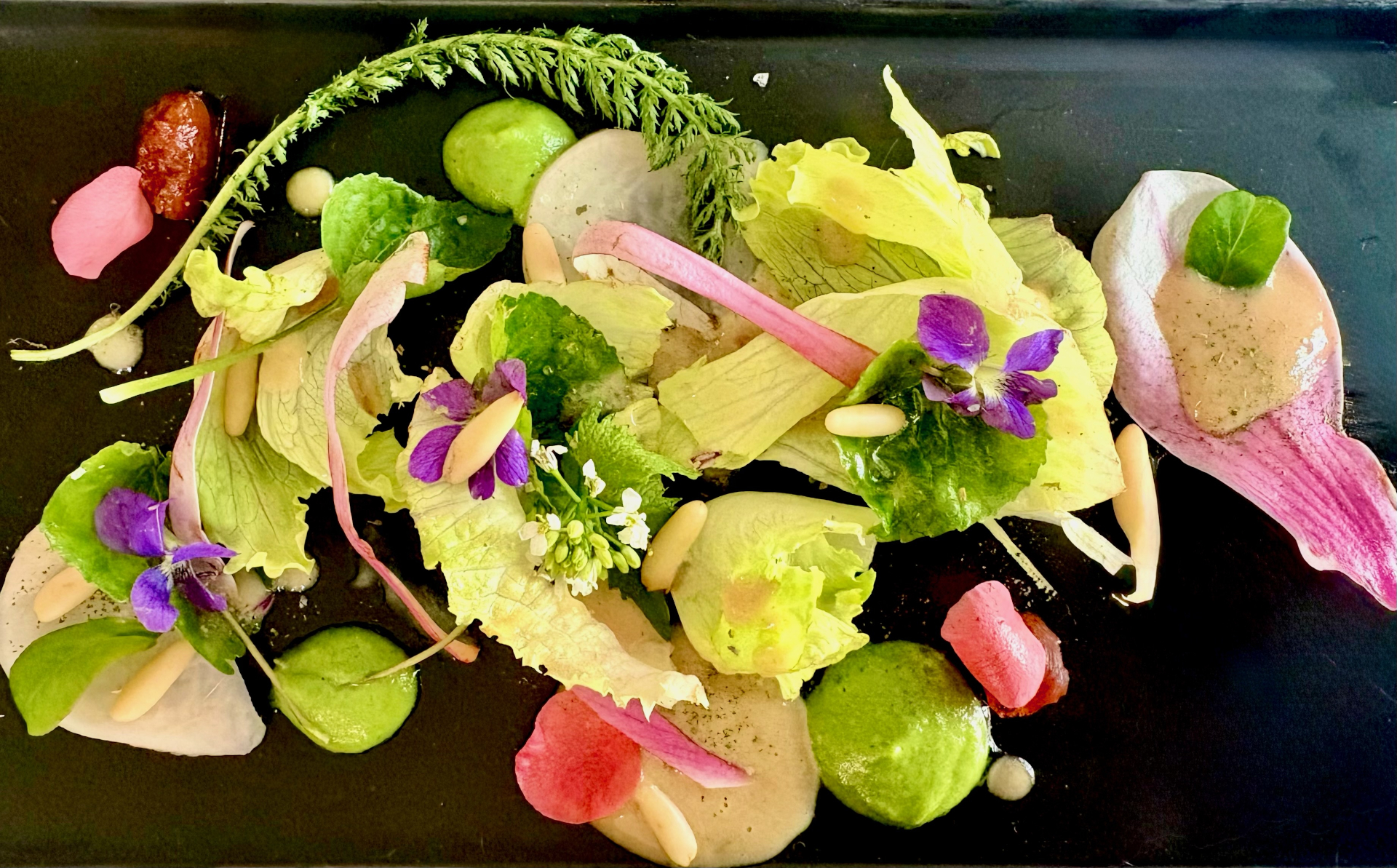
Magnolia, wild violet leaves, garlic mustard, and mallow, with rough-torn iceburg make up the salad pictured here. Nasturtiums and romaine with mint might be a delicious mix later on. And like a good outfit, a salad truly pops when put together with color, texture, shine; handy criteria to consider when on a foraged salad scavenger hunt.
Colour and texture for this salad came from edible buds and petals, a chiffonade of magnolias, a crunch of fermented veg and nuts. To contrast and connect the flavors, pools of foraged green sauce did the trick. Should you wish to concoct a similar one, blend a few blanched herbs and weeds (such as dandelion, nettles, basil and yarrow as I had for this one), with a scant amount of sweet peas in enough vegetable broth to get the consistency needed, then season to taste with white miso, pepper, garlic and maple syrup.
Shine was achieved via the blush of a magnolia white chocolate vinaigrette, lighting up this riot of weeds, like the hope it lit up for me, during what seemed like the longest winter of all.
Magnolia White Chocolate Vinaigrette:
This velvety vinaigrette could be infused with whatever the landscape is offering you that minute; possibly elderflowers one week, raspberries, rose petals or blackberry leaves the next, along with your own mix of foraged friends, woken and very much alive.
Ingredients:
- 1/2 cup of vegan white chocolate, such as Enjoy Life brand (tinyurl.com/White-Choc)
- 1/2 cup neutral oil, such as grape seed
- 1 cup lightly packed Magnolia blossoms, torn or chopped
- There are different types of magnolias that have different flavours. I use only the pink saucer magnolia, with its crisp and gingery edge.
- 1 Tbsp Dijon mustard
- 1/4 cup champagne vinegar (or rice wine vinegar)
- Salt, pepper and ground ginger (optional)
Method:
Heat the white chocolate in the microwave at 30 second intervals, stirring each time until just melted and runny. Heat the oil and vinegar with the magnolia until just warmed through and wilted. With a blender, mix to emulsify the warmed oil, vinegar and magnolia mix with the runny white chocolate, mustard and seasoning.
Drizzle or dollop over greens, or use as a dip for foraged crudité, dunking whole saucer magnolias tepals directly into it, served in the garden.
Foraging Footnote
Responsible foraging goes far beyond a footnote of advising you to confidently identify plants before preparing and eating any, washing them, and taking very little of what you need, always leaving more for it to flourish.
It also includes asking permission, from the plant and the land then listening with your heart to hear the answer. Offering a gift of gratitude that benefits it, while aligning with your culture and sentiment is also part of foraging. There are sacred indigenous rituals of offerings worth learning about and respecting.
I have thanked the land in various ways. Once, my birdseed cookies were hung by ribbons to a dear old crabapple tree during Wassail, an ancient pagan ritual of celebrating and giving thanks to trees and orchards. That brought the birds and thus a healthy environment for pollinators to also visit the tree, which I believe helped the old one produce its beautiful bounty again that spring. Foraging is a relationship with our ecology and given everything is connected, it is healthiest for all when mindfulness and respect is central to it.
Mary Munroe is a culinary artist and coach, inspired by nature and transformation. She forages, ferments, and foments, unveiling hidden gems, be it in the value of weeds, the life left in fallen petals, or the power of playing with perspective.
Instagram: Bigbank2riverbank
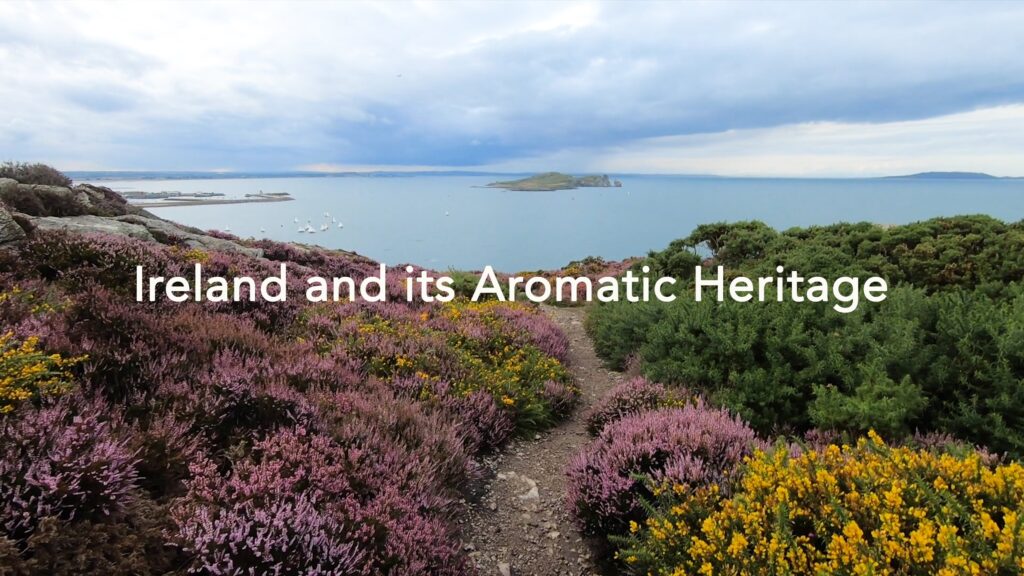
As Ireland transitions from the rich, smoky scent of peat-burning to a more sustainable future, its olfactory heritage is evolving. What will become the next iconic aromatic symbol of Ireland?
Click to watch the documentary trailer.
As Ireland transitions from the rich, smoky scent of peat-burning to a more sustainable future, its olfactory heritage is evolving. What will become the next iconic aromatic symbol of Ireland?
Plantings
Sensing Floral Futures: A Conversation with Eliza Collin
By Clara Muller
A Corner on a Country Road
By John Steele

The Ecology of Memory: Scent, Culture, and the Brain
By Gayil Nalls

Heat and the Voices Most Unheard
By Willow Gatewood

Hildegard of Bingen: The Living Green World
By Gayil Nalls