

How to Meet an Alien
What Entanglements of Bees, Cuttlefish, Whales, and AI Reveal About Listening Across Difference
By Willow Gatewood
Sign up for our monthly newsletter!
A meadow appears quiet, yet sings with signals beyond human perception. Flowers release scent compounds that speak to pollinators; bees navigate patterns of fragrance, vibration, and polarized light. Plants communicate through chemical exchanges in the air and across the invisible beings that live within soil. Much of this communication occurs in forms we cannot directly sense.
We can only speculate code deciphered by a moth’s scaly body, electrical flickers between a fungi’s whisk-thin hyphae and the roots in which it embeds itself, or ultrasonic pops that stem plants make within their xylem (the “artery” of a plant) insects seem to hear and respond to. But what if, through the help of advancing technology, we move beyond speculation to observation, translation, and one day, mutual understanding?
Artificial intelligence is often described as a tool for generating language. Yet some of its most transformative applications may lie not in speaking, but in listening. Machine learning systems excel at detecting patterns in enormous quantities of data, patterns too large, complex, or subtle for humans to recognize on their own. Increasingly, scientists are using these tools to study communication among other species (Lameira & Pietquin, 2025).
If language is understood broadly as the exchange of meaningful information, then the world is already full of conversations. Whale clicks, bee dances, coral reef soundscapes, plant chemicals, and even electrical signals moving through living systems may all contain information that shapes behavior and relationships. AI may help us recognize patterns within these communications and perhaps one day translate aspects of them.
This possibility raises a fascinating question: what does it mean to communicate across radically different forms of life?
The ocean provides compelling examples. Coral reefs are anything but silent. Like a terrestrial metropolis, reefs and seamounts in particular are noisy places: snapping shrimp, fish, and algae bubble, chirp, gurgle, release pops, snaps, and clicks. Young fish and other marine animals use these sounds, along with chemical cues, to locate healthy habitats where they can settle and grow. Sound functions as a kind of ecological map, guiding life toward life (Young, L. 2025).
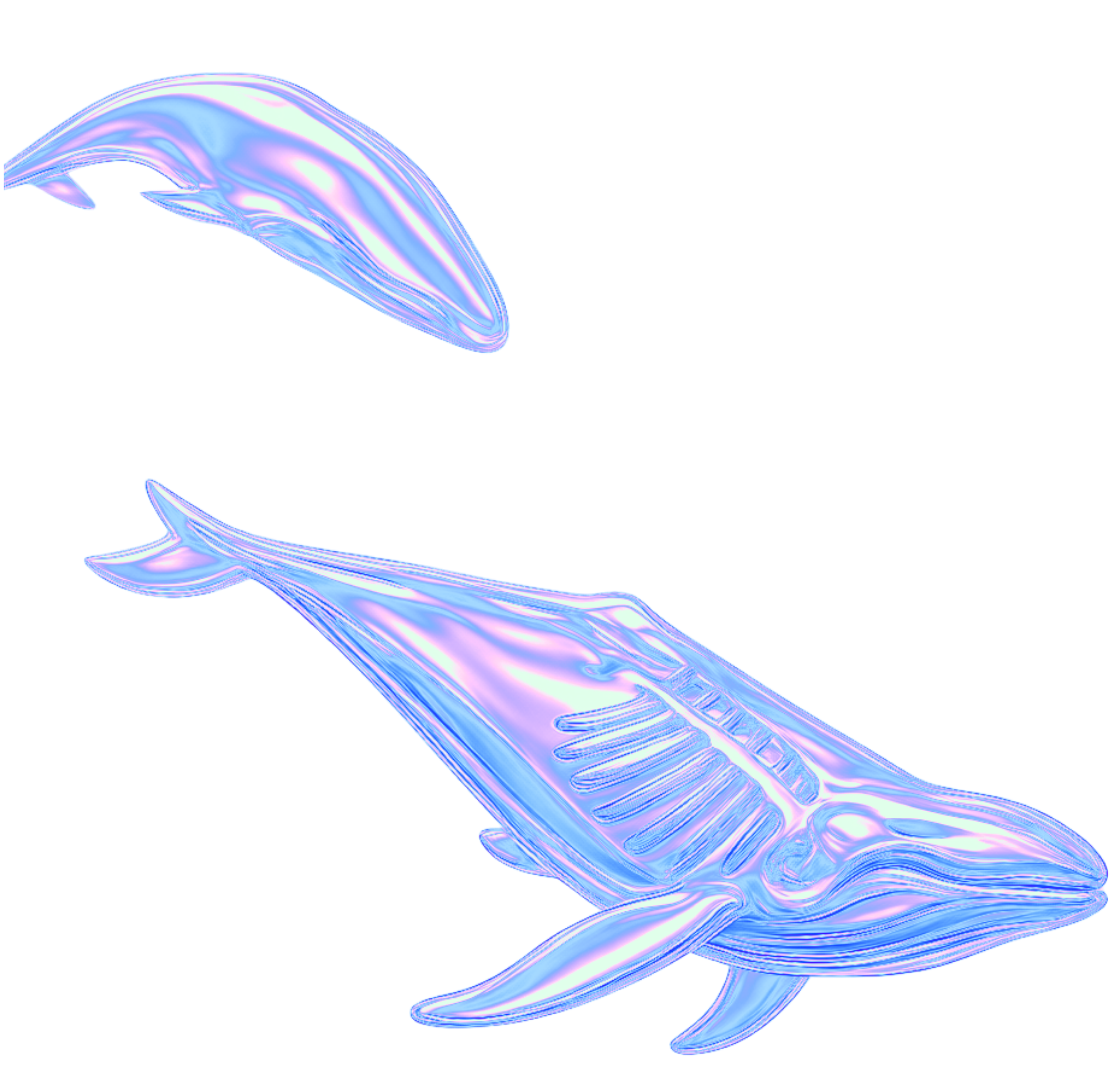
Far from the reefs, open ocean may seem quieter, lonelier at first glance; however, life is rich here even if the song is slower, deeper, and wider. Sperm whales communicate through highly str uctured sequences of clicks known as codas. These vocalizations appear to carry information about identity, social relationships, and group membership. Researchers have discovered that different whale communities possess distinct communication patterns, suggesting the presence of cultural traditions that vary among populations.
Projects such as the Cetacean Translation Initiative (CETI) are using robotics, acoustic monitoring, and machine learning to better understand these vocalizations. In 2025, researchers introduced the Whale Acoustic Model (WhAM), a large language model designed to analyze and generate sperm whale codas (Paradise, O., et. al. 2025).
The goal is ambitious: not simply to catalog whale sounds, but to uncover patterns that may reveal how whales share information.
Such work has obvious implications for conservation. Understanding how whales respond to shipping traffic, changing ocean conditions, or shifting food sources could help scientists better protect vulnerable populations. Yet it also raises deeper questions.
Translation is not the same as understanding.
Human languages are shaped by culture, history, place, and experience. The same may be true of other species like whales (Eguiguren A et al. 2025). A machine might identify recurring patterns in whale communication without fully grasping what those signals mean within the lived reality of whale societies.
The challenge becomes even more complex when communication extends beyond sound.
Consider the cuttlefish.
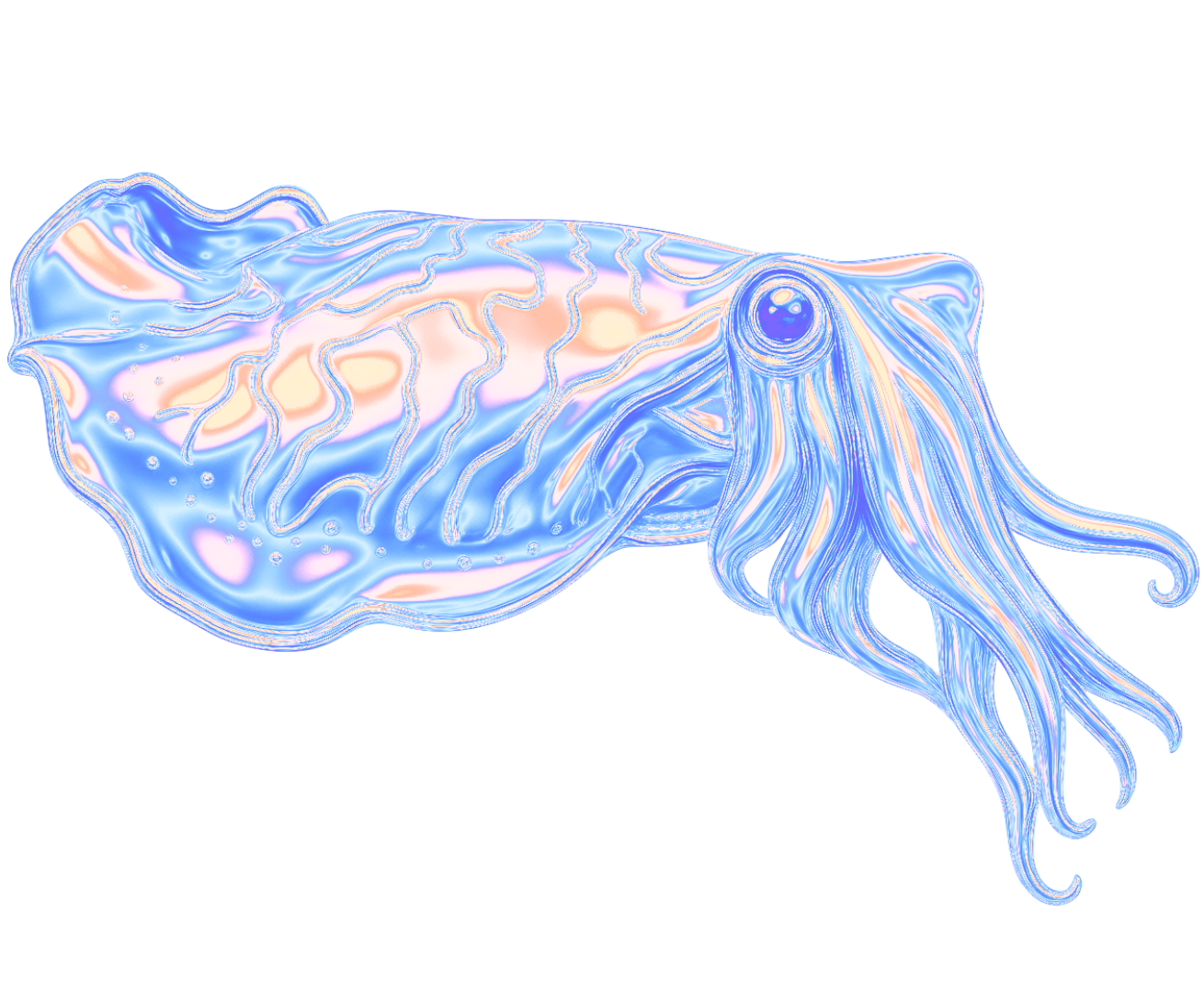
These remarkable cephalopods communicate through rapidly shifting colors, textures, body postures, and movement. Their skin functions almost like a living display system, capable of producing dynamic visual signals in fractions of a second and research suggests that some of these displays serve important communicative functions between individuals (Cohen-Bodénès & Neri, 2025; Watch Cuttlefish Communicate—with Enthusiastic Gestures, 2025).
AI systems can already analyze images and video with extraordinary accuracy. They may soon be able to recognize recurring visual patterns in cuttlefish behavior and correlate them with social interactions. But recognizing a pattern is only the first step. Understanding its meaning requires entering, as much as possible, into another creature’s sensory world.
This is where the challenge of interspecies communication shifts from engineering to philosophy.
A whale experiences an acoustic ocean. A bee navigates through scent and vibration. A cuttlefish speaks through color and movement. Each inhabits a sensory reality profoundly different from our own.
AI may help reveal these realities. It may identify relationships we would otherwise miss and uncover forms of communication previously hidden from human awareness. But it cannot eliminate differences. Nor should it.
As these technologies advance, they force us to confront an ethical question. If the living world becomes increasingly legible, will we use that knowledge to control and exploit, or to listen more carefully?
Perhaps the goal of interspecies communication is not to translate every signal into human language. Perhaps it is to recognize that other forms of intelligence, perception, and culture already exist around us.
In this sense, AI does not give nature a voice: nature has always been speaking.
Perhaps the promise of AI is not that it will teach us how to speak to whales, bees, or cuttlefish. It may be that it teaches us how much we still have to learn about listening, and how much of the world has been speaking all along.
Images by author, adapted using Canva’s generative AI algorithms
Willow Gatewood is an environmental scientist, interdisciplinary artist, and storyteller from Brooklyn, NY. Follow her on Instagram: @willowg_music
References
Cohen-Bodénès, S., & Neri, P. (2025). Cuttlefish interact with multimodal “arm wave sign” displays. BioRxiv (Cold Spring Harbor Laboratory). https://doi.org/10.1101/2025.04.13.648584 (PREPRINT)
Eguiguren A et al. (2025). Integrating cultural dimensions in sperm whale
(Physeter macrocephalus) conservation: threats, challenges and solutions. Phil. Trans. R. Soc. B 380: 20240142. https://doi.org/10.1098/rstb.2024.0142
Paradise, O., et. al. (2025). WhAM: Towards A Translative Model of Sperm Whale Vocalization. ArXiv.org. https://arxiv.org/abs/2512.02206
Watch cuttlefish communicate—with enthusiastic gestures. (2025). Science.org. https://www.science.org/content/article/watch-cuttlefish-communicate-enthusiastic-gestures
Young, L. (2025). What does a healthy reef sound like? – The Institute for Environmental Research and Education. The Institute for Environmental Research and Education. https://iere.org/what-does-a-healthy-reef-sound-like/
Not cited directly; for further background context and reading:
Agrawal, A., et. al. (2026). Barriers and Limitations in Artificial Intelligence for Decoding Non- Human Signals. In W. Ameur & A. Arbi (Eds.), Harnessing AI for Human-Animal Communication (pp. 85-116). IGI Global Scientific Publishing. https://doi.org/ 10.4018/979-8-3373-5483-5.ch00
Amphaeris, J. et. al. (2023). A multifaceted framework to establish the presence of meaning in non‐human communication. Biological Reviews. https://doi.org/10.1111/brv.12989
Project CETI. (n.d.). https://www.projectceti.org/
Schlenker, P., et. al.(2026). Ancestral iconicity: the dance language of bees revisited. Biological Reviews. https://doi.org/10.1002/brv.70164
Plantings
Issue 61 – July 2026
Also in this issue:
Sniffing around with AI
By Stuart Firestein
Artificial Olfaction or Olfactory Intelligence?
By Andreas Keller
AI and Scent: Creating an Ethics of Synthetic Smell
By Gayil Nalls

Multispecies Meanings: Merle Bergers on Plant Communication, Natural Perfumery, and Ecological Attention
By Clara Muller

The Language of Living Air
By Gayil Nalls
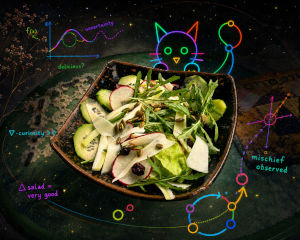
Eat More Plants Recipes:
Uncertainty Salad
By Daria Dorosh
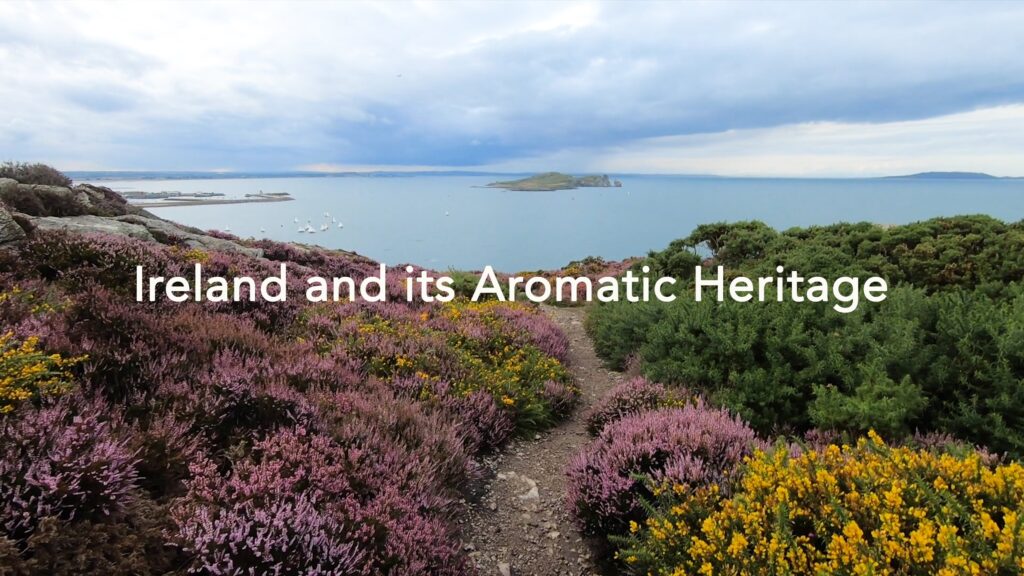
As Ireland transitions from the rich, smoky scent of peat-burning to a more sustainable future, its olfactory heritage is evolving. What will become the next iconic aromatic symbol of Ireland?
Click to watch the documentary trailer.
As Ireland transitions from the rich, smoky scent of peat-burning to a more sustainable future, its olfactory heritage is evolving. What will become the next iconic aromatic symbol of Ireland?