


The Language of Living Air
By Gayil Nalls
Sign up for our monthly newsletter!
A forest trail begins with an inhalation.
The air is cool beneath the canopy, where sunlight arrives softened by thousands of leaves. With every breath, the forest enters the body as chemistry. Invisible molecules released from bark, needles, mosses, fungi, flowers, and soil drift together in an ever-changing composition. No two moments are quite the same.
To perceive the scent of a plant is to step into a quiet commerce between it and air, a circulation of invisible offerings that binds organism to atmosphere. What we call smell is both a detection and a participation, a moment in which the chemistry of a plant enters the body and becomes thought, memory, and feeling.
Plants colonized land more than 450 million years ago, while flowering plants emerged roughly 140–150 million years ago. They announce their presence through volatile organic compounds (VOCs)—molecules light enough to rise from petals, bark, leaves, or soil and drift through the air. Terpenes, phenylpropanoids, and green leaf volatiles are among their many chemical expressions. A flower summons pollinators; a wounded leaf signals distress; roots communicate chemically with fungal partners beneath the soil. Every emission is shaped by light, temperature, humidity, season, and time of day, so that a jasmine blossom at dusk and the same flower at noon speak in distinctly different chemical voices.
When we inhale, these molecules cross a threshold. They dissolve into the moist lining of the nose and bind to olfactory receptors, roughly 400 functional receptor types in humans, each broadly responsive to particular molecular features. No single receptor identifies a scent. Instead, the brain recognizes patterns of activation, assembling countless molecular signals into a unified perception. What reaches consciousness is not the molecule itself but the brain’s interpretation of its chemical signature.
This pathway is both ancient and remarkably direct. Olfactory signals travel quickly into the limbic regions of the brain, where emotion, learning, and memory converge. Unlike the other senses, olfactory information reaches the primary olfactory cortex without first passing through the thalamus, contributing to its unusually direct connection with emotion and memory. It arrives with unusual immediacy, saturating the present with echoes of the past. A trace of honeysuckle or the faint drift of peat can summon an entire landscape, not simply as an image, but as an atmosphere felt throughout the body.
Yet scent is never singular. What we breathe is an aerobiome: a constantly changing mixture of plant emissions, microbial metabolites, moisture, minerals, and airborne particles shaped by surrounding ecosystems. The air of a forest is not merely the sum of its trees but a living chorus of chemical exchanges among plants, fungi, microbes, water, and atmosphere. Many of these compounds pass through us as well. Growing evidence suggests that exposure to forest atmospheres, including plant volatiles, airborne microbes, and other components of the aerobiome, can influence mood, reduce physiological stress, and support aspects of immune function, contributing to our overall sense of well-being. Smelling becomes a form of ecological immersion, a physiological participation in place.
Scent also unfolds through time. Lighter, more volatile molecules arrive first, bright and fleeting; heavier molecules linger, lending depth and persistence. The perfumer’s language of top, heart, and base notes reflects the differing volatilities of aromatic molecules, a temporal unfolding that also occurs naturally. At the same time, perception itself evolves. The olfactory system rapidly adapts, allowing once-prominent aromas to fade from awareness until a shift in attention, or a fresh current of air, brings them back again.
To describe smell is to attempt a translation between worlds. Human language evolved primarily around sight and sound and often falters before scent. We reach instinctively for analogy: freshly cut grass, warm rain, cedar chests, a remembered kitchen. Smell is rarely stored as an isolated label but as a constellation of memory, place, emotion, and culture. Every fragrance carries both immediate sensation and accumulated experience, making it at once intimate and elusive.
Yet with attention, vocabulary expands. We begin to distinguish the green from the resinous, the mineral from the floral, the cool from the warm. Metaphor becomes a bridge between the senses. A fragrance may feel luminous like morning light, textured like linen, or resonant like music. Through these crossings, perception grows richer, and the seemingly ineffable becomes something we can begin to share.
Some cultures have developed languages in which scents are named directly rather than through reference to objects. These vocabularies remind us that perception is shaped not only by biology but also by culture, attention, and practice. Where language offers distinctions, perception often follows. The more precisely we can name experience, the more nuanced our experience becomes.
To smell a plant, then, is to enter a web of relationships—molecular, neural, ecological, evolutionary, and cultural. It is a way of knowing that precedes language yet can, with patience, be carried into it. When we find words for scent, we do more than describe an experience. We preserve it, communicate it, and deepen our relationship with the living world from which it arose.
Each breath becomes a meeting place. The plant releases its chemistry into the atmosphere; the body receives and transforms it; the mind shapes it into memory, meaning, and sometimes language. What passes between them is invisible and ephemeral yet enduring in its effects. The air itself becomes a medium of relationship, and every inhalation a quiet act of ecological belonging.
Gayil Nalls, PhD, is an interdisciplinary artist and theorist and the founder of the World Sensorium / Conservancy and editor of Plantings.
Plantings
Issue 61 – July 2026
Also in this issue:
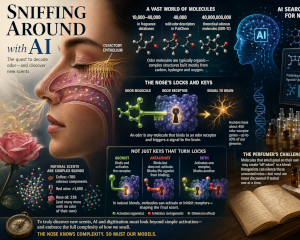
Sniffing around with AI
By Stuart Firestein
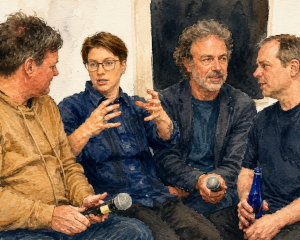
Artificial Olfaction or Olfactory Intelligence?
By Andreas Keller
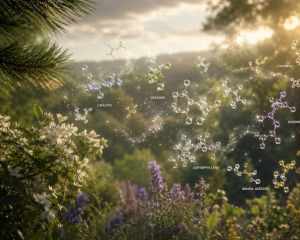
AI and Scent: Creating an Ethics of Synthetic Smell
By Gayil Nalls

Multispecies Meanings: Merle Bergers on Plant Communication, Natural Perfumery, and Ecological Attention
By Clara Muller

How to Meet an Alien
By Willow Gatewood
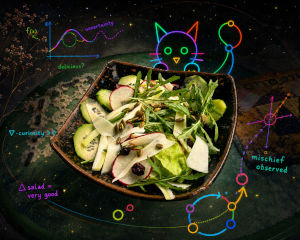
Eat More Plants Recipes:
Uncertainty Salad
By Daria Dorosh
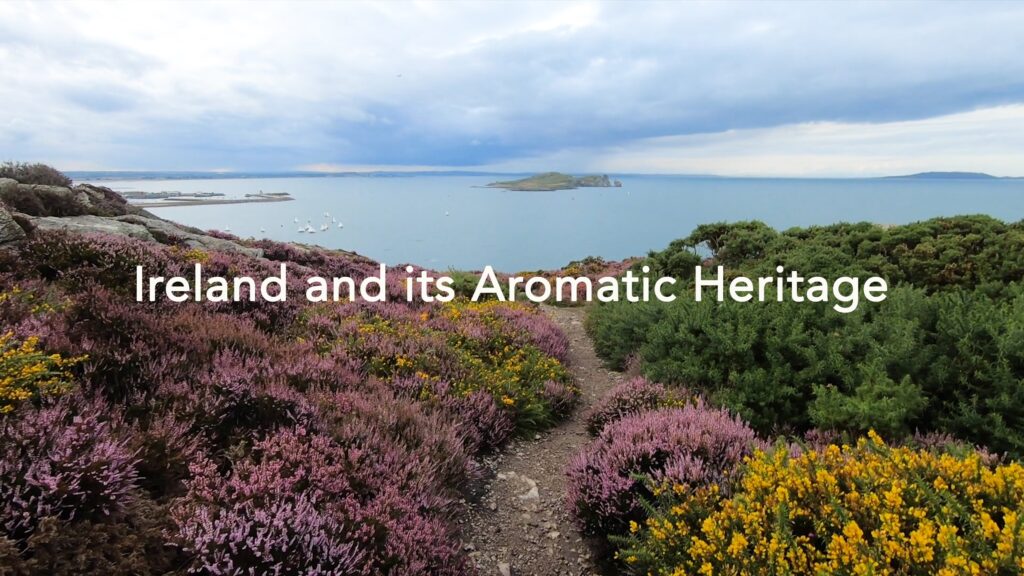
As Ireland transitions from the rich, smoky scent of peat-burning to a more sustainable future, its olfactory heritage is evolving. What will become the next iconic aromatic symbol of Ireland?
Click to watch the documentary trailer.
As Ireland transitions from the rich, smoky scent of peat-burning to a more sustainable future, its olfactory heritage is evolving. What will become the next iconic aromatic symbol of Ireland?