

Photo by Roadtrippers, April 15, 2017
A Calendar of Smells
By John Steele
Sign up for our monthly newsletter!
One of the best sentences about smell in the English language was written by a woman who could neither see nor hear. “Smell is a potent wizard that transports us across a thousand miles and all the years we have lived,” Helen Keller wrote in 1908, in a chapter she titled “Smell, the Fallen Angel”—fallen because the rest of us, spoiled by our eyes, had demoted it. For Keller, the wizard was no figure of speech. The scent of ripe fruit returned her to the peach orchard of her Alabama childhood; other odors could flood her without warning with joy, or with old grief. Any of the senses can carry us across distance. Only smell travels so surely through time, and it keeps a schedule, because the scents that reach deepest arrive with the seasons. The printed calendar has twelve months. The one I carry in my body is the calendar my own nose learned.
Fall: The Leaves
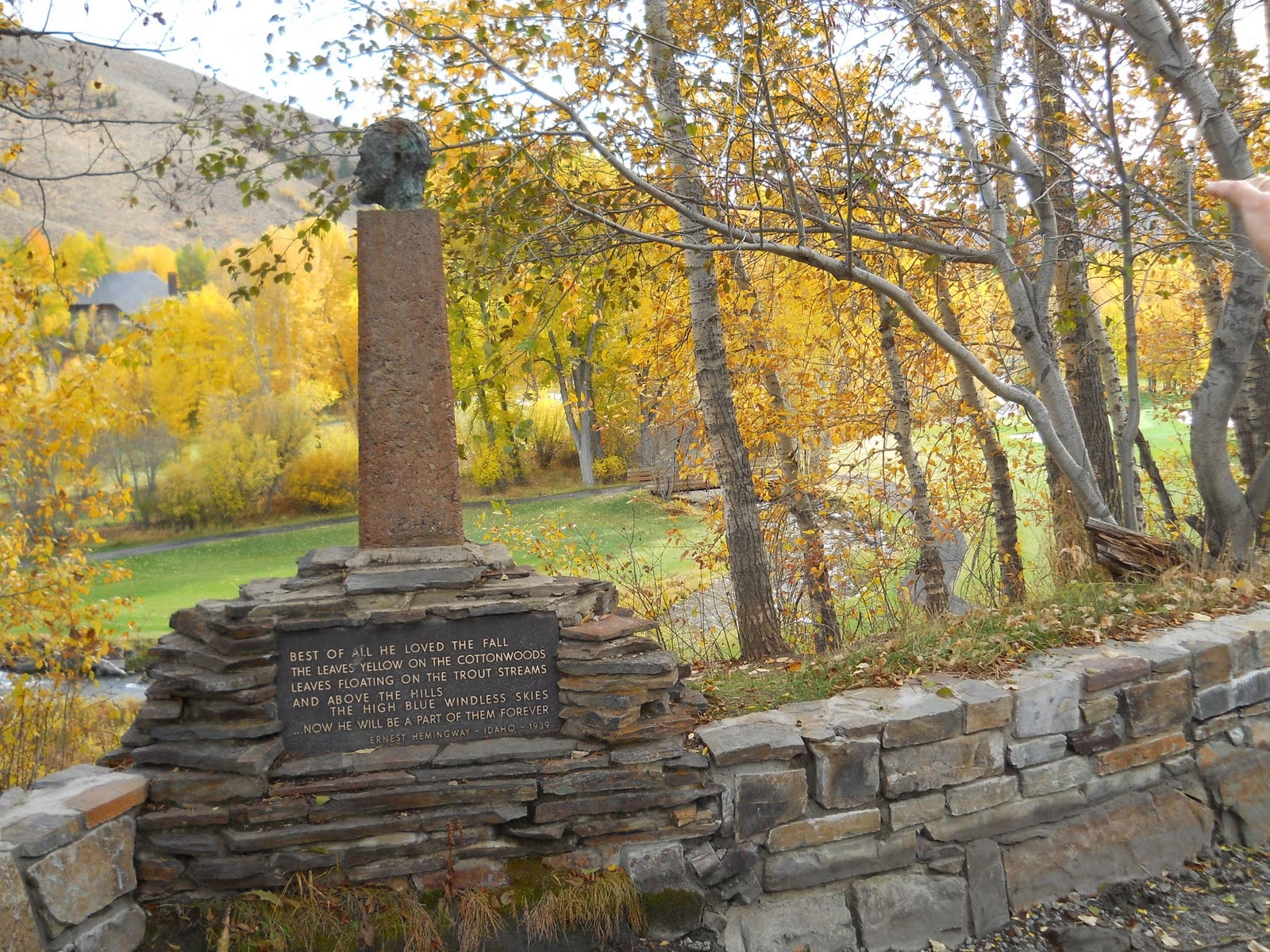
Above Trail Creek in Sun Valley, Idaho, on a knoll east of the lodge, a bronze bust of Ernest Hemingway looks out over the cottonwoods. The stone beneath it carries lines he wrote in the fall of 1939, a eulogy for his friend Gene Van Guilder, a young Sun Valley publicist killed that October in a hunting accident: “Best of all he loved the fall, the leaves yellow on the cottonwoods.” The lines go on, leaves floating on the trout streams, the high blue windless skies above the hills, and end with the promise that his friend would now be part of them forever.
Five years after Hemingway’s own death in Ketchum, a few miles away, his family and friends chose those same words for his memorial, dedicating it on what would have been his sixty-seventh birthday. The inscription is all sight: yellow leaves and blue sky. What finds you first on that knoll in October is the smell of the leaves themselves, down and damp along the creek.
For me the year begins there, with fallen leaves. Not the leaves on the tree, which are for the eye, but the leaves on the ground, the drifts along the curb, dry on top and damp beneath, giving off a sweet, smoky, faintly tea-like scent that no other season can counterfeit. Science can name some of it. Fungi and bacteria dismantle what the trees let go, releasing a shifting mixture of volatile compounds. The smell of October is decomposition, and decomposition is the first stage of next spring.
The poets understood the emotional chemistry long before the biochemists did. Gerard Manley Hopkins put it to a child in “Spring and Fall”: “Margaret, are you grieving / Over Goldengrove unleaving?” The girl weeps at the falling leaves, and Hopkins tells her, as gently as such a thing can be told, that she is really weeping for herself. The smell of fallen leaves is that knowledge, made pleasant enough to inhale.
Keats reached the same truth from the other direction; his “To Autumn,” with its “season of mists and mellow fruitfulness,” insists that decline has its own ripeness.
There is a smell missing from the modern fall, and older readers will know it: burning leaves. For much of the twentieth century, October in America smelled of leaf smoke, the piles raked to the curb and set alight, a communal incense now banned or restricted in many communities. The restrictions are sensible, and the loss is real. An entire generation carries a seasonal smell that has largely disappeared from the air—proof enough that the calendar of scent is kept in memory as much as in the atmosphere.
Winter: The Pine
Then winter, and here the nose meets a paradox. Step outside on a January morning, and the air seems to have a smell, cold and crisp and almost metallic. But cold does not give the air an odor so much as take odors away. Low temperatures reduce the volatility of the molecules that carry scent. Fewer rise readily into the air. What we experience as the smell of winter may therefore be partly an absence sharpened into a sensation of its own.
Literature seems to confirm it. Writers give winter sights and sounds, Joyce’s snow falling faintly through the universe, Frost’s easy wind and downy flake, but almost never a scent, unless a door opens.
When winter does smell on the page, it often smells of the indoors escaping. Dickens made a specialty of this. In A Christmas Carol, the grocers’ shops breathe tea and coffee and spice into the cold London street, and the Cratchits’ pudding arrives wrapped in its own festive steam. Pasternak, in Doctor Zhivago, evokes another Russian seasonal threshold through the smell of pancakes and vodka in the week before Lent. In Victorian London and czarist Russia alike, winter’s fragrance comes from warmth, food, and human habitation pushing back against the cold.
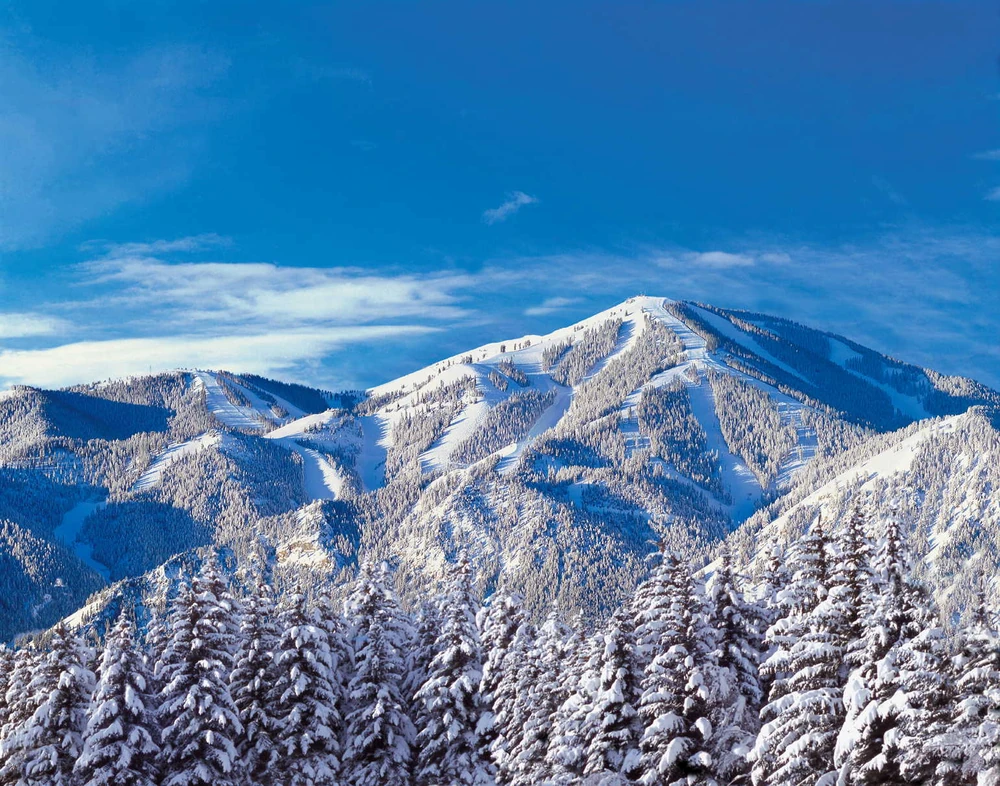
For me, the real smell of winter is pine.
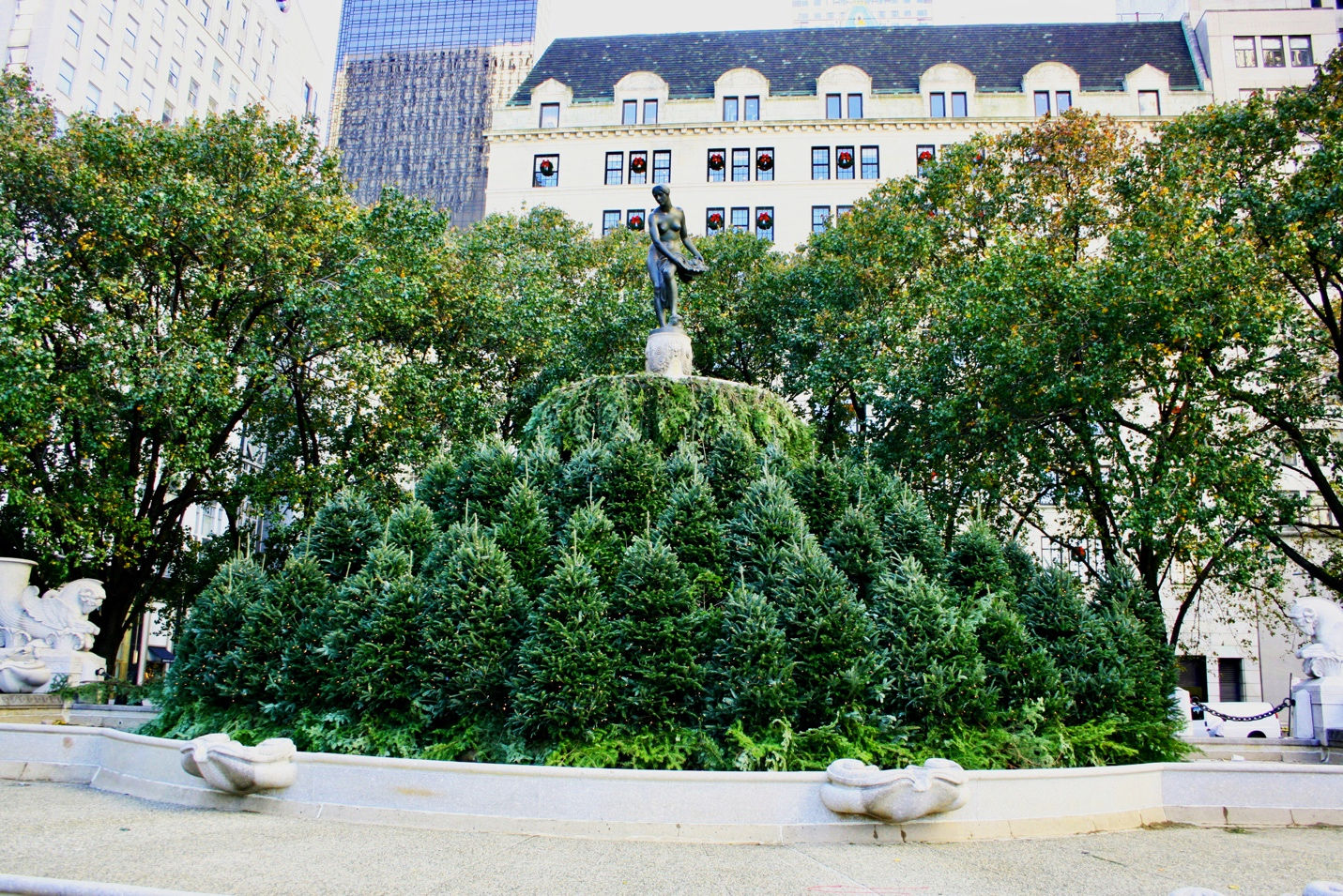
It arrives every year in two forms. There is the first smell of pine boughs decorating a hallway, the sudden resinous declaration that the holidays have begun. And there are the Christmas trees for sale on the streets of New York, whole miniature forests appearing against brick buildings and scaffolding, their scent escaping into air that otherwise seems to contain almost none.
It is a strange seasonal signature because it is one we deliberately import. We cut a tree from the forest, carry it into the living room, and let it fill the house with pineness and other resinous terpenes, compounds central to the conifer’s chemical defenses. The evergreen is the tree that refuses the season, and we bring its refusal indoors and decorate it.
Robert Frost, in “Christmas Trees,” watches a stranger offer to buy his hillside of young firs for the city market and finds he cannot sell them, though he wishes he could enclose one in a letter to a friend. Whittier’s “Snow-Bound” completes the picture, a farmhouse sealed in by blizzard, organized around the hearth, roasting apples and simmering cider defining a world whose outdoors has been erased.
When nature withholds scent, we make our own.
Spring: Hyacinth, Lilac, Peony, Honeysuckle
Spring is when literature’s nose finally opens, and mine opens with it, hyacinth first, then lilac, peony, honeysuckle, as if the season were pacing itself.
The hyacinth comes first because it belonged to my father’s garden. Even now its smell does not simply tell me that spring has arrived. It opens a garden that no longer exists exactly as it did, and for an instant my father is somewhere within it. That is the peculiar authority of scent; memory does not feel summoned. It feels present.
The hyacinth is spring’s earliest olfactory notice, served while the ground is barely awake. Its scent is out of all proportion to the moment. Dense, sweet, almost tropical, it broadcasts at full strength into air still cold enough that little else competes with it.
The Greeks attached grief to a flower they called hyakinthos. Hyacinthus was the youth Apollo loved and accidentally killed with a discus. From his blood the god raised a flower whose petals, Ovid tells us, bore the marks of Apollo’s cry of mourning.
A much-quoted English verse long attributed to the Persian poet Saadi takes the opposite view: if a man has two loaves of bread, he should sell one and buy hyacinths to feed his soul. Eliot, in The Waste Land, found something else again: “You gave me hyacinths first a year ago; / They called me the hyacinth girl,” the flower marking an anniversary, the year measured in blooms rather than months.
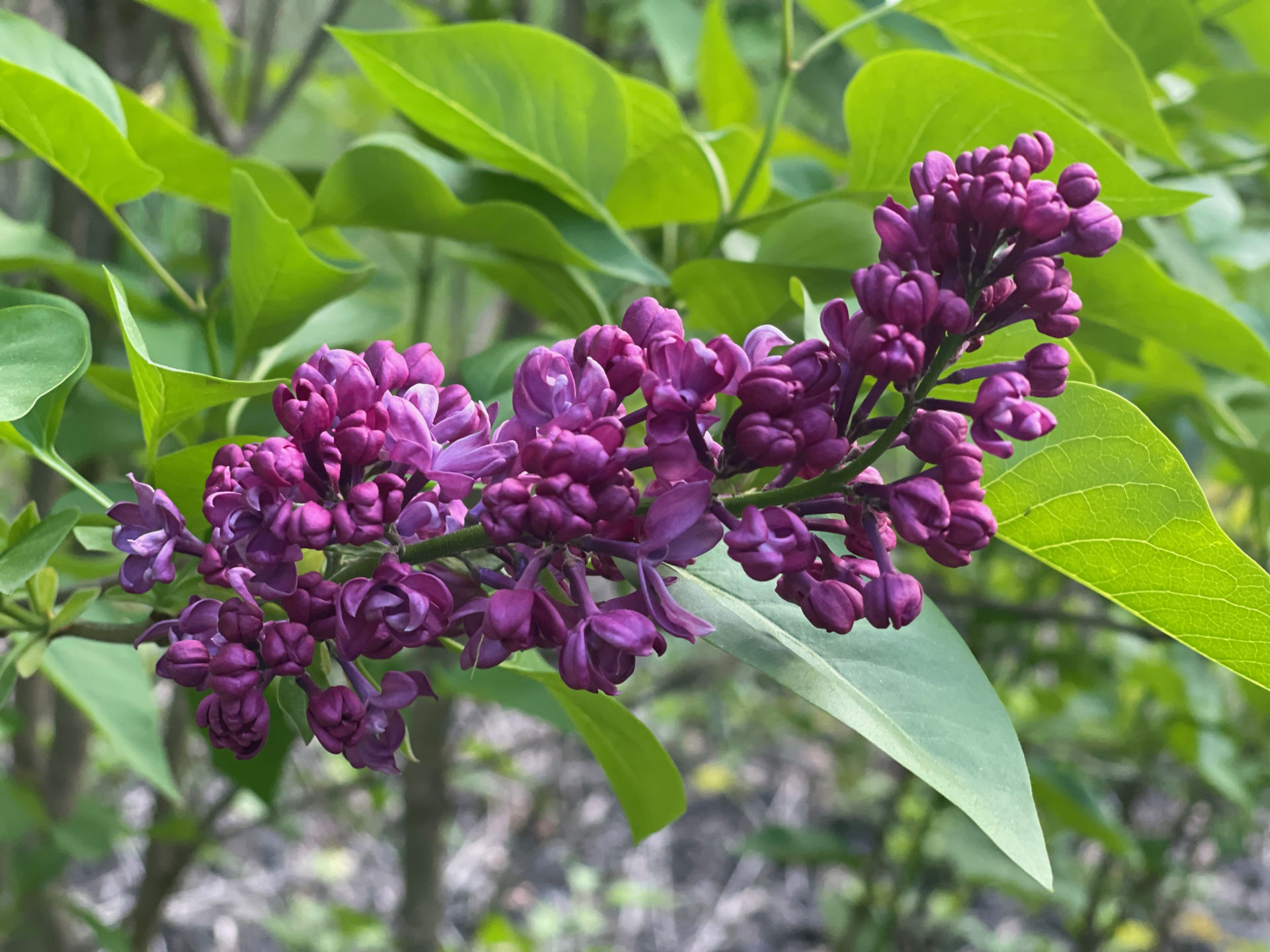
Lilac carries perhaps the heaviest freight in American poetry, and Walt Whitman is the reason. “When Lilacs Last in the Dooryard Bloom’d,” his elegy for Lincoln, is built on recurrence and scent. Whitman breaks his sprig from the bush with its heart-shaped leaves and understands exactly what he is doing, binding the flower to grief, so that every returning spring will return the mourning with it.
“I mourn’d, and yet shall mourn with ever-returning spring,” he writes. An enormous claim for a flower, that it can carry a nation’s sorrow forward, April after April, whether anyone wills it or not. Proust needed a novel to establish what Whitman asserted in a line.
Amy Lowell, a half-century later, made lilacs the naturalized citizens of New England itself, blooming by every doorstep and pasture wall, the immigrant shrub that came to smell like home.
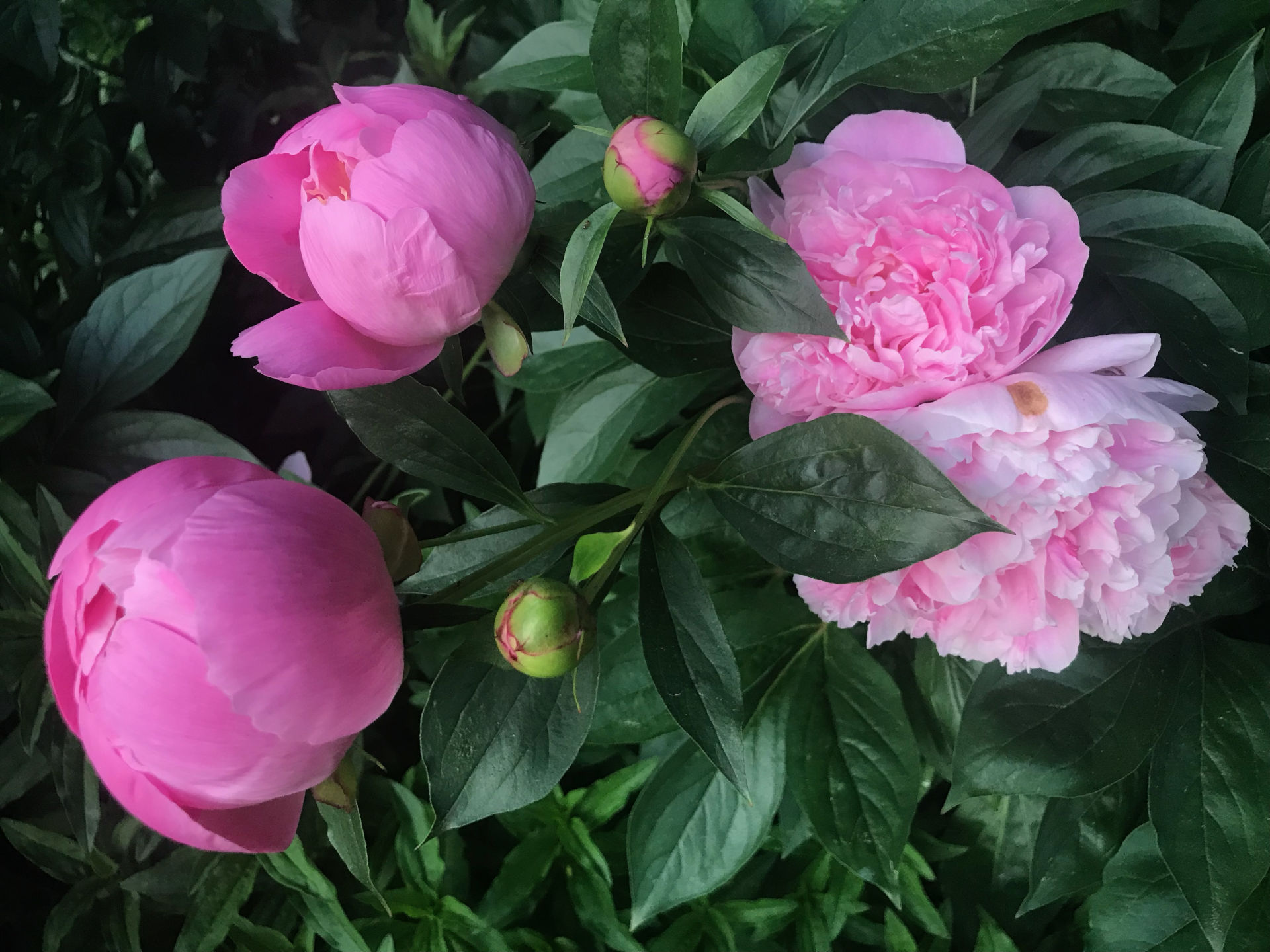
The peony is the quiet one. It offers its scent only if you lean in, rose-like with something cool and lemony underneath. The classical poets of Japan and China loved the flower for its reticence. Issa caught it in a haiku: the peony scatters, and yesterday’s rain spills out of it. A flower that holds the previous day’s weather and releases it as it dies.
Honeysuckle ends the season, and it is not innocent. In The Sound and the Fury, Faulkner lets honeysuckle saturate Quentin Compson’s memory of his sister until it becomes unbearable- the scent of everything he cannot control or undo, “the saddest odor of all,” Quentin calls it.
That a child’s fence-climbing flower, its single drop of nectar pulled from the blossom’s throat, can hold that much darkness says something about the reach of the sense itself. Spring’s s mells are not ornamental. They wake the year’s memory, and not everything they wake is sweet.
Summer: Jasmine and Gardenia
Summer belongs to the white flowers in our Hudson Valley garden, and the white flowers belong to the night.
Many pale, night-blooming flowers evolved according to an economy of darkness: light-colored blossoms visible in low light and fragrance carrying the rest of the message to nocturnal pollinators. Jasmine is among the great practitioners of this strategy. Its scent intensifies into the evening, transforming a garden or a porch after sundown. The perfume of a summer night was never addressed to us. We intercept it.
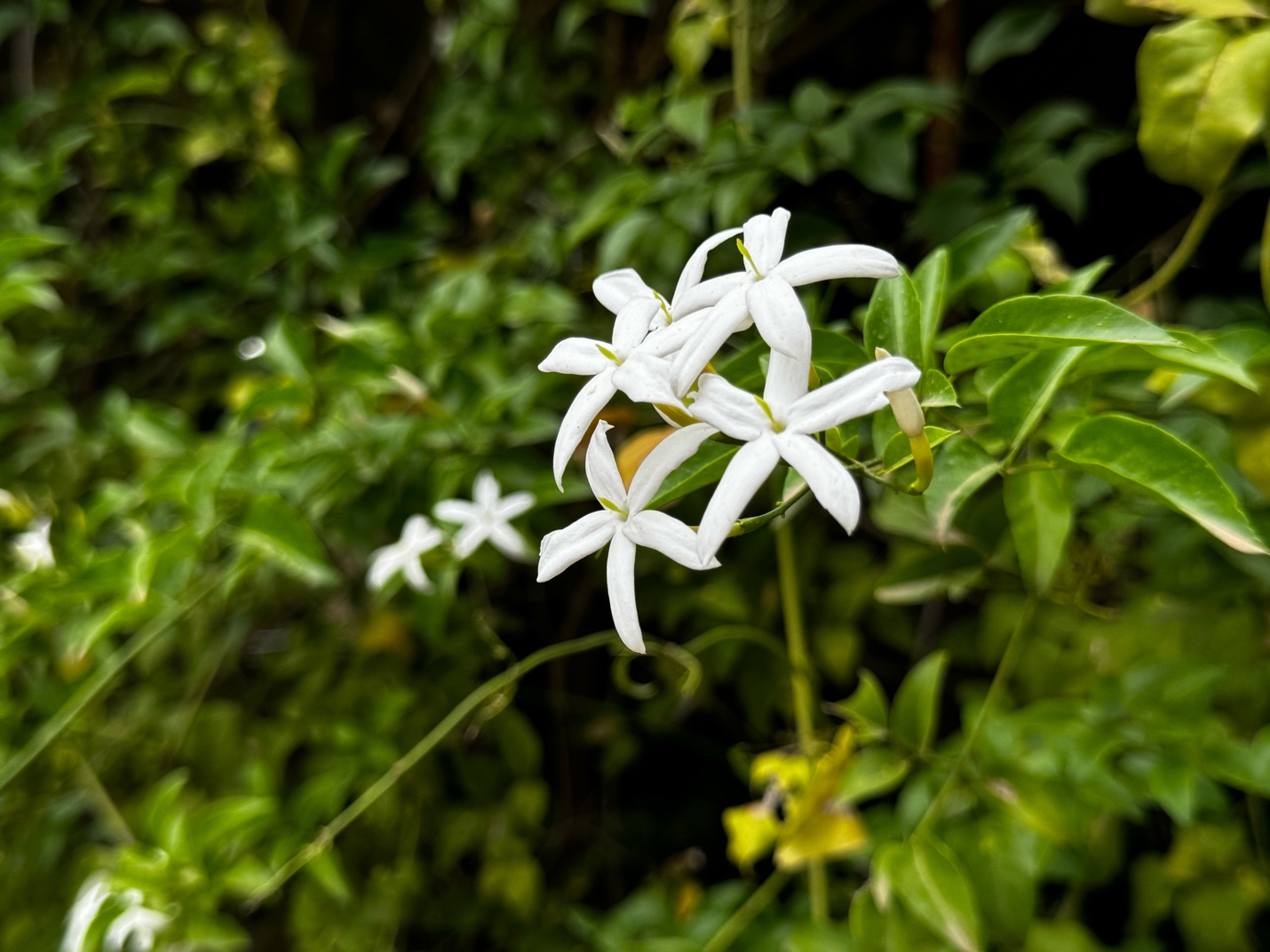
Tagore filled his hands with jasmine. “Ah, these jasmines, these white jasmines!” he wrote, recalling the first blossoms of his childhood, a whole life’s sweetness recovered through a flower an old man holds again. In Persian poetry, in Indian song, jasmine becomes nearly synonymous with the scented summer night.
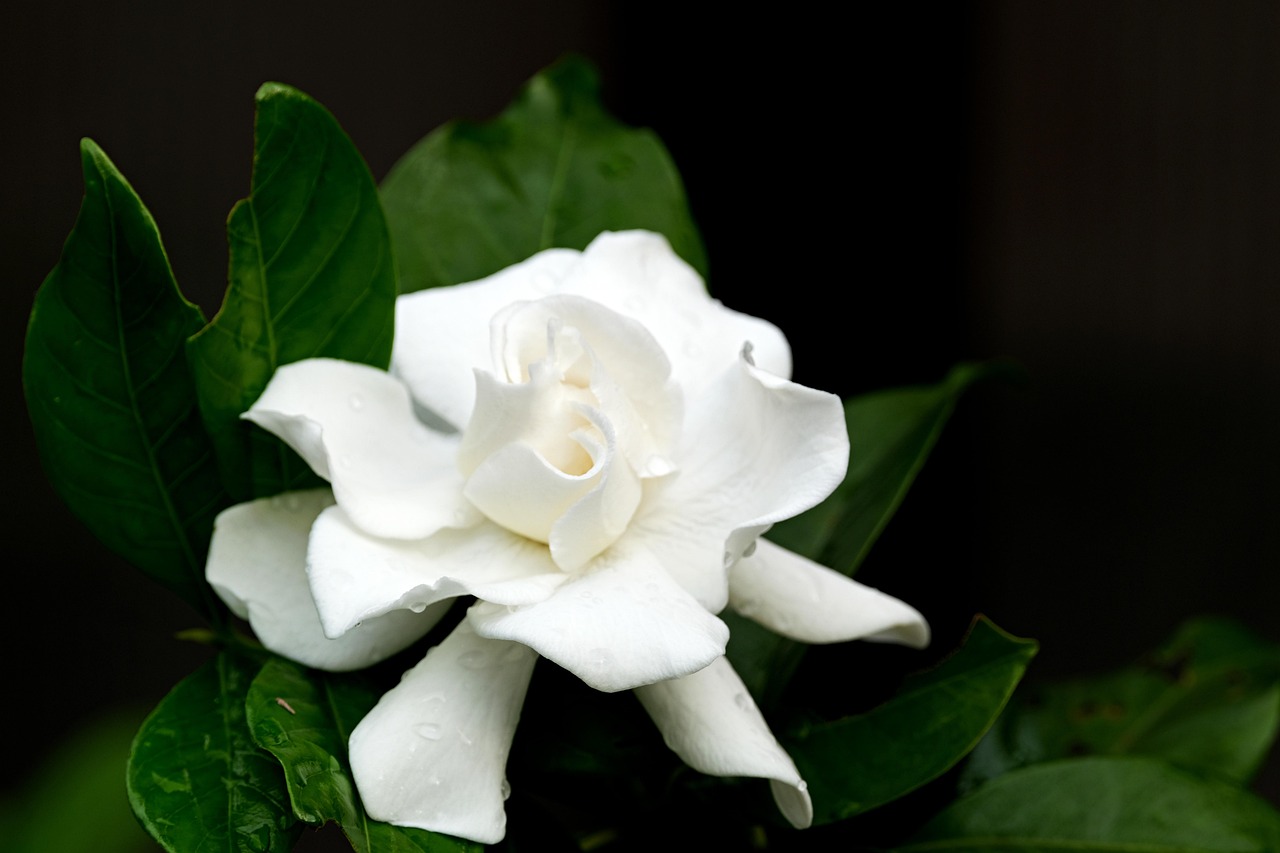
Gardenia is its heavier-scented companion in the American imagination. It comes with its own iconography. Billie Holiday singing with the white bloom in her hair, glamour and grief in the same corsage, a flower that perfumes a room and bruises brown at a touch.
Chemists who analyze the perfume of flowers such as jasmine find, inside the sweetness, a molecule called indole, a compound also produced in biological decay. At high concentrations, indole can smell fecal, animalic, even putrefactive. Diluted and woven into a flower’s bouquet, it becomes floral, sensual, almost narcotic.
The most beautiful smells of summer carry a trace of death in their chemistry, and would be poorer without it.
If the four seasons teach one thing through the nose, it is that scent is how time behaves when it refuses to be a line. A clock moves forward; a smell circles back.
Anatomists can tell us part of the reason. Olfaction has unusually direct access to the brain systems involved in emotion and memory. But Whitman knew it without instruments when he promised to mourn “with ever-returning spring.” For him the lilac was never simply a reminder of the funeral, it re-performed it, annually, on schedule.
Proust’s madeleine gets the credit, but the seasons were the original involuntary memory. Every October the leaves come down, and everyone past a certain age is, for one breath, every age they have ever been in October.
Scent in time runs both directions. It is how the past reaches forward, the leaf smoke of a vanished decade, my father’s garden returning in a hyacinth, a friend who loved the fall becoming part of it forever.
John Steele is a Founder and Executive Editor of Blue Continuum.
Plantings
Issue 63 – September 2026
Also in this issue:

Christophe Laudamiel: Planted Memory, Cultivated Ethics, and More Blossoming for Perfumery
By Gayil Nalls
When Flowers Keep Time: How Circadian Rhythms Shape the World of Scent
By Gayil Nalls
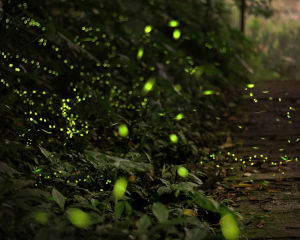
Bioluminescence and Living Earth
By Gayil Nalls
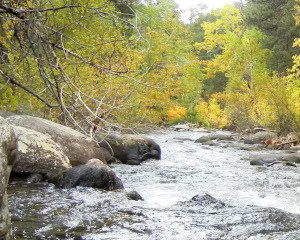
Ancient forests took 100,000 years to recover from the last global warming period similar to today – Wyoming fossils reveal what happened
By Regan E. Dunn

How to Nurture Plants and Your Kid’s Curiosity
By WS/C
Eat More Plants Recipes:
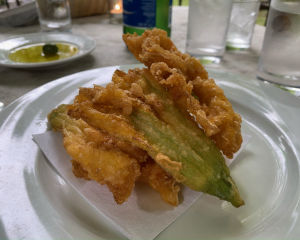
Fried Zucchini Blossoms: A Roman Celebration of Cucina Povera
By Alexandru Kovacs
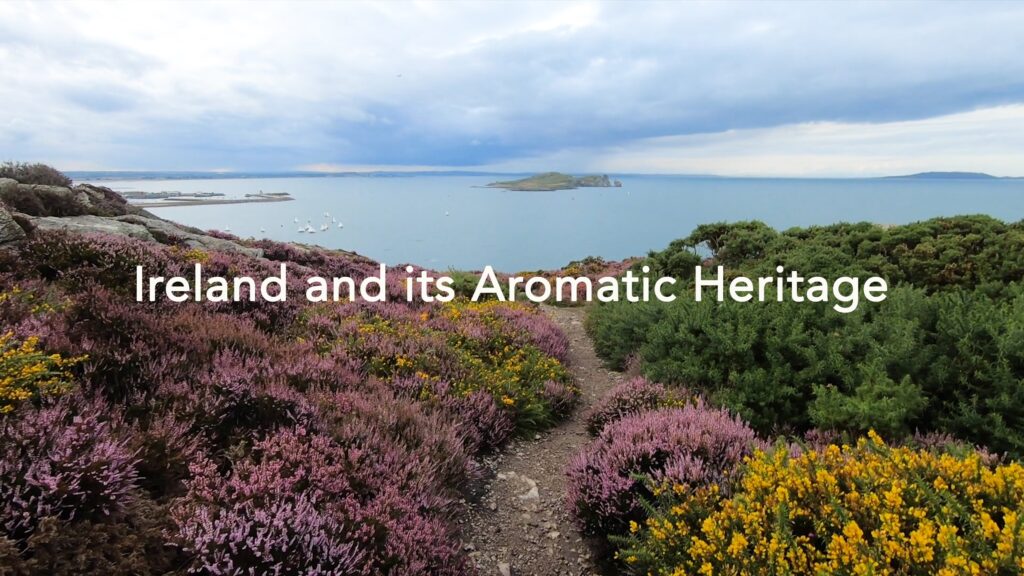
As Ireland transitions from the rich, smoky scent of peat-burning to a more sustainable future, its olfactory heritage is evolving. What will become the next iconic aromatic symbol of Ireland?
Click to watch the documentary trailer.
As Ireland transitions from the rich, smoky scent of peat-burning to a more sustainable future, its olfactory heritage is evolving. What will become the next iconic aromatic symbol of Ireland?