

How to Nurture Plants and Your Kid’s Curiosity
By WS/C
Sign up for our monthly newsletter!
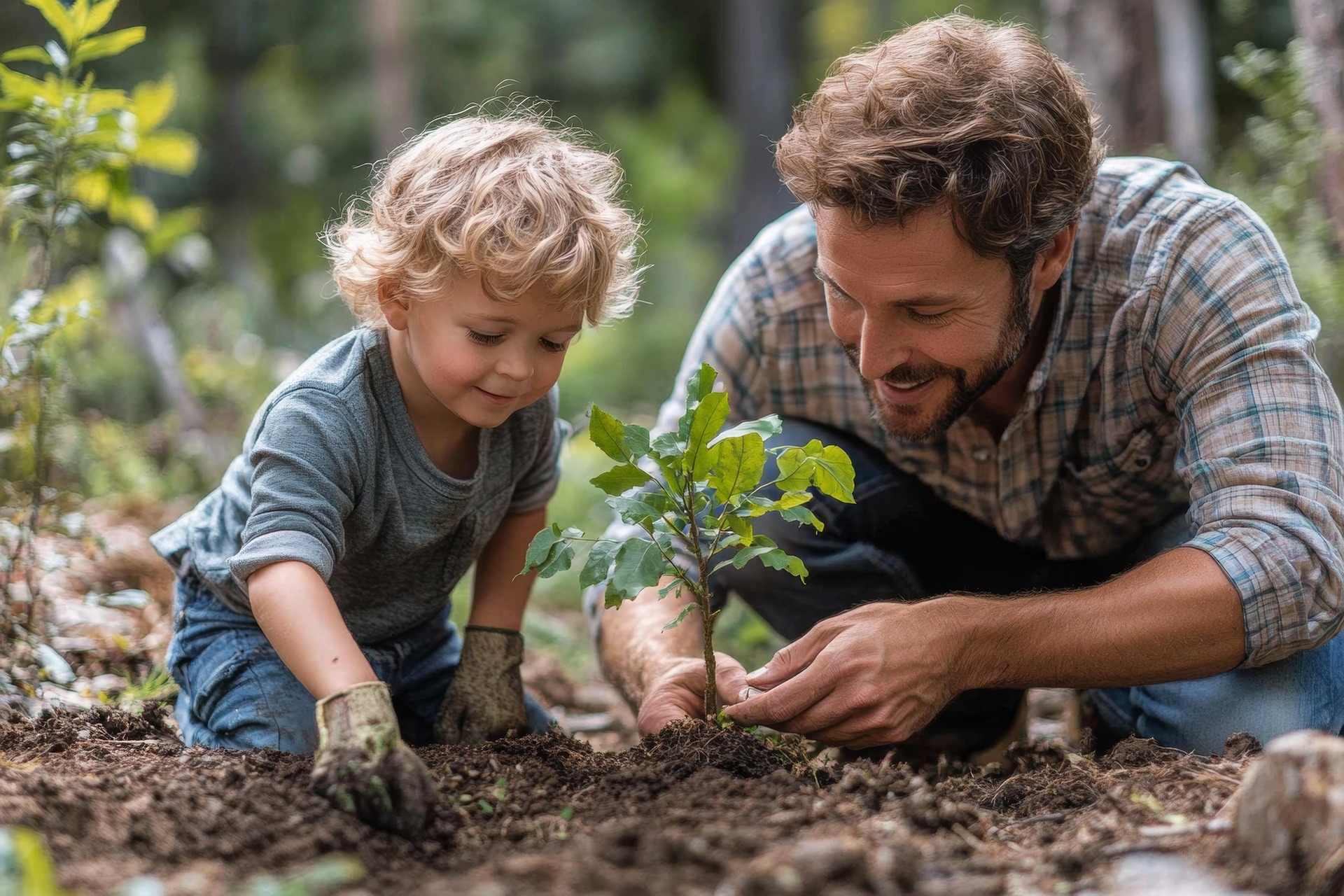
There is something quietly transformative when a child cares for a plant. A seed pressed into soil, a sprout bending toward light, a tomato ripening on a balcony vine. These simple events awaken a sense of wonder that no screen can replicate. Plants invite children into a relationship with time, patience, observation, and the living world itself. In nurturing plants, children begin to nurture curiosity, and curiosity is one of the most important capacities we can cultivate for the future.
Gardening with children is an initiation into attentiveness. A child who watches a sunflower track the sun’s movement or notices the scent released when mint leaves are rubbed between their fingers begins to understand that the world is alive with processes, signals, and relationships. Plants become teachers.
To care for a plant is to enter into a relationship with something living but radically different from us. A plant cannot tell a child that it is thirsty. It communicates through the curl of a leaf, the dryness of the soil, the sudden droop of a stem. It asks to be noticed.
And they ask questions.
Curiosity Begins with Contact
Plants offer living answers. Unlike abstract lessons, gardens respond visibly to care and neglect. They reward observation. A child who waters regularly sees growth. A child who forgets notices drooping leaves. Through this interaction, children develop not only practical knowledge but ecological empathy.
Through sensory engagement, children can smell aromatic herbs such as basil, rosemary, mint, or lavender; feel the textures of leaves, bark, moss, and petals with their fingertips; watch pollinators visiting flowers; taste edible plants directly from the garden, such as a strawberry, still warm from the sun; and listen to wind moving through grasses and trees. These experiences deepen memory and emotional connection. Neuroscience shows that sensory-rich experiences strengthen learning and emotional development, and scent in particular has profound links to memory and feeling.dar of scent is kept in memory as much as in the atmosphere.
Start Small and Let Them Lead
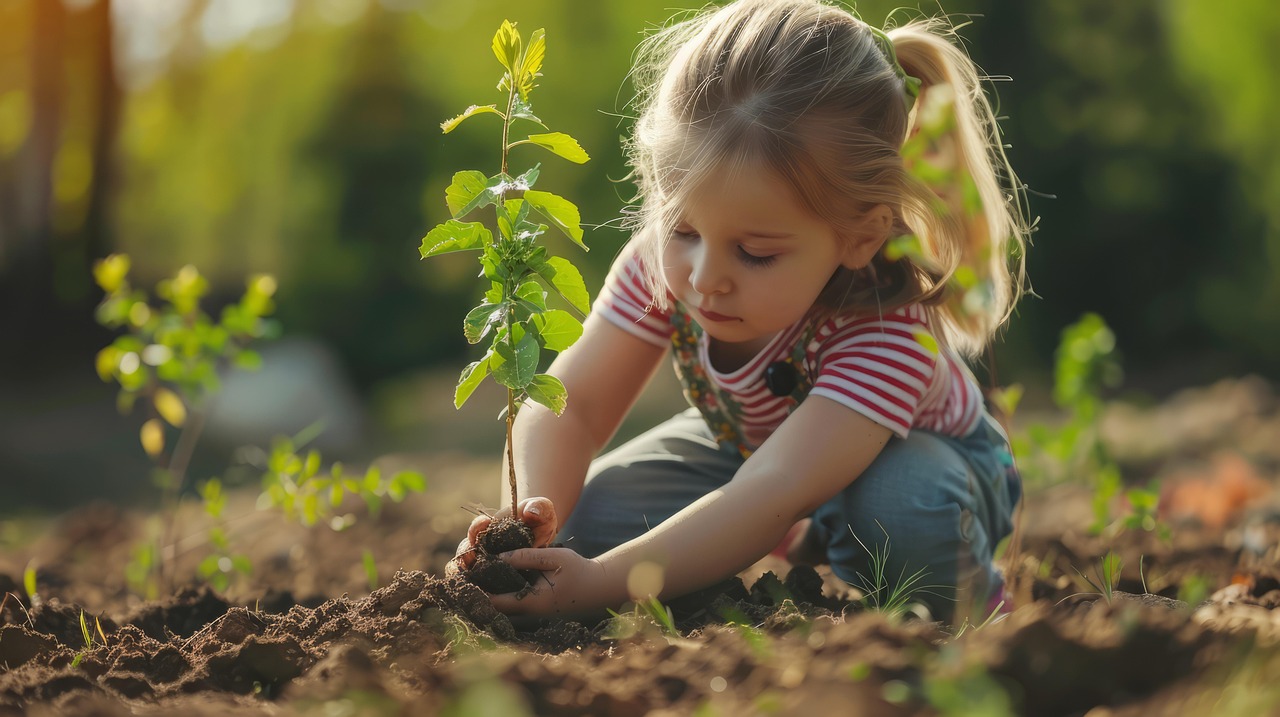
You do not need a large garden to nurture curiosity. A windowsill, balcony, porch, or small patch of earth is enough. Even a single pot can become a world of discovery.
Choose plants that are forgiving and rewarding: cherry tomatoes, sunflowers, nasturtiums, strawberries, beans, mint, basil, and marigolds. Fast-growing plants such as these are especially satisfying for children because they provide visible change and encourage ongoing engagement.
Allow children to make decisions whenever possible. Let them choose seeds, decorate pots, or decide where plants should go. Curiosity flourishes when children feel ownership and agency.
Rather than over-explaining, invite observation:
“What do you notice?”
“Why do you think this leaf turned yellow?”
“What insects are visiting the flowers today?”
Questions are often more powerful than answers.
Teach Patience in an Age of Immediacy
Plants live according to biological time. Seeds germinate when the conditions are right. Roots develop invisibly before anything appears above the soil. Buds form slowly. Flowers arrive in their season. Fruit cannot be hurried into ripeness simply because we want it now.
For children growing up amid instant entertainment, constant stimulation, and information available almost before a question has been fully formed, the garden offers a radically different rhythm. It asks for patience without guaranteeing a reward. Plants move according to biological time, not digital time. Seeds germinate when conditions are right. Flowers bloom in season. Roots develop invisibly before growth appears above ground.
For children growing up in a world of instant entertainment and constant stimulation, gardening teaches a radically different rhythm. It introduces delayed gratification and trust in unseen processes. This may be one of gardening’s greatest gifts. A child learns that meaningful growth often happens slowly and quietly. They learn that care matters even when results are not immediate. They learn resilience when a plant dies and joy when another unexpectedly flourishes. These are not merely gardening lessons. They are life lessons.
Encourage Ecological Thinking
Gardening also helps children understand interdependence. Bees pollinate flowers. Earthworms enrich soil. Fungi connect roots underground. Rain, sunlight, insects, birds, and microbes all participate in the life of a garden.
Children who garden begin to see ecosystems instead of isolated objects.
This understanding can inspire a lifelong respect for biodiversity and conservation. When children care for living things directly, environmental issues become personal rather than abstract. Climate change, habitat destruction, and pollinator decline are no longer distant concepts—they affect the butterflies in their garden and the flowers they planted.
Gardening, like life, can be uncertain and random. Sometimes the seed does not germinate. Sometimes a plant is eaten by insects. A storm snaps a stem. Leaves yellow for reasons that are not immediately understood. A carefully tended flower may fail while another plant, almost forgotten in a corner, suddenly flourishes.
These moments matter too. They reveal that caring for the living world does not mean controlling it.
A child begins to learn that meaningful growth can happen slowly and invisibly. Care matters even when its effects cannot yet be seen. Failure is not necessarily an ending. Another seed can be planted.
The garden also gradually enlarges a child’s sense of relationship. At first there may be only the plant: my sunflower, my strawberry, my bean. But soon other lives enter the story.
A bee lands on a blossom. An earthworm twists through the soil. A butterfly pauses on a flower. Fungi work invisibly among roots. Rain changes the texture of the earth. Birds arrive looking for insects and seeds. Sunlight moves across the garden during the course of the day.
Every garden, however small, is a community of relationships. Flowers depend upon pollinators. Roots depend upon soil organisms. Insects depend upon plants, and birds depend upon insects. Water, light, fungi, microbes, wind, and weather are all participants in the same living system.
Ecology, then, does not have to begin as an abstract idea in a textbook. It can begin with a bee on a flower.
Even simple activities can foster ecological awareness, such as planting native flowers for pollinators, growing herbs used in family traditions or cultural cooking, composting kitchen scraps, or saving seeds for next season. Through these practices, children begin to understand themselves as participants in the living world rather than separate from it.
Make Space for Wonder
Not every gardening experience needs to become a lesson plan. Some of the most important moments arise spontaneously: A ladybug crawling across a child’s hand, a bean sprout appearing overnight, or rain collecting on leaves. Wonder is foundational to curiosity. It is the emotional spark that motivates lifelong learning, creativity, and care.
Children do not need perfect gardens. They need opportunities to encounter life directly and attentively.
Growing More Than Plants
When we garden with children, we cultivate far more than plants. We nurture observation, patience, responsibility, sensory awareness, and an emotional connection to the living Earth. At a time when childhood is increasingly mediated by screens and technology, tending a garden can restore something essential: the understanding that we belong to nature, not apart from it. Curiosity, once rooted, continues to grow. A child who learns to protect a seedling may one day become an adult who protects forests, rivers, and pollinators—and who understands and respects the natural laws that sustain all life. Every seed placed in a child’s hand is also a seed planted for the future of the planet.
Plantings
Issue 63 – September 2026
Also in this issue:

Christophe Laudamiel: Planted Memory, Cultivated Ethics, and More Blossoming for Perfumery
By Gayil Nalls

When Flowers Keep Time: How Circadian Rhythms Shape the World of Scent
By Gayil Nalls
Bioluminescence and Living Earth
By Gayil Nalls

Ancient forests took 100,000 years to recover from the last global warming period similar to today – Wyoming fossils reveal what happened
By Regan E. Dunn

A Calendar of Smells
By John Steele
Eat More Plants Recipes:
Fried Zucchini Blossoms: A Roman Celebration of Cucina Povera
By Alexandru Kovacs

As Ireland transitions from the rich, smoky scent of peat-burning to a more sustainable future, its olfactory heritage is evolving. What will become the next iconic aromatic symbol of Ireland?
Click to watch the documentary trailer.
As Ireland transitions from the rich, smoky scent of peat-burning to a more sustainable future, its olfactory heritage is evolving. What will become the next iconic aromatic symbol of Ireland?