

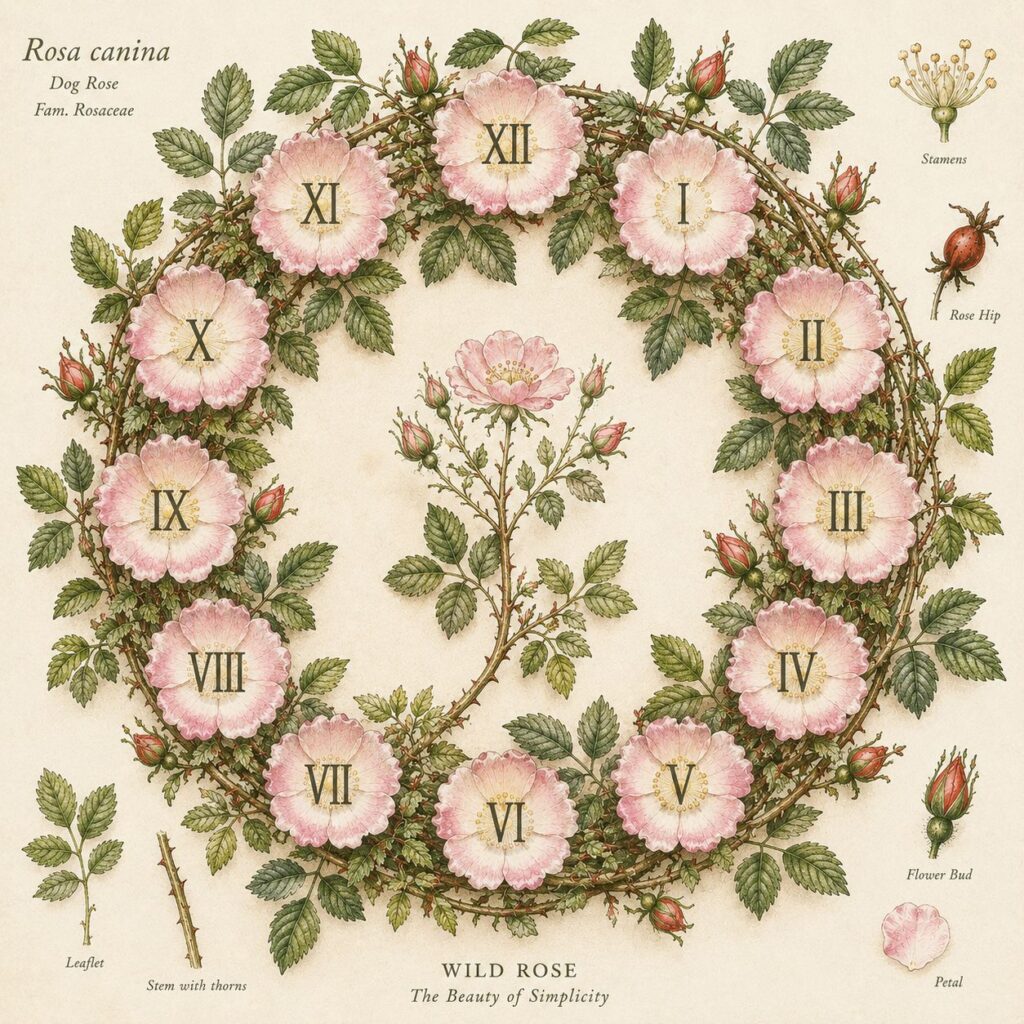
When Flowers Keep Time: How Circadian Rhythms Shape the World of Scent
By Gayil Nalls
Sign up for our monthly newsletter!
There are moments when a familiar flower seems unexpectedly intoxicating. A rose encountered at dawn may seem softer and fuller than the very same blossom smelled in the afternoon. Evening jasmine can appear almost impossibly rich as dusk settles, while the fragrance of lavender seems to drift differently in the cool hours before sunrise. We often assume these changes are caused solely by the flower itself or by the shifting temperature and humidity of the day. Yet a growing body of research suggests something even more remarkable: the flower is changing—and so are we.
Every living organism on Earth evolved beneath the rhythmic turning of our planet. The twenty-four-hour cycle of light and darkness has shaped the physiology of plants, animals, fungi, microbes, and humans for hundreds of millions of years. Life does not merely exist in time; it is synchronized to it.
Recent research reveals that our experience of smell is governed by an intricate dialogue between two biological clocks: the circadian rhythms of plants that regulate the release of volatile aromatic compounds, and the circadian rhythms within our own nervous system that determine how sensitive we are to those scents. Fragrance is therefore not simply a chemical phenomenon. It is a temporal one.
The Flower’s Internal Clock
Flowers do not release fragrance continuously. Instead, many species possess sophisticated circadian clocks that determine precisely when aromatic molecules should be produced and emitted.
In their landmark review, Circadian Rhythms in Floral Scent Emission, plant biologists Masanori P. Fenske and Takato Imaizumi describe how internal genetic clocks regulate the timing of scent production independently of environmental conditions. Even under constant laboratory light, many flowers continue releasing fragrance according to an approximately twenty-four-hour rhythm, demonstrating that these cycles are generated internally rather than simply triggered by sunlight.
This timing is an evolutionary masterpiece.
Plants invest significant metabolic energy in manufacturing volatile organic compounds. Releasing fragrance only when pollinators are active conserves resources while maximizing reproductive success. Day-blooming flowers typically emit their strongest scents when bees and butterflies are most active. Night-blooming species, including jasmine, moonflower, tobacco flowers, and many cacti, wait until evening, when moths and bats begin their nocturnal foraging. Some orchids synchronize fragrance release to the exact activity period of a single pollinator species. Others alter not only the intensity of scent but also the chemical composition of their fragrance over the course of the day, effectively changing the message they send to different insects.
These aromatic emissions are biological conversations. Each molecule becomes part of an ecological language conveying information about nectar availability, reproductive readiness, species identity, and even environmental stress.
Our Noses Also Tell Time
Plants, however, are only half of this remarkable story.
Research by Rachel Herz and colleagues has shown that human olfactory sensitivity also fluctuates according to circadian rhythms. Depending on where we are in our own biological cycle, identical concentrations of odor molecules can smell stronger or weaker. Certain scents become more detectable at particular times of day, while others may fade into the background.
Our perception of aroma is therefore influenced not only by the external environment but by internal physiological changes affecting the olfactory system, hormone levels, attention, metabolism, and brain function. In other words, the same flower may smell different not because it has changed, but because we have.
This finding helps explain experiences that have long seemed mysterious. Why does a garden encountered before breakfast often feel more fragrant than one visited in mid-afternoon? Why do memories associated with certain scents emerge more vividly at particular times of day? Why can perfumes that seem exquisite one evening appear muted the following morning?
The answer may lie not only in chemistry but in chronobiology—the science of biological time.
Perhaps the most extraordinary implication of these studies is that smelling a flower is not a one-way experience. It is an interaction between two independently evolving circadian systems. The flower releases its aromatic message according to its internal clock. The human brain receives that message according to its own. Our experience emerges from the meeting point between these rhythms. This transforms fragrance from a static object into a dynamic relationship.
We participate in this ongoing temporal conversation between species, and these discoveries also invite us to rethink landscapes. When we walk through a forest, meadow, or botanical garden, we often imagine we are entering a place defined by space. Yet every ecosystem also possesses temporal architecture. Morning forests emit different volatile compounds than evening forests. Wetlands shift their aromatic profiles as humidity changes. Trees increase or decrease terpene emissions throughout the day. Flowers synchronize with pollinators. Pollinators synchronize with daylight. Predators synchronize with prey. Even soil microbes follow circadian cycles that influence the release of volatile compounds from the earth itself. A landscape therefore possesses not one smell but thousands, unfolding hour by hour like movements in a symphony. No single visit captures its complete aromatic identity. To know a place fully is to encounter it repeatedly through time.
Modern life often disconnects us from these natural rhythms. Artificial lighting extends daylight indefinitely. Shift work disrupts human circadian cycles. Urban environments replace the subtle progression of natural scents with relatively constant emissions from traffic, industry, and synthetic fragrances.
As both plants and humans experience increasing circadian disruption from climate change, light pollution, and changing seasonal patterns, the synchronization that evolved over millions of years may itself begin to shift. Understanding the temporal dimension of smell may therefore become increasingly important not only for ecology but for public health, conservation, agriculture, and urban planning.
Botanical gardens, restoration projects, and nature preserves might one day interpret landscapes not only by identifying species but by revealing when their scents emerge. Perfumers may consider the biological timing of fragrance perception alongside chemistry. Medical researchers may explore how circadian rhythms influence smell loss, appetite, emotional well-being, and neurological health. These studies remind us that fragrance is a living expression of time itself.
Every blossom carries an invisible schedule written into its genes. Every human carries another, embedded within the brain and body. When these clocks align, the scent becomes a moment of biological resonance between species separated by hundreds of millions of years of evolution yet united by the same rotating planet. Perhaps this is why some mornings a rose seems capable of stopping us in our tracks. The flower has been waiting for exactly this hour. And so have we.
Gayil Nalls, PhD, is an interdisciplinary artist and theorist and the founder of the World Sensorium / Conservancy.
References
Fenske, M. P., & Imaizumi, T. (2016). Circadian rhythms in floral scent emission. Frontiers in Plant Science, 7, 462. https://www.frontiersin.org/journals/plant-science/articles/10.3389/fpls.2016.00462/full
Herz, R. S., Van Reen, E., et al. The Influence of Circadian Timing on Olfactory Sensitivity. Chemical Senses. https://pmc.ncbi.nlm.nih.gov/articles/PMC5863568/
Plantings
Issue 63 – September 2026
Also in this issue:

Christophe Laudamiel: Planted Memory, Cultivated Ethics, and More Blossoming for Perfumery
By Gayil Nalls
Bioluminescence and Living Earth
By Gayil Nalls
Ancient forests took 100,000 years to recover from the last global warming period similar to today – Wyoming fossils reveal what happened
By Regan E. Dunn
A Calendar of Smells
By John Steele
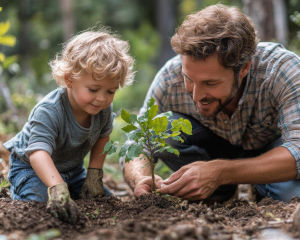
How to Nurture Plants and Your Kid’s Curiosity
By WS/C
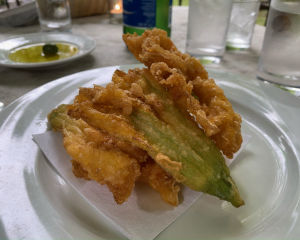
Eat More Plants Recipes:
Fried Zucchini Blossoms: A Roman Celebration of Cucina Povera
By Alexandru Kovacs
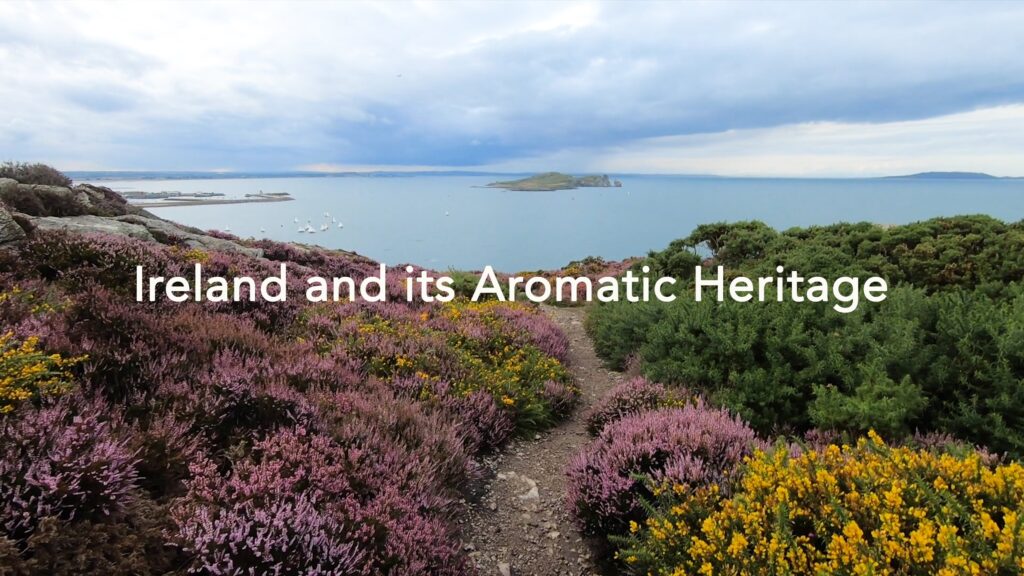
As Ireland transitions from the rich, smoky scent of peat-burning to a more sustainable future, its olfactory heritage is evolving. What will become the next iconic aromatic symbol of Ireland?
Click to watch the documentary trailer.
As Ireland transitions from the rich, smoky scent of peat-burning to a more sustainable future, its olfactory heritage is evolving. What will become the next iconic aromatic symbol of Ireland?