

Favorite Aromatic Plants of Ireland
World Sensorium Conservancy Survey Results
Votes cast between 11-16-2024 and 4-22-2025
Every country carries an atmosphere that cannot be seen yet is instantly recognized. It lingers in the air after rain, rises from warmed soil, drifts from hedgerows at dusk, or spills in from the sea on a shifting wind. This invisible presence, composed of plants, landscapes, weather, and memory, forms what we might call a nation’s aromatic identity.
Aromatic identity comes from its catalog of fragrant species. It is the lived sensory experience of place: the plants that persist in commons and gardens, along roads and coastal paths; the blossoms that signal seasonal thresholds; the wild shrubs that endure wind and grazing; even the hayfields and seaweeds that evoke livelihoods and labor. These scents become cultural markers, binding ecology to memory. They shape how childhood is recalled, how festivals are marked, how myth and medicine are remembered.
In Ireland, as in every country, aroma operates as a quiet archive. Peat-sweet air, hedgerow blooms, resinous uplands, salt-swept shores, each contributes to a shared atmosphere that feels simultaneously personal and collective. When people are asked to name their favorite aromatic plants, they are revealing attachments to landscape, continuity, and belonging.
Plants become emblematic because of the qualities of its smell, the history it carries, and resilience, and identity on the air.
The “Favorite Aromatic Plants of Ireland” campaign gathered 200 total votes, revealing not simply botanical preferences, giving a layered portrait of Ireland’s sensory memory, one rooted in hedgerows, peatlands, coastlines, and lived experience.
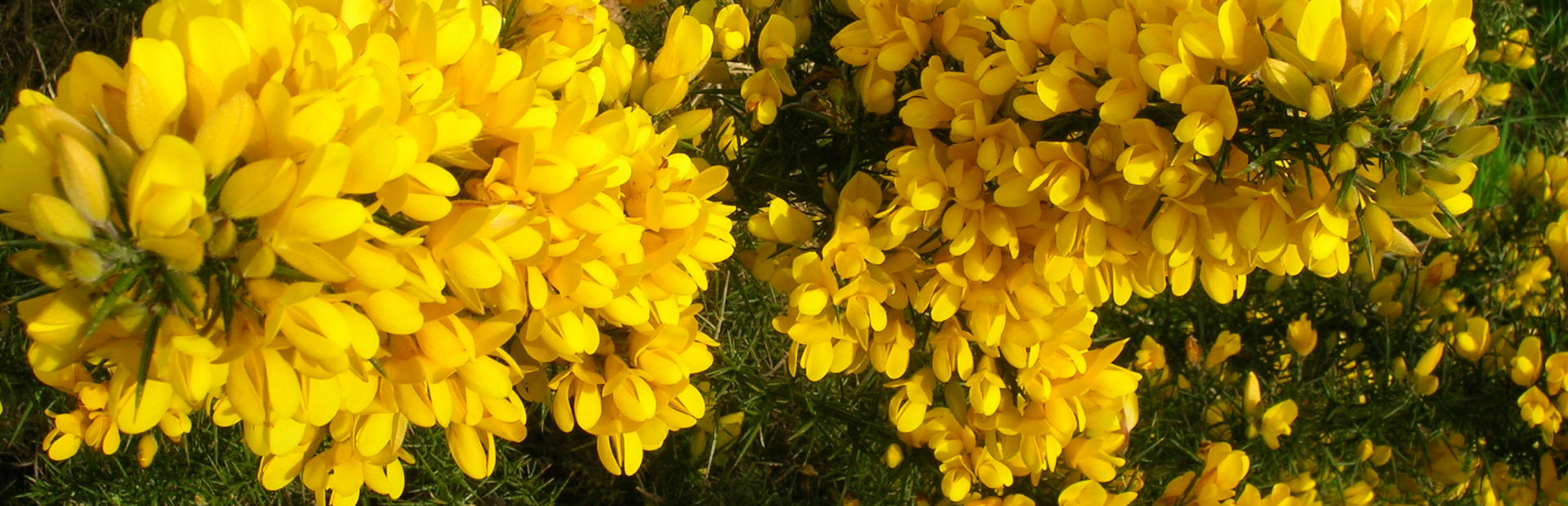
Gorse: The Scent of the Irish Landscape
With 49 votes (24.5%), Gorse (Ulex europaeus), known as Aiteann, Whin, or Furse in Ireland, emerged as the clear favorite. Its sweet coconut, vanilla, honey fragrance, especially vivid in warm sunlight, is inseparable from Ireland’s wild terrain. Gorse flowers bloom nearly year-round, carrying a resilience with its thorny, persistent, luminousness. Its strong lead suggests that participants chose it for its scent, but also for its yellow brightness against grey skies. Gorse stands as an aromatic treasure and a living symbol of endurance and familiarity in the Irish landscape.
A Hedgerow Chorus
Tied at 19 votes each (9.5%), Honeysuckle and Hawthorn reflect the intimacy of Ireland’s hedgerows, the country’s ecological corridors and cultural thresholds. Honeysuckle brings the sweetness of childhood and summer evenings; Hawthorn carries mythic charge, associated with fairy lore and seasonal rites. These plants suggest that Ireland’s favorite aromas are the companions woven into daily life and folklore.
Following closely were Heather (6%) and Fuchsia (6%), reinforcing the importance of the moorland and the gardens spaces where cultivated and wild mingle fluidly.
Aromatic Boglands and Meadows
Bog Myrtle (5%) and Meadowsweet (4%) evoke wetland ecologies and older herbal traditions. These are plants with historical use in brewing, medicine, and ritual. Their presence in the upper ranks suggests a quiet recognition of peatland heritage and traditional plant knowledge deeply aligned with Ireland’s ecological and cultural identity.
Lavender (4%), though not strictly native but naturized, signals the integration of garden aromatics into Irish sensory life, reminding us that aromatic heritage evolves through adaptation.
Coast, Field, and Farm
Votes for Blackberry Bramble (3.5%), Bluebell (3%), and Tangleweed Kelp (3%) reflect a broader sensory geography, from hedgerows to woodland floors to Atlantic shores. Notably, the inclusion of Tangleweed Kelp introduces the marine dimension, an acknowledgment that Ireland’s aromatic identity extends offshore, into salt air and seaweed.
Lower-percentage selections such as Wild Thyme, Juniper, Irish Moss, Crab Apple, Elder, and Clover reinforce the ecological diversity represented in the poll, the woodland edge, orchards, meadows, and heaths.
A handful of single votes expanded the frame of what “aromatic plant” means culturally, such as writing in “a freshly pulled pint of Guinness.”
However, Ireland’s favorite aromas belong to landscapes that still breathe, the wind-brushed hills, flowering boundaries, bogs releasing sweetness underfoot. The survey becomes a sensory map of attachment, showing how ecological presence translates into cultural belonging.
These responses underscore that scent memory transcends taxonomy. Participants voted not just for species, but for experiences. Aromatic identity here operates as atmosphere and culture: the lived environment distilled through smell.
The results portray Ireland as a mosaic: peat and sea, hedgerow and meadow, myth and memory. Yet scent is a carrier of cultural continuity. This poll demonstrates that Ireland’s aromatic identity lies in resilience, intimacy with land, and the subtle power of everyday encounters with wild plants.
In the end, Gorse leads, but the deeper finding is collective. Ireland’s favorite aromas belong to landscapes that still breathe, the wind-brushed hills, flowering boundaries, bogs releasing sweetness underfoot. The survey becomes a sensory map of landscape attachment, showing how ecological presence translates into cultural belonging.
This survey gave the opportunity to celebrate Ireland’s living aromatic heritage. People explored a selection of Ireland’s most culturally significant aromatic plants and voted for the one that resonated most deeply with them or write in one.
Each email address is allowed one vote. Only residents of Ireland or Irish citizens living abroad were asked to participate in the voting process. The goal was to contribute to growing knowledge of Ireland’s aromatic flora and raise awareness of aromatic heritage and the need to adopt safeguards for culture and memory and biodiversity. Aromatic heritage refers to the collective sensory, cultural, and ecological knowledge associated with the scents of plants and environments. It includes tangible elements of aromatic plants and intangible elements (oral histories, spiritual practices, traditional medicine, and memory).