

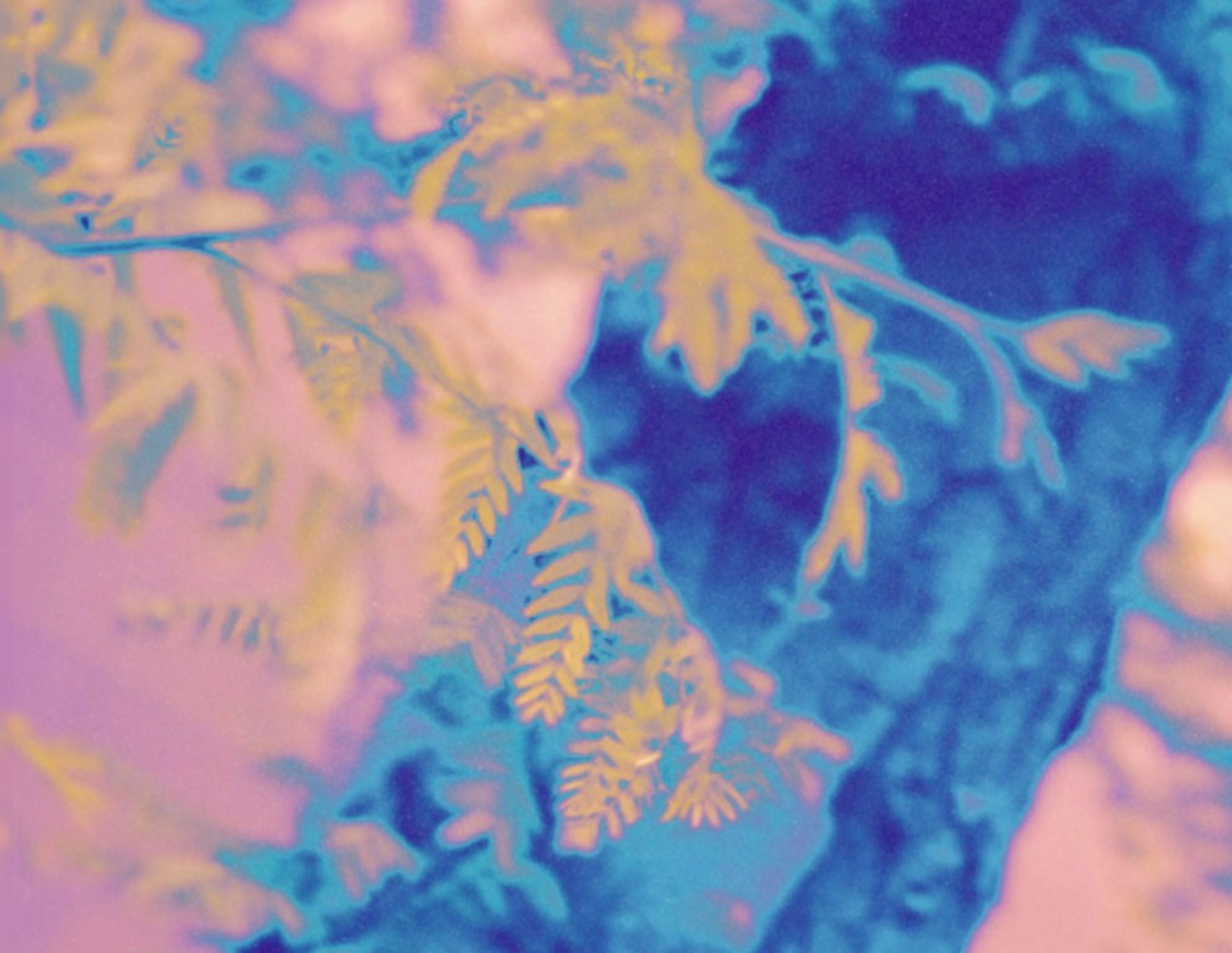
Image: Willow Gatewood
Heat and the Voices Most Unheard
Urban heat islands, ecological
intelligence, and life at the margins
By Willow Gatewood
Sign up for our monthly newsletter!
What began as a clouded, easy walk to work morphs into an intense sun-drenched sickness. Spots blur the day’s brightness as blood pools in my feet, brain screams for oxygen, and my body’s circulatory system confuses itself. As someone navigating chronic pain and dysautonomia — a condition where the autonomic nervous system, which controls involuntary processes like blood pressure, digestion, and temperature regulation, doesn’t work properly — I’ve learned that the city isn’t kind to “othered” bodies, particularly in a changing climate where temperature fluctuates as sporadically as my pulse.
It is hard to describe confusion that comes from heat intolerance. I consider sitting at a bus stop, but remember the change in position will only escalate my symptoms; instead, I find myself along an aqueduct lined with oak and birch. Perhaps my brain seeks something familiar and soothing before a panic state or remembers through the haze lessons on city heat islands and nature-based mitigation. The shift into shade churns my stomach, abrupt change in temperature and moisture almost as disorienting as the heat itself. On one hand, air squeezes me closer, although the wetness doesn’t suffocate like the humidity rising from black tar. Rather, I meander through the wet atmosphere dreaming of fog. Drip. Drip. Drip. Where the canopy thickens, occasional cool drops roll down my forehead and shoulders. As trees breathe — called transpiration — water collects on their leaves. Evaporation cools surrounding air. The combined process, evapotranspiration, provides the faintest relief on a day where clouds form thunderheads on the horizon but never breach the bubble of hot air around the city.
Many cities experience significantly higher surface and atmospheric temperature than the surrounding landscape, a phenomenon known as “urban heat islands” (UHIs). Roadways, rooftops, and concrete corridors absorb sunlight throughout the day and diffuse captured heat so even nighttime sidewalks radiate intensely up through shoes and into joints. Brick walls hold warmth like ovens, and in dense corridors where airflow stagnates, the city itself begins to feel feverish. Additionally, urban infrastructure often lacks Earth’s cooling systems such as canopy cover that reflects heat before it reaches the ground, evaporative cooling from vegetation, and surfaces that naturally modulate temperature like open grasslands, streams, and soil (Paschalis, A. et al., 2021). Buzzing machinery, cars, and the hustle of bodies moving about adds to radiant energy on a molecular level. The resulting heat sink, or bubble of intensely hot air, disrupts weather patterns and makes surface dwelling difficult for plants, people, and other creatures alike.
Over half the world’s population resides in cities, and the UHI effect becomes increasingly dangerous as climate changes, global trends witness large migrations from rural to urban environments, and human-built infrastructure fractures landscapes. Extreme heat is the leading cause of weather-related deaths in the United States and globally (New York State Heat Surveillance Dashboard, 2025; Paschalis, A. et al., 2021). Everyone is affected, but elderly, children, otherly-abled bodies, and folks with less access to cooling like those facing low wages, poverty, or homelessness are particularly at risk — precisely the populations most likely to use their feet for transportation and be exposed to hot city surfaces as a part of daily life.
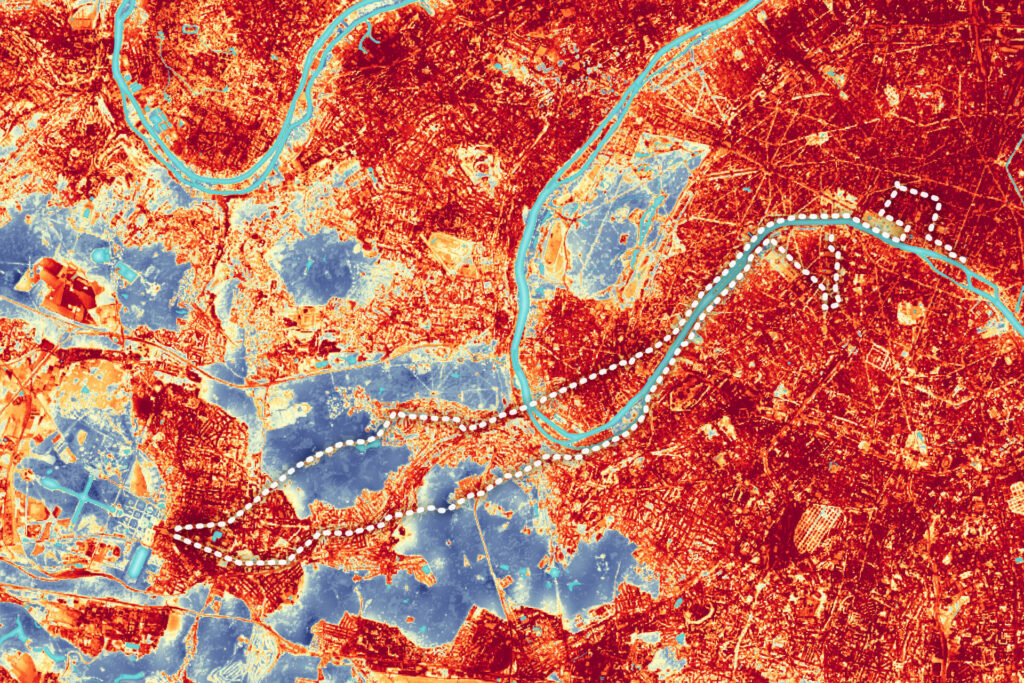
https://eoimages.gsfc.nasa.gov/images/imagerecords/153000/153178/parismarathon_vir_20240806_lrg.jpg
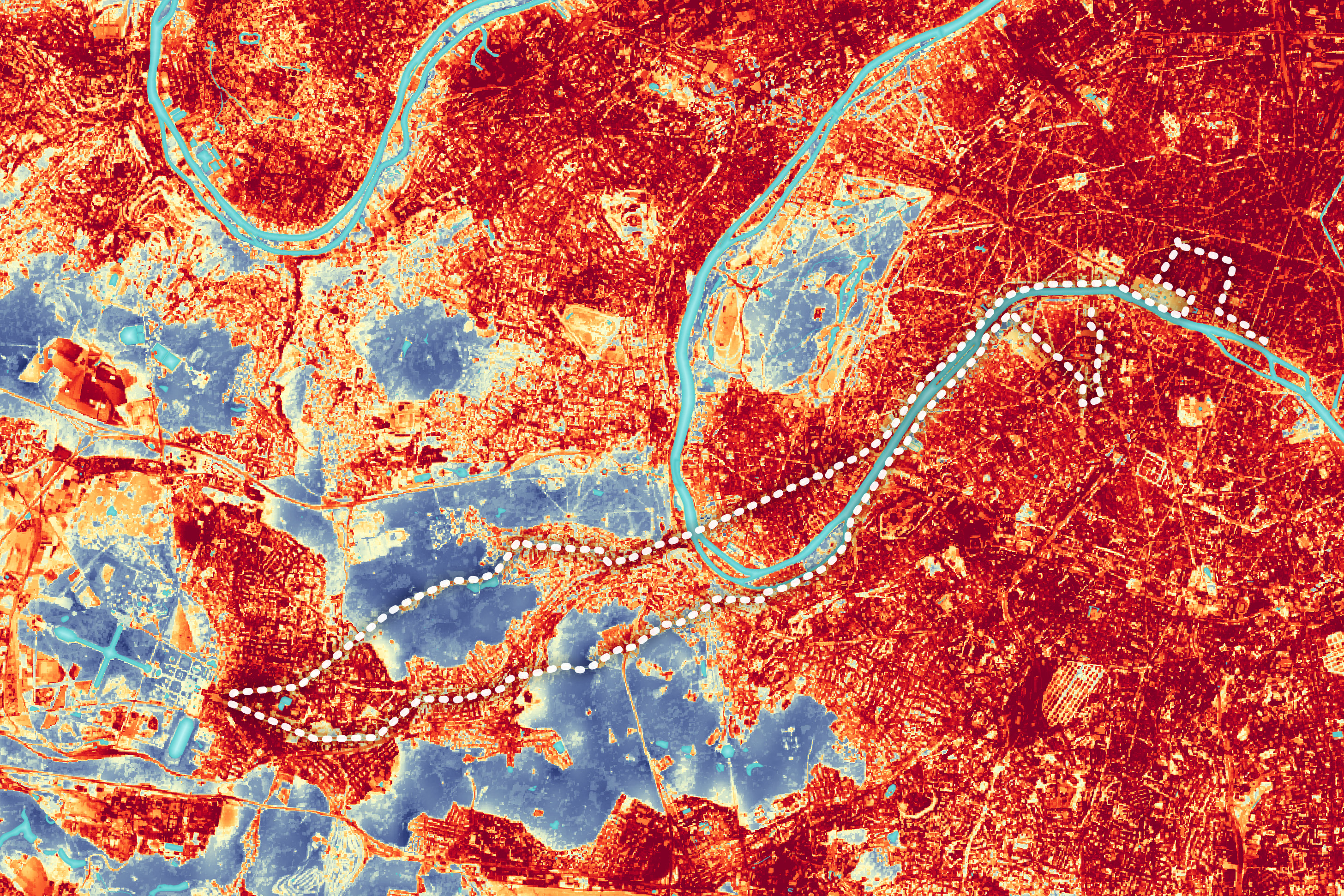
(n.d.).
Like vanishing green spaces, most vulnerable populations are often marginalized and unnoticed as they suffer and slip to the edges. Urban heat reveals which bodies, species, and knowledges cities are designed to ignore. UHIs are not produced by climate alone, but by relationships cities choose to prioritize or neglect: a disrupted balance between infrastructure and ecology, efficiency and care, visibility and marginalization, human systems and the larger living systems that sustain us. Earth’s ancient systems like forests, wetlands, fungal networks, rivers, grasslands, and even heat-adapted organisms carry evolutionary knowledge cities are only beginning to recognize. The challenge is not whether alternatives exist, but whether urban systems are willing to listen to the bodies, communities, and ecologies they have historically pushed to the margins.
Within the past years, increasing research has been directed to nature-based solutions for mitigating, or lessening the UHI effect, primarily by incorporating more green space like trees, foliage, and gardens, and blue space such as aqueducts, streams, and by improving the health or surface availability of existing waterways. Trees cool by providing both shade and evaporative cooling; water evaporates and chills the air. Additionally, blue space works alongside vegetation, soil, and complex textures of leaves and foliage to lessen the amount of heat absorbed and emitted back into the lower atmosphere. Along parks, temperatures may drop several degrees within only a few blocks, creating pockets of relief inside otherwise heat-trapping neighborhoods. As I starkly experienced along the aqueduct, the combination factors together create what is known as micro-climates that cool not only immediate surroundings but provide city-wide effects if incorporated strategically (Soliman, 2026; Paschalis, A. et al., 2021). Green and blue spaces can also be implemented among routes most used for foot traffic to make streets safer for pedestrians. Helping cities become more hospitable for green spaces by intentional growing, cultivating, and care creates positive feedback loops — healthy ecosystems foster healthy communities, increasing the overall functioning of urban life.
We can go a step further by incorporating living things and processes into spaces through biomimetic design, which seeks to learn from and mimic natural processes, systems, and organisms to solve problems, create materials, and develop products (What Is Biomimicry – the Biomimicry Institute, 2024). Applications range from building high-efficiency networks by observing slime mold solve puzzles, to the humble velcro, inspired by haired and hooked feet of insects. In a way, biomimetic design follows nature’s time-tested blueprints: we can find inspiration for natural cooling by looking to something as seemingly mundane as the way other organisms regulate their body temperature, or how forest canopies grow layered to passively protect roots and the buzz of underground soil life the health of the ecosystem relies on (Araque et al., 2021). Biomimetic design and nature-based solutions work together to build cities that both learn from and include what one might term ecological intelligence.
Imagine a city that learns from the natural cooling systems of Earth: materials designed from life to reflect, rather than absorb and emit, infrastructure that strategically incorporates green space in the most vulnerable areas and pedestrian walkways, and governing systems that listen to and adapt alongside all populations, particularly those experiencing the conditions rather than projecting assumptions. Perhaps safer urban futures begin not with domination over heat, but with learning again how to live within relation.
This vision is already underway. For example, Zhengzhou, China uses local plants and pockets of waterways to create micro-climates that cool city-wide. Across Masdar City, UAE, wind towers and skyscrapers inspired by forests, vegetation lined walkways, passive cooling, and low-carbon materials coupled with city-wide planning that seeks to put pedestrians first keep residents and tourists alike safer and more comfortable while navigating Masdar’s scorching summers (Masdar City Case Study: How Abu Dhabi Built the GCC’s First Sustainable Urban Model, 2025). In NYC, apartments grow food and meadows on rooftops, artists and activists take over industrial rooftops now exploding with native meadows, and neighbors toss seed bombs collected from their local community garden in the midst of roadways. It is often these small actions, carried out by those experiencing the threat of extreme heat daily, that ripple up into larger infrastructural changes — or at the very least, make their communities a little safer for themselves, neighbors, other species, and even tourists seeking some shelter but unaware of how to navigate the city’s transit system or hot zones safely.
Thankfully, my route to work, while longer, follows the aqueduct long enough for my body to cool down and my mind to clear before conducting a roomful of eager young minds. I pause to lean against the bark of pin oak, inhale, and let the pain searing across me dissipate into the environment. For a moment, I breathe here with the world, no longer fighting against my surroundings but being supported by it: this feels right.
Tourists and locals; young and old; high-rise office-goers and blue collar workers; disabled and otherly-abled; those with mansions and those with knapsacks; other species and ecological processes; the city’s most vulnerable populations: all deserve to navigate urban environments safely and efficiently. Cities designed to work with nature and designed by life’s processes promise a future more safe and comfortable for humans and non-humans alike. We have natural cooling technologies older than time — we simply need to learn to listen a little closer, and be more open to ideas and voices of those at the margins. While there is a lot to learn, perhaps a shift in perspective is one of the first places to start.
Willow Gatewood is an environmental scientist, interdisciplinary artist, and storyteller from Brooklyn, NY. Follow her on Instagram: @willowg_music
New York Resources for Extreme Heat:
Access alerts, education, and more on https://www.nyc.gov/site/doh/health/emergency-preparedness/emergencies-extreme-weather-heat.pageand find cooling centers, water fountain locations, community aid, and additional resources with the New York City Department of Parks & Recreation Cool It! NYC Program here: https://www.nycgovparks.org/about/health-and-safety-guide/cool-it-nyc
Additionally, New York State hosts a heat map and dashboard that can be filtered by county: https://www.health.ny.gov/statistics/environmental/heat_dashboard/
Country-wide:
To find cooling centers across the country, extreme heat education, aid, alerts, and community hubs visit heat.govor explore data on extreme heat using the CDC’s online tool here: https://heat.gov/tools-resources/cdc-heatrisk-dashboard/
Plantings
Issue 60 – June 2026
Also in this issue:
Sensing Floral Futures: A Conversation with Eliza Collin
By Clara Muller
A Corner on a Country Road
By John Steele

The Ecology of Memory: Scent, Culture, and the Brain
By Gayil Nalls
Three New Plant Research Findings Everyone Can Apply
By WS/C

Hildegard of Bingen: The Living Green World
By Gayil Nalls
Eat More Plants Recipes:
Magnolia, White Chocolate Vinnaigrette for Foraged Greens
By Mary Munroe
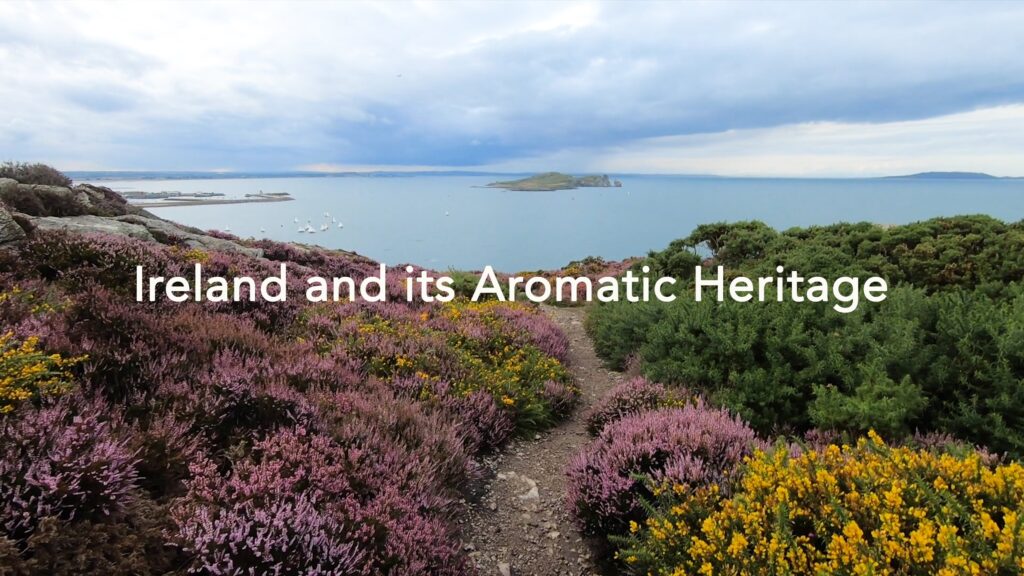
As Ireland transitions from the rich, smoky scent of peat-burning to a more sustainable future, its olfactory heritage is evolving. What will become the next iconic aromatic symbol of Ireland?
Click to watch the documentary trailer.
As Ireland transitions from the rich, smoky scent of peat-burning to a more sustainable future, its olfactory heritage is evolving. What will become the next iconic aromatic symbol of Ireland?