

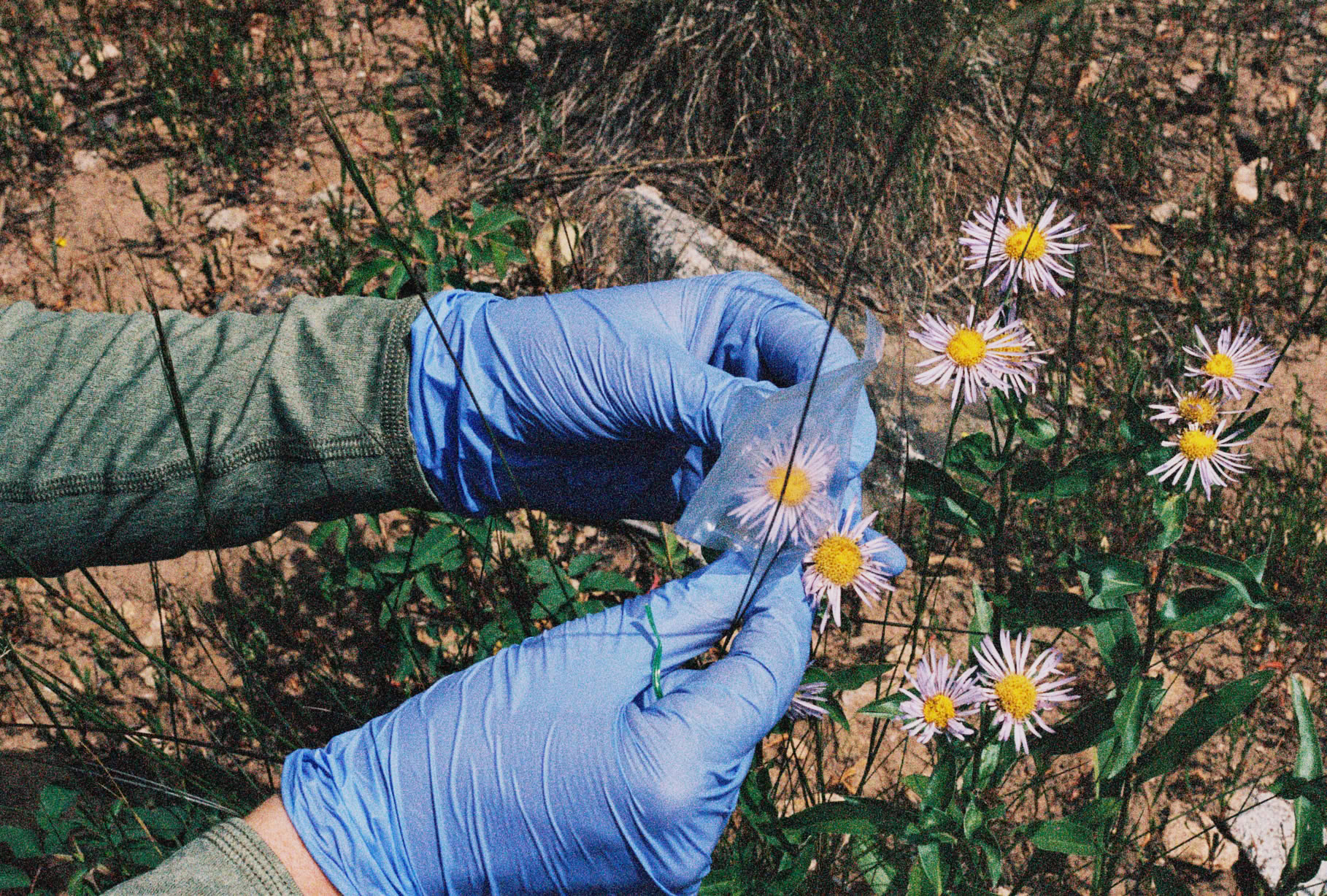
Scent and morphology evolution research at the Rocky Mountain Biological Laboratory. © Eliza Collin
Sensing Floral Futures: A Conversation with Eliza Collin
By Clara Muller
Sign up for our monthly newsletter!
The biodiversity crisis is often understood in terms of species loss. Yet many of its effects unfold before, or alongside, extinction: living beings migrate, hybridise, manifest phenotypic variations, and find their most essential relations transformed under anthropogenic pressure. Some flowering plants, for instance, are responding to rising temperatures, pollution, and other atmospheric alterations by shifting their traits — from colour and morphology to the volatile organic compounds they release into the air — with consequences for plant-pollinator interactions, reproduction, and, ultimately, survival.1
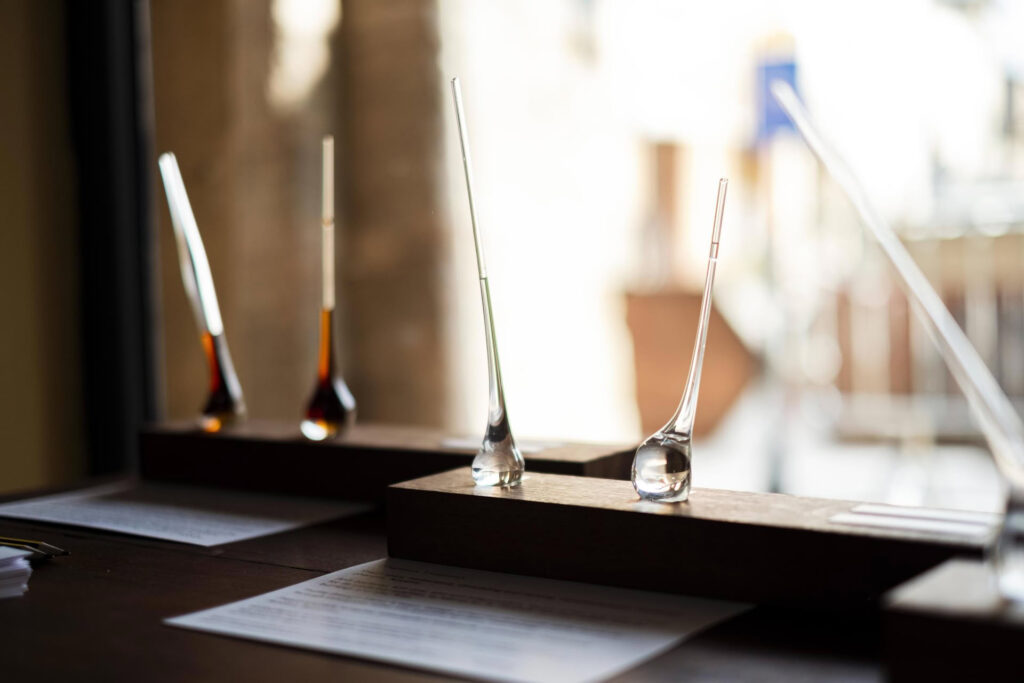
British designer Eliza Collin has made these subtle transformations central to her work. Across scent reconstructions, films, speculative botanical visualisations, and living gardens, she reveals ways of sensing ecological change as it is happening. Her project Grease (2023) first explored this terrain through the phenotypic plasticity of Mediterranean plants, drawing on research into the alteration of floral scents in a drier world. The installation invited visitors to compare scents evoking plants growing under optimal conditions and under drought. In Olfactive Evolution, exhibited at the Design Museum in London in 2024, Collin extended this inquiry through new scent compositions based on chromatographic analyses, while also visualising future floral forms informed by the research of evolutionary ecologists who are studying high-altitude hybrid zones in Colorado.
In the words of David G. Haskell, “flowers are world changers.2” Collin’s practice takes this proposition seriously, asking what happens when the multispecies worlds organised by and around flowers are disturbed. In this conversation, she discusses her most recent work around alpine meadow flowers and hybrid zones, her take on scent as a “tool for noticing,” and the role of design in imagining ecological futures beyond narratives of loss alone.
Clara Muller: In the last few years, your work has been concerned with how flowering plants respond to climate change — not only visually, but also through scent. You are now extending this research to hybrid zones in alpine landscapes. Can you tell me about this new project?
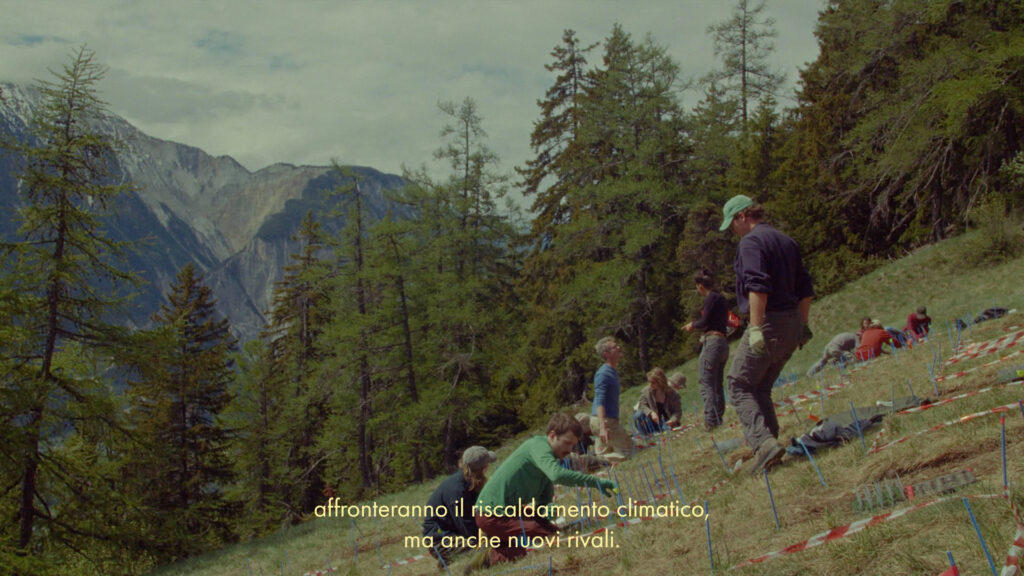
Eliza Collin: At the moment I’m focusing on the evolution of high-altitude species and on species that have relationships across low, mid, and high altitudes in the Alps. I’m interested in how these species have evolved depending on where they grow, what kinds of human interaction they’ve had, and what relationships they have with other species. The project maps the history of human relationships with the alps and how that history has impacted the evolution of meadow species.
CM: What interests you, then, is not only the plants themselves, but how human disturbance has made these meadow ecologies possible?
EC: Yes, and the way Anna L. Tsing talks about disturbance has been instrumental here. Human disturbances are not only disaster or damage, but sometimes a condition in which unexpected multispecies relations can emerge. That feels relevant to the alpine meadows I’m looking at, which are the result of a long history of humans altering mountain forest ecosystems. From the perspective of the forest, such clearings might be a disaster, but from the perspective of meadow species and pollinators, they’re an advantageous disturbance, because they create habitats, corridors, and possibilities of movement toward higher altitudes. The Alps are actually a good example of what we could call a positive human-landscape relationship, historically. Of course, there has also been over-deforestation in the last few hundred years, but when considering a longer history, the Alps offer an interesting case of co-evolution between humans and a landscape, where disturbance has created opportunities for other species, and even, in some cases, increased biodiversity.
CM: And how is that long history being unsettled by the much faster, global transformations taking place today? What is changing now for these alpine plants and plant communities?
EC: Today, because of glacial retreat and changes in land use, plant populations are changing, especially in meadows. Species that previously lived at lower altitudes are rising up the mountains, where they can outcompete high-altitude species — some of which are culturally and medicinally important. At the same time, because glaciers are retreating and species are moving across mountain ranges, distant relatives may be meeting again, potentially creating new hybrid zones, like those being researched in Colorado. I think that’s a really interesting space in which to think about the future: I’m interested in how we might enable these plants to continue changing so that they can survive climate change, but also in how humans can relate to such evolutions, especially when they have strong cultural connections to certain species.
CM: This preliminary research is currently being presented at Fondazione Pistoletto Cittadellarte in Biella. How have you translated it into an exhibition?
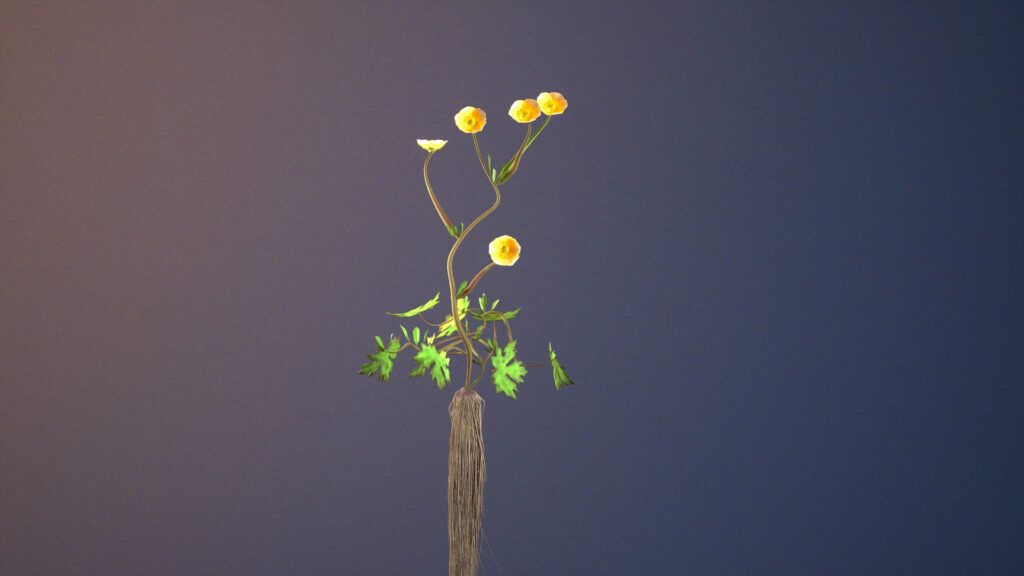
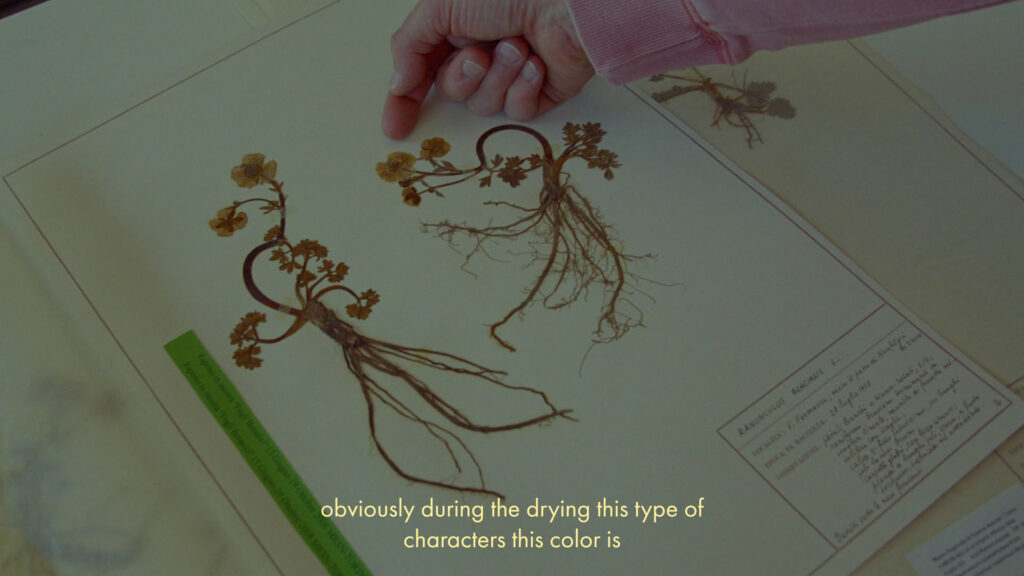
EC: For this exhibition, which is a first offering, the project takes the form of a video: a series of observations and portraits of people with different perspectives but a shared concern for high-altitude meadows. I’ve also worked with an animator to develop morphing flower-evolution animations of the buttercup, which is everywhere in the meadows, but also has high-altitude relatives, such as the glacier buttercup. The latter lives at high altitude, close to the glacial line and is threatened by the rise of global temperatures.
In this project I am speculating on the future evolution of these ecosystems, based on the work of ecologists on other terrains. I did find papers about new hybrid zones in the Alps, but only around two species. So I know there is the possibility that these things are happening, especially as it is being researched in more depth by my collaborators in the Rocky Mountains, yet this isn’t being explored at length in the Alps. So for this first exhibition, the work is more of a proposition, or a set of questions, addressed to scientists, herders, and members of the public: what might the future ecologies of this landscape look like? What is the role of humans in this change? What does it mean for glaciers to disappear and for valleys to be reconnected? A glacier is a boundary. It has meant that certain species evolved separately from one another. So what happens when that boundary disappears?
CM: Ecologist and evolutionary biologist Dr. Paul CaraDonna — who you’ve been collaborating with — believes that “building trust and exchange between scientists and artists” has the potential to lead to much more than just good science communication. It can actually “create new ways of knowing and understanding” because “each approach informs the other, helps to challenge their mutual assumptions, and shifts perspectives.3” What role do such collaborations play in your own practice?
EC: I agree that such collaborations shouldn’t just be about artists illustrating science. With the scientists I collaborate with, in Colorado for example, I’m giving them ideas just as much as they are giving me ideas. Artists can challenge scientists and vice versa, questioning what they could be doing next. Because artists are in a privileged position, they can move between subjects, territories and conversations in a way that is sometimes harder for scientists, because they are usually focused on one very specific question.
CM: How are you moving between your research in Colorado and this new project in the Alps? How does one inform the other?
EC: In Colorado, I am doing a project at the Rocky Mountain Biological Laboratory, around the research of evolutionary ecologist Dr. Diane R. Campbell, with the help of Dr. Paul CaraDonna, who runs the Art-Science Exchange residency there. The Campbell lab is looking at scent and evolution: how are wildflowers evolving under climate change? What is that doing to their visual and olfactory traits? And what does that mean for the future? Of course, the Rocky Mountains and the Alps are two very different case studies, but it is fascinating to gain perspectives on both: to see what can be compared, but also what cannot.
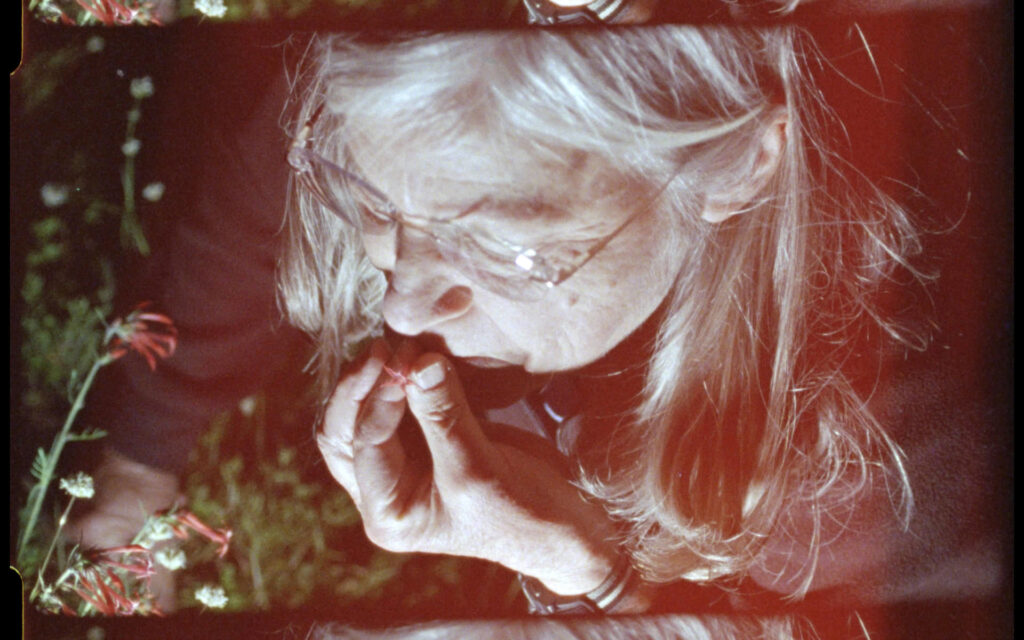
In the last year, I have been collaborating with film director Federico Barni on a semi-fictional documentary, looking at Dr. Diane R. Campbell’s research, and at the way she has been using observation and simulation to predict the future of this one wildflower she has been working on for nearly forty years. She has about twenty-seven years of usable data on how it is going to evolve. The film highlights her incredible work, but also the very sci-fi nature of it. The process of making this film has massively changed the way I look at mountain ecologies and their relevance beyond the mountain slope. Therefore I hope that, when people watch it, they will look at the world differently too and that it may inspire new outlooks on the future.
CM: That makes me think of John Burroughs, who wrote that science confers “new powers of vision,” meaning that when you gain knowledge about the living world, you learn to see it — but also touch, hear, and smell it — differently. How can art or design also help people perceive and value aspects of nature they cannot normally sense — particularly ecological changes that are too slow, too molecular, or too large for ordinary perception?
EC: Anna L. Tsing’s notion of “tools for noticing” really inspired me. As a designer, I am always asking: how can I create tools for noticing? My scent works in particular are really meant to be little tools, offerings, or invitations to perceive plant life and non-human communication differently: to expect different things from it, and to relate to it in a new way. I suppose the films could be another version of that, another tool to help people look at things differently.
CM: These “tools” you create often rely on both scientific data and speculation. How do you negotiate the balance between scientific accuracy and artistic licence, especially when translating ecological change into sensory experience?
EC: It’s definitely a balance to find, especially in the scent shows. The first was a client project at Central Saint Martins, in collaboration with Firmenich. At that stage, we didn’t have much data to work from. Then I worked with Megan Jones, an amazing scent artist based in Wales. This time, we had data from the team of French ecologist Coline Jaworski, but not much budget. So we worked within our means to get as close as possible to the data, without extrapolating. The third time was for the Design Museum, when I worked with Clara Weale, a perfumer based in Scotland. By then, I had a higher budget, and she had access to a much wider library of olfactive materials. We bought all the compounds that were present in the datasets we were using relating to Jasminum auriculatum and Campanula rotundifolia. We didn’t know whether there would even be a perceptible difference between the versions, but in the end you could really smell the difference! That was what I had wanted from the beginning: accuracy. My art, or my design work, has integrity because it draws from actual data. As soon as I take too much artistic licence, I don’t feel like it is something I can stand behind.
CM: David George Haskell writes that “to smell a flower is to inhale evolution’s creative power.4” Your work seems to take that quite literally, by using scent to make plant evolution and adaptation sensible. What do you hope visitors inhale when encountering your scent works?
EC: Often, when people smell my works, they immediately link the scents to a memory. They say, “Oh, this smells like my grandma,” or, “This smells like grass.” It becomes very personal very quickly. At the beginning, I was a bit annoyed by that, because I didn’t want people to make it personal. That was not what the work was about. It was about trying to think outside oneself. But now I think it might also work to my advantage, I just haven’t fully figured out my relationship to that yet.
CM: I think you can’t really avoid that, because that’s how the sense of smell works. But I believe that art can make you move beyond that first personal association. At first, you may think of your grandmother, but then the artwork can make you smell beyond your own personal memories and idiosyncrasies — just as you can learn to see beyond, to see the second or third meaning of something.
EC: Yes, I like that idea of smelling beyond. For me, scent is a powerful way of making the fact of change more tangible. If people leave with the memory that plants are responding to climate change, that their scents, forms, and relationships are shifting, then I feel the work has done something. And I do think that the scent experience can stay with them in a way that a wall text might not.
CM: Some of your earlier works as a designer, such as WET ZONES, dealt with water quality, waste, filtration, and the hidden infrastructures that shape urban life. In your more recent projects around plant scents, you have turned to another kind of invisibility. Do you see a continuity between these bodies of work?
EC: I started working around water because it is both invisible and so important. That project was more about urban planning and architecture, about the way our human-made environments have been designed so that water remains hidden. Because we don’t see it, we can pollute this incredibly valuable resource without really having to confront what we are doing. I think I’ve always been interested in the invisible, and in how people living in cities are so disconnected from the impact they have on surrounding landscapes. How do you reconnect those things, especially in a future where more and more people will be living in cities?
Through scent, I began looking at a different type of invisibility. But, for me, the underlying question is similar. My projects often try to trace things back to their origin. With water, that meant moving towards the landscapes where water comes from, and understanding what the loss or contamination of that water does to those landscapes. With scent, it means tracing plant smells back to the ecological conditions that produce them, and asking what happens when those conditions change and what does that mean for those non-human relationships. To me it all reconnects in some way.
CM: That question of reconnecting urban publics with the ecological conditions behind invisible phenomena brings me to Hybridising Scentscapes (2024). In that project, you moved from working with reconstituted vegetal scents to working with living plants, in the middle of London. How did the project come about?
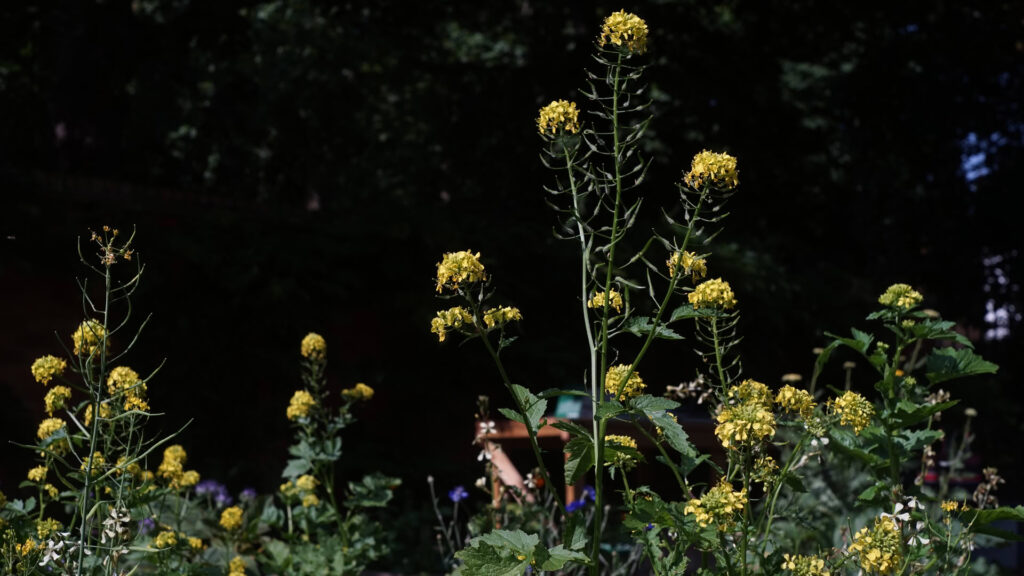
EC: Hybridising Scentscapes is a collaboration between Aterraterra and myself. In a way, it continues that same question of how to make invisible ecological relationships perceptible — but this time through a living plot. Aterraterra has been researching spontaneous hybridisation in Sicily, especially through plants which have been cultivated for food crops over centuries. In my work I was looking at how scent affects pollinator interactions, and how this may evolve across generations, including through cross-pollination.
We became interested in the Brassicaceae family because some species’ VOC emissions are affected by increased ozone, drought, or heat and some are not. Brassicaceae also hybridise quite easily with one another, and the family includes many different cultivated vegetables as well as wild or uncultivated species that grow in pavements, gardens, and urban edges. So we planted a plot in the Dame Sylvia Crowe garden at the Design Museum with as many different Brassicaceae as we could find. We assumed that some of the plants in the plot would change their scent when exposed to London’s air pollution, while others would not.
CM: What were you hoping to observe over time?
EC: The idea was to leave them for three years, keep replenishing them, and monitor potential hybridization and pollinator interactions, with the help of the Growing Together network.We wanted to see which pollinators were visiting which plants. Are certain bees attracted to specific Brassicaceae and why? Does this change depending on the climate? Does that reduce the possibility of those plants hybridising, because different pollinators may be visiting each flower? And who would visit a potential hybrid? Because of funding restraints, we didn’t manage to monitor the plot as much as we wanted but we are working on a new plot at Birmingham City University, where we will be able to do headspace analysis using their GC-MS equipment. That will allow us to study the VOC emissions of the plants more directly.
CM: If a hybrid plant inherits traits from two parent species that attract different pollinators, what happens to its future relations?
EC: The research in Colorado showed that hybrids are usually visited by the pollinators of both parent species. For example, Ipomopsis tenuituba, a high-altitude species of Ipomopsis, is white and emits indole, attracting moths, while the low-altitude species Ipomopsis aggregata is red, does not emit indole and attracts hummingbirds. The middle species attracts both hummingbirds and hawkmoths, because it’s pink and emits indole!
That example helps me think about what might happen in the Brassicaceae plot: the idea is that the hybrid species could have more pollinator opportunities. In a way, Hybridising Scentscapes is also a critique of the history of cultivation, in which the plants were bred according to human preferences, which means they are now maladapted to climate change, pollution, or other disturbed conditions. So, based on Aterraterra’s research, this project offers the opportunity for selection back to pollinators. Whether the species created will be much better at surviving climate change, this remains to be seen…
CM: Beyond whether hybridisation actually occurs, isn’t part of the project’s value also in the conversations it makes possible — with visitors, volunteers, gardeners, scientists, or local communities?
EC: Yes. Having a physical garden has been really important because it allows the project to continue beyond the exhibition format. It gives us a way to disseminate these ideas publicly, through observation, care, talks, and workshops. It also creates a space to speak about how climate affects scent, how scent affects ecological interactions, and how planting might support processes of adaptation and hybridisation — which might make some plants more resilient to climate change.
CM: A lot of climate communication relies on texts, data, and images, especially images of disaster. Your work approaches ecological change through less visible phenomena — volatile compounds, hybridisation, slow evolutionary processes. Does that change the kind of response you hope to create?
EC: I think it means tapping into different emotions, which can draw people away from climate-change fatigue. We are so saturated with images of disasters that it becomes very easy to feel overwhelmed or helpless. Imagery can so easily become about shock. Scent works differently: it is emotive, but it also brings in mystery and embodiment. It reaches a different part of the body and of the mind.
The point is to shift mindsets and approaches. That happens through more knowledge, more interaction, and a deeper understanding of the world around us. It can create agency — the feeling that the future is not decided, and that our imaginaries contribute to possible futures. We are not powerless within it.
This is also where I feel more designer than artist. The works, or “tools,” I develop are research tools as much as educational ones. They are meant to feed into interventions, outputs, or proposals for how we could do things differently. For me, the key message has always been change, not distress or death. Of course, there is extinction, and we are living through an incredibly difficult time with a lot of loss caused by human action. But we also need stories around change, and what comes next.
Clara Muller is a French art historian and art critic conducting research on olfaction in art, design, and literature. She has been a writer for the olfactory magazine and publishing house Nez since 2016. She contributes to the collection “The Naturals Notebooks” for which she studies the place of aromatic plants in the history of visual and decorative arts. She has curated several exhibitions dedicated to olfactory art and design. https://www.claramuller.fr/
Plantings
Issue 60 – June 2026
Also in this issue:
A Corner on a Country Road
By John Steele

The Ecology of Memory: Scent, Culture, and the Brain
By Gayil Nalls
Three New Plant Research Findings Everyone Can Apply
By WS/C
Heat and the Voices Most Unheard
By Willow Gatewood
Hildegard of Bingen: The Living Green World
By Gayil Nalls
Eat More Plants Recipes:
Magnolia, White Chocolate Vinnaigrette for Foraged Greens
By Mary Munroe
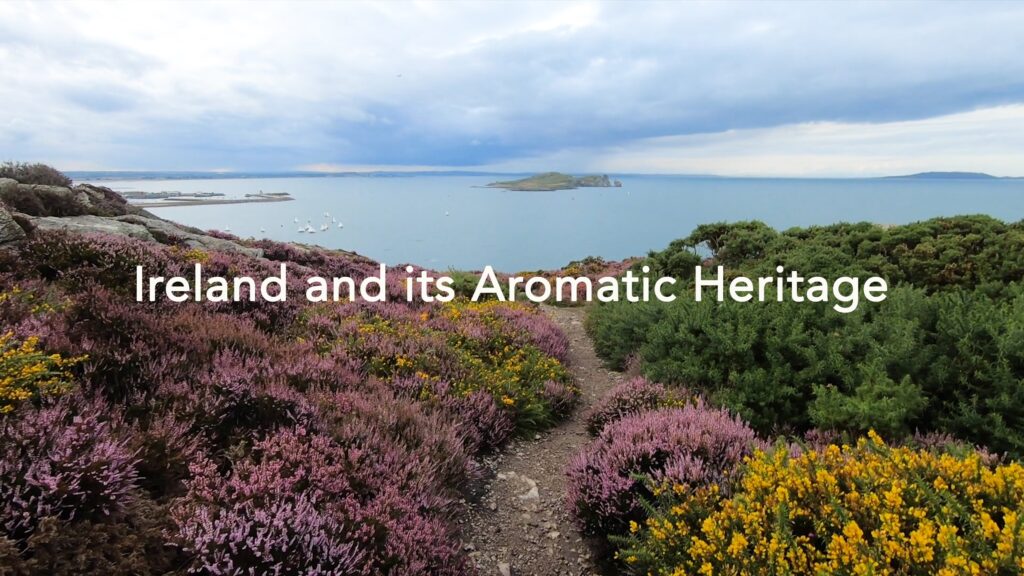
As Ireland transitions from the rich, smoky scent of peat-burning to a more sustainable future, its olfactory heritage is evolving. What will become the next iconic aromatic symbol of Ireland?
Click to watch the documentary trailer.
As Ireland transitions from the rich, smoky scent of peat-burning to a more sustainable future, its olfactory heritage is evolving. What will become the next iconic aromatic symbol of Ireland?