

The New Extractivism
From Botanical to Data Prospecting in the Fragrance Industry
By Nuri McBride
Sign up for our monthly newsletter!
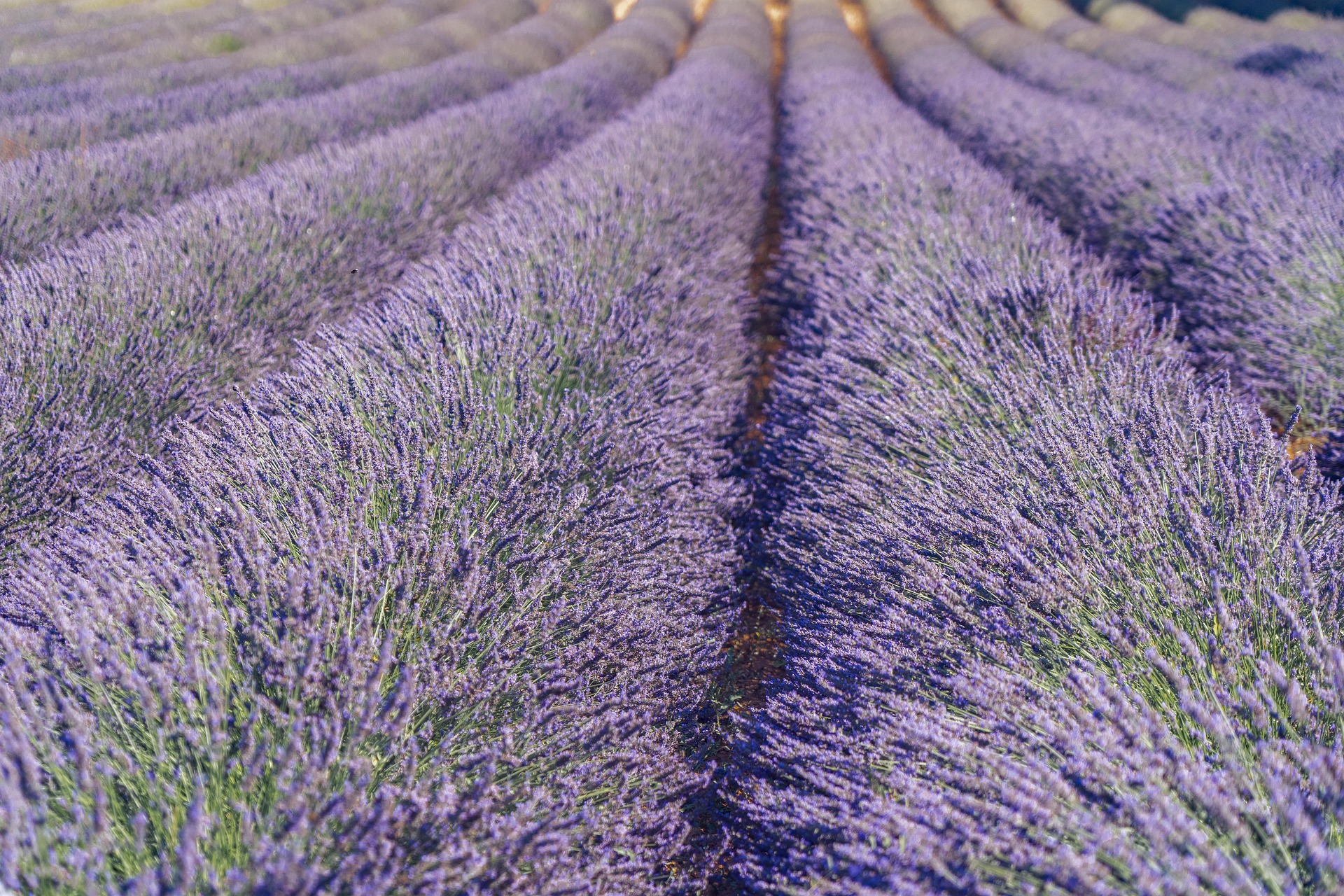
The history of perfumery is frequently narrated through a romanticised botanical imaginary, evoking images of jasmine fields at dawn and rose harvests in Bulgaria’s misty valleys. Advertising often portrays perfume production as a spontaneous creative act arising from this floral abundance. However, beneath these fragrant narratives exists a parallel history: one of power, knowledge, and wealth accumulated through extractive systems that benefited companies in imperialist economies while undermining the ecology and well-being of colonised regions.
In the eighteenth and nineteenth centuries, European empires initiated extensive efforts to catalogue global botanical resources. Naturalists, merchants, missionaries, colonial administrators, and botanists travelled across continents seeking plants with economic potential. Botanical gardens, universities, and travelling botanists, supported by state and private capital, functioned as research and development teams dedicated to maximising the colonial project’s economic returns.
Once the economic value of a botanical resource was established, it was integrated into the colonial plantation system and placed under the control of state and industrial monopolies. This is how a Mexican orchid gets transferred to plantations in Réunion, Madagascar, and Tahiti to produce French vanilla. Aromatic materials held a privileged status within these networks due to their desirability. Cloves, nutmeg, cinnamon, sandalwood, patchouli, vetiver, rose, vanilla, and numerous other botanicals became targets of imperial interest.
The extraction of these materials was instrumental in shaping the foundations of modern perfumery. I argue that securing imperial monopolies on key botanicals, such as sandalwood and vanilla, was no less significant to the industrialisation of perfume than mechanisation and the development of synthetic compounds. Through vertical integration into the colonial plantation system, producers gained access to a wide array of natural materials at substantially reduced costs. They also controlled their competitors’ access to these captured botanicals. When combined with mercantilist state policies, we would see the industrialisation of perfumery coincide with the near collapse of competition in Europe. Fragrance had multiple metropoles of influence at the beginning of the eighteenth century. Istanbul, Athens, Cologne, Venice, Florence, Montpellier, and London all had thriving fragrance industries, but by the end of industrialisation, Grasse ruled supreme due to France’s protectionist policies and colonial assets. While other locations still produced perfume, by the early twentieth century, fragrance production in Europe or North America was contingent upon access to the French system, which was built within the French colonial sphere. Consequently, the fragrant sensibilities of French creatives came to dominate the industry, thus collapsing dozens of scent cultures into one.
Bioprospecting extended beyond the collection of plants. It encompassed the acquisition, translation, and transfer of cultivation techniques, harvesting methods, processing knowledge, and ecological understandings developed over generations. Knowledge that once existed within living relationships between people and the land became increasingly separated from its original context and absorbed into imperial institutions, scientific networks, and commercial enterprises.
The wealth generated through these extractive practices seldom remained in the regions where it originated.
This historical context is significant because the fragrance industry is currently experiencing another period of technological transformation, ecological uncertainty, and creative stagnation. Artificial intelligence is increasingly promoted as a tool for revolutionising fragrance creation, accelerating research, predicting consumer preferences, optimising supply chains, and identifying innovations. These developments are often framed as progress, yet they also prompt more challenging questions.
Mainly, what if artificial intelligence signals the emergence of a new era of extractivism?
The comparison may initially seem exaggerated. After all, AI is not smuggling sandalwood, but extraction has never been only about physical resources. Colonial bioprospecting depended upon the conversion of knowledge into economic value. AI systems similarly depend upon the collection, organisation, and monetisation of knowledge. The materials have changed, but the underlying logic has not.
Botanical expeditions during the imperial era aimed to identify valuable plants and integrate their worth into global commercial networks. Contemporary AI systems increasingly depend on extensive repositories of botanical, chemical, ethnobotanical, historical, and commercial information. Fragrance databases, scientific literature, cultivation records, consumer research, historical formulas, and professional expertise are converted into machine-readable datasets, which are marketed as sources of new insights and commercial opportunities.
This process constitutes digital bioprospecting.
Instead of collecting seeds, specimens, and cuttings, AI systems collect information about plants. They acquire knowledge regarding aromatic compounds, cultivation practices, regional traditions, sensory characteristics, cultural associations, and market behaviour. Once integrated into computational systems, this knowledge can be analysed, recombined, and monetised in ways increasingly disconnected from its origins.
My entire body of writing has been, without my knowledge or consent, scraped from the internet and academic institutions and is currently used in both open and commercial large language models related to fragrance. The context of my work and my framing as a researcher have been entirely removed from my words in an effort by others to monetise my output as a dataset.
The questions that arise are remarkably similar to those posed during previous periods of extraction.
Who owns knowledge about aromatic plants?
Who benefits when traditional ecological knowledge becomes digital infrastructure?
Who receives compensation when generations of expertise contribute to systems that generate profit elsewhere?
These questions are particularly significant when examining the role of traditional ecological knowledge in the fragrance industry. Much of perfumers’ understanding of aromatic materials originates from centuries of experimentation by growers, harvesters, healers, traders, and craftspeople. This knowledge is cumulative, communal, and deeply rooted in specific locations. It develops through sustained interaction with living landscapes.
AI systems excel at abstraction rather than sensory nuance. They are designed to convert situated knowledge into standardised information. Context is reduced to metadata, experience to data points, and relationships to variables. While this process may be marketed as economically efficient, its equity and accuracy remain questionable.
Proponents of AI often assert that these technologies will democratise creativity and foster innovation. In perfumery, AI-assisted tools are promoted as capable of identifying novel accords, projecting market trends, accelerating formulation, and reducing development costs. Such claims may have some merit. Computational systems may indeed prove useful for certain forms of analysis and research. However, it should be noted that LLMs are not necessary to provide these functions and most of this computing is already effectively done with algorithms and existing software.
However, these AI tools are marketed primarily for creative labour rather than market research. What forms of creativity might they promote? Exceptional fragrances arise from unexpected encounters, cultural exchange, personal obsessions, and years of accumulated expertise. A skilled perfumer employs the unexpected to generate tension, which is resolved through the wearer’s emotional response. Perfume is fundamentally shaped by human relationships.
We are also already living in an age of focus group slop. While we have more launches than ever before, most of what’s on offer in perfumery today is utterly forgettable. They are reruns of popular fragrances and inoffensive white noise perfumes, designed to move profit margins by 0.5%, not to create art and advance the field.
AI identifies patterns within existing data. As a result, it tends to favour what is measurable, predictable, and statistically significant. The creative tension produced by the unexpected stands in direct opposition to this tendency. The industry is already experiencing a creative convergence, reminiscent of the artistic bottleneck at the end of industrialisation. AI will not help perfumers overcome this convergence; it will exacerbate it. AI will thus extract the industry’s accumulated knowledge to produce measurable, predictable, and statistically significant nothingness; olfactive Rococo.
The colonial systems that established industrial perfumery often justified extraction by appealing to productivity and progress. However, this productivity frequently resulted in environmental degradation and social disruption. Monocultures supplanted diverse landscapes, standardisation replaced local variations, and economic value became concentrated within increasingly centralised systems. AI poses the risk of replicating these tendencies within the domain of fragrance knowledge.
But let us not forget about the environmental impact.
The future of the fragrance industry relies on the health of global ecosystems. Climate change threatens numerous aromatic crops through drought, extreme weather events, and biodiversity loss. Growers worldwide face increasing uncertainty as environmental conditions become more unstable.
Advocates of AI often present it as part of the solution. However, the computational infrastructure supporting contemporary AI systems requires significant energy and water. Data centres consume vast resources, and the training and maintenance of large-scale models contribute to environmental pressures that extend far beyond the digital world.
Can an industry dependent on resilient ecosystems adopt technologies that place additional strain on those systems? Is it possible to measure sustainability solely through operational efficiencies while disregarding the environmental costs associated with computational infrastructure? Is this worth doing at all for creative mediocrity and tasks we already have software to complete?
The answers to these questions are unlikely to be straightforward. Technology itself is not the problem. The history of perfumery has consistently been shaped by innovation. Distillation, analytical chemistry, synthetic aroma molecules, and modern extraction techniques have all significantly transformed the field. There may indeed be a place for AI in our industry, but it should be filling a genuine need and be considered within its environmental and social context.
So will fragrance’s adoption of AI be governed by principles of reciprocity or extraction? We like to use our moral commitments in marketing, but will be live by them? I am sceptical that its role in our industry will be anything more than extraction. At a minimum, anyone whose material is part of a dataset must consent and be compensated. How can reciprocity even be considered given the environmental concerns? The history of colonial bioprospecting demonstrates what happens when plants, expertise, and cultural traditions are regarded primarily as assets for extraction. Let us pause before going down this road again.
Knowledge is not a resource to be harvested; it is a relationship to be shared.
Nuri McBride is a perfumer, educator, and researcher with Atropos Parfums, where she explores the cultural, historical, and ritual dimensions of fragrance. Her work is dedicated to olfactory cultural education, the role of aromatics in life-cycle rituals, and the preservation of traditional methods of aromatic preparation. Nuri’s research investigates the profound relationship between scent, memory, and mortality through the Death/Scent Project, while her monthly newsletter, Aromatica de Profundis, examines the history, symbolism, and cultural significance of fragrance across time and place. She is also co-editor of Alabastron, a journal devoted to the history, art, and culture of perfume.
Plantings
Issue 62 – August 2026
Also in this issue:

David Shaw: Health for a Living Planet
By Gayil Nalls

Vertical Farming: Reimagining Agriculture in an Urban Age
By Gayil Nalls

Using Evolution to Better Your Neighborhood
By WS/C

Bioenergetic Landscapes: Rethinking Our Relationship with Trees
By Octavia Overholser and Gayil Nalls
What a Village Knows That a City’s Forgotten
By Willow Gatewood

Eat More Plants Recipes:
Cold Veggie Peanut Noodles
By Ian Sleat
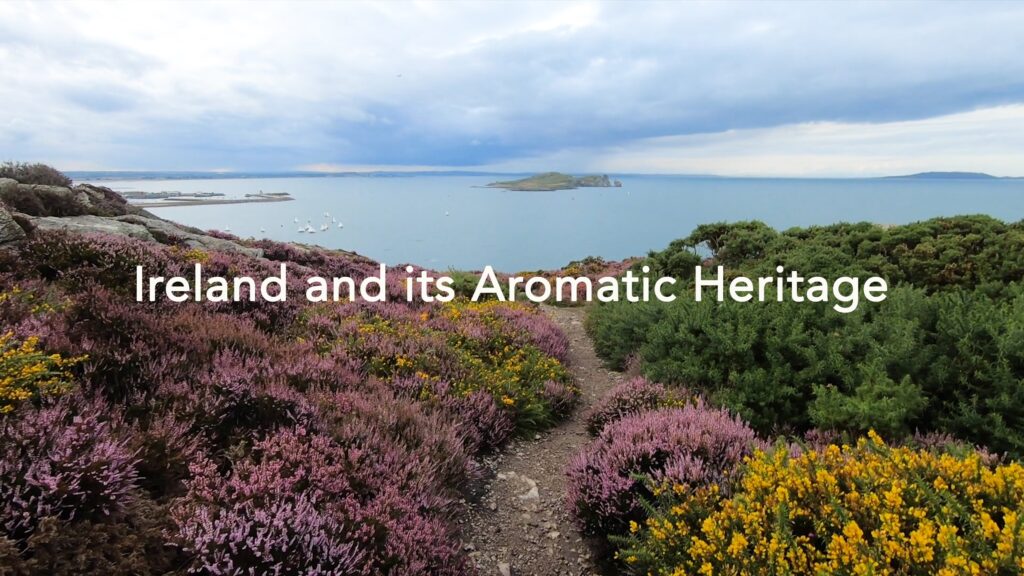
As Ireland transitions from the rich, smoky scent of peat-burning to a more sustainable future, its olfactory heritage is evolving. What will become the next iconic aromatic symbol of Ireland?
Click to watch the documentary trailer.
As Ireland transitions from the rich, smoky scent of peat-burning to a more sustainable future, its olfactory heritage is evolving. What will become the next iconic aromatic symbol of Ireland?