
David Shaw: Health for a Living Planet
The Creation of the Shaw Institute of Public and Planetary Health
By Gayil Nalls
Sign up for our monthly newsletter!
In an era of accelerating climate change, biodiversity loss, and growing public health challenges, the realization that human well-being depends on the health of the natural world has moved from scientific insight to urgent necessity. Few people have done more to bridge the worlds of science, entrepreneurship, conservation, and philanthropy than David Evans Shaw. Through the creation of the David Evans Shaw Institute of Public and Planetary Health at the University of New England, Shaw is advancing a model that unites medicine, public health, environmental science, business, and policy to address the intertwined challenges facing both people and the planet. In this conversation with Plantings, he reflects on the ideas that inspired the Institute, the importance of interdisciplinary collaboration, the role of culture and the arts in shaping societal change, and why optimism, innovation, and systems thinking remain essential to building a healthier future for all.
Gayil Nalls: You have spent much of your career building science-based companies that translate research into practical solutions. What convinced you that this was the moment to invest in an institute focused specifically on public and planetary health, and what gaps do you hope it will fill that traditional academic structures have not?
David Shaw: For more than five decades, I have worked at the intersection of science, entrepreneurship, and stewardship of the natural world, and I have come to believe that the health of people and the health of the planet are inseparable. The COVID-19 pandemic and the accelerating degradation of ecosystems, including the rapid warming of the Gulf of Maine right outside the University of New England’s (UNE) door, have made that connection impossible to ignore. So, in many ways, the moment chose itself, and I launched the David Evans Shaw Institute of Public and Planetary Health with UNE as a structured response.
Throughout my career, I have found that the most transformative solutions come from dissolving the boundaries between sectors and fields, from asking people who would not normally be in the same room to solve a problem together. What drew me to UNE is that it has already done the hard work of crossing those lines. It has trained Maine’s healthcare workforce while running nationally ranked marine and environmental science programs and a sustainable business curriculum. It routinely works at the intersections of health, environmental science, and climate change.
The Shaw Institute is designed to formalize and capture the magic of that crossing with a public health focus, bringing health sciences, medicine, public health, marine and environmental science, political science, and sustainable business into genuine collaboration. UNE already has the building blocks to accomplish that.
UNE is home to Maine’s only medical, dental, and pharmacy schools. It has the state’s only physician assistant program. It produces more health professionals for Maine than any other institution. And its marine science programs are ranked in the top 10 in the country. What the Institute adds is a shared identity and a mandate to work across the lines, defining the field of planetary health by aligning UNE’s leadership in healthy aging, public health practice, climate research, sustainability, entrepreneurship, and ecosystem management, to name just a few, under one mission.
GN: The concept of planetary health recognizes that human well-being cannot be separated from the health of ecosystems. Looking ahead twenty years, what changes would you most like to see in how society measures progress and success if this understanding truly takes hold?
DS: We tend to measure what is easy to count, and for too long that has meant a narrow set of financial scorecards. I have spent much of my life questioning whether those are the right metrics.
In business, I never believed that shareholder value was the sole measure of success. I believed that creating exceptional value for people and the planet was the purpose, and that economic rewards would follow from doing that well. The science of human happiness now supports this. We are wired to benefit from doing good.
In twenty years, I would like to see that principle reflected in how we keep score …. how we measure success. I would like the cost of a ton of carbon in the atmosphere or a ton of plastic in the ocean to appear on the ledger rather than being quietly absorbed by society. I would like measures of progress to include the health of a community and the health of the watershed it depends on, not just its output.
This reflects the worldview built into UNE’s mission, which treats the health of people,
communities, and the natural world as one connected system. In the University’s marine and environmental programs, climate change is not a standalone subject but a thread running through nearly all research and teaching, which trains students to read ecological and human outcomes together.
My deepest hope is for the graduates that this approach produces people who think at the level of whole systems and carry that integrated view into health systems, business, policy, and science. And I hope UNE and Maine will be recognized as a place that helped shape the national and global conversation on public and planetary health, amplifying this small state’s voice well beyond its size.
GN: The Institute brings together expertise from health sciences, environmental science, public health, political science, and sustainable business. Interdisciplinary collaboration is often praised but difficult to achieve in practice. What do you believe are the most important conditions for creating meaningful collaboration across disciplines rather than parallel work occurring under the same roof?
DS: The first condition is a shared mission that is bigger than any one person or department, something people feel in their gut and not just on a strategic plan. The second is psychological safety. The best teams I have been part of welcomed rigorous, candid debate, the kind that scientists expect when colleagues challenge their data, but they did it without personal attack. People have to feel safe enough to disagree and to be wrong.
The third condition is a culture that values curiosity over expertise. I am not a scientist, and I have found that enormous value comes simply from asking why, listening for comprehension, and being willing to admit what you do not understand. When specialists have to explain their work to someone outside their field, both people learn. An institute that rewards this kind of question-asking, rather than rewarding people for defending their turf, will get collaboration. One that does not will get parallel work and shared parking.
What convinced me UNE could meet these conditions is that it has been practicing them for years. It is a national leader in interprofessional education, and students from different disciplines already learn with, from, and about one another through shared simulation experiences on campus. That model began in the health professions, where team-based care produced measurably stronger patient outcomes, and it is now expanding to broader planetary health challenges. The Institute’s partnerships carry it into the field as well. This year the Institute became the primary academic partner of the Maine Public Health Association, connecting students with more than 80 organizations across the state.
GN: Throughout your career, you have worked at the intersection of entrepreneurship, conservation, and public service. What lessons from the private sector do you believe are most urgently needed in addressing today’s planetary health challenges, and conversely, what can business learn from ecological systems?
DS: The private sector brings a discipline that planetary health work urgently needs: a bias toward action, clear goals, accountability, and the entrepreneurial habit of asking not what resources are available but what resources are needed to accomplish the goal. That is a mindset of abundance, and it is how audacious things get done. We will not solve these challenges without harnessing that power as a force for good. It is the discipline I wanted built into the Institute itself, which is designed to scale through partnerships, grants, and self-generated activity so that investment accelerates impact rather than covering overhead.
What can business learn from ecological systems? A great deal. Nature runs on a circular model in which nothing is wasted, and everything is reused, while our economy still runs on take, make, and discard. Nature builds resilience through diversity and redundancy. And nature operates on a longer time horizon than the next quarter. This is where UNE’s approach is especially compelling.
The ocean must be viewed not only as something to protect but as a resource that can support economic growth in a sustainable, even restorative, way, which is itself an answer to what business can learn from ecology. The University teaches at this intersection through a sustainable business curriculum and hands-on, team-based work on real problems. And through existing University partnerships, UNE pilots studies across marine science, environmental systems, and data-driven ecological analysis, pairing academic inquiry with applied research. The companies I most admire are designing for circularity and measuring themselves against the health of the systems they depend on. Business and ecology are not opponents: The smartest businesses are starting to behave more like ecosystems.
GN: Many environmental discussions focus on crisis and loss. Yet your work often emphasizes opportunity, innovation, and what you call ‘wave making.’ How can institutions such as the Shaw Institute inspire hope and agency, particularly among young people who are inheriting an era of climate uncertainty?
DS: I am an optimist by conviction, not by temperament alone. I have seen what happens when a small, determined group decides that a seemingly impossible thing is possible. We helped protect vast stretches of the High Seas that belong to no nation, starting from a conversation on a boat.
None of that came from focusing on loss. It came from focusing on the wave that could be caught.
Young people are inheriting real uncertainty, and I do not want to minimize that. But a steady drumbeat of crisis without agency produces despair, and despair is not a strategy. Wave making is the alternative. It means treating a challenge as an opportunity to build something better, and it is a far more powerful motivator than fear. The Shaw Institute can model this by putting students to work on real problems alongside real partners, so they experience their own capacity to make a difference.
I have already seen this at UNE through the Shaw Innovation Fellowship, which began in 2021 to build creative confidence and cross-disciplinary problem-solving among students across every major. Fellows have taken on climate change, coastal mapping for community resilience,
maternal health systems, cultural competencies in healthcare, and public health disparities. UNE makes that kind of interdisciplinary work part of undergraduate life through programs and spaces open to students of every major, from the Summer Sustainability Fellows to the P.D. Merrill Makerspace, the Sustainable Innovation Center, and the Honors College, where students from business, marine science, and health professions build and test solutions to shared problems.
This is the model other institutions can implement to inspire optimism and agency within its students. When a young person discovers they can actually move the needle, hope stops being a feeling and becomes a habit.
GN: Public health and planetary health are often discussed in scientific and policy circles, but less frequently as cultural or ethical questions. How important do you think it is to engage artists, storytellers, and cultural institutions in shaping a healthier future for both people and the planet?
DS: Engaging artists, storytellers, and cultural institutions is essential, and it is one of the parts of this work closest to my heart. Science gives us the evidence, but evidence alone rarely changes how people live. Art changes how people see. A great work of art creates a private conversation with each person who encounters it, and in doing so it can shift a perspective in a way that a chart never will. I have experienced this in my own life through sculpture, filmmaking, and music, much of which I came to while recovering from a brain injury. The artists who move me most take ordinary materials and reveal their hidden potential, which is its own lesson about what is possible.
We are also living in a moment of intense polarization, where facts alone do not persuade. Storytellers reach people that scientists and policymakers cannot. If we want collective action across every demographic and industry, we have to engage culture, not just policy. This is part of why UNE and the Shaw Institute is suited to the work.
Alongside its health and science programs, UNE’s distinguished programs in the humanities and the arts give the Institute a real base from which to engage artists and cultural institutions as partners rather than as an afterthought. A healthier future for people and the planet will be built by scientists and engineers, yes, but it will be imagined by artists and carried by storytellers.
GN: If the David Evans Shaw Institute succeeds beyond your highest expectations, what will exist in the world ten years from now that does not exist today? What would be the clearest evidence that this investment truly made a difference?
DS: Ten years from now, I hope a new kind of professional exists in significant numbers: leaders who were trained from the start to think across whole systems, who can hold human health and planetary health in the same frame and act on both at once. Today that person is rare, and when the David Evans Shaw Institute of Public and Planetary Health succeeds, Maine will be exporting them, and other regions will be copying the model.
The clearest evidence will be concrete, not rhetorical. I would point first to a stronger public health workforce for Maine, filling real gaps in rural healthcare, mental health services, and preventive care, built on the pipeline UNE has created with the Maine Public Health Association.
I would also point to specific solutions that came out of the Institute and are working in the real world: a coastal community better prepared for a warming Gulf of Maine, a more sustainable
approach to ocean food systems, and measurable improvements in mental health, recovery and addiction treatment, and healthy aging in places that needed them. I would point to sustained
programs reaching the people too often left out, including Maine’s youth, its aging residents, its immigrant communities, and its rural populations. And I would point to the Institute having become a true convener, the place people across the state and the wider North Atlantic come together to solve shared problems.
I have always believed the ultimate test of anything you build is whether it thrives and grows beyond its founder. If, in ten years, the David Evans Shaw Institute no longer needs me at all, we will have succeeded.
The David Evans Shaw Institute of Public and Planetary Health is an interdisciplinary research and educational hub at the University of New England (UNE) that bridges human medicine, public health, and environmental/marine sciences.
Plantings
Issue 62 – August 2026
Also in this issue:
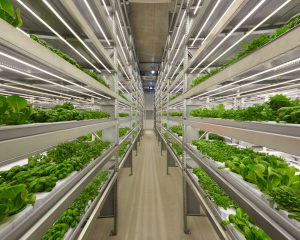
Vertical Farming: Reimagining Agriculture in an Urban Age
By Gayil Nalls
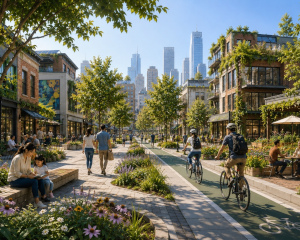
Using Evolution to Better Your Neighborhood
By WS/C

Bioenergetic Landscapes: Rethinking Our Relationship with Trees
By Octavia Overholser and Gayil Nalls
What a Village Knows That a City’s Forgotten
By Willow Gatewood

The New Extractivism
By Nuri McBride

Eat More Plants Recipes:
Cold Veggie Peanut Noodles
By Ian Sleat
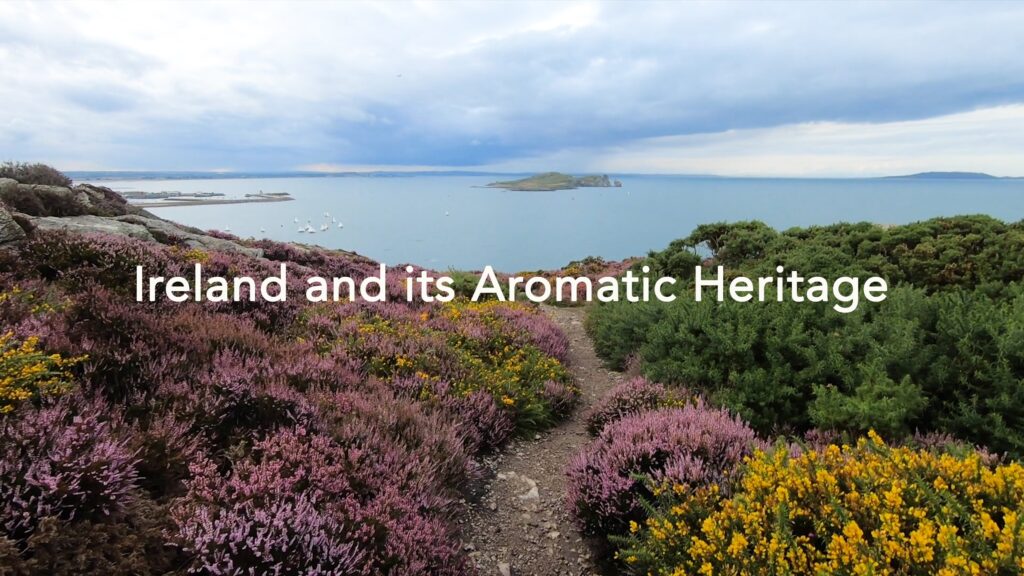
As Ireland transitions from the rich, smoky scent of peat-burning to a more sustainable future, its olfactory heritage is evolving. What will become the next iconic aromatic symbol of Ireland?
Click to watch the documentary trailer.
As Ireland transitions from the rich, smoky scent of peat-burning to a more sustainable future, its olfactory heritage is evolving. What will become the next iconic aromatic symbol of Ireland?