

© archbio
Using Evolution to Better Your Neighborhood
By WS/C
Sign up for our monthly newsletter!
In his 2011 book, The Neighborhood Project, the evolutionary biologist David Sloan Wilson asks us to see the cities where we live as a living expression of human evolution, to view it as a manifestation of our instincts for cooperation and competition, our need for belonging, and our capacity to shape environments that in turn shape us. A city, in his telling, is less like a machine and more like a hive: an emergent system where countless small interactions produce large-scale patterns of health or dysfunction. And he argues that cities and neighborhoods can be understood and improved using the principles of evolution.
The book centers on a simple but powerful idea: human behavior is shaped by environments, and environments can be intentionally designed to promote cooperation, well-being, and social resilience. Drawing on evolutionary theory, especially the concept of multilevel selection (where groups, not just individuals, can be units of evolutionary success), Wilson shows that groups that foster trust, shared norms, and mutual support tend to function better than those driven by competition alone.
Using his own city of Binghamton, New York, as a living laboratory, Wilson collaborates with schools, community organizations, and local leaders to apply these ideas in practice. He demonstrates how small-scale, neighborhood-level interventions, such as improving school culture, strengthening community ties, and creating pro-social norms, can lead to measurable improvements in outcomes like education, mental health, and civic engagement.
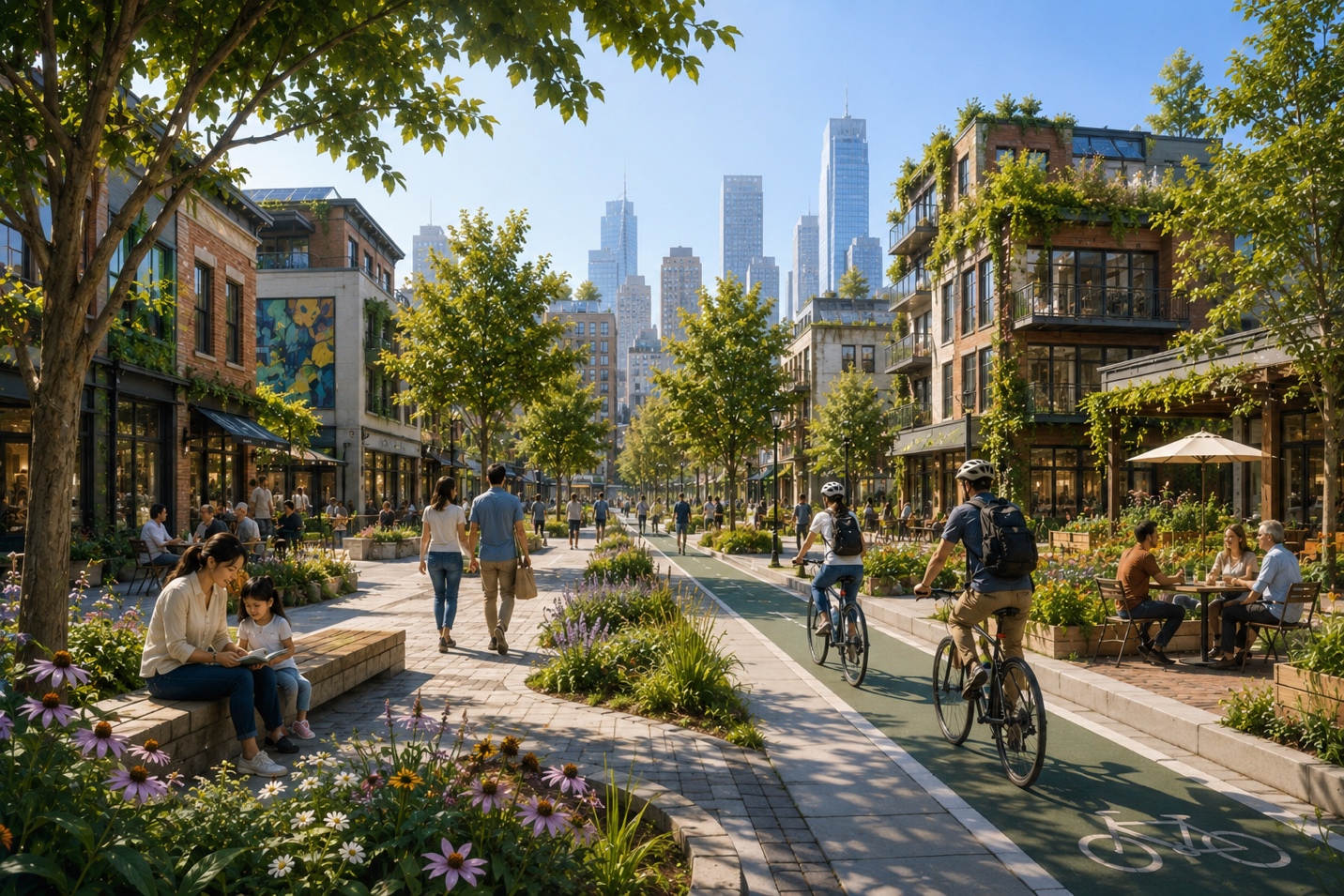
If we take this idea seriously, World Sensorium Conservancy’s goal to inspire the rewilding of cities becomes something deeper than adding green space. It becomes an evolutionary intervention, a way of reshaping the conditions that guide human behavior.
Wilson’s framework suggests that environments select for behaviors. Streets that isolate produce guardedness; neighborhoods that foster shared purpose produce cooperation. By extension, landscapes rich in biodiversity, sensory variation, and ecological function may select for attentiveness, care, and reciprocity. Rewilding, then, is not simply about restoring plants, animals, and insects, it is about restoring the kinds of relationships that allowed humans to evolve within living systems rather than apart from them.
“Evolution”, Wilson writes, “doesn’t make everything nice. It results in this full spectrum of outcome that we associate with good and evil, thriving and decay. The kind of change that we associate with progress can emerge as a robust product of evolution but only under certain environmental conditions. With the right conditions, the world becomes a better place.” (p. 11)
Wherever we look in a city, it reflects our evolutionary process–biological, psychological, and cultural. In this light, what are the conditions for a rewilded city, one that operates and thrives on several intertwined levels.
Reframing goals for cities:
Ecological re-patterning.
Native plant corridors, pollinator habitats, and restored soils become ways to rebuild the metabolic processes of the city—cooling air, filtering water, supporting species. These systems introduce complexity and resilience, qualities that evolution consistently favors.
Behavioral scaffolding.
When residents encounter birdsong instead of traffic noise, edible landscapes instead of vacant lots, or shared gardens instead of fenced-off parcels, their daily micro-decisions shift. They linger, observe, participate. Wilson emphasizes that pro-social behavior flourishes when environments make it easy and rewarding. Rewilded spaces do precisely that. They invite stewardship rather than passive consumption.
Cultural evolution.
Cities are also cultural organisms. Rewilding can re-anchor urban identity in local ecologies—seasonal cycles, native flora, and multisensory experience. This aligns closely with World Sensorium Conservancy’s work on aromatic heritage: scent, in particular, becomes a carrier of memory and belonging. A city that smells of linden in June, soil after rain, or coastal salt is a city that situates its inhabitants within a living narrative rather than an abstract grid.
Psychological recalibration.
Wilson draws on evolutionary psychology to show that humans are shaped by environments of moderate complexity, rich in cues but not overwhelming. Rewilded spaces, messier, more layered than manicured parks, restore this balance. They quiet vigilance while sharpening perception. Attention shifts from defensive scanning to exploratory awareness.
What emerges is a subtle but powerful proposition: rewilding the city is a way of aligning urban life with the conditions under which human cooperation, curiosity, and care evolve.
It also reframes responsibility. If cities reflect human nature, they also train it. A degraded urban environment normalizes extraction and disconnection; a rewilded one normalizes reciprocity. Over time, these patterns accumulate, just as Wilson describes in neighborhoods where small cooperative norms compound into large social outcomes.
In essence, The Neighborhood Project reframes the city as an evolving system of real-world evolutionary biology, psychology. Its central message is pragmatic and hopeful: by understanding the evolutionary forces that shape human behavior, we can consciously design communities that bring out our cooperative, caring, and creative capacities. suggesting that meaningful change begins not at the scale of policy alone, but at the level of everyday social environments, one block at a time. So, the question is not only how to bring nature back into cities, but how to design urban ecosystems that cultivate the best of our evolved tendencies. In that sense, rewilding is less a return to the past than a forward experiment in shaping the future human niche, one block, one corridor, one sensory encounter at a time.
Plantings
Issue 62 – August 2026
Also in this issue:

David Shaw: Health for a Living Planet
By Gayil Nalls
Vertical Farming: Reimagining Agriculture in an Urban Age
By Gayil Nalls
Bioenergetic Landscapes: Rethinking Our Relationship with Trees
By Octavia Overholser and Gayil Nalls
What a Village Knows That a City’s Forgotten
By Willow Gatewood
The New Extractivism
By Nuri McBride

Eat More Plants Recipes:
Cold Veggie Peanut Noodles
By Ian Sleat
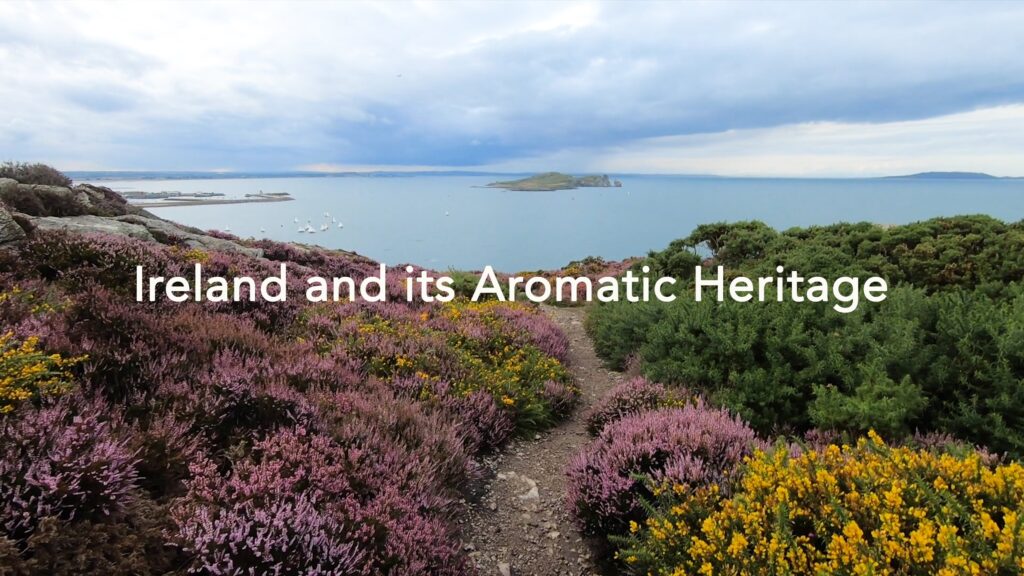
As Ireland transitions from the rich, smoky scent of peat-burning to a more sustainable future, its olfactory heritage is evolving. What will become the next iconic aromatic symbol of Ireland?
Click to watch the documentary trailer.
As Ireland transitions from the rich, smoky scent of peat-burning to a more sustainable future, its olfactory heritage is evolving. What will become the next iconic aromatic symbol of Ireland?