

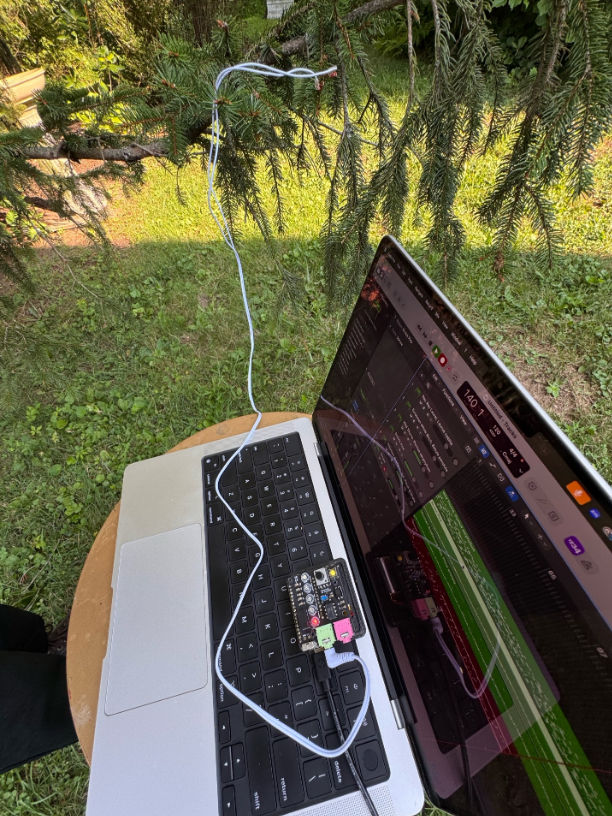
Sensors record acoustic activity from a living plant for research, analysis and data
Listening to World Sensorium Plants
An Exploratory Study
Plants can produce ultrasonic emissions, particularly under stress, and respond to mechanical vibrations. The mechanisms and significance of these signals remain under study. The World Sensorium Conservancy is recording ultrasonic emissions from selected World Sensorium plants and examining how conditions affect them.
Two ways of listening
Bioacoustics records sound or vibration produced by a plant. Specialized microphones and contact sensors can capture signals beyond human hearing. Playback may shift ultrasonic recordings into the audible range, but this does not establish what the signals mean.
Bio-sonification translates measured data into sound. For example, sensors can track changes in a plant’s electrical potential, and software can map those measurements to pitch, volume, or rhythm. The sound represents the data; it is not a recording of the plant making that sound.
From scent to sound
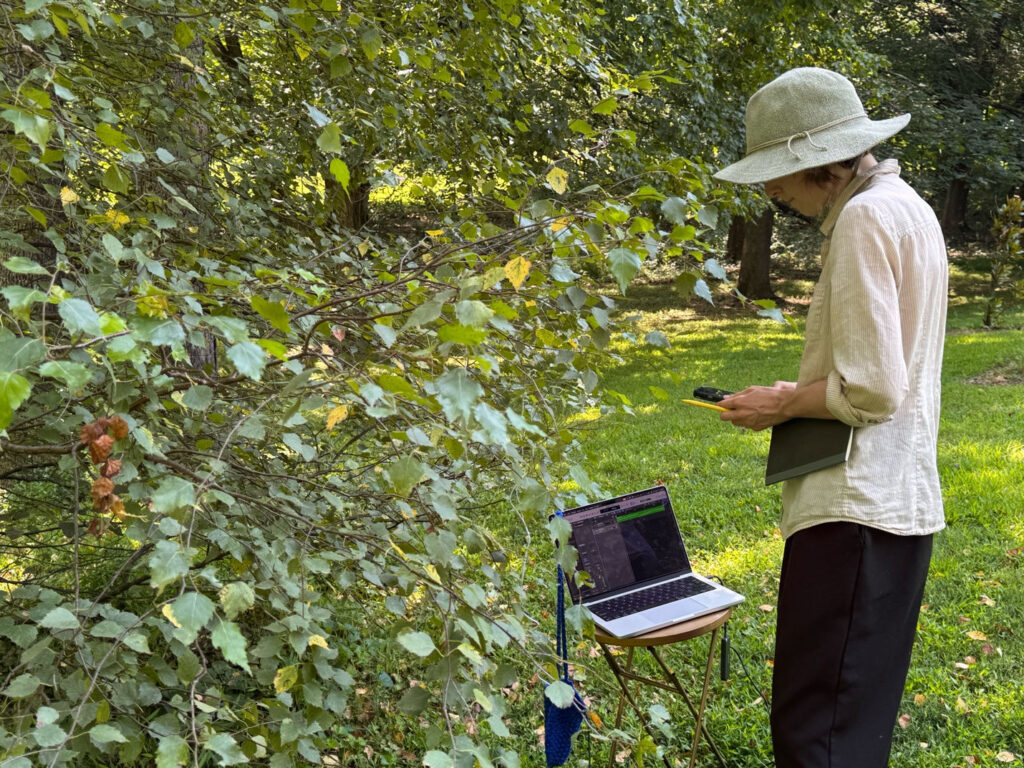
World Sensorium brings together plants significant to cultures around the world. This exploratory work asks how their acoustic activity varies across species and conditions, and what careful measurement can reveal about plant responses. Although plants respond to mechanical stimuli, how they detect sound and vibration remains an active area of research.
We will share selected recordings, methods, and research questions as the project develops. Explore the World Sensorium country pages to learn about the plants and cultural histories represented in the project.
Here are some initial biosonification results:
Jasmine
Jasmine (Jasminum spp.) is one of the world’s most cherished aromatic plants, holding profound cultural, symbolic, medicinal, and ritualistic significance across multiple regions. Revered for its delicate beauty and intoxicating fragrance, jasmine has played a vital role in tradition, religion, medicine, and daily life in China, Pakistan, the Philippines, Algeria, Kenya, Saudi Arabia, Tunisia, Paraguay, Panama, Macau, Suriname, Djibouti, and Barbados. It is also a significant aromatic cultural plant for many more countries.
Rose
The rose (Rosa spp.), particularly Rosa damascena and Rosa centifolia, has held profound cultural, symbolic, and medicinal importance across various civilizations. It is culturally significant for eight nations in World Sensorium: Bangladesh, Nigeria, Iran, Afghanistan, Syria, Bulgaria, Luxembourg, and the Maldives.
Pine
Pine (Pinus spp.) is one of the most culturally significant trees across the Northern Hemisphere and beyond, serving as a symbol of resilience, longevity, and ecological importance. In the United States, Austria, and Honduras, pine plays a central role in national identity, traditional practices, and ecological conservation. Across these diverse regions, pine trees are associated with deep-rooted traditions, medicinal uses, and symbolic meanings. The scent of pine is one of the most recognizable and evocative natural fragrances, deeply tied to human well-being, cultural traditions, and ecological functions
Cherry
The cherry blossom (Prunus serrulata), known as sakura in Japan, holds profound cultural and symbolic importance. A beloved emblem of spring and renewal, it is celebrated through hanami, the tradition of gathering beneath the blossoms to admire their fleeting beauty. In World Sensorium, cherry blossom is culturally significant for Japan.
Lemon
The lemon (Citrus limon) has deep cultural, culinary, and sensory significance across several regions. From Turkey, where its scent is woven into everyday life, to Italy and Portugal, where it is closely tied to food and local identity, and Argentina, where lemons are widely grown and used, the fruit carries a distinctive place-based aroma. In World Sensorium, lemon is culturally significant for Turkey, Italy, Argentina, and Portugal.