


Above/Below. Willow Gatewood
What Lies Beneath the Climate Story
Unraveling the complexity of climate change hidden underground
By Willow Gatewood
Sign up for our monthly newsletter!
I am less disturbed by the tree’s death than by what it might tell us about the soil around its skeletal remains and entanglement of life that builds the world below my feet. I cannot say for certain, but the heat radiating from surrounding buildings and flakey texture of soil around its roots makes me suspect a weakening, if not fully degraded, soil ecology hidden under concrete. Nearby, an open patch of grass yellows even though it’s recently rained. The tree and grass patch may seem isolated, but underground, their roots and soil communities entwine within the same small patch.
The rhizosphere is a space where a tree negotiates its existence: a tiny zone immediately around a root that participates in processes whose consequences can emerge at the scale of entire forests — and eventually, the global carbon cycle. New York City’s average temperature has increased by 0.25°F per decade over the past century (Climate Data for NYC – Environment & Health Data Portal, 2020). Meanwhile, concrete and other infrastructure cover soil that might otherwise support living communities, changing how water moves through the ground and how much heat it absorbs: man-made surfaces become tinfoil around what was once fertile forest soil while the city itself bakes. Increased rainfall, intense storms, and saltwater intrusion can further alter soil conditions and threaten belowground organisms, although their effects vary with local conditions and the organisms involved (Delgado-Baquerizo et al., 2025).
Our climate narratives often focus on what happens topside, frequently centering carbon in the atmosphere. Soil is sometimes discussed primarily as a carbon sink: a place where carbon captured by living organisms can be stored. Yet many Earth system models already include soil carbon, and researchers have developed models of rhizosphere processes. The challenge is that the spatial structure of the rhizosphere, microbial activity, and plant–soil interactions are difficult to represent together, particularly when making predictions across ecosystems and at global scales. What happens to our understanding of climate change when we follow carbon into the living relationships beneath our feet — and what might we do differently if we treated those relationships as part of the climate system, rather than as the background to it?
How does global climate change affect the rhizosphere, and how might changes belowground feed back into the climate system? A tree’s relationship with the atmosphere does not end at its leaves. Through photosynthesis, it draws carbon from the air, allocating some of it to roots and the fungi and other microorganisms associated with them. Mycorrhizal fungi extend through the soil, distributing plant-derived carbon beyond the immediate reach of roots. Their living tissues, secretions, and eventual decomposition can contribute to soil organic matter, including forms of carbon that become protected through interactions with soil minerals (Sharma et al., 2022; Frey, 2019).
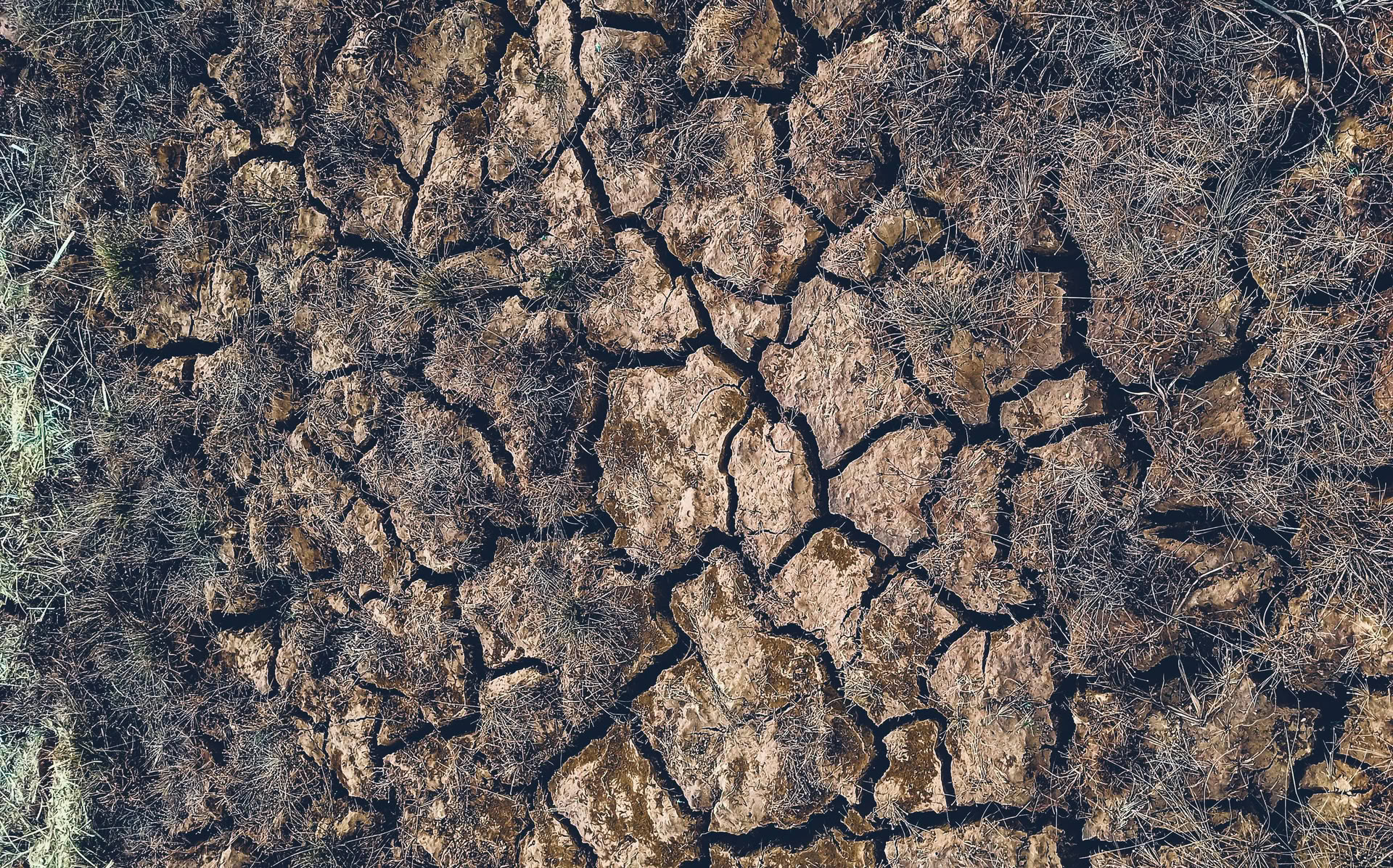
But the underground is not simply a place where carbon accumulates. Fungi and other soil organisms also influence the decomposition of organic matter already present. Depending on the organisms and environmental conditions, their activity can promote carbon loss or contribute to its retention. This makes the rhizosphere a dynamic interface in the climate system, connecting above and below ecologies: a place where the fate of carbon depends on biological relationships that change with temperature, moisture, nutrient availability, and soil structure.
Climate-related heat and water stress can alter plant–soil interactions down to the microbial level. Stress can change the compounds plants release through their roots, as well as the composition and activity of the microbial communities around them. Exactly how these changes affect the relationships between plants and microorganisms remains an active area of research. A study by Parejko (2024), for example, examined simulated drought and the rhizosphere microbiome of Brassica rapa. Such research helps investigate how belowground communities respond to environmental stress, but it does not establish a single meaning or function for changes in root exudation (Parejko, 2024). It is tempting to imagine these compounds as messages exchanged between plants and their microbial partners, or even as a cry for help from a stressed plant. For now, these images are best held as possibilities to investigate further, rather than explanations we can assume.
The Brassica study represents just one example of how little we know about the below ground world and its response to climate, and vice versa. We have long known that soil microorganisms influence carbon cycling, but translating complex microbial and fungal processes into reliable predictions remains challenging. As heat, drought, flooding, and other environmental pressures alter ecosystems, changes in soil organisms and their activity can affect how carbon enters, moves through, and leaves the soil. The direction and magnitude of these effects depend on local conditions; belowground stress does not produce the same outcome everywhere.
Chandel and colleagues’ 2023 review of 71 microbial soil-carbon models found substantial variation in which processes were represented. Nearly half modeled only microbially mediated decomposition, while far fewer explicitly represented microbial dormancy or the recycling of microbial necromass — the dead remains of microorganisms (Chandel et al., 2023). These differences reveal a central challenge in predicting soil-carbon dynamics: the mechanisms we include, and how we represent them, influence what we can simulate. The review examined microbial soil-carbon models rather than global climate models as a whole, but it illustrates why representing the living processes that shape soil carbon remains difficult.
Implications extend beyond carbon. Seeing soil and climate primarily through a carbon-lens can obscure how the health of the underground influences life aboveground: soil supports tree growth and the roots that help hold it in place, influences water movement and erosion, and sustains the biodiversity on which ecosystems depend. These relationships can extend beyond any single site, affecting how landscapes respond to disturbance and how nutrients and sediments move through watersheds toward the ocean. A fuller account of soil’s role in climate must therefore consider not only how much carbon it stores, but also the biological relationships that sustain the wider ecosystem (Delgado-Baquerizo et al., 2025).
From farmed fields to forests, our entire biosphere depends on the health of soil. Surviving — and flourishing beyond — global crises like climate change and biodiversity loss requires soils teeming with life. Yet a report compiled for the United Nations by more than 300 scientists describes serious threats to soil biodiversity worldwide. While often overlooked, what happens underground is just as important as what we can observe aboveground; and regenerating severely degraded soils can take centuries (State of Knowledge of Soil Biodiversity – Status, Challenges and Potentialities, Summary for Policy Makers, 2020).
Ultimately, what happens beneath our feet is not separate from the climate story; it is part of the living system through which that story unfolds. When making predictions about global climate — and decisions about climate mitigation and intervention — we must better represent the rhizosphere and biological relationships it sustains. Doing so may help us understand not only how carbon moves through a changing world, but also what it takes for living systems to endure, recover, and thrive in an uncertain future.
Willow Gatewood is an environmental scientist, interdisciplinary artist, and storyteller from Brooklyn, NY. Follow her on Instagram: @willowg_music
Sources
Chandel, A. K., Jiang, L., & Luo, Y. (2023). Microbial Models for Simulating Soil Carbon Dynamics: A Review. Journal of Geophysical Research: Biogeosciences, 128(8). htps://doi.org/10.1029/2023jg007436
Climate data for NYC – Environment & Health Data Portal. (2020). Environment & Health Data Portal. https://a816-dohbesp.nyc.gov/IndicatorPublic/data-explorer/climate/
Delgado-Baquerizo, M., et. al. (2025). Soil biodiversity and function under global change. PLOS Biology, 23(3), e3003093. https://doi.org/10.1371/journal.pbio.3003093
Parejko, J. A. (2024). Climate change and plant rhizosphere microbiomes: an experiential course-embedded research project. In Journal of microbiology & biology education (Vol. 25, Issue 2, p. e0004624). PubMed Central. https://doi.org/10.1128/jmbe.00046-24
FAO, ITPS, GSBI, SCBD and EC. 2020. State of knowledge of soil biodiversity – Status, challenges and potentialities, Summary for policy makers. Rome, FAO. https://doi.org/10.4060/cb1929en
Frey, S. D. (2019). Mycorrhizal Fungi as Mediators of Soil Organic Matter Dynamics. Annual Review of Ecology, Evolution, and Systematics, 50(1), 237–259. https://doi.org/10.1146/annurev-ecolsys-110617-062331
Sharma, B., et. al. (2022). Interference of Climate Change on Plant-Microbe Interaction: Present and Future Prospects. Frontiers in Agronomy, 3. https://doi.org/10.3389/fagro.2021.725804

Plantings
Issue 65 – November 2026
Also in this issue:

Ellen Windemuth: Turning Stories into Action
Gayil Nalls

The Olfactory Experience of Nature: A Conversation with Minh-Xuan Truong
Clara Muller
Why Fall Yard Care Could Start With Doing Less—but Not Nothing
Manjot Kaur Sidhu

Three Times a Day: How Climate Change Is Already on Your Plate
Lewis H. Ziska
Why Are Some of Us Betting on the End of the World Instead of Saving It?
Gayil Nalls

Eat More Plants Recipes:
Autumn Kabocha and Perilla Miso Soup
Willow Gatewood
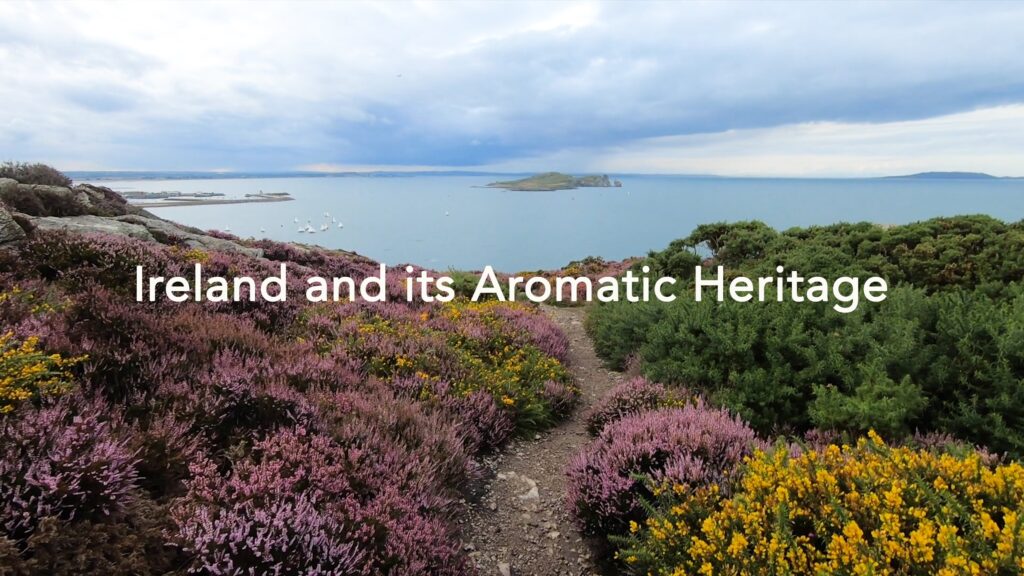
As Ireland transitions from the rich, smoky scent of peat-burning to a more sustainable future, its olfactory heritage is evolving. What will become the next iconic aromatic symbol of Ireland?
Click to watch the documentary trailer.
As Ireland transitions from the rich, smoky scent of peat-burning to a more sustainable future, its olfactory heritage is evolving. What will become the next iconic aromatic symbol of Ireland?