

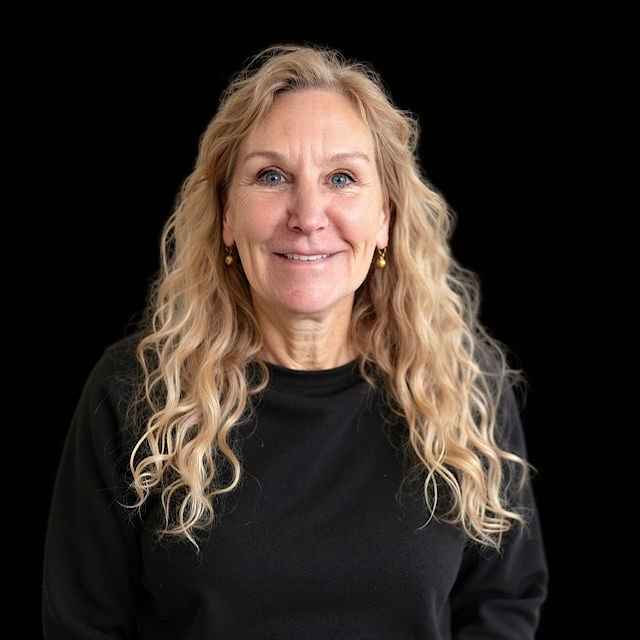
Ellen Windemuth: Turning Stories into Action
By Gayil Nalls
Sign up for our monthly newsletter!
A powerful nature documentary can take us beneath the ocean’s surface or into a threatened forest, bringing us close to lives and landscapes we might otherwise never see. But when the screen goes dark, can that sense of wonder lead to action? Producer and media entrepreneur Ellen Windemuth has spent her career exploring how stories can help bridge that distance.
Windemuth founded Off the Fence in 1994, building it into an international nonfiction production and distribution company. In 2021, she founded the WaterBear Network, a streaming platform for environmental and social-impact stories designed to connect viewers with ways to get involved. Its films offer more than a window onto ecological challenges: they can also point audiences toward campaigns, organizations, and practical steps.
From award-winning nature films to a platform built around participation, Windemuth’s work as proven that attention can grow into care, and care into action. In this interview, she discusses the responsibilities of telling stories about the living world, the changing landscape of environmental media, and how film can help audiences see themselves as participants in the future of nature.
Gayil Nalls: You have described storytelling as a force capable of creating real-world change. What first convinced you that environmental film could move audiences beyond awareness and into action?
Ellen Windemuth: It happened to me kind of by happenstance around 2011, when Grupo Exito came to us and asked whether we could make a film about Colombia’s natural habitats. This was during a period of great tension between the FARC and the Colombian government.
We were lucky to be able to make the film. When we premiered it at the opera house in Bogotá, President Álvaro Uribe Vélez came and spoke. A number of very interesting artists and politicians came, but also shamans from the mountains and Indigenous leaders were invited, too. We were overwhelmed by what a film could do beyond what we were doing at the time, which was producing television. Television was trying to get ratings and ad revenue, and frankly, I was getting very tired of that. It didn’t let us say what we were able to say in this film about Colombia. The film was broadcast on both national broadcasters in primetime, at the same time on the same day.
It was also shown to both parties during the peace talks with the FARC in Cuba. That got me hooked. I thought that there’s so much more you can do with a good documentary than earn money through ratings and ad revenue. There’s so much more we can say. It was also the first time I saw a really effective campaign being made. I’d say that was the beginning. We started around 2010 or 2011, and the film came out in 2012.
GN: What was the title of the documentary?
EW: It was called Magia Salvaje—M-A-G-I-A, S-A-L-V-A-J-E. It ended up on Netflix, and I think it’s now on YouTube in Spanish and English. Colombian people still remember it really well because it was one of the highest-grossing films ever released theatrically in Colombia.
It really tuned me in to what happens when you speak to people about their home. It’s very different from flying in 40 people from the UK to film leopards in Kenya. The reaction is very different when you talk to people about their home.
GN: Absolutely. During your years leading Off the Fence, you witnessed a lot of change in natural-history filmmaking. How has the genre evolved, and what must it do differently in response to today’s accelerating climate and biodiversity crises?
EW: I think those are two quite different questions. I used to run a company called Off the Fence, and to keep going and survive as a business, the company has to engage with things that make natural-history documentaries more commercial. It has to work with creators and celebrities who front films, and use voiceovers by well-known people. In some ways, it has to keep up the illusion that our natural world is still untouched. You might have tractors, trailers, and digging machines right behind you, but you’re still expected to film that pristine piece of nature so it’s palatable to the people who need ratings and ad revenue.
On the other hand, I think there are two ways for a natural-history film to be effective. That’s the area I’ve focused on professionally over the years. I don’t really want to make commercial documentaries just to feed a company anymore. I’d like films to have a bigger effect, on the place where they were made, on the audience’s understanding and education, and on the communities they need to serve.
As for how the genre has changed, around 2012, I think Attenborough made a film about climate change that bombed on the BBC, and the subject was buried for years. Then, in a later series, I can’t remember which one, he popularized the idea of not using plastic straws anymore. It was such a tiny piece of progress, but it was monumental at the same time.
Impact films have become more honest about what’s really happening in the world. I think one smart way they’re doing that is by raising the stakes dramatically. On the one hand, you see something beautiful; on the other, you hear the contrast, this is endangered because of this, and here’s what we can do about it.
I think impact film is a separate genre from the conventional natural-history documentary. Within impact film, people are making progress not just by popularizing subjects through celebrities, but by tackling climate change, soil quality, biodiversity loss, deforestation, water, and food. They’re being clearer about these issues. A well-composed mix of something beautiful and something awful. Something awful and something awesome, juxtaposed can work for people as long as you don’t terrify them. As you know, they’re pretty terrified already.
GN: So you think that’s one way to help people face today’s accelerating climate and biodiversity crises?
EW: Certainly. Within our realm of responsibility as media people, one very good approach is a dramatic story with stakes, accompanied by a campaign that gives people the ability to do something. That could mean cleaning up beaches, joining an NGO, making your own films, or starting your own movement with your own portal. I think people need to be given options for what to do.
GN: You were executive producer of Oscar Award winning My Octopus Teacher, which reached millions of people through an intimate encounter between a human and a wild animal. What did its extraordinary reception teach you about the kinds of stories that awaken empathy for other species?
EW: I think we’ve probably all had a moment outdoors when we looked at an animal and the animal looked back, and we had real contact. I remember that happening to me years ago with an elephant. It also happened with a whale. When you really feel seen, it elicits awe. And awe is the most incredible joy because it’s an overwhelming feeling.
We didn’t think of My Octopus Teacher and then make it. It was a film that happened to us, to this team of people. The encounters happened to my friend Craig Foster. I think the film elicits awe and wonder because the contact was with an animal that’s funny-looking, right? It makes you think of an alien. But at the same time, it’s a sentient, very intelligent animal, with a kind of intelligence different from ours and, as you can see in the film, it’s more than able to interact very cleverly with a human. I think that feeling is what people take away from it.
The cinematography is very good, too. It shows how close Craig and Roger are to the animals in that part of the world, in the kelp forest outside the Cape Peninsula. You can see their love for these animals. The whole thing is filmed in a very loving way. The light is used in a very loving way. And the way the film was edited and directed by Pippa Ehrlich shows the same deep attachment to the place, as well as an intimate knowledge of how to bring it all together.
GN: It’s a stunning film, and it’s amazing the impact it had on people. I think it revolutionized the field.
EW: Thank you.
GN: You founded WaterBear, which has had an amazing impact by connecting films directly to environmental organizations and opportunities for participation. How do you design a story or campaign so that viewers’ emotional responses become meaningful and measurable action?
EW: There are several ways of doing that, and WaterBear’s new owners, OurFrame in Switzerland, are continuing the work we started by experimenting with different models.
One is a straightforward branded-content model. A brand helps finance original content, and then the brand creates a campaign. WaterBear creates a campaign, too, so donations go directly to the NGO and the community involved.
The second model, which I like even more, is this old idea we had: How can people watch themselves green? They can do that now on WaterBear because there’s a sponsorship model where every minute you watch brings more money to the NGO in question. Your viewing minutes help you learn more about the subject and bring sponsorship money to the cause. I like that very much because you’re benefiting on two sides.
WaterBear is also now a nonprofit, so philanthropic donations help build campaigns around the content. I keep coming back to campaigns. I just think that showing something once, the way conventional television does, and then running ads does absolutely nothing for the subject. People who watch even a really good natural-history film, or a great film about plants, probably retain three things from it. If you don’t reinforce those discussion points and things they remember, I think you just lose them.
On a streaming service like WaterBear, the film is available to watch as many times as you like. You can tell your friends about it, participate in the campaign, and say, “What I just saw, I’m actually going to put into action.” I think that’s the crucial step.
GN: This ties back to what we were talking about earlier: environmental communication often struggles to convey the gravity of ecological loss without leaving people overwhelmed or hopeless. How can filmmakers tell the truth about a crisis while preserving a sense of possibility and agency? What you just mentioned seems one way to do that.
EW: Yes. One way is to give people the ability to act and never make them feel overpowered. The sense of loss we all feel is why communicators have to work with it very carefully. If you lean too deeply into that feeling, people turn off whatever they’re watching. But you want to connect with that feeling of loss, hold the audience’s hand through the experience, and lead them to something being done about it, and something they can do themselves.
A couple of years ago, we made a film with Pope Francis about his climate-change encyclical, Laudato si’. We adapted this hundred-page encyclical, which he co-wrote with the then-lead scientist of the Potsdam Institute for Climate Impact Research, to speak to people of the Catholic faith. That’s 1.3 billion people in the world. The film was rooted in the values that people recognize, seek, and come together around in their faith.
It was effective because it wasn’t scary. We didn’t just take disturbing images and rattle them together the way some fearmongering films do. We had beautiful characters, people who were all lending themselves to the purpose. We had this bigger issue, reflecting Catholic values, and really constructive, kind, benign Catholic values.
The film screened in about 30,000 Catholic communities around the world. The fastest-growing Catholic communities are in Africa, so that was important to achieve. It also had a lot of views. It was a YouTube Original, and I think it had 8.3 million views. After that, my old company, Off the Fence, distributed it to free-to-air public broadcasters all over the world.
It’s an example of how many ways there are to make films like this palatable and allow people to connect. You don’t deny the loss and fear. We all share those feelings. But you work with them and show possibilities. Those are generally principles I adhere to. Some filmmakers try the opposite, using a structure like the crime genre that’s popular on Netflix. I don’t think those films work, and it’s certainly not a film I would know how to make. I’ve focused my work on the awe-and-wonder business, as I tell people. I generally work on 80-minute films. Each film is a journey, and each is wondrous, with amazing characters. Great naturalists, great heroes, great scientists can take an audience a long way.
GN: Absolutely. That brings us to local communities, Indigenous people, scientists, and crews, many of whom hold the deepest knowledge about the environment. How can the film industry make sure they’re not simply subjects, but genuine partners in telling and benefiting from their own stories?
EW: Again, I think that’s a fantastic question, Gayil. It’s a question one could debate for days. Television has been notorious for riding roughshod over communities, people portrayed in documentaries, and scientists who have spent their entire adult lives researching a film’s subject. A lot of people are sore about what traditional filmmaking has done to communities.
That’s why I’m in the impact-filmmaking business. Impact filmmakers are much more mindful that if you film in a community, people need to be paid for their time. The same goes for scientists. They need to be paid, too. If your budget is so low that you can’t pay people for their time, you have to make sure your campaign brings money back into that community and supports research.
GN: After more than three decades of producing and supporting stories about the living world, what gives you hope now? And what stories do you think most urgently need to be told?
EW: Those are two interesting questions. The stories I think need to be told right now are about the water crisis. People aren’t talking about that yet, but they should. And the food crisis. People have started talking about regenerative agriculture, and at New York Climate Week, that was certainly a subject of the week, which I think is a very good idea.
They may not be the sexiest subjects. Filmmakers will really have to think about how to make a subject like the water crisis palatable and visually interesting. I think these subjects are very important. Deep-seabed mining is incredibly important to talk about, too, because people keep trying to find a way around every bit of sense a human being can have so they can do it anyway. Oceans, food, and water are very important, not that biodiversity and forests aren’t.
I’m working on a film about biodiversity right now, using natural soundscapes. As you know, being an olfactory scientist, without a beautiful sense of smell you lose a lot. Your sense of smell is the first to react to an environment and can actually change your brain. Sound is very similar. It’s probably second, and may even come before visual stimuli, but it’s hugely important to find ways to work with it.
Media people are a little bit like lawyers trying to make a great case by telling a great story. We need to make a great case for free water, healthy free food, and biodiversity, because we are biodiversity. Human beings are part of the chain. Until people realize that, we’ll keep going into places that are certainly not fun to look forward to.
As for what gives me hope, the new generation does. The younger filmmakers I meet, and more and more women filmmakers by the way, don’t have the same ego as the people who used to make these films in the ’90s. They were mostly men, usually given giant budgets by broadcasters who will remain unnamed. I think people are doing much more teamwork. Teams work better than an ego-driven director. The new way of making films is more honest. People are more self-effacing and realistic. They shouldn’t be lying to the public and saying everything’s great when it isn’t.
The first thing that gives me hope is young people. The second is technology. YouTube is now the largest media company in the world. I’m certainly not happy with the way conventional media are currently dominated by right-wing owners, but underneath that layer, there are a lot of opportunities through YouTube, streaming, and platforms like WaterBear, Core, and Documentary+. I also think festivals are rising to the occasion. I’ve seen the World Science Congress engaging with impact. Jackson Wild, where I was board chair for many years, is definitely embracing impact. A number of other European documentary festivals have impact sections, too. I think people are really getting it.
GN: One thing you and I hear everywhere is that people protect what they love. It’s become a mantra. There’s certainly truth to it, but it always makes me think about aromatic plants. Are there any aromatic plants from your childhood that trigger a feeling of protectiveness or have special meaning for you?
EW: Yes. I grew up in Germany, so when I think of Germany, the first thing I think of is the smells: elderflower, pine, chamomile, nettles, if nettles even have a smell. Those things really trigger memories and make me feel the way I did when I was small. I was lucky that my parents had a little house right next to a huge field and a forest, so I ran around there a lot. I have very strong olfactory memories.
I also have a strong connection with lavender because I was in France when my first little son was born. It will always remind me of when he was a baby and when I was in France. Now I’m in Maine, where you have this wonderful pine smell, and the ocean. It’s a very special smell that you can only experience in this state. I would recognize it anywhere. I came to Maine because I remembered the times I spent here with my uncle when I was about nine years old.
GN: You obviously had very good feelings about it.
EW: Very, very good feelings. You could run around, sleep with dogs in your bed, jump into the ocean in your clothes, jump back out, let your clothes dry, and keep running. It was really fun.
GN: It’s wonderful. There’s nothing like the smell of saltwater drying on your skin.
EW: It’s amazing. And the smell of the sun on your skin with the salt, you never forget that as a child. I think people who have the opportunity to be mindfully outdoors, whether in a garden or a park, or out in the forest, mountains, or ocean, will understand what we’re talking about much more quickly than people who are sequestered in their offices and on their cell phones.
You can find more on Ellen Windemuth at: https://waterbear.com
https://www.linkedin.com/in/ellen-windemuth-543a583
Gayil Nalls, PhD, is an interdisciplinary artist and theorist and the founder of the World Sensorium / Conservancy.

Plantings
Issue 65 – November 2026
Also in this issue:
The Olfactory Experience of Nature: A Conversation with Minh-Xuan Truong
Clara Muller
What Lies Beneath the Climate Story
Willow Gatewood
Why Fall Yard Care Could Start With Doing Less—but Not Nothing
Manjot Kaur Sidhu
Three Times a Day: How Climate Change Is Already on Your Plate
Lewis H. Ziska
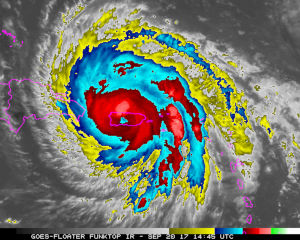
Why Are Some of Us Betting on the End of the World Instead of Saving It?
Gayil Nalls

Eat More Plants Recipes:
Autumn Kabocha and Perilla Miso Soup
Willow Gatewood
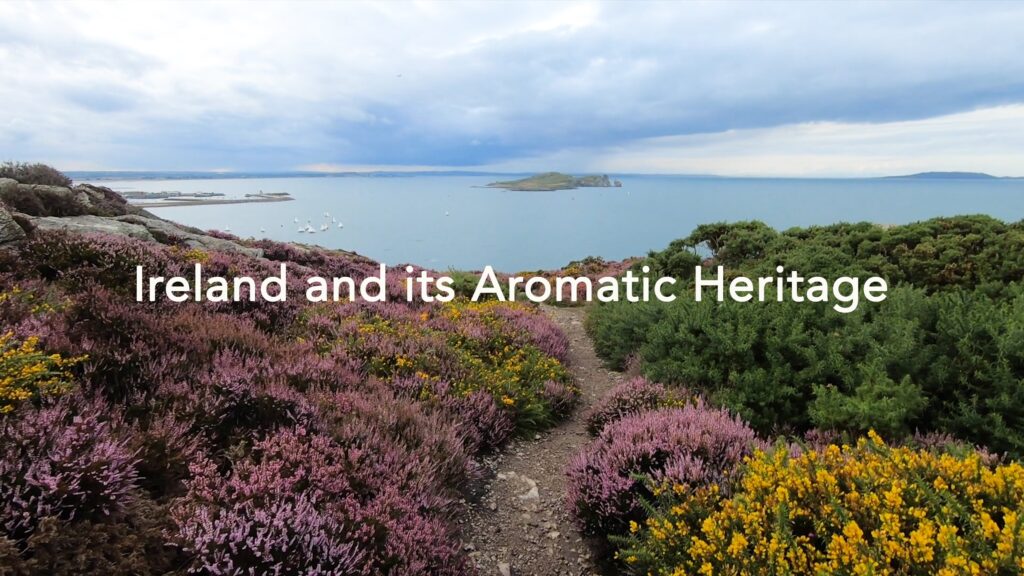
As Ireland transitions from the rich, smoky scent of peat-burning to a more sustainable future, its olfactory heritage is evolving. What will become the next iconic aromatic symbol of Ireland?
Click to watch the documentary trailer.
As Ireland transitions from the rich, smoky scent of peat-burning to a more sustainable future, its olfactory heritage is evolving. What will become the next iconic aromatic symbol of Ireland?