

NOAA
Why Are We Betting on the End of the World Instead of Saving It?
By Gayil Nalls
Sign up for our monthly newsletter!
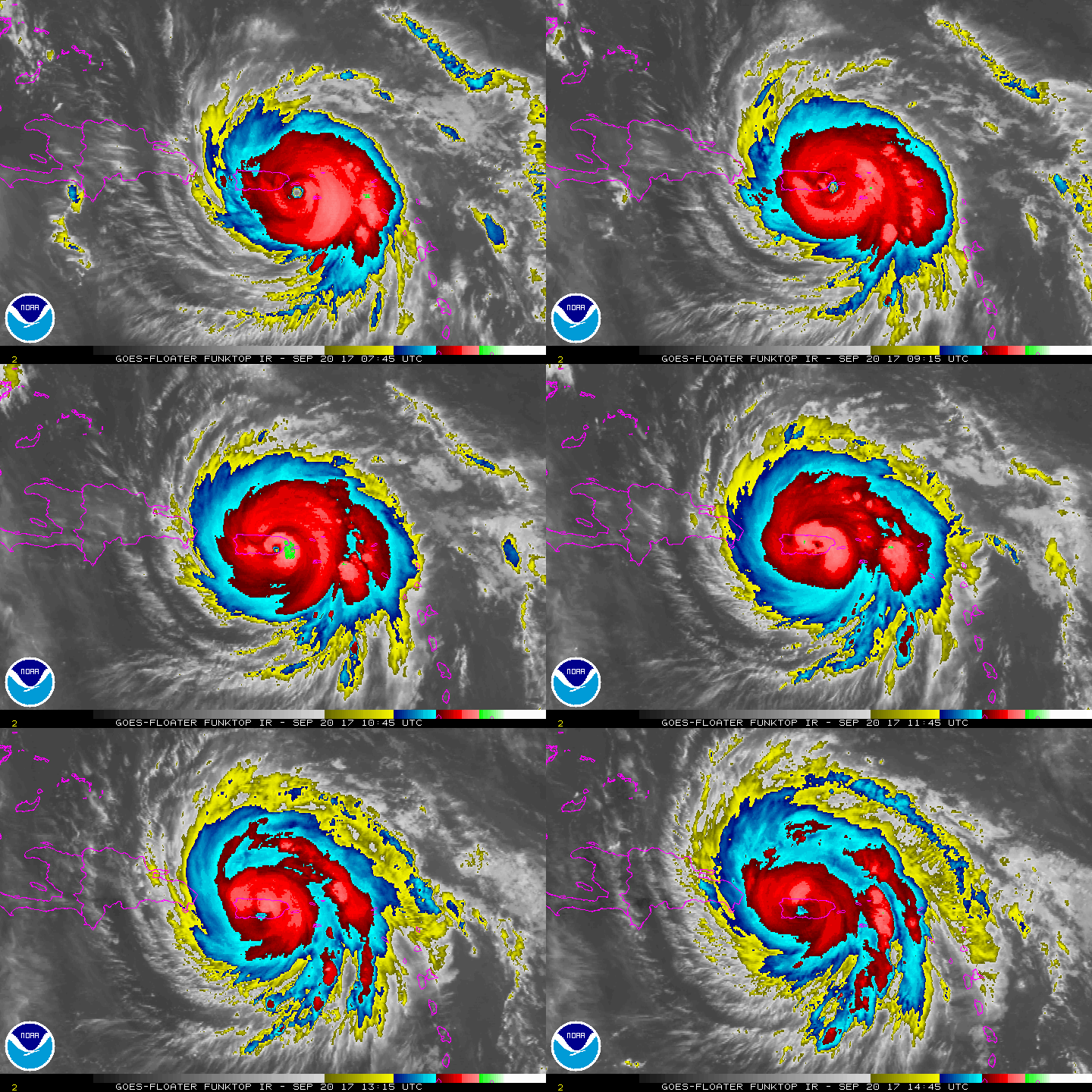
As I write this, there is a powerful nor’easter moving up the Northeast East Coast, bringing heavy rain, high winds, and coastal flooding. There was a time when the approach of a hurricane or severe storm sent people to their radios, their neighbors, and their storm cellars. Today, it can also send them to their phones to place a wager.
Online prediction markets now allow participants to bet on whether a hurricane will make landfall, how many acres a wildfire will consume, whether an earthquake will exceed a particular magnitude, or whether a given year will become the hottest ever recorded. On some platforms, climate disruption has been reorganized into a menu of tradable possibilities: flood or no flood, drought or no drought, how many consecutive days of high temperatures, and catastrophe before a specified date or sometime after.
During Hurricane Milton in October 2024, traders on Polymarket bought and sold contracts on what category the storm would be when it made landfall in the United States. This past winter, during the storm Fern, people bet on how much snow New York would get in a weekend.
The proposition is seductive. Prediction markets claim to transform collective judgment into useful information. Participants buy and sell contracts tied to future events, and the resulting prices are interpreted as probabilities. If a contract concerning a major hurricane trades at 40 cents, the market is effectively suggesting a 40 percent chance that the event will occur. Because people have money at stake, advocates argue, they are motivated to study the evidence and make more accurate predictions.
A hurricane becomes another contest.
A wildfire becomes another score to follow.
This changes how we look at the world.
But forecasting language can obscure what is actually being sold. When the event is a hurricane, wildfire, earthquake, famine, or deadly heat wave, the market is not trading an abstract probability. It is trading the possibility of destroyed homes, displaced families, damaged ecosystems, injured bodies, and lost lives.
The closer catastrophe comes, the more valuable one side of the bet becomes, and suffering becomes a market. Prediction markets place fundamentally different events into the same visual and psychological framework. An election, an entertainment award, a championship game, and a catastrophic storm can all appear as contracts awaiting a yes-or-no answer. The format erases moral distinctions. A hurricane becomes another contest. A wildfire becomes another score to follow. This changes how we look at the world.
When money is placed on destruction, the bettor acquires a financial interest in a particular outcome. A person holding a “yes” contract on a hurricane making landfall may sincerely hope that no one is harmed, but financially, that person benefits if the storm crosses the coast. The contradiction cannot be eliminated by calling the wager a forecast.
The problem is not simply that betting on tragedy appears distasteful. Markets help shape attention and behavior. They tell us what is worth watching, what can be owned, and what can be converted into personal gain. When disaster becomes a commodity, human vulnerability becomes part of the entertainment.
The screen may display only a number, but behind that number is a place. There are neighborhoods within a hurricane cone, animals trapped by wildfire, crops failing in prolonged drought, and elderly people enduring heat in apartments without adequate cooling. The clean binary language of the contract—yes or no—removes nearly everything that gives the event human and ecological meaning.
Even the phrase “natural disaster” can mislead us. Hurricanes, earthquakes, floods, and wildfires may originate as natural hazards, but human choices shape the scale of the resulting disaster. The United Nations Office for Disaster Risk Reduction emphasizes that a hazard becomes a disaster through its interaction with exposure and vulnerability. Poverty, inadequate housing, deforestation, poorly planned development, weak infrastructure, and unequal access to warnings all determine who will be harmed and who will be able to recover. As the agency puts it, hazards may be natural, but disasters are not.
A prediction contract compresses these complex realities into a single measurable threshold: the magnitude of an earthquake, the category of a hurricane, the number of acres burned, or the location of landfall. Yet these figures say remarkably little about what a disaster will mean.
A lower-category storm can be devastating when it strikes a poorly protected community. A stronger storm may cause fewer deaths where buildings are resilient, evacuation systems function, wetlands remain intact, and public officials are trusted. A fire’s acreage cannot measure the loss of an ancient forest, the destruction of habitat, or the cultural meaning of a landscape to the people who live there.
The wager encourages us to ask, “Will it happen?” The more important questions are: Who is exposed? Who has been protected? Who has been ignored? What could still be done? Prediction markets are often praised for aggregating dispersed knowledge, but access to knowledge is not equal. Meteorologists, government employees, emergency-management personnel, utility workers, insurers, shipping companies, and residents near an unfolding event may possess information unavailable to the general public. Even when no rule is technically broken, those informational advantages raise troubling questions about who is positioned to profit.
The people most exposed to disaster are rarely the people with the greatest capacity to wager on it. Those living in flood-prone neighborhoods, informal settlements, drought-stricken farming regions, or areas abandoned by insurers may be struggling to protect their homes and families. Faraway traders, meanwhile, can treat the same danger as an opportunity for speculation.
This reproduces a familiar pattern of climate injustice: those who contribute least to the crisis and possess the fewest resources bear the greatest losses, while those at a safe distance discover new ways to make money from the instability.
There is also the risk of manipulation. Disaster contracts depend on precise definitions, data sources, reporting deadlines, and methods of verification. Disputes may arise over whether a storm officially made landfall, whether a wildfire crossed a specified acreage, or whether an earthquake reading met the contractual threshold. The apparent simplicity of “yes” and “no” rests upon a complicated, and potentially contestable, system of measurement.
Registered prediction markets are required to monitor contracts for manipulation and price distortion, but regulators are still grappling with the rapid expansion of event-based trading and whether particular markets serve the public interest.
Forecasting is valuable, but gambling is not preparedness. There is an important distinction between using probability to reduce harm and using probability to generate excitement and private profit.
Meteorologists calculate risk so communities can evacuate. Public-health agencies model heat waves so cooling centers can open. Ecologists map fire conditions so landscapes can be managed more safely. Humanitarian organizations increasingly use forecast-based financing to release funds before a hazard strikes. These systems convert knowledge into action. Prediction markets convert knowledge into a payout.
Supporters sometimes describe disaster wagers as a form of hedging. A homeowner in a hurricane zone, for example, might theoretically buy a contract that pays if a storm makes landfall. But a small, short-term wager is not a substitute for affordable insurance, resilient infrastructure, reliable emergency services, or public assistance. It transfers responsibility back to the individual, implying that people should protect themselves by gambling correctly on the disaster that may destroy their lives.
Legitimate risk-sharing mechanisms work differently. Insurance, public disaster funds, and carefully designed catastrophe bonds can provide resources for recovery when predefined conditions are met. Their purpose is, or should be, to move money toward affected people and institutions. Catastrophe bonds, for example, transfer a portion of disaster risk to investors so that governments or insurers can receive funding after qualifying events.
A public-interest test is therefore essential: Does the financial instrument increase society’s capacity to prepare, protect, respond, and recover? Or does it merely allow spectators to profit from correctly anticipating suffering?
The bottom line is that there is moral hazard in spectatorship. Most individual bettors have no power to cause an earthquake or steer a hurricane. The danger is less direct but more culturally pervasive. Repeated exposure to disaster as a betting category can make catastrophe feel ordinary, even recreational. It trains us to watch rather than respond.
The emotional rhythm of gambling is anticipation followed by resolution. The event must happen—or fail to happen—so the contract can settle. But disasters do not truly resolve when the market closes. Their consequences continue for years: polluted water, lost forests, trauma, debt, displacement, species decline, and communities that may never be rebuilt. The bettor moves on to the next contract. The survivor cannot.
As climate change intensifies many weather-related hazards, we should be resisting the normalization of catastrophe, not designing more engaging ways to consume it. We already live within economic systems that reward fossil-fuel extraction, deforestation, reckless construction, and the transfer of environmental costs to vulnerable communities. Adding a secondary market in the consequences completes a grim circle of profiting from producing the danger, then profiting again from predicting the damage.
There is nothing wrong with wanting better forecasts. Accurate information saves lives. According to the World Meteorological Organization, even 24 hours of warning before a storm or heat wave can significantly reduce damage, while investments in early-warning systems can return many times their cost. But the purpose of knowing what may happen should be to change what happens next.
If collective intelligence can estimate the likelihood of a flood, it should help communities move people and animals to safety. If data reveal rising wildfire danger, they should guide ecological land management, emergency staffing, and public communication. If models anticipate crop failure, funding should reach farmers before hunger begins. Forecasting reaches its highest purpose when it becomes foresight and foresight becomes care.
The central question is not whether prediction markets can sometimes produce useful probabilities. They may. The question is what kind of relationship to the future we are cultivating. Do we want to become spectators placing odds on collapse, or participants working to prevent it?
The end of civilization is unlikely to arrive everywhere at once. It is arriving in a pattern of one forest, one species, one home, one harvest, and one community at a time. For someone, somewhere, the catastrophe displayed on a betting platform is not a proposition. It is the end of the world they knew. That is not something to wager on. It is something to prevent.
We need monitoring, forecasting, and early warning systems that reach everyone, along with the capacity to prepare for and respond to emergencies. And we need to do all we can to mitigate global warming.
Gayil Nalls, PhD, is an interdisciplinary artist and theorist, and the founder of the World Sensorium / Conservancy.
Sources
Commodity Futures Trading Commission. https://www.cftc.gov/LearnandProtect/PredictionMarkets?utm
Commodity Futures Trading Commission. https://www.federalregister.gov/documents/2026/06/12/2026-11854/prediction-markets-public-interest-determinations
Pietruska, Jamie L. https://aeon.co/essays/what-is-the-real-cost-of-betting-on-weather-catastrophes?utm_source=chatgpt.com
United Nations Office for Disaster Risk Reduction. https://www.undrr.org/our-impact/campaigns/no-natural-disasters
World Bank. https://treasury.worldbank.org/en/about/unit/treasury/ibrd/ibrd-capital-at-risk-notes
World Bank. https://www.worldbank.org/en/programs/disaster-risk-financing-and-insurance-program
World Meteorological Organization. https://wmo.int/media/news/wmo-bulletin-early-warning-and-anticipatory-action
World Meteorological Organization. https://wmo.int/activities/early-warnings-all/wmo-and-early-warnings-all-initiative

Plantings
Issue 65 – November 2026
Also in this issue:
Ellen Windemuth: Turning Stories into Action
Gayil Nalls

The Olfactory Experience of Nature: A Conversation with Minh-Xuan Truong
Clara Muller
What Lies Beneath the Climate Story
Willow Gatewood
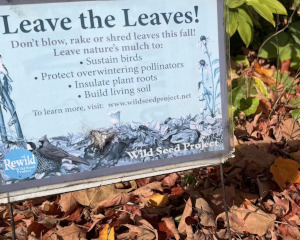
Why Fall Yard Care Could Start With Doing Less—but Not Nothing
Manjot Kaur Sidhu

Three Times a Day: How Climate Change Is Already on Your Plate
Lewis H. Ziska

Eat More Plants Recipes:
Autumn Kabocha and Perilla Miso Soup
Willow Gatewood
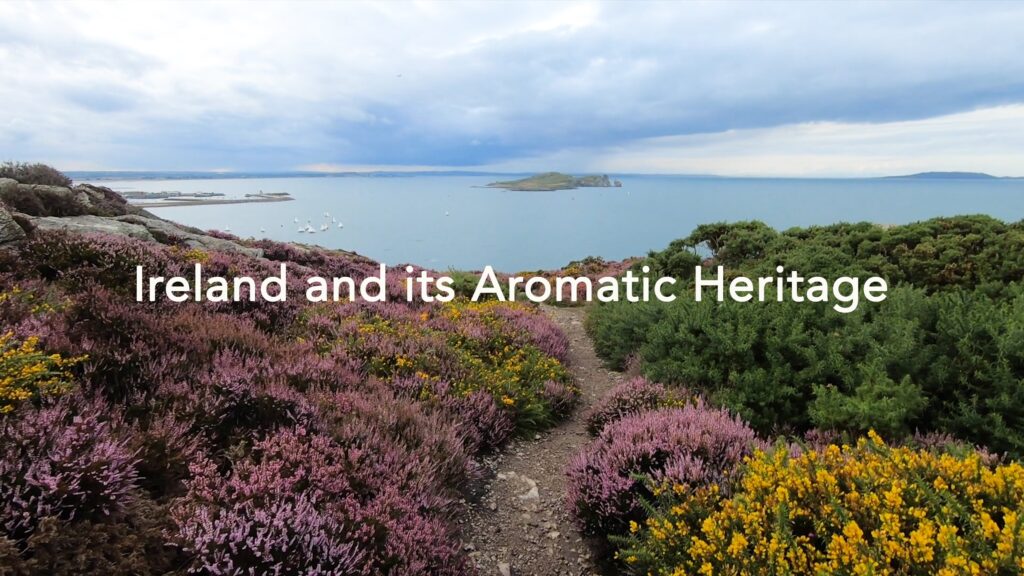
As Ireland transitions from the rich, smoky scent of peat-burning to a more sustainable future, its olfactory heritage is evolving. What will become the next iconic aromatic symbol of Ireland?
Click to watch the documentary trailer.
As Ireland transitions from the rich, smoky scent of peat-burning to a more sustainable future, its olfactory heritage is evolving. What will become the next iconic aromatic symbol of Ireland?