

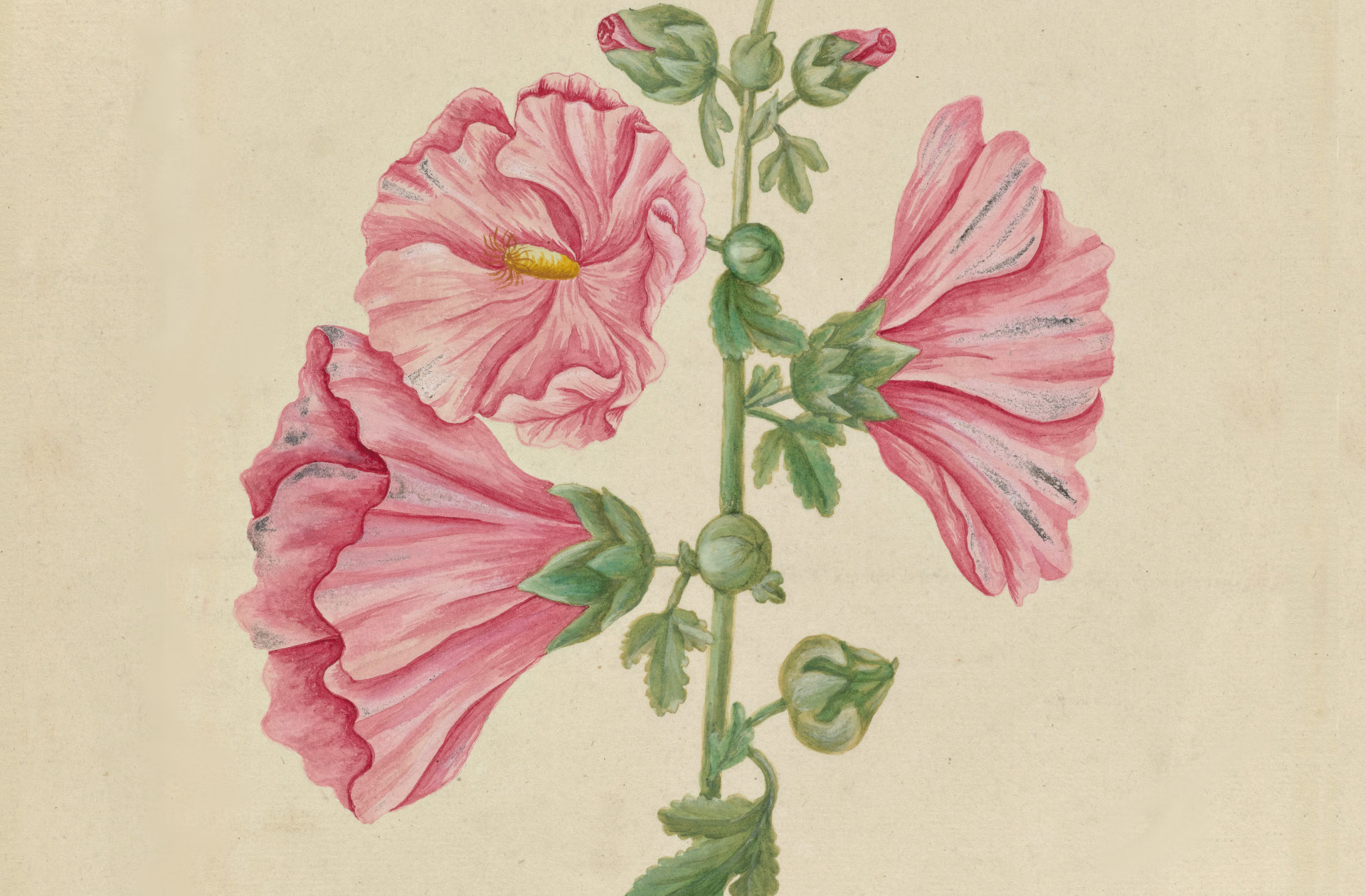
Elizabeth Blackwell: The Courage of Attention
By John Steele
Sign up for our monthly newsletter!
There is a quiet kind of courage that does not announce itself in proclamations or monuments, but instead resides in patience, the patience to observe, to draw, to name, and to understand. It is the courage of attention. In the early eighteenth century, when botany was still assembling itself from fragments of folklore, trade, and medicine, one woman practiced this courage with extraordinary clarity. Her name was Elizabeth Blackwell.
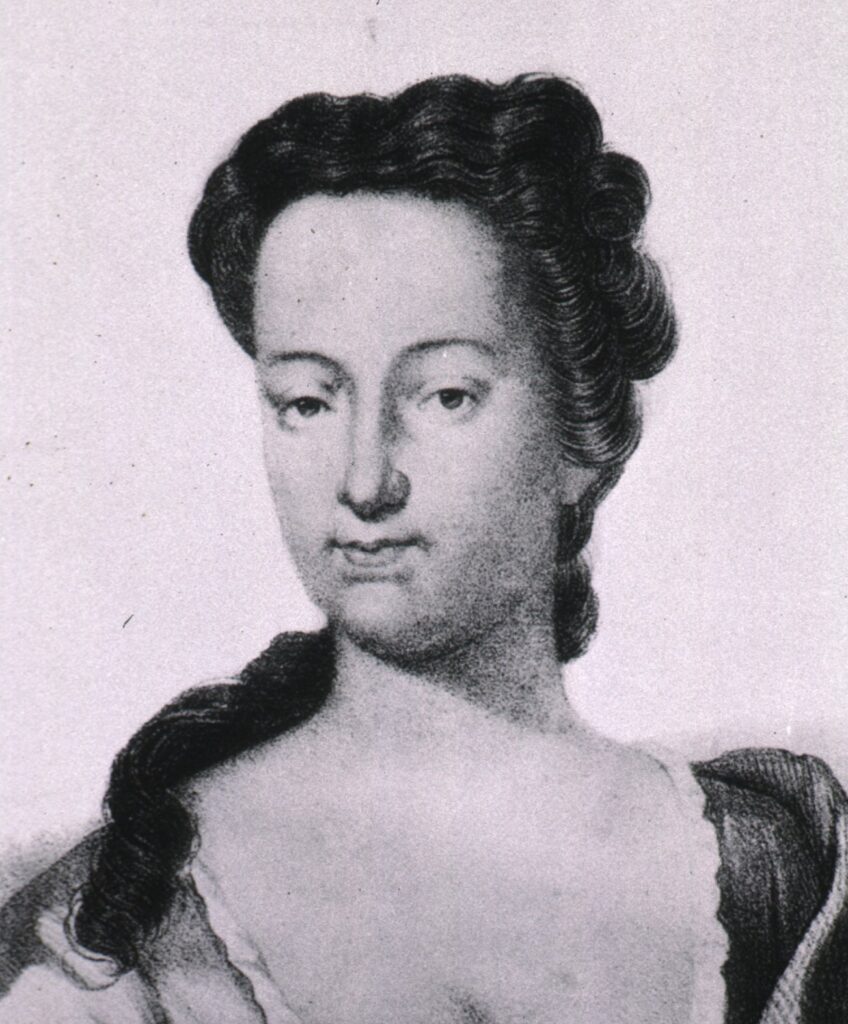
She did not begin as a scientist in any formal sense. She was not trained in the universities, nor elected to the societies where knowledge was debated and codified. She stood outside those institutions, yet she saw with a precision that allowed her to enter, through her work, into the very heart of science. Her achievement reminds us that science is not a profession but a way of seeing.
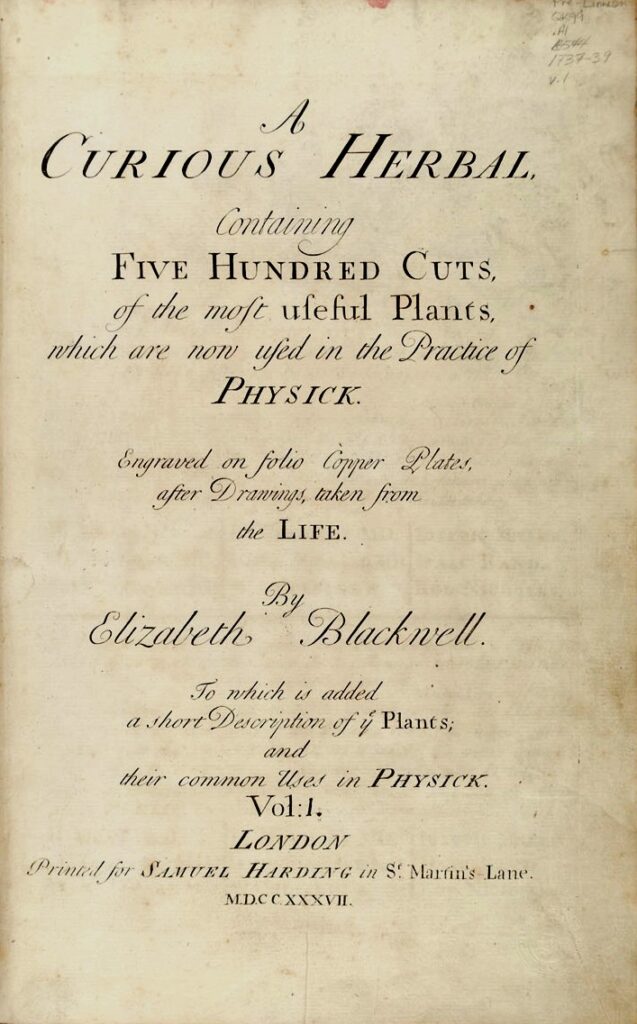
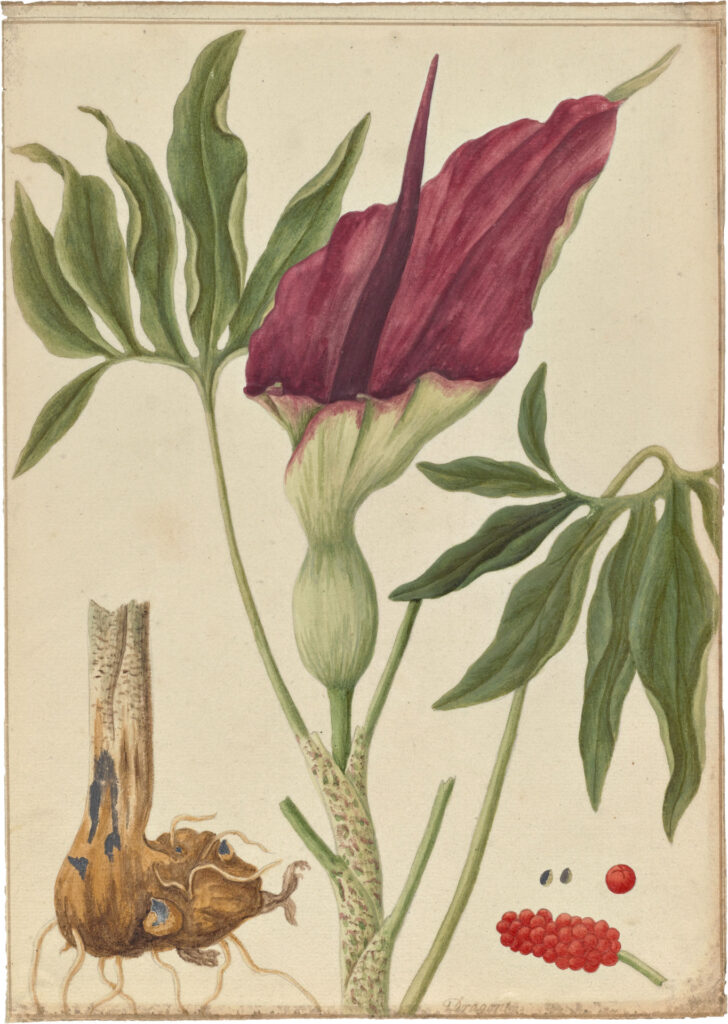
Elizabeth Blackwell is remembered today for a single work, A Curious Herbal, published between 1737 and 1739. It is a collection of nearly five hundred plates of plants, each one drawn, engraved, and hand-colored by Blackwell herself. But the work is more than a catalogue of images. It is an act of translation, of turning the living world into a form that can be shared, preserved, and used.
The story begins, as so many scientific stories do, not in a laboratory but in adversity. Blackwell’s husband, Alexander, a printer, was imprisoned for debt in London. Faced with financial ruin, she sought a way to earn enough to secure his release. She turned, improbably to botany as an observer willing to learn.
In London at that time the Chelsea Physic Garden stood as one of the most important collections of medicinal plants in Europe. It gathered specimens from across the expanding world, plants carried along the routes of trade and empire, valued for their healing properties. Blackwell gained access to the garden, and there she began her work.
She studied each plant directly, sketching it from life. This mattered. Earlier herbals had often been copied from copies, each generation carrying forward the distortions of the last. Blackwell broke that chain. She returned to the plant itself.
Her process was exacting. She would draw the plant, engrave it onto copper plates, print the sheets, and then hand-color them. Each stage required its own intelligence of eye, of hand, of judgment. And to each image she added a description, its name, its uses, its origin. She worked with physicians and apothecaries to ensure that what she showed could be trusted.
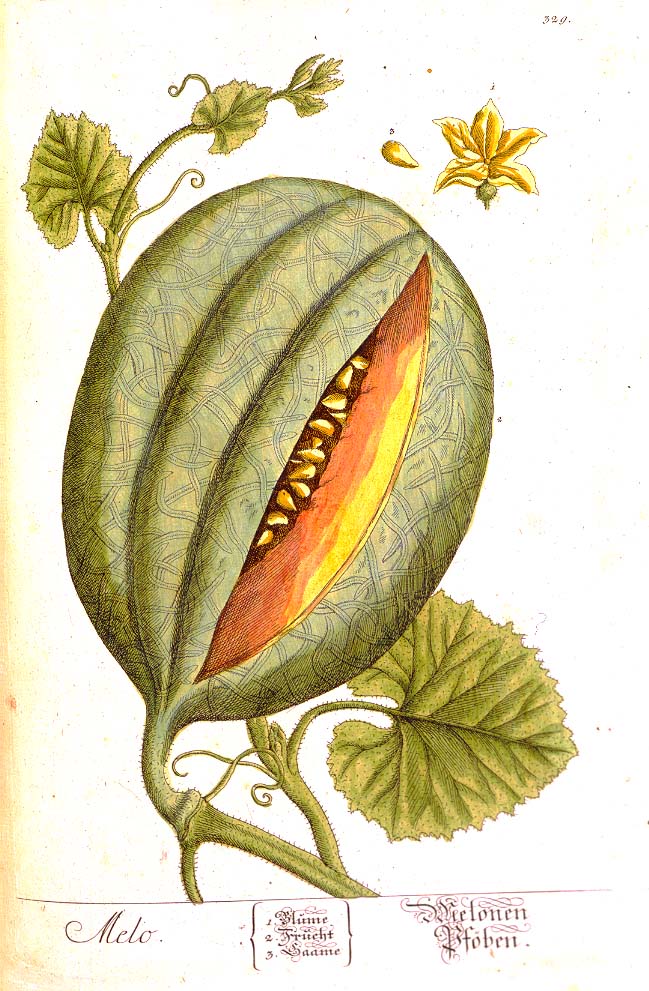
Blackwell understood this with clarity, so her illustrations are exact. Each curve of a leaf, each structure of a flower, each arrangement of seeds is rendered so that the plant can be recognized. The image becomes a form of knowledge, one that can be carried from garden to apothecary, from page to practice.
Her work belongs to a moment of transition. The natural world was beginning to be understood not as a collection of curiosities, but as a system. Soon, Carl Linnaeus would formalize this shift with a method of classification that gave each plant a place within a larger order. But before such systems could be widely used, the forms themselves had to be seen clearly. Blackwell helped make that possible.
There is, in her work, an implicit belief: that nature can be known through attention. It is a modest belief but a powerful one. It places authority in observation disciplined by care, inviting the observer to look again, and more closely.
Her achievement was recognized in her own time. A Curious Herbal was subscribed to by physicians and apothecaries, and it became a practical reference in medicine. It succeeded because it could be used. It allowed plants to be identified, remedies to be prepared, knowledge to be applied.
With the proceeds, she secured her husband’s release. The fact is simple, but it grounds the work in life. Science here is not abstract. It is bound to necessity, to survival, to responsibility, to the contingencies of circumstance.
If we ask what Elizabeth Blackwell contributed to modern botany, the answer lies in the accuracy of her illustrations and the method they represent. She demonstrated that knowledge of the natural world could be built from direct observation, rendered with clarity, and shared in a form that others could use.
In doing so, she widened the reach of knowledge. Her work could be read not only by scholars, but by practitioners, hose who worked with plants in daily life. She bridged the distance between the learned and the practical.
There is another significance to her work, quieter but no less important. Blackwell was a woman working in a field that did not readily admit women. She entered not through permission, but through necessity and ability. Her work stands as evidence that the capacity to contribute to knowledge does not belong to institutions alone. It belongs to those who are willing to look carefully and to learn.
Her later life was marked by loss. Alexander Blackwell, having gone to Sweden in search of opportunity, became entangled in political intrigue and was executed. Elizabeth’s final years are less clearly recorded, and she died in 1758. The arc of her life does not resolve into simple triumph.
But her work remains.
In modern botany, the scale of knowledge has expanded beyond anything Blackwell could have imagined. We study plants at the level of genes and ecosystems, tracing relationships across continents and through deep time. And yet the foundation of this knowledge remains what it was in her day, the act of seeing.
The plant must still be recognized. Its form must still be distinguished from another. Even in an age of molecular precision, the discipline of observation endures.
Blackwell’s illustrations continue to speak to this discipline. They remind us that representation is not incidental. The way we depict the natural world shapes the way we understand it. A clear image is not merely descriptive; it is explanatory.
There is also, in her work, a quality that reaches beyond method. It is a form of respect. She does not impose upon the plant; she allows it to present itself. The drawing is an act of attention and attention is a form of regard.
If we look again at the plates of A Curious Herbal, we see this balance. The plants are set against a blank ground, isolated so that their structure can be studied. And yet they retain a sense of life. They are not reduced to diagrams. They remain, unmistakably, living things.
This balance between analysis and presence is at the heart of science. It allows us to focus without forgetting the whole.
What, then, does her work mean to us now?
In a time when the diversity of plant life is under increasing pressure, the act of seeing plants clearly takes on a new urgency. To recognize a species is to acknowledge its existence. To acknowledge its existence is the beginning of care.
Blackwell did not work with this intention. She worked to solve a problem, to make a living, to meet a need. But in doing so, she created a record of the living world that still carries meaning.
Her work reminds us that knowledge begins in attention. That to understand the world, we must first learn to see it. And that in the simple act of looking closely, we participate in something larger, the effort to bring the living world into clarity, and to find our place within it.
John Steele is a publisher and the founder of Nautilus Magazine.
Plantings
Issue 59 – May 2026
Also in this issue:

The Green Bloom: Chlorophyll, Light, and Renewal
By WS/C
Environmental Generational Amnesia and the Smell of Maybugs
By Clara Muller
Edward Steichen: Delphiniums on Umpawaug Farm
By Gayil Nalls

The Importance of Embodied Joy
By Gayil Nalls
Seeds, Time, and the Human Psyche
By Margherita Gandolfi
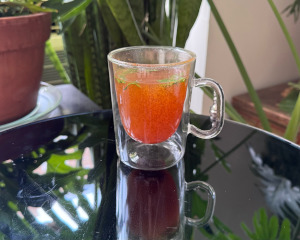
Eat More Plants Recipes:
Spring Dandelion & Burdock Broth
By Gayil Nalls
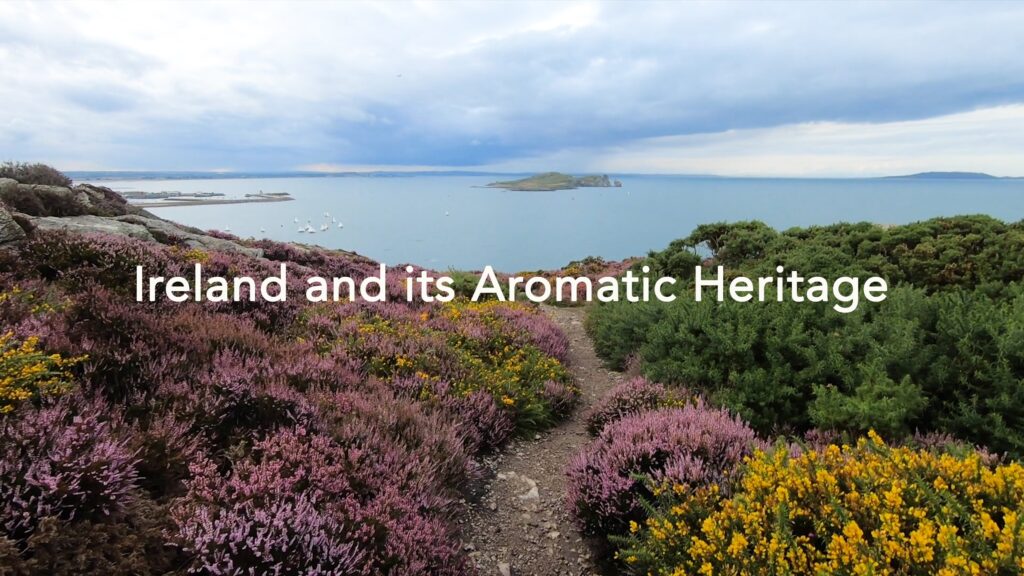
As Ireland transitions from the rich, smoky scent of peat-burning to a more sustainable future, its olfactory heritage is evolving. What will become the next iconic aromatic symbol of Ireland?
Click to watch the documentary trailer.
As Ireland transitions from the rich, smoky scent of peat-burning to a more sustainable future, its olfactory heritage is evolving. What will become the next iconic aromatic symbol of Ireland?