


The Importance of Embodied Joy
By Gayil Nalls
Sign up for our monthly newsletter!
What is embodied joy?
Is it singing in the shower—a spontaneous, private concert where the body becomes an instrument? Is it the pleasure of preparing a vibrant, nourishing meal, inhaling the green brightness of herbs and the warmth of spices? Is it wrapping your arms around the rough bark of an old oak tree, or stretching out in sun-warmed grass, feeling the slow pulse of the earth beneath you?
For me, one such recent moment of quiet, embodied joy came in the early evening, listening to a robin—American Robin—singing his claim to the territory. The light was thinning, that brief, suspended hour when the day exhales, and his song carried with a clarity that seemed to widen the air itself. It was not background sound but presence, insistent, patterned, alive with intention. Each phrase rose and fell with a kind of measured confidence, as if he were stitching the boundaries of his world into being through sound.
I felt my own body attune almost without effort. The mind quieted; the usual forward pull of thought softened. There was only this exchange—breath, air, and the shaping of space through voice. The robin’s call seemed to gather the surrounding elements into coherence: the cooling ground, the dimming sky, the faint movement of young, greening leaves. It was a small event, easily overlooked, yet it held a fullness that resisted abstraction. Not joy as excitement or uplift, but as a subtle alignment, a sense of being momentarily placed, precisely, within the living fabric of things.
Simple, fleeting moments such as these reveal something profound: joy is not an idea or an emotion we observe at a distance. It is a lived, sensory, physiological experience. It is something we feel through the body, not just about the body. This is embodied joy.
Embodied joy can be understood as a form of sensory intelligence that arises when the senses are fully engaged and integrated, when sight, sound, touch, taste, and smell converge with attention and presence. It is not abstract happiness, but a state of felt aliveness. The warmth of sunlight on skin, the aromatic lift of basil or rosemary, the grounding pressure of bare feet on soil. These pleasures are central to how humans regulate mood, memory, and meaning.
Neuroscience offers insight into why such experiences resonate so deeply. Sensory inputs, especially olfactory and gustatory signals, are processed through the limbic system, including structures such as the amygdala and hippocampus, which are central to emotion and memory (Herz, 2004; Small & Prescott, 2005). Unlike other senses, olfaction bypasses the thalamic relay and connects directly to these regions, helping explain why scent can evoke vivid autobiographical memories and emotional states with unusual immediacy. In this way, embodied joy may be understood as a form of neurobiological coherence, aligning perception, emotion, and memory into a unified experience of well-being.

There is another dimension of embodied joy that emerges through immersion in action. Psychologist Mihaly Csikszentmihalyi described this as flow—a state of complete absorption in an activity where time seems to dissolve, and effort becomes effortless (Csikszentmihalyi, 1990). Whether in creative work, gardening, cooking, or walking through a landscape, flow represents a dynamic balance between challenge and skill.
In such states, the distinction between body and mind softens. Attention stabilizes, self-consciousness recedes, and perception becomes finely attuned. This, too, is deeply sustaining embodied joy: the quiet exhilaration of being fully engaged with the world.

Nature remains one of the most powerful catalysts for this form of joy. Unlike highly mediated environments, natural settings engage the senses in complex, layered ways. The variability of wind, the texture of leaves, the acoustic patterns of birds, and the invisible chemistry of plant emissions create a multisensory field that the body appears evolutionarily primed to respond to. Research in environmental psychology suggests that exposure to natural environments can reduce stress, improve mood, and enhance cognitive restoration (Ulrich et al., 1991; Kaplan & Kaplan, 1989).
Plants, in particular, offer a rich portal into embodied joy. Their aromatic compounds, biogenic volatile organic compounds (BVOCs) such as terpenes, function ecologically as signals and defenses, yet they also affect human physiology. Studies on forest environments have shown that inhalation of these compounds can lower cortisol levels, modulate autonomic nervous system activity, and even enhance immune function, including increased natural killer (NK) cell activity (Li, 2010). When we breathe in the scent of pine, lavender, or soil, we are participating in a subtle interspecies exchange, a form of atmospheric communication that influences both body and mind.
Taste and smell are uniquely powerful in shaping embodied joy because they are deeply entangled with memory and culture. A meal is never merely nutritional; it is relational. It carries the imprint of place, season, and tradition. The sweetness of a ripe tomato, the bitterness of dandelion greens, or the layered complexity of a spice blend are sensory experiences that root us in both ecology and identity.
Within the context of the World Sensorium Conservancy’s work, this relationship becomes especially significant. Aromatic plants are not only biological entities but carriers of cultural memory. Their scents encode histories of land use, ritual, medicine, and daily life. When such plants are lost through habitat destruction, climate change, or cultural erosion, we lose not only biodiversity but also the sensory pathways through which joy, belonging, and identity are transmitted.
In contemporary life, embodied joy is often diminished by disconnection—from the body, from the senses, and from the natural world. Increasingly, we inhabit environments oriented toward abstraction, efficiency, and digital mediation, conditions that can flatten sensory experience and attenuate our capacity for direct engagement.
Reclaiming embodied joy does not require grand interventions. It begins with attention: noticing the scent of the air across seasons; eating with awareness of texture, flavor, and origin; moving the body in ways that feel expressive rather than obligatory; seeking moments of immersion, whether in creative work or in nature.
These practices are essential to resilience. They help regulate the nervous system, support emotional balance, and deepen our relationship with the environment (Porges, 2011). In doing so, they restore a sense of coherence between inner and outer worlds.
Ultimately, embodied joy is not only personal—it is ecological. When we are attuned to the sensory richness of the world, we are more likely to care for it. Joy becomes a form of knowledge, a way of understanding value through direct experience rather than abstraction.
To feel joy in the scent of a forest, the taste of a plant, or the warmth of sunlight is to recognize, at a fundamental level, that we are part of a living system. This recognition carries ethical weight. It invites stewardship, reciprocity, and a renewed commitment to protecting the conditions that make such experiences possible.
Embodied joy, then, is foundational.
It is how we remember what it means to be alive and why it matters to keep the world alive with us.
Gayil Nalls, PhD is an interdisciplinary artist and theorist, and the founder of the World Sensorium / Conservancy.
Selected References
Herz, R. S. (2004). A naturalistic analysis of autobiographical memories triggered by olfactory stimuli. Chemical Senses.
Small, D. M., & Prescott, J. (2005). Odor/taste integration and the perception of flavor. Experimental Brain Research.
Csikszentmihalyi, M. (1990). Flow: The Psychology of Optimal Experience.
Ulrich, R. S. et al. (1991). Stress recovery during exposure to natural and urban environments. Journal of Environmental Psychology.
Kaplan, R. & Kaplan, S. (1989). The Experience of Nature.
Li, Q. (2010). Effect of forest bathing trips on human immune function. Environmental Health and Preventive Medicine.
Porges, S. W. (2011). The Polyvagal Theory.
Plantings
Issue 59 – May 2026
Also in this issue:

The Green Bloom: Chlorophyll, Light, and Renewal
By WS/C
Environmental Generational Amnesia and the Smell of Maybugs
By Clara Muller
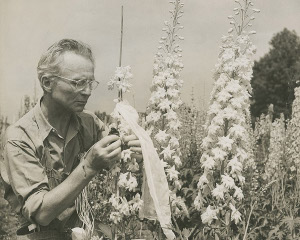
Edward Steichen: Delphiniums on Umpawaug Farm
By Gayil Nalls
Elizabeth Blackwell: The Courage of Attention
By John Steele
Seeds, Time, and the Human Psyche
By Margherita Gandolfi

Eat More Plants Recipes:
Spring Dandelion & Burdock Broth
By Gayil Nalls

As Ireland transitions from the rich, smoky scent of peat-burning to a more sustainable future, its olfactory heritage is evolving. What will become the next iconic aromatic symbol of Ireland?
Click to watch the documentary trailer.
As Ireland transitions from the rich, smoky scent of peat-burning to a more sustainable future, its olfactory heritage is evolving. What will become the next iconic aromatic symbol of Ireland?