

Seeds, Time, and the Human Psyche
Why seed saving and planting activate hope, patience, and future-oriented thinking
By Margherita Gandolfi
Sign up for our monthly newsletter!
Growing up, my father’s favorite sayings were always the ones about seeds:
“Plant a seed today and watch it grow tomorrow.”
“From a tiny seed, a mighty tree can grow.”
“Every great tree once started as a small seed.”
My father has always been attentive to the quiet things in life, the small moments most people pass over. When I was young, we lived in the countryside, surrounded by trees, flowers, sky, and clouds, and we spent much of our time outdoors. So we really did plant seeds—my father, my sisters, and I.
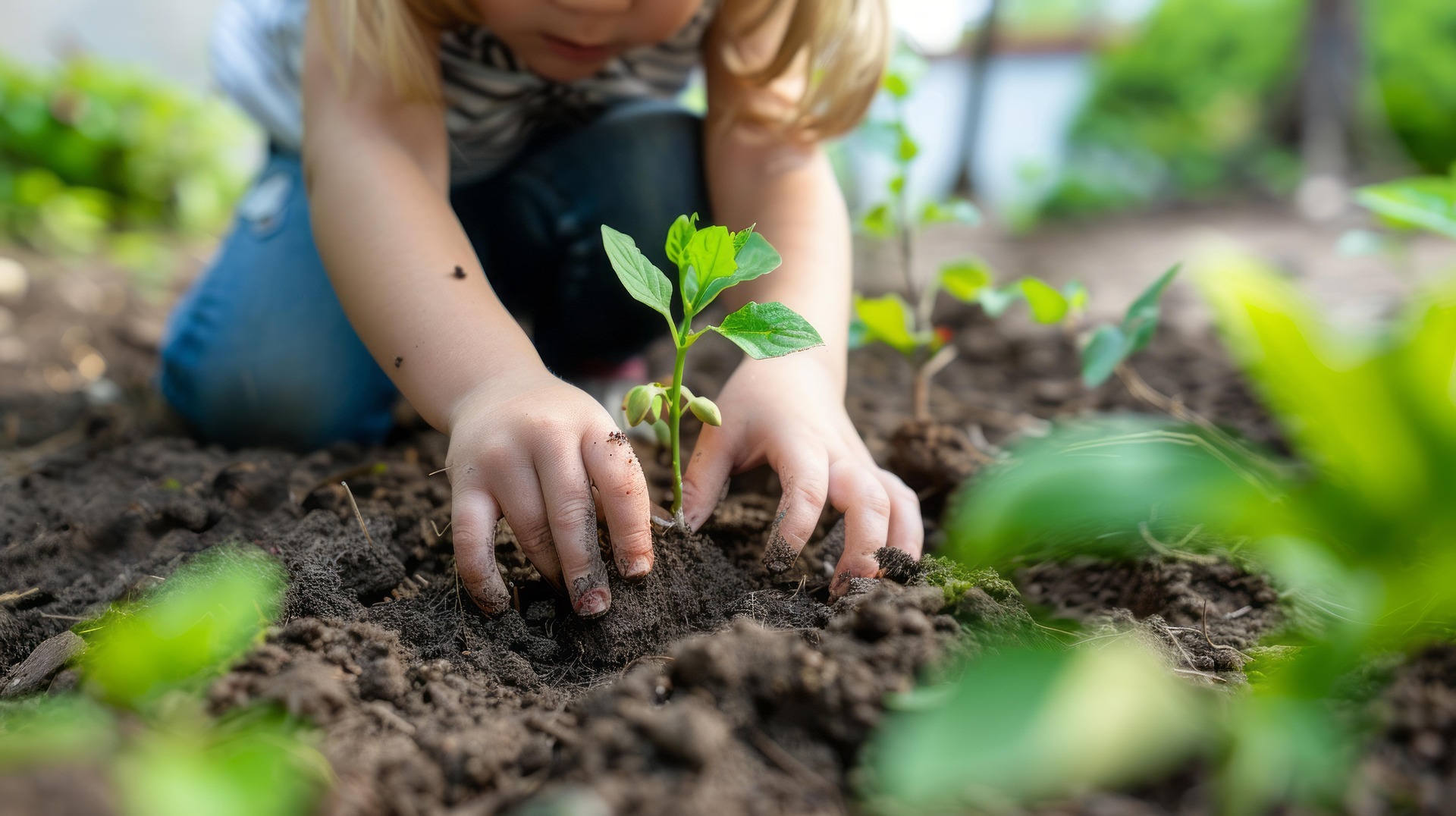
I remember saving seeds from the fruit we ate, then kneeling on the ground and digging into the earth with our hands. The soil was dark and damp. We would press each tiny seed into a small hollow, cover it gently, and then sit still. My father, who has one of the gentlest voices I have ever known, would guide us through something that, now, I would call a meditation:
“Girls, close your eyes and feel that you are now the seed. You are being embraced by the soil, warmed by the sun, and through the long hug that the earth is giving you, you will slowly open and release a beautiful flower. Do you feel the warmth of the sun?”
I was excited to see the flower bloom, of course. But I also loved the waiting itself, because even then it felt as though something beautiful was already taking place inside the dark.
I did not have psychological language for that as a child. I do now. What my father was teaching us, without naming it, was a relationship to time. Planting a seed asks us to invest in a future we cannot yet see. It asks us to tolerate uncertainty, delay, and invisibility. It asks us to act without immediate reward. Psychologically, it engages several deeply human capacities at once: hope, patience, and the ability to imagine a future before it arrives.
I remain deeply grateful to my parents for raising us inside a green, calm, slow-moving bubble. Only later did I understand how unusual that rhythm has become. When I grew older and entered working life on my own, the contrast felt sharp. I moved from the Tuscan hills to New York City, and there I began to understand how difficult it can be, in modern life, to live like a seed.
In a culture organized around speed, convenience, and constant productivity, waiting easily begins to feel intolerable, almost like failure. We are surrounded by systems designed to reduce delay: instant replies, same-day delivery, food on demand, frictionless consumption. There is comfort in that, of course. But there is also a psychological cost when life becomes so optimized for immediacy that we lose our tolerance for slow processes.
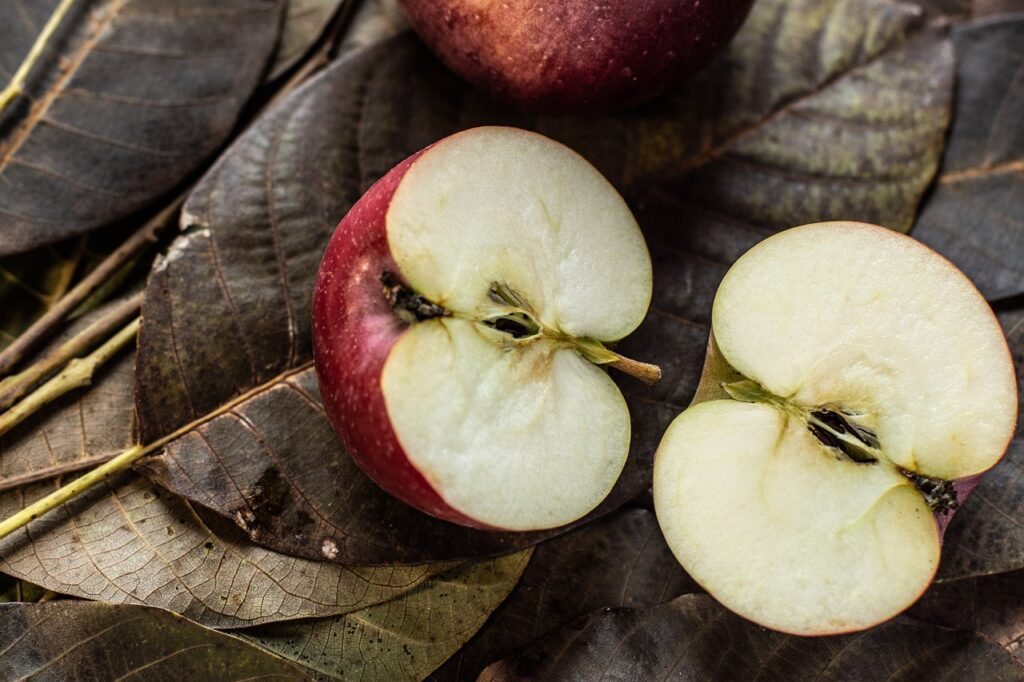
That is part of why planting can feel so powerful. Saving a seed from an apple, wrapping it in a damp cloth, and placing it in the refrigerator for the cold treatment it needs to germinate, then transferring it to soil and waiting for the first green shoot to appear brings the cycle of life directly before us. It gives us something to care for, something to return to, something to hope toward. You wake and check whether anything has changed. Slowly, almost without realizing it, you become attached to a future that is still out of sight.
That attachment matters. Hope is often mistaken for passive wishfulness, but psychologically it is far more active. C. R. Snyder, one of the major theorists of hope, described it as our ability to imagine pathways toward desired goals and sustain the motivation to pursue them. By that definition, planting a seed becomes a small but meaningful practice of hope. You imagine a future that does not yet exist, you act in service of it, and you continue even without immediate proof.
Planting also engages what psychologists call episodic future thinking: the capacity to project ourselves forward and mentally pre-experience what has not yet happened. Cristina Atance and Daniela O’Neill described it as a projection of the self into the future to pre-experience an event. Looking back, that is exactly what my father invited us to do when he asked us to close our eyes and become the seed. He was not only calming us—he was teaching us how to inhabit, even briefly, a future we could not yet see.
That capacity is closely related to patience. Research on delay of gratification has long suggested that people who are better able to orient themselves toward the future are also better able to tolerate waiting in the present. When we can imagine what we are waiting for, the wait becomes more bearable. It takes on shape and meaning. Planting teaches this quietly: you water something today for a result that cannot be hurried. I still remember that whenever we grew impatient while the soil remained flat and brown, my father would remind us that the earth was holding the seed a little longer.
There is now a growing body of research suggesting that gardening and cultivation can support mental well-being. A meta-analysis of 22 case studies found that gardening was associated with reductions in depression and anxiety, as well as increases in life satisfaction, quality of life, and sense of community. On the other side of the equation, chronic time pressure has been linked to higher levels of stress, anxiety, and depressive symptoms. One way of living keeps the nervous system braced for urgency. The other invites it into rhythm, repetition, and gradual change.
This does not mean cities are bad, or that speed is inherently harmful. Some forms of speed are necessary, useful, even life-giving. But when our inner world becomes organized entirely around urgency, efficiency, and immediate results, we begin to lose the capacity to stay present with anything that unfolds slowly. We become less practiced at waiting, and less trusting of what is happening when nothing visible seems to be happening at all.
A seed resists that mentality. It does not respond to pressure. It does not bloom faster because we are impatient. It asks for care, repetition, and trust. It reminds us that some forms of growth begin underground, beyond the reach of proof.
That, to me, is why seed saving and planting can feel so psychologically meaningful. They return us to truths that modern life often encourages us to forget: that growth is rarely immediate, that transformation often begins out of sight, and that the future is shaped not only by our plans, but by our willingness to tend what has not yet appeared.
Margherita Gandolfi is a licensed psychologist based in Milan who supports others and the natural world through empathy, dialogue, and psychological care.
Citations
Atance, C. M., & O’Neill, D. K. (2001). Episodic future thinking. Trends in cognitive sciences, 5(12), 533–539. https://doi.org/10.1016/s1364-6613(00)01804-0
Ogden, R., Schoetensack, C., Klegr, T. et al. Chronic time pressure as a predictor of symptoms of depression, anxiety and stress. BMC Psychol 13, 1407 (2025). https://doi.org/10.1186/s40359-025-03654-4
Snyder, C. R. (2002). Hope theory: Rainbows in the mind. Psychological Inquiry, 13(4), 249–275. https://doi.org/10.1207/S15327965PLI1304_01
Soga M, Gaston KJ, Yamaura Y. Gardening is beneficial for health: A meta-analysis. Prev Med Rep. 2016 Nov 14;5:92-99. doi: 10.1016/j.pmedr.2016.11.007. PMID: 27981022; PMCID: PMC5153451.
Plantings
Issue 59 – May 2026
Also in this issue:
The Green Bloom: Chlorophyll, Light, and Renewal
By WS/C
Environmental Generational Amnesia and the Smell of Maybugs
By Clara Muller
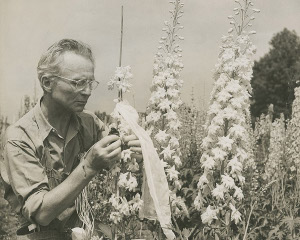
Edward Steichen: Delphiniums on Umpawaug Farm
By Gayil Nalls
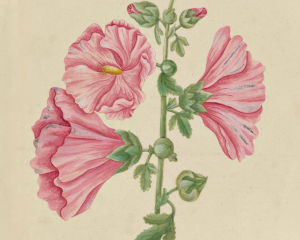
Elizabeth Blackwell: The Courage of Attention
By John Steele

The Importance of Embodied Joy
By Gayil Nalls
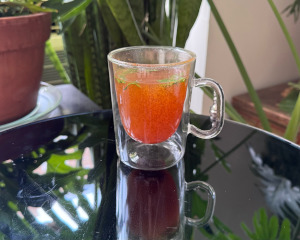
Eat More Plants Recipes:
Spring Dandelion & Burdock Broth
By Gayil Nalls
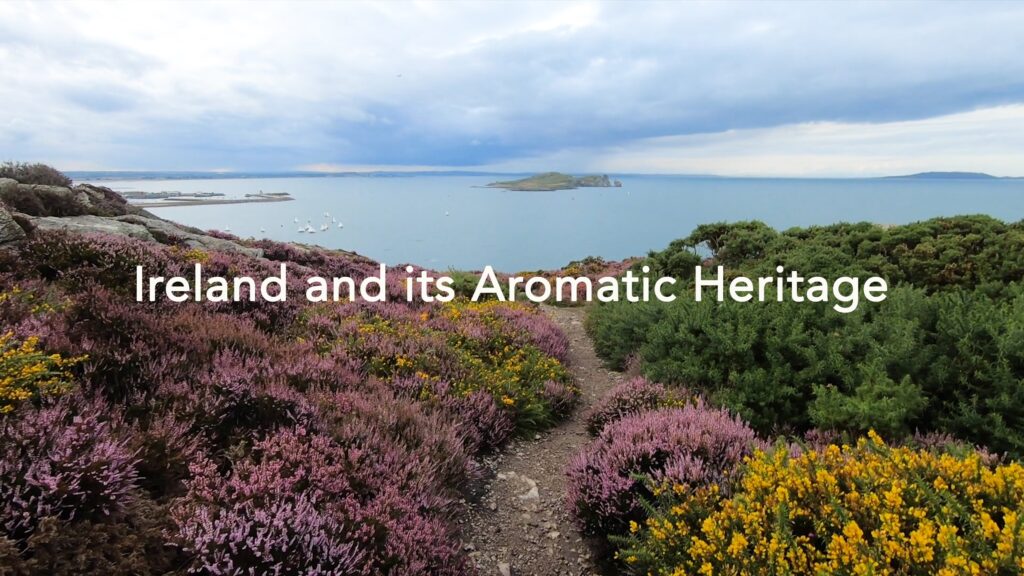
As Ireland transitions from the rich, smoky scent of peat-burning to a more sustainable future, its olfactory heritage is evolving. What will become the next iconic aromatic symbol of Ireland?
Click to watch the documentary trailer.
As Ireland transitions from the rich, smoky scent of peat-burning to a more sustainable future, its olfactory heritage is evolving. What will become the next iconic aromatic symbol of Ireland?